
Will the Poles of My 3 Season Tent Collapse in a Sudden Snowstorm?
3 season tents are generally designed to be lightweight, which makes their poles thinner and more flexible. If an unexpected snowfall occurs in the area where you are camping, the weight of the snow accumulating on top of the tent puts a serious load on these poles. The static weight of the snow, combined with the dynamic pressure of the wind, can lead to the standard aluminum poles bending in an "S" shape or breaking at the connection points. 4 season tents use thicker poles with more intersection points to distribute this load. Therefore, using a 3 season tent on a route where more than 5 centimeters of snow accumulation is expected means taking the risk of the tent collapsing on you at midnight.
Will the Fabric of a 3 Season Tent Tear in Strong Mountain Winds?
Wind affects not only the poles of the tent but also the strength of its fabric. 3 season tents are usually made from thin fabrics ranging from 15D to 40D (Denier), while 4 season models are made from 40D and above. In mountain winds reaching speeds of 60-70 kilometers per hour, the wide inner canopy of a 3 season tent (usually made of mesh) can create a sail effect by allowing wind to enter. If the outer canopy is not taut or the seams are not sufficiently reinforced with heat treatment, the continuous pulling created by the wind can separate the fibers of the fabric. The fabrics used in 4 season tents are both thicker and supported by "snow skirts" that prevent the wind from lifting the tent from underneath.
Does It Become Impossible to Breathe Inside a 4 Season Tent in Summer Heat?
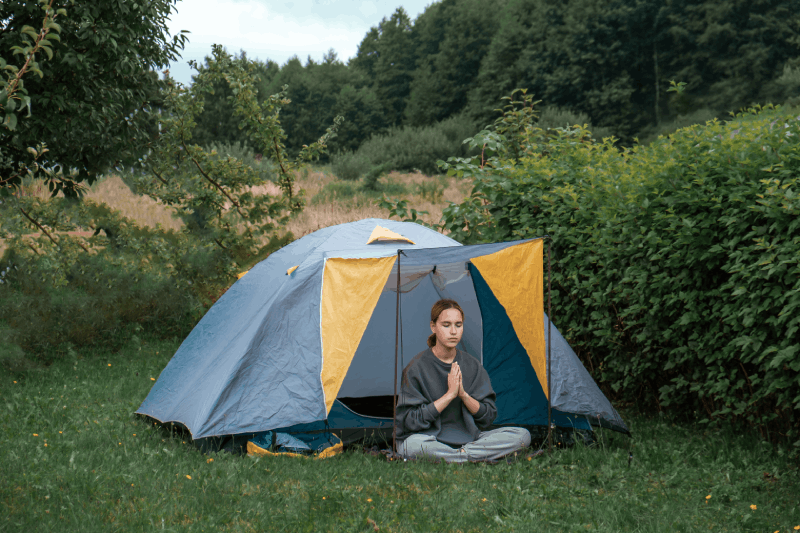
This is one of the most common fears and unfortunately has a significant degree of validity. 4 season tents have minimal "mesh" (netting) area to trap warm air inside and block the freezing wind outside. Air circulation is often limited to small windows at the top. If you attempt to use this tent in July at a sea-level campsite, the inside can feel like a sauna. The moisture from your body heat and breath cannot escape, causing condensation to form on the inner walls of the tent. 3 season tents, on the other hand, provide a breezy sleeping area by allowing even the slightest breeze to enter through their wide mesh panels; therefore, using a 4 season tent in summer "just in case" can seriously compromise your comfort.
Does the Extra Weight of 4 Season Tents Pose a Risk of Herni During Long-Distance Hikes?
From a logistical standpoint, a 3 season tent typically weighs between 1.5 - 2.5 kg, while a true 4 season tent can weigh between 3.5 - 5 kg. The importance of every 500 grams on your back increases exponentially during a 15-20 kilometer mountain hike. If you are not a professional athlete or do not have a partner to share your load, carrying a 5-kilogram tent alone can lead to excessive strain on your back and knee joints by the end of the day. This weight difference is not only due to fabric thickness but also results from additional poles, heavier stakes, and reinforced ground fabric. Therefore, if there are no extreme winter conditions on your route, purchasing a 4 season tent just for the sake of being "safe" can turn into a logistical nightmare.
Do the Snow Skirts on the Tent's Outer Canopy Prevent Insect Entry in Summer?
This is another misconception that seems logical; however, snow skirts are actually designed to cut off air circulation. These skirts found on 4 season tents prevent winter winds from entering the tent and cooling the interior or causing snow accumulation. In summer, however, these skirts completely block the natural airflow that could enter from underneath the tent. Yes, they can stop some crawling insects that come into contact with the ground, but they also prevent the moisture and heat inside the tent from escaping, causing you to sweat due to the lack of airflow. Moreover, these skirts are very good at collecting dirt, mud, and dry leaves; cleaning them up when packing the camp can be quite a hassle.
Is There a Risk of Freezing in an Unexpected Frost Event with a 3 Season Tent?
A tent does not heat you; it only protects you from external factors (wind, rain, snow). The thing that keeps you warm is your sleeping bag and mat. However, the fact that every part of a 3 season tent is mesh causes the warm air inside to escape outside in seconds. The fabric panels of a 4 season tent can keep the air inside a few degrees warmer. If you are staying in a 3 season tent in weather that drops to -10 degrees, even the slightest wind will directly contact your sleeping bag, causing your body heat to drop rapidly due to the "wind chill" effect. Therefore, if you do not have the right sleeping bag, your risk of freezing in a 3 season tent is much higher due to the speed of heat loss.
Does the Setup Time of a 4 Season Tent Turn into a Disaster in Stormy Weather?
4 season tents are structurally more complex. They contain more pole intersections and more anchoring points (guy lines). While you can set up a 3 season tent in 3 minutes in normal weather, getting a 4 season model taut and secure can take you 10-15 minutes. If you are trying to set it up in cold and windy weather where you cannot take off your gloves, this complexity becomes a risk factor. Some 4 season models have "outer pitch" systems that prevent the inner tent from getting wet. However, in 3 season tents, you typically set up the inner tent first and then throw the rainfly over it; this means that in heavy rain, the inner part can turn into a pool during the setup phase.
Will I Need to Buy Extra Heavy Duty Stakes for a 4 Season Tent?
Most 4 season tents come with standard stakes suitable for regular ground. However, the main purpose of 4 season use is to camp in snow or frozen ground. In these cases, the standard stakes that come out of the box will never hold in snow. You will need to buy wide, perforated, and long stakes known as "snow stakes" or devices that act as anchors in snow. This is an additional hidden cost. In a 3 season tent, standard stakes are sufficient in soft ground or grassy areas, while to ensure the safety promised by 4 season tents, you may need to spend an additional 30-40 dollars on special anchoring equipment depending on the ground type.
Does the Condensation Problem Inside the Tent Make My Sleeping Bag Damp?
This issue is the biggest nightmare in 4 season tents during winter. The outside is very cold, and the inside fills with water droplets because it warms up with your breath. If the internal volume of the tent is tight, the foot or head of your sleeping bag may touch these walls, and the insulation material of the bag gets wet. If you are using a down sleeping bag, the wet down will clump together and lose its insulating properties. In 3 season tents, however, the airflow is so high that condensation usually remains at a minimum. When buying a 4 season tent, you must check how well the ventilation system is designed and whether the inner tent is far enough away to protect your sleeping bag from this moisture.
Are Repair Kits for 4 Season Tents More Expensive and Complex?
Technically yes. The fabrics used in 4 season tents are usually silicone-coated nylon (SilNylon) or specially coated materials. A random repair kit you buy from the store will not work for repairing these fabrics; you will need special silicone-based repair kits. Additionally, since the poles are thicker, the spare pole sleeve (repair sleeve) you need to carry in case of breakage is also heavier and more specific. In 3 season tents, standard patch tapes are usually sufficient for temporary fixes, but repairs made in extreme winter conditions must be flawless. This makes it mandatory to have a more professional and therefore more expensive repair kit on hand.
Does the Floor Fabric of a 3 Season Tent Allow Water to Penetrate on Wet Ground?
Tent brands provide a water column value in "mm" for their floor fabrics. In 3 season tents, this value is usually around 1500-3000 mm, while in 4 season tents, it can go up to 5000-10000 mm. If you set up your tent in a low area that can create a water pool, you may feel water seeping in through the floor of the 3 season tent via "osmosis" when you press down with your knees. 4 season tents have a much more aggressive waterproofing because they are assumed to be set up on snow, where the body heat will melt the snow and create water underneath. At this point, it is mandatory for 3 season users to use an additional ground tarp called a "footprint," which adds extra cost and weight.
Does the Color of the Tent Affect My Chances of Survival in the Wild?
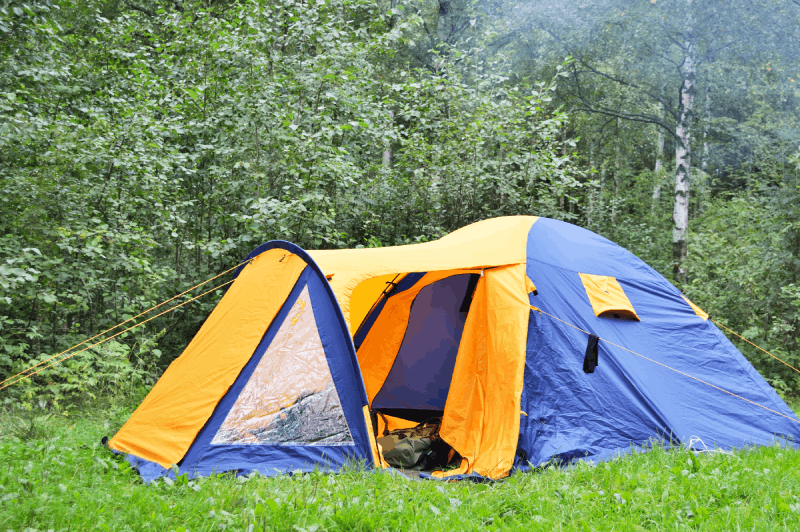
This question may seem like an aesthetic preference, but it is actually a safety issue. 3 season tents are usually produced in green, brown, or gray tones to blend in with nature. This is good for those who practice "wild camping." However, 4 season tents are often designed in bright orange, yellow, or red colors so that search and rescue teams can see you if you are caught in a storm or under snow. If you are in the winter mountains with a dark green tent and get caught in a blizzard or heavy snowfall, it becomes nearly impossible for a helicopter to locate you. This proves that a 4 season tent is not just a shelter but also a signaling device.
Does the Width of the Vestibule Affect Cooking Safety?
You cannot cook outside when there is a snowstorm outside. Therefore, the "vestibule" areas of 4 season tents are generally designed to be wider and taller. However, lighting a stove inside the tent or in the vestibule poses a risk of carbon monoxide poisoning and fire. 4 season tents are designed to manage this risk by positioning ventilation holes to vent the stove's smoke. In 3 season tents, the vestibule may only be narrow enough to hold shoes. Trying to light a stove in this narrow space during severe weather can cause the tent fabric to catch fire in an instant. Therefore, the volume of the vestibule in winter camps is not just a luxury but an operational necessity.
Do the Zippers of 4 Season Tents Freeze and Get Stuck in the Cold?
3 season tents usually use standard toothed zippers, which have a thin fabric flap (storm flap) over them. In freezing temperatures, moisture that accumulates between these flaps freezes and locks the zipper. In professional 4 season tents, oversized and freeze-resistant zippers are generally preferred. Additionally, zipper pulls are supported by large, sturdy cords that can be held with gloves. When you need to go to the bathroom in the middle of the night, struggling with a frozen zipper for 10 minutes is one of the most frustrating and sometimes dangerous (risk of hypothermia) moments of winter camping.
Are the Connection Buckles Used When Setting Up the Tent Cold-Resistant?
Plastic materials lose their flexibility in freezing temperatures and become brittle. Standard plastic buckles used in 3 season tents to reduce costs can break when you try to tension the tent in -15 degree weather. In 4 season tents, connection elements made from polymers resistant to extreme cold or reinforced with metal are used. If you are going to the winter mountains with a 3 season tent, you should know that if a critical connection point breaks, you will not be able to keep the tent standing. These small quality details explain why the price difference between the two types of tents is 2-3 times.
Is the Ultraviolet (UV) Resistance of a 3 Season Tent Sufficient for Long-Term Camping?
Most campers only think about rain, but sunlight (UV) is the number one killer of tent fabric. 3 season tents typically use nylon or polyester blends designed for weekly camping trips. If you use this tent at high altitudes (where the sun is more intense) or for long periods (on a trip lasting months), UV rays can break down the fibers of the fabric and cause it to tear like paper. 4 season tents are much more resistant to this degradation due to both the thickness of the fabric and the special protective coatings on them. A tent that is "sunny side up" loses its waterproofing properties, which means your long-term investment is wasted.
Are There Systems Inside the Tent for Drying Towels and Clothes?
In winter camping, everything that gets wet risks turning into an ice cube. Inside 4 season tents, there are usually "gear lofts" or hanging lines that run along the ceiling. These lines allow you to dry your clothes in the warm air created by your body heat rising. In 3 season tents, however, these types of "extra" features are avoided for the sake of lightweight. If you have no place to hang your clothes inside the tent, you have to put them inside your sleeping bag, which increases the moisture inside the bag and causes you to sweat throughout the night. These hanging points, which may seem like a small detail, are vital for hygiene and comfort during long winter trips.
Is the Tent Door Design High Enough to Prevent Snow Entry?
The doors of 3 season tents are usually very close to ground level. This makes it easy to enter and exit. However, if you open this door in an area where 10 centimeters of snow has fallen, the snow outside will pour into the tent as soon as you open it, covering your bedding. In 4 season "expedition" type tents, door openings are usually a few centimeters higher, or the door design is angled to shed snow outside. This structural difference helps you maintain a "hygienic and dry" area inside. Snow entering not only causes wetness but also dramatically increases the moisture inside as that snow melts.
Does Brand Warranty Really Save Lives When Buying a 4 Season Tent?
If an ordinary 3 season tent breaks down, your camping trip may be ruined, but you can return home. However, if a 4 season tent's pole breaks or its fabric bursts in the middle of winter, at the top of a mountain, it is a life-threatening crisis. Therefore, top segment 4 season tent brands offer lifetime warranties and fast technical service. If you buy a cheap, unbranded "4 season" tent and it leaks from the seams in a storm, you will have no one to turn to. At this point, the high amount you paid is actually a guarantee from a company that will send you spare parts or stand behind its product when you find yourself in a difficult situation.
Is It Logical to Use a 3 Season Tent Where a Caravan is Present?
If your vehicle is nearby and the weather reports are stable, a 3 season tent is always a more logical choice. Because if a problem arises (if the tent leaks or the wind becomes unbearable), you have a warm caravan to retreat to. A 4 season tent is designed for "out" situations where the return route is blocked and there is no other place to take shelter. Logistically, it is much more practical to stay in a 2 kg airy 3 season tent than to set up a 5 kg tank in a camp where your vehicle is present and sweat inside it. In this case, a 4 season tent becomes just an "unnecessary burden" and "hauling".
Conclusion: Which Tent Meets Your Real Needs?
As you can see, the difference between 3 and 4 season tents is not just a "season" difference but a completely "condition" difference. If you camp only a few times a year in non-extreme weather, a quality 3 season tent and a good sleeping bag will save you in any situation. However, if your goal is high altitude, snow camping, or unpredictable mountain routes, a 4 season tent is not just your shelter but also your insurance. When making a decision, instead of thinking "the most expensive is the best," you should ask yourself "how much can I carry on my back" and "how much do I want to sweat inside it."