How to Minimize the Risk of Breaking Poles in a Snowstorm?
One of the biggest fears of winter campers is the breaking of tent poles (the skeleton) under heavy snow load or severe winds at midnight. To reduce this risk, you should first focus on the material of the poles. Standard fiberglass poles tend to break in freezing cold and can split in half under the slightest pressure. Instead, you should prefer 7001 or 7075 series aluminum poles. These poles are both flexible and maintain their strength in low temperatures. Additionally, the geometric structure of the tent is also critical; "geodesic" or "semi-geodesic" designs have many intersection points where the poles support each other. This structure distributes the wind load evenly across the entire skeleton, preventing the breaking of a single point. If you are going to a very harsh area, choosing models that can increase the number of poles or allow the use of double poles will guarantee your safety.
What Type of Fabric Prevents Water from Dripping from the Inner Ceiling of the Tent When I Wake Up in the Morning?
The most insidious enemy of winter is not the cold outside, but the humidity inside (condensation). As you breathe, the warm air inside rises and when it hits the cold tent fabric, it turns into water. The only option to escape this situation is "double-walled" tents. However, the type of fabric is also critically important. The inner tent should be made of breathable nylon or ripstop fabric, allowing moisture to escape, while the outer tent should be silicone-coated (SilNylon) to keep water out. If you are looking for a more flexible solution, single-walled technical tents with membranes similar to Gore-Tex are available; however, they are expensive. The most practical and economical solution is four-season models that do not have a mesh inner tent, are entirely fabric, but have excellent top ventilation design. Cotton canvas tents are also great for moisture management but are very heavy, making them more suitable for vehicle-based camping.

Do Cotton Canvas Tents with Stoves Collapse Under Heavy Wet Snow?
Canvas tents are the palaces that provide "home comfort" for winter camps. However, cotton naturally absorbs water. When wet snow starts to accumulate and melt on the tent, the fabric absorbs this water and the weight of the tent can increase two to three times. If the central pole or skeleton of the tent is not capable of carrying this extra weight, it poses a risk of collapse. To prevent this situation, polycotton (cotton-polyester blend) fabrics should be preferred; because they absorb less water and dry faster. Additionally, the pitch of the canvas tent should be steep so that snow slides off instead of accumulating on top. Using a stove is an advantage at this point; the heat inside dries the fabric and ensures that the snow on top melts and flows off. Still, if a heavy snowstorm is expected, getting up several times during the night to knock off the accumulated snow from the sides of the tent will extend the life of the skeleton.
What Should Be Done If Zippers Freeze and Get Stuck While Setting Up with Gloves?
Touching a metal zipper with bare hands at minus 20 degrees is both painful and risky. The quality of zippers in winter tents is a vital logistical detail. Frozen zippers are usually caused by moisture from outside turning to ice between the teeth. Large-toothed zippers from brands like "YKK" used in quality winter tents are more resistant to freezing. If your zipper freezes, you should never force it; this can cause the fabric to tear or the zipper slider to break. You should always have a small ice remover spray or lighter with you. However, the best method is to lubricate the zippers with silicone spray or wax before camping. Additionally, the zipper pulls should be large enough to be grasped with gloves (with perlon or plastic ends). If the pulls are small, modifying them by adding paracord strings at home can speed up your entry into the tent during a storm.
Can Snow Get Inside a Tent Without a Wind Skirt All Night?
Wind skirts are pieces that extend a few centimeters longer than the outer tent and spread out on the ground. By placing snow or stones on these pieces, you can prevent wind from entering under the tent and snow dust from filling inside. If the tent you choose does not have this feature, you will face a serious comfort issue. Snow dust can seep in through the smallest gaps and accumulate on your sleeping bag, causing everything to be soaked when you wake up in the morning. To prevent this in a tent without a wind skirt, you need to build a small wall of snow around the tent. However, you must ensure that you do not block the ventilation openings of the tent while building this wall; otherwise, the oxygen level inside may drop. As a modification, you can sew a waterproof fabric to the bottom of your tent to create your own skirts, but this requires sealing the seams well.
Does the Total Weight of the Tent Cause Back Pain When Camping Alone in Winter?
The equipment needed for winter camping is already heavy (thick sleeping bag, mat, stove, fuel). When you add a 4-5 kilogram winter tent, the weight of your backpack can reach 20-25 kilograms. This weight during long-distance winter hikes can lead not only to fatigue but also to serious joint and back injuries. "Ultra-light" winter tents come into play here. Typically weighing around 1.5 - 2.5 kg, these models use expensive Dyneema or high-quality SilNylon fabrics. If your budget is limited and you have a heavy tent, you should split the load. Removing the poles from your backpack and securing the tent outside or giving the poles to a friend can help balance the center of gravity. If you are alone, using a "pulka" (snow sled) instead of carrying a heavy tent is the most professional way to protect your back by distributing the load from your back to the ground.
Does the Air Gap Between Double-Walled Tents Really Cut the Outside Freezing Temperatures?
Many people think that a tent will act as a heater, but a tent is actually an insulator. The working principle of double-walled tents is similar to thermoses. The approximately 5-10 centimeter air gap between the inner and outer tents creates a static air layer. This layer prevents the warm air heated by your body from coming into direct contact with the freezing cold outside. Tests have shown that a well-designed double-walled tent can be 5 to 8 degrees warmer inside than outside. This difference can be vital near the freezing point. However, for this gap to be effective, the inner tent must be made of non-mesh, windproof fabric. If the inner tent is mesh, the air gap will continuously circulate, causing the insulation property to be lost. Therefore, a real winter tent should be chosen from models that do not contain mesh or have mesh parts that can be covered with zippered fabric.
Do Aluminum Poles or Carbon Fiber Poles Break Faster in Freezing Cold?
Carbon fiber is known for its lightness and rigidity, but its behavior in extreme cold is risky. Carbon fiber poles are very stiff and have less flexibility. At minus 30 degrees, this stiffness can cause the poles to shatter like "glass" when impacted or subjected to sudden wind load. Aluminum poles (especially quality ones like DAC or Greek brands) have more flexibility. When a wind hits, an aluminum pole can bend and return to its original shape when the storm subsides; even if it bends permanently, it continues to hold the tent up as long as it does not break. In high-altitude camps and winter conditions, aluminum is still the industry standard. You should prefer carbon fiber only in winter camps where weight is critically important and the wind is not too strong. In short, if you are looking for safety and durability, remember that aluminum is a safe harbor.
Are Snow Stakes Worth the Price Compared to Standard Stakes or Are Homemade Solutions Sufficient?
Standard tent stakes are designed for hard ground and have no grip in soft snow; they can easily come out of the ground when the wind blows. Snow stakes, on the other hand, are special pieces shaped like "V" or "U", with holes on them and much longer (30-50 cm). These stakes grip the snow with their wide surface area and ensure that the snow freezes and locks onto them through the holes on top. Their prices may seem high, but they are the only thing that can prevent your tent from flying away in a storm. As homemade solutions, you can bury thick branches or bags filled with snow (snow anchors) below 40 cm using the "deadman" technique. However, removing these anchors in an emergency or when the ground is very hard can become a torture. Professional snow stakes increase both your setup speed and your safety margin. This is a "hidden cost" item that should not be skimped on in winter camping.
Does Lighting a Candle Inside the Tent Increase the Heat Inside or Create a Fire Risk?
Using an open flame inside a tent is an ongoing debate in winter camping forums. The heat emitted by a candle (approximately 80-100 BTU) can raise the temperature by 1-2 degrees in a very small tent and, more importantly, gives a psychological feeling of warmth. However, the risks are enormous. Tent fabrics are usually synthetic and when they catch fire, they can melt onto you within seconds. Additionally, a burning candle in an environment with limited oxygen can lead to carbon monoxide buildup. If you absolutely want light or a little warmth, you should use candle lanterns (like UCO models with protection). These lanterns trap the flame inside glass and metal cages, preventing fire in case of tipping over. Still, the safest heating method is to prepare a water bottle filled with hot water and place it inside your sleeping bag; this provides ten times more heat than any candle and is zero risk.
What Ground Coverings Prevent the Mat from Sliding and Heat Loss When Setting Up a Tent on an Icy Surface?
Sleeping on ice is like lying on a giant cooling block that absorbs heat directly from your body. No matter how high quality the tent floor fabric is, it cannot cut the cold of the ice. The sliding of your mat inside the tent leads to uncomfortable sleep throughout the night and the formation of cold bridges. To prevent this, you must use a "footprint" as the first layer. However, the real solution is inside. Laying a thin "aluminum foil emergency blanket" or better yet, "bubble insulation sheet" across the tent floor, extending from wall to wall, reflects radiant heat upwards. Placing non-slip pads under your mat or using closed-cell foam mats with a textured surface (like Z-lite) at the bottom and laying a sleeping mat on top will prevent slipping and also increase the R-value (insulation coefficient).
How to Store Wet Boots and Clothes Without Causing Moisture in a Tent with a Narrow Storage Area?
In winter camping, the "vestibule" storage area is more critical than the living area of the tent. If you bring your wet, snowy boots and frozen jackets inside, when they melt, they will soak everything and increase humidity. If your storage area is narrow, storing these items can turn into a logistical nightmare. The solution is to "layer" and insulate the items. After thoroughly cleaning the snow off your boots, you can place them in a large garbage bag and tie it shut, leaving them in the storage area; this way, the moisture inside does not escape and the boots do not freeze further. For jackets, the "gear loft" (shelf) on the tent ceiling should be used. If your tent does not have this shelf, you can hang a taut paracord over the inner tent. However, never lay wet clothes on top of your sleeping bag; this will destroy the insulation property of the bag in seconds. Tents with spacious vestibules (like tunnel-type) are the key to comfort in winter camping.
Do Polyester Fabric Tents Cause Sweating by Creating a Greenhouse Effect When the Sun Comes Out?
On sunny but cold winter days, polyester fabrics absorb sunlight and quickly heat the inside. While this may seem pleasant at first, it quickly turns into a "greenhouse effect." If you are wearing thick winter clothing, you will start to sweat; sweating in winter camping is a recipe for disaster (as sweat leads to hypothermia). To manage this disadvantage of polyester tents, you should strategically use ventilation windows. When the sun hits, you should open two opposing ventilation openings to ensure airflow. If your tent's UV resistance is low, the polyester fabric may harden and crack over time. If you are planning long-term and high-altitude camps, you should prefer more technical fabrics like "Nylon 66" that better maintain temperature balance. In short, when the sun comes out, removing layers of clothing and fully opening the ventilation is essential to maintain the moisture balance inside the tent.
Are Expedition Tents Designed for High Altitude Really an Unnecessary Investment for an Average Winter Camper?
An "expedition" tent is designed to withstand winds of 100 km/h and meters of snow load. If you are only camping in forested areas or low-altitude plateaus on weekends, these tents may be "overkill" for you. Setting up these tents is usually more difficult, they are much heavier, and since their ventilation is optimized for low temperatures, they can be too warm to use in spring. However, there is no price for safety. If your budget allows and you think, "I want a place to shelter even in the worst-case scenario," buying an expedition tent will give you incredible psychological security. The main difference between an ordinary four-season tent and a professional expedition tent is the thickness of the fabric, the tear resistance of the fabric, and the number of tension points. If you are not going to be wandering in extreme conditions, a quality mid-range four-season tent will suffice.
Does Setting Up a Tent Directly on Ice Damage the Tent Floor Instead of Packing Snow?
Ice can behave like sandpaper. Especially in windy weather, the movements inside the tent can cause the tent floor to slide millimetrically on the ice. These micro-scratches can wear down the waterproof coating of the tent (PU or Silicone) over time. Worse, the sharp crystals inside the ice can puncture the fabric. The healthiest method is to fill the area where you will set up the tent with snow and compact it to create a "platform." When the compacted snow freezes, it creates a solid and firm surface; this surface protects the tent floor and provides better insulation. If you must set up directly on ice, you should always lay a thick "footprint" or a cheap "tarp" that you can buy from hardware stores underneath. This extra layer will act as a shield protecting your expensive tent from mechanical damage.
Does Closing the Ventilation Holes of the Tent at Night Due to Cold Endanger Oxygen Levels?
This is one of the deadliest mistakes made in winter camping. While there is freezing cold outside, it is instinctive to close every hole in the tent to keep warm inside. However, a winter tent is a structure that has an outer tent that extends to the ground and is sealed with wind skirts. If you close the ventilation openings, the fresh air intake stops. As the carbon dioxide level increases due to human breath, the oxygen level decreases. Worse, if you are burning a stove inside or even have a small candle, the risk of carbon monoxide poisoning arises. Additionally, closed ventilation can cause the moisture inside (condensation) to build up and you wake up with a wet sleeping bag in the morning. No matter how cold it is, at least two ventilation windows should be left open. Remember; the tent protects you from wind and precipitation, but what keeps you warm is your sleeping bag and mat, not the air inside the tent.
Do UV Rays Damage Tent Fabric in Snowy and High Altitude Areas?
Snow reflects more than 80% of sunlight. This means that your tent at high altitude is exposed to intense UV bombardment from both above and below. UV rays break down the polymer structure of synthetic fabrics (nylon and polyester); the fabric fades, its texture thins, and eventually, it starts to tear easily like paper. A standard camping tent can lose its properties within one or two seasons under continuous high UV exposure. For winter camps, tents with "UV protective" coatings or more durable dark-colored SilNylon fabrics should be preferred. If you are going to leave your tent set up for weeks in the same spot (like a base camp), it may be a good investment to stretch a cheap tarp over it or spray special sprays that extend the life of the fabric. If you hear a "crackling" sound when you lightly press on your tent fabric with your finger, that fabric has completed its life and is ready to tear in the next storm.
How to Repair a Tent When One of the Guy Lines Breaks During a Storm?
Guy lines are the tendons that transfer the wind load of the tent to the ground. A broken line can cause the tent to take on an asymmetric load and the poles to break. Therefore, the lines used in winter tents should be at least 2 mm thick and static (non-stretching). If a line breaks, you should not panic and immediately use your spare paracord. Your knot knowledge is vital here; you should be able to tie "taut-line hitch" or "bowline" knots even with gloves on. If the loop where the line is attached to the fabric is torn, you can create a temporary connection point by placing a rock behind the fabric and wrapping the fabric around the rock and tying it with a line (the "marbles in a bag" technique). Always keep a few spare aluminum line tensioners and at least 10 meters of quality paracord with you; this small but significant precaution can prevent a winter night from ending in disaster.
What Color Tent is Best for Visibility and Safety on a White Snow Cover?
Aesthetic concerns should take a back seat in winter camping. A white or gray tent can become completely invisible during heavy fog (whiteout) or blizzards. If you leave your camp area for a short time and cannot find your tent when you return, it can turn into a survival situation. Additionally, if you need to be rescued by helicopter in an emergency, a contrasting color can save your life. For winter camps, the industry standard is bright orange, yellow, or vibrant red. These colors are easily visible in the snow and also create a more "warm" and spacious feeling inside the tent, boosting your morale. Dark green or navy blue tents absorb heat better but can be darkening in low light. In summary; for your safety, do not be "camouflaged" in nature during winter, instead, be "visible".
What Reflective Solutions Should Be Used to Avoid Tripping Over Tent Lines in the Dark?
Winter nights are long and pitch dark. When you step outside with your headlamp, you may not see the lines buried under the snow or the taut lines and trip, which can cause injury to you and damage the tension points of the tent. Therefore, professional winter tents come with self "reflective" guy lines. If your lines are standard, you should definitely replace them with reflective ones. Additionally, hanging small LED "flashes" or glow sticks at the points where the lines connect to the tent and where the stakes are located will create a safe "walking corridor." Some campers also mark the locations of stakes by placing empty plastic bottles on top, which helps to indicate their locations and ensures that the stakes are buried deeper in the snow. Remember, a hard fall on frozen ground is the last thing you want when you are miles away from the nearest hospital.
What is the Fastest Tent Design to Set Up When Fingers Are Numb from Freezing?
When at risk of hypothermia or when your hands are frozen, dealing with complex pole systems is torture. In winter tents, "clip" systems are much faster to set up than systems that require threading poles through sleeves. However, the advantage of channel systems is that they distribute the load more evenly. The fastest and most durable designs to set up in winter are geodesic tents with "hub pole systems" that connect at a single point. Additionally, models where the inner and outer tents are integrated and set up at the same time (pitching in one go) prevent the inner tent from getting wet or filling with snow during setup, which is the standard for winter. You should definitely stay away from pop-up (automatic) tents in winter; these mechanisms can jam in freezing cold or easily break in the wind. For a balance of speed and durability, look for models with wide pole pockets that allow you to fit the poles into the sleeves even with gloves on.
What to Do If the Collected Tent Becomes Rigid and Does Not Fit in the Bag?
Cold weather reduces the flexibility of plastics and synthetic fabrics. Your tent fabric, which is soft at home, can turn into a rigid sheet at minus 15 degrees. It may seem impossible to stuff the tent into its original bag when packing it in the morning. In this case, instead of forcing the fabric or zipper to break, it is best to stuff the tent into a larger "compression sack" or, if you are using a pulka, roll the tent without folding it completely and secure it like a "burrito" on top of the sled. Never fold the tent too sharply; frozen fabric can develop micro-cracks at the folds and damage its waterproofing. Always carry the poles in a separate bag to prevent the fabric from being punctured by the sharp ends of the poles. Packing a tent in winter is not an "art" but a matter of "speed and protection."
Are Gear Lofts in Tents Strong Enough to Hold Heavy Winter Jackets?
Many campers rely on the small mesh pockets in the tent ceiling to store heavy, wet jackets. However, these lofts are usually designed for lightweight items like lanterns, glasses, or gloves. A wet down jacket can weigh 2-3 kilograms, and this weight can cause the inner tent ceiling to sag, placing an asymmetric load on the poles. This can compromise wind resistance and create a favorable depression for snow accumulation on top of the tent. Instead of placing heavy items on the ceiling loft, you should place them in the corners of the tent, near the poles on the ground. If you must use the ceiling, instead of hanging the jacket, spread it out and ensure that the weight does not rest on a single stitching point. In winter, you must use every square millimeter efficiently, but this should not come at the expense of the structural integrity of the tent.
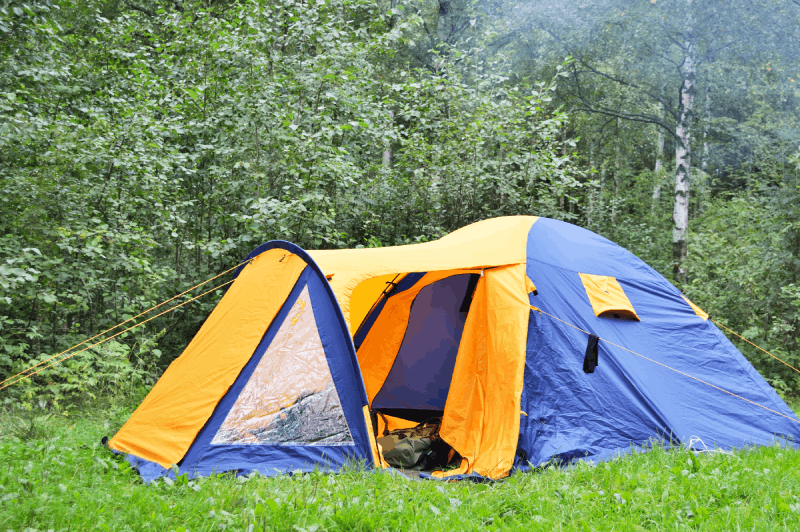
Is the Door Design of a Tent Effective Enough to Prevent Snow from Filling Inside When Opened?
This is a detail that is often overlooked in catalogs but can be very frustrating in the field. If the door of the tent is very sloped and there is no "overhang" above when you open the door, all the snow on top will fall directly into the inner tent, onto your sleeping area. The ideal door design for a winter tent should be in the shape of a "D" and leave some protection area when the zipper of the outer tent is opened. A small storage pole found in some models creates a "canopy" over the door, solving this problem. If your tent does not have such protection, you must clean the snow off the outer tent with a brush or glove before opening the door. Additionally, always leave the zipper at the bottom of the door a few centimeters above the ground to slightly prevent snow from seeping inside.
How Does the Noise of Thin Fabric Tents in the Wind Affect Sleep Quality and Psychology?
In winter camping, you are not only fighting the cold but also the noise. In strong winds, thin nylon fabrics can crackle like a drum. This sound can reach 80-90 decibels and can make it impossible for you to sleep all night. Not being able to sleep dulls your decision-making ability the next day and distracts your attention; this can be dangerous in winter. Canvas tents are much quieter in this regard because the fabric is thicker and does not flap. If you are using a nylon tent, the way to reduce the noise is to tension the lines "perfectly." Any loose piece of fabric will flap like a flag. Additionally, you should always have quality earplugs with you. Psychologically, the noise of the tent can give you the feeling that it will tear apart; to overcome this fear, you should know the limits of your tent and trust it. A quiet night is the greatest luxury in winter.
What to Do If the Seam Tapes Come Off in Dry Winter Weather?
Winter weather is not only cold but also extremely dry. This dryness can cause the seam tapes that seal the seams of low-quality tents to dry out, harden, and eventually separate from the fabric. When a seam tape comes off, your tent is no longer waterproof and windproof. Before going on a winter camping trip, you should check all the seams inside the tent and repair any areas that are starting to lift with flexible sealants like "Seam Grip." If this happens in the field, you can create a temporary solution with strong tape like "Gorilla Tape" or similar that you carry with you. However, make sure the fabric is warm and dry before applying the tape; nothing sticks to frozen fabric. In professional winter tents, "corespun" threads are often used instead of seam tape, which swell when wet and automatically seal the hole; this is the most reliable sewing method for winter.
Is It Better to Use a Tarp or the Original Footprint Under the Tent for Protection?
In winter camping, a groundsheet is essential for insulation and protection. Original footprints are perfectly compatible with the tent's base dimensions, are lightweight, and can be attached to the tent poles. However, they are usually thin. A cheap PVC tarp is much thicker and more durable, providing better protection on icy surfaces. However, the biggest risk of a tarp is that it can extend beyond the tent's boundaries. If the tarp extends beyond, the snow and melting water filtering down from above will accumulate on top of the tarp and seep directly under your tent, meaning under your mat. Therefore, if you are using a tarp, you should fold it inwards so that it is 5-10 cm smaller than the tent base. In heavy winter conditions, if weight is not an issue, laying a thick construction tarp over the original footprint provides "armored" ground insulation.
Do Pets' Paws and Claws Damage the Tent Floor When They Freeze in the Cold?
If you are going winter camping with your dog, the safety of both your pet and your tent is important. Cold weather makes the coating on the tent floor more brittle. Your dog's paws, especially after walking on ice and snow outside, become hard and can turn into piercing tools. Before entering the tent, you must dry your dog's paws and clean off any ice chunks. Laying a thick fleece blanket or an old mat in the area where your dog will sleep inside the tent will keep them warm and protect the tent floor from paw impacts. Additionally, you should calm your dog to prevent sudden movements inside the tent and perhaps even put special "paw shoes" on them. A punctured tent floor can ruin all your winter insulation strategies.
Does the Moisture Absorption of Cotton Canvas Tents Cause Mold Formation in Winter?
Canvas tents are very comfortable in winter because they breathe, but they are difficult to maintain. Cotton fibers absorb moisture, and if you pack the tent into its bag without completely drying it after camping, mold can start to grow within just 48 hours. Mold penetrates the texture of the canvas, emits a bad odor, and compromises the waterproofing of the fabric. No matter how dry your canvas tent looks after winter camping, you must air it out in a closed and warm area (like a garage or a spacious room) for at least 24 hours after returning home. If mold has formed, heavy chemicals like bleach can damage the fabric; instead, you should use special canvas cleaners. The price of comfort in winter camping is meticulous drying after the trip.
Does Static Electricity Buildup in Dry Winter Air Damage Electronic Devices?
In winter, the humidity level is very low, which can create massive static electricity charges between synthetic tent fabrics and your sleeping bag. You may see small sparks when you turn inside your sleeping bag at night. These static discharges can theoretically damage the circuits of sensitive electronic devices (smartwatches, GPS, phones) or at least cause the device to freeze. To prevent this, you should not let your devices come into direct contact with the tent floor or fabric; instead, wrap them in an anti-static cloth or keep them in the pocket of your sleeping bag. Additionally, keeping your devices warm with your body heat will also prevent their battery life from draining in seconds due to the cold. Static electricity can be not just a "tingle" but a hidden threat to your winter digital assistants.
Are Premium Brands' Winter Tents Really Worth the Price Difference?
Winter tents from brands like Hilleberg, North Face (like classic models VE-25), or Black Diamond can cost thousands of dollars. Many people might think, "it's just a piece of fabric." However, this price difference is due to the stitching density, the quality of the poles, the tear resistance of the fabric (tensile strength), and most importantly, "R&D". These tents are tested in wind tunnels and real storms. While a cheap four-season tent's zipper may fail at minus 20 degrees, the chance of this happening in a premium brand is one in a million. If you are going on extreme routes where your life depends on this equipment, this price difference is essentially a "life insurance" premium. However, if you are just camping for hobby purposes in safe areas, good mid-range brands (like Naturehike's winter series or quality local productions) will suffice. What matters is not the brand name but whether the materials used are certified.
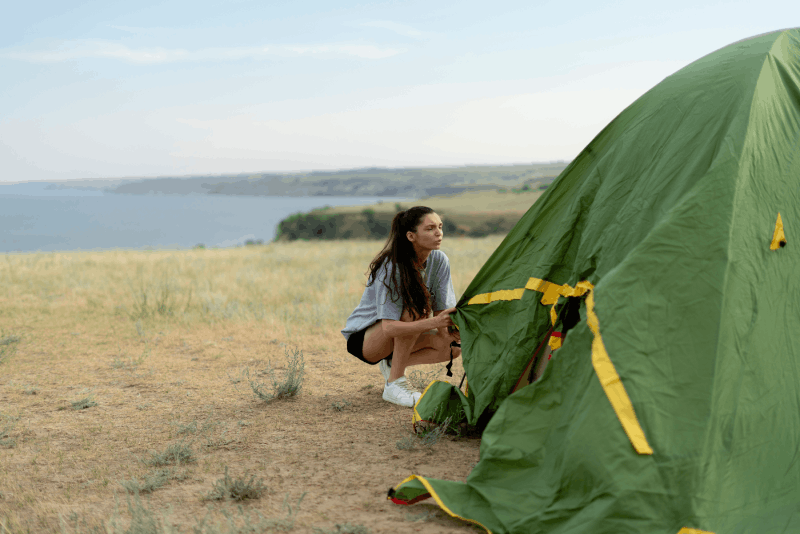
What "Invisible" Defects Should Be Considered When Buying a Second-Hand Winter Tent?
Buying a second-hand winter tent can be a big risk. Even if the tent looks very clean from the outside, the phenomenon known as "hydrolytic degradation" refers to the chemical breakdown of the waterproof coating (PU) on the inside of the fabric over time. If you open the tent and a sharp, stale smell (like vomit or old plastic) wafts out or the fabric sticks together, that tent has reached the end of its life. Additionally, lightly scratch the seam tapes with your fingernail; if they come off easily, the tent will leak. Check the poles one by one for cracks or corrosion. It is normal for the poles in winter tents to have "memory" (slight bending), but sharp bends are a sign of weakness. Most importantly, ask whether the tent has previously been exposed to high altitudes for long periods under sunlight; UV damage is hard to detect visually but can reduce the fabric's strength by up to 80%.
Are Chemical Odors from a Wet Packaged Winter Tent Harmful to Health?
Many winter tents are coated with fire retardant chemicals. If the tent is wet and remains airtight inside, these chemicals can react with moisture and create a strong odor. In a small and enclosed tent space, inhaling this odor for a long time can lead to headaches, nausea, and long-term respiratory irritation. Especially the symptoms of "carbon monoxide poisoning" can be confused with the fatigue caused by this chemical odor, making diagnosis difficult. The solution is to ventilate the tent whenever possible and, if you can, prefer "chemical-free" (PFC-free) certified tents. In winter camping, air quality is as critical a comfort factor as warmth.
Does the Placement of Lighting Inside the Tent Affect Winter Depression and Morale?
Winter nights last 14-16 hours. Spending such a long time in a narrow and dim space can lead to psychological tension known as "cabin fever." The lighting of the tent is not just a necessity but also a source of morale. Instead of a single harsh white light hanging from above, using warm yellow-toned (amber) LED strips or frosted glass lanterns spread around the tent makes the environment feel more homely and secure. Some professional tents have special fabric pockets in the inner tent that distribute the lantern light evenly throughout the tent. The higher your morale, the better you will cope with the cold and challenges. In winter camping, light is not just to pierce the darkness but to keep your spirit warm.
What is the Fastest Exit Strategy from the Tent in Case of an Emergency Collapse?
If the tent collapses due to heavy snow load or broken poles, panic is your biggest enemy. The fabric of winter tents is thick and can press down on you with the weight of the snow. In this case, finding the door can be difficult. Every winter camper should have a sharp "camp knife" within reach inside their sleeping bag or right next to them. If the door is stuck or cannot be found, cutting the fabric to get out is the only way. Additionally, when you go outside, you should always have your jacket and boots easily accessible, as you will face freezing cold. During a collapse, first protect your head, create an air pocket, and calmly determine your exit route. Visualizing these scenarios before camping will strengthen your reflexes.
How Does Using a Pulka (Snow Sled) Affect the Weight Distribution Dynamics of the Tent?
If you are pulling the tent with a pulka instead of carrying it on your back, the center of gravity becomes much more important. The tent is one of the heaviest parts of the pulka. If you place the tent too far back on the pulka, the sled will constantly wobble and show signs of tipping. The ideal is to place the heavy tent and kitchen supplies in the middle-lower part of the pulka. While rolling the tent and placing it on top of the pulka may be practical, it raises the center of gravity. In winter, tipping over on uneven terrain means you have to stop each time to adjust the load, which leads to sweating and energy loss. Place your tent inside the pulka in a waterproof and sturdy bag (duffel bag) to distribute the weight to the center.
Is Shared Body Heat in Multi-Person Winter Tents Really an Advantage?
Yes, "social warmth" is a great blessing in winter camping. In a three-person tent, the heat emitted by three people significantly increases the ambient temperature compared to being alone. However, there is a cost to this: three times more breath means three times more humidity. If the ventilation capacity of the tent is not sufficient for three people, you may wake up in the morning to find the inside of the tent as humid as a tropical rainforest. In multi-person winter camps, tunnel-type tents with wide ventilation openings at both ends manage this humidity better. Additionally, filling the gaps between you while sleeping with clothes minimizes heat loss (convection). Group camps are far superior to solo camps in terms of both safety and thermal efficiency.
What Difficulties Arise If the Inner Tent Height Is Too Low to Allow Dressing While Sitting?
You spend a lot of time inside the tent during winter camping. You use the tent not only for sleeping but also for cooking (very carefully and with ventilation), changing clothes, and maintaining equipment. If the ceiling of the tent is too low, you will constantly scrape against it while putting on your jacket or tying your boots. This scraping can cause all the frozen condensation crystals (like snow) on the ceiling to fall onto your back. The center point of a winter tent should be at least high enough for you to sit comfortably (90-110 cm). Low-profile "bivouac" type tents are very resistant to wind but spending a 15-hour winter night inside can turn into a complete test of claustrophobia. You should balance comfort and durability according to your physical needs.
Is It Risky to Camp in Winter with a Tent That Has Excessive Mesh Panels?
There are many "hybrid" models sold as "4-season" tents that have a large proportion of mesh in the inner tent. These tents are not real winter tents. When the wind blows, it can seep in through the mesh panels and instantly expel all the warm air inside. Additionally, during a blizzard, snow dust can enter through the mesh pores and directly settle on you. The inner tent of a real winter tent should be breathable but made of windproof fabric. Mesh parts should only be found in small areas at the top for ventilation and must be able to be covered with zippered fabric. If your current tent has too much mesh, you can sew lightweight "windstopper" fabric or fleece panels to the inner part to prepare it for winter; however, this will increase the weight of the tent.
How Does the "Solid Wall" Psychology of Winter Tents Increase the Sense of Security?
Winter nature is very "noisy" and "active." When there is a howling wind outside, you feel completely unprotected inside a thin mesh tent. Tents with a "solid wall" design, where the inner tent is entirely made of fabric, give you a sense of having a "room." This is not just an insulation issue; it is also a psychological fortress. Visually and physically disconnecting from the chaos outside lowers your adrenaline levels and allows you to sleep more deeply and soundly. Quality sleep is your most powerful survival tool in winter. When choosing a tent, focus not only on technical specifications but also on how "at home" you will feel inside it. Because winter camping only makes sense when you reach that little refuge where you feel safe.