How Should the Vehicle Selection, Which is the First Step for My Motorhome Conversion, Be Made?
To obtain a caravan license, the type and age of the vehicle you choose are of great importance. Generally, vehicles in the N1 (light truck) or M2 (minibus/bus) categories are preferred for conversion. However, the age of the vehicle directly affects the amount of Special Consumption Tax (ÖTV) you will pay. When converting a panel van that is less than 5 years old into a caravan, high ÖTV differences may arise, so to reduce costs in licensing processes, vehicles that are generally 5 years old or older are preferred. The structural integrity of the vehicle and the capacity of the interior space to accommodate the planned equipment is the first rule to avoid problems during the technical inspections at the licensing stage.
How Are ÖTV (Special Consumption Tax) Rates Calculated When Obtaining a Caravan License?
The most confusing issue in the caravan conversion process is the payment of ÖTV. According to the laws in Turkey, if the vehicle you are converting is older than 5 years (from the registration date), you do not have to pay an additional ÖTV difference when it is converted into a caravan. However, if the vehicle is younger than 5 years, the difference between the ÖTV rates for passenger cars, which can vary between 45% and 220% based on the current value of the vehicle, and the lower ÖTV for light trucks must be deposited to the tax office. This situation can escalate costs to astronomical levels. Therefore, it is essential to check the age of your vehicle and obtain a debt-free certificate from the tax office before starting the licensing process to ensure the smooth progress of the process.
What Should Be Considered When Designing a TSE Approved Caravan Project?
After the caravan construction process is completed or while in the conversion phase, you need to have a qualified mechanical engineer draw up a "Individual Vehicle Compliance Document", which is the caravan project. This project includes technical drawings and weight calculations of the kitchen, bed, seating group, and storage areas inside the vehicle. To obtain TSE (Turkish Standards Institute) approval, the project must comply with the highway traffic regulations. The engineer must confirm that the total weight of the vehicle does not exceed the maximum load capacity and that the equipment is secured. It is not possible to proceed with inspection and registration processes without project approval.
What Are the Mandatory Technical Equipment That Must Be Inside the Caravan?
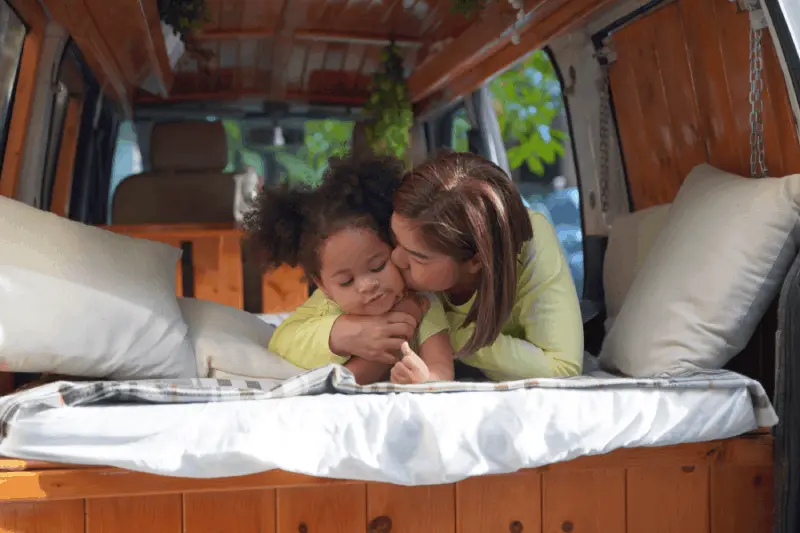
For a vehicle to be registered as "SA" body code, meaning "Special Purpose Caravan", it is legally required to have minimum equipment inside. This equipment includes a convertible or fixed bed, a dining table, storage cabinets accessible from the outside or inside, and a kitchen that provides cooking facilities. Additionally, all of this equipment must be securely fixed to the vehicle. Portable stoves or foldable beds are not accepted during license approval. Inspectors want to see that the living space inside the vehicle truly offers the comfort of a home and that it is installed in such a way that it does not move during travel.
How Does the Design of the Bed and Seating Group Affect License Approval?
The location and dimensions of the bed and seating group in the caravan project must be specified meticulously. According to standards, the bed area must be of a size that an adult can comfortably sleep. The seating group should provide an integrated structure with the dining table. If the bed is formed by folding the seating group, this must be clearly stated in the project. Additionally, if passengers will be transported in the back during travel, these seats must be approved seatbelted seats and included in the number of seats on the license. There is no seatbelt requirement for seats that will only be used while parked, but this distinction must be clearly made in the project.
What Are the Standards for Kitchen Counter and Cooking Area?
To obtain a license, there must be a kitchen area in the caravan. This area must consist of at least a sink and a fixed stove. The kitchen counter must be made of a solid material and be fixed to the vehicle body. If the stove is gas-powered, a leak-proof report for the gas installation or compliance with the project will be checked. The requirement for the sink to be connected to a waste water tank is important in terms of hygiene and environmental standards. During TSE inspections, it is checked that the stove is actually operational and positioned at a safe distance. The lack of kitchen equipment is one of the most common reasons for failing to obtain a license.
What Are the Safety Criteria for Storage Areas and Fixed Furniture?
All cabinets, drawers, and storage areas inside the caravan must have locking mechanisms. The opening of cabinet doors or the scattering of items while in motion is considered a safety deficiency. TSE experts check whether the corners of the furniture are sharp and whether the assembly is durable. The materials used in the construction of the furniture (for example, poplar plywood) must be lightweight but durable, which is a critical detail in terms of not exceeding the total weight limits of the vehicle. Each cabinet's location and volume must be specified in the project, and the assembly points must be planned in a way that does not damage the structure.
What Standards Should Caravan Ventilation Windows and Roof Hatches Meet?
The interior ventilation of the caravan is essential for both comfort and safety. During the licensing phase, it is required that the windows opened on the side panels of the vehicle have "E" approval, meaning they must comply with automotive standards. Home-type windows or unapproved plexiglass applications may not pass inspection. Additionally, having a roof ventilation (Heki) in the kitchen area for the discharge of cooking steam and possible gas leaks provides a significant advantage. If there are gas appliances in the vehicle, the presence of vents is vital. It is among the elements examined during technical inspections before licensing that the windows are installed in a way that does not compromise their airtightness and travel safety.
Electrical Installation Standards
What Documents Are Required for the Installation of the Water and Gas System?
The electrical and gas installations used in the caravan are very sensitive issues. The electrical installation must be made with appropriate fuses and cable cross-sections against fire risk and should be shown in the project's electrical schematic. In the gas installation, the use of copper pipes and the completion of a gas tightness test are required. In some cases, TSE may request a "Gas Tightness Report" obtained from an authorized service for the gas installation. If solar panel installation has been done, it is checked whether these panels are safely attached or screwed to the roof structure, and whether the wind resistance calculations are included in the project. The non-compliance of these systems with standards endangers your safety and makes it impossible to obtain a license.
Why Is the Caravan Weight Measurement and Scale Receipt Vital?
The most concrete data of the project phase is the scale receipt. After all the furniture, water tanks, and devices of the caravan are installed, the vehicle is taken to a scale. The obtained scale receipt must match the calculations in the project. The total weight of the vehicle must not exceed the "Maximum Load Weight" limit set by the manufacturer. If the weight limit is approached too closely, the number of seats in the license can be reduced (each passenger is calculated as approximately 75 kg) to maintain balance. Without a scale receipt, the engineer cannot complete the project, and TSE approval cannot be obtained. Therefore, the selection of lightweight materials is a strategic choice for the success of the licensing process.
What Awaits Caravan Owners in the TÜVTÜRK Inspection Process?
After obtaining TSE approval, the next stop is the TÜVTÜRK inspection station. Here, the vehicle undergoes "Modification Inspection." Technicians check whether the drawings in the project match the vehicle exactly. In addition to standard checks such as brake tests, lighting systems, and seat belts, the stability of the equipment in the living area is also checked. Vehicles with a caravan license must undergo inspection regularly every year (this rule can also apply to commercial vehicles even if they are in the M1 class). With the document given for the vehicle that passes the inspection successfully, you can now go to the notary and print your license.
Are the Licensing Conditions Different for Trailers Under and Over 750 Kilograms?
The legal process for trailers is divided based on weight. Trailers under 750 kg (category O1) do not require a separate license or plate; these trailers can only be taken on the road with the plate of the towing vehicle (or without a separate plate) but with a type approval certificate. Trailers over 750 kg (category O2) must have their own licenses and plates. The O2 class trailer is applied for at the notary with the COC document (Certificate of Conformity) provided by the manufacturer. Additionally, O2 class trailers are also required to undergo TÜVTÜRK inspection every year. It is very critical to consider this weight limit when purchasing a trailer, as it will also affect your driver's license class.
Is There a Limit on the Number of Seats When Transitioning from a Panel Van to a Motorhome?
Yes, the number of seats depends on both the vehicle's weight capacity and the details of the project. In a caravan converted from a panel van, a seating capacity of generally 1+1 or 2+1 is preferred. If you want to add extra seats to the back, these seats must be approved in M1 class, equipped with seat belts, and have test documents. Randomly mounted seats will not be processed in the license. Additionally, each added seat can create a risk of exceeding the weight limit due to the decrease in the vehicle's loading capacity. Carrying more passengers than the number of seats specified in the license can lead to traffic fines and insurance issues, so you should determine the appropriate number of seats at the beginning of the project according to your needs.
How Are Caravan Insurance and Comprehensive Insurance Processes Carried Out After Obtaining a License?
After the licensing procedures are completed and the type of your vehicle is changed to "Special Purpose Caravan," you need to update your traffic insurance. There may be premium differences between truck insurance and caravan insurance. More importantly, you should obtain caravan comprehensive insurance. A standard vehicle comprehensive insurance does not cover the expensive equipment inside the caravan (solar panel, lithium battery, refrigerator, etc.). By presenting your license to your insurance agent, you should add "caravan equipment value" to your policy. This will also secure your investments in the living area in case of an accident or theft. Driving without insurance or with incorrectly registered vehicles poses a significant risk.
What Is the Legal Process for Converting Disabled Vehicles into Caravans?
The process of converting a disabled vehicle purchased with an ÖTV exemption into a caravan before the 5-year period expires is quite complex and costly. If the 5-year period has not expired, the tax office may request the return of the exempted ÖTV for the conversion to be considered as "modification." However, after the 5-year period has expired, the vehicle can be converted into a caravan like a standard vehicle since the annotation on the vehicle is lifted. Caravan projects that include special lifts or ramps suitable for the use of disabled individuals can also be approved by TSE. In this case, the project must be detailed as "special purpose transport suitable for disabled access," and special calculations must be made by the engineer.
What Is the Total Cost and Duration of Obtaining a Caravan License?
As of the 2024-2025 period, the cost of obtaining a caravan license consists of project drawing fees, TSE approval fees, scale fees, TÜVTÜRK modification inspection, and notary license printing fees. This total cost can vary approximately between 15,000 TL and 25,000 TL (assuming no ÖTV difference arises in some vehicles). The process takes about 7 to 15 working days from the drawing of the project to the obtaining of the license when working with a professional team. For those doing it on their own, this duration may extend due to missing documents or technical errors. It is advisable to plan ahead and seek expert advice to save time. and helps you save on unnecessary expenses.
Does the driver's license class need to change after obtaining a caravan license?
Obtaining the license only changes the status of the vehicle, but who can use this vehicle depends on the driver's license class. If your motorhome has a maximum weight of under 3,500 kg (which is the case for most panel vans), a Class B license is sufficient. However, if the weight is over 3,500 kg (some large bus and truck conversions), a Class C or C1 license may be required. For trailers, the situation is different; if you are towing a trailer over 750 kg (Class O2), you must add "BE" to your existing Class B license. Using an incorrect license to drive a caravan can lead to vehicle attachment and heavy fines, so you must pay attention to the weight value in your license.