How to Plan a Safe Route Before Solo Camping?
The first rule of solo camping is to determine exactly where you are going and how long you will stay there. Safe route planning starts with examining the topographic maps of the area. You should not only know the popular routes but also the alternative exit paths and water sources in the area beforehand. In addition to digital maps, learning to use a physical map and compass can save your life when your devices run out of battery. While making your plan, you should realistically assess your physical condition and seasonal conditions, and avoid routes that will overly challenge you.
What Should Your "Emergency Plan" That You Leave to Your Loved Ones Include?
Before heading out alone, leaving a detailed plan with someone you trust is your most important safety insurance. This plan should include your exact camping coordinates, your vehicle's license plate and model, the exact time you plan to turn back, and how long after that you should notify search and rescue teams. Additionally, you should include a list of the equipment you are carrying and any potential health issues (allergies, medications, etc.) in this document. If you are not heard from at the designated time, knowing where to look can save vital seconds for the teams.
What is "Stealth Camping" When Camping Alone?
Stealth camping is a security strategy based on ensuring that the place you are camping is not noticed by others. It is practiced especially in remote areas to avoid unwanted attention from malicious individuals or curious eyes. In this method, naturally hidden areas away from main roads and trails are chosen. Equipment that blends in with nature (green, brown) is preferred over brightly colored tents. Instead of making a fire, small stoves that operate discreetly are used. The goal is to leave no trace in nature and to spend the night safely without revealing your presence to anyone.
How Should the Campsite Layout Be Against Wildlife Threats?
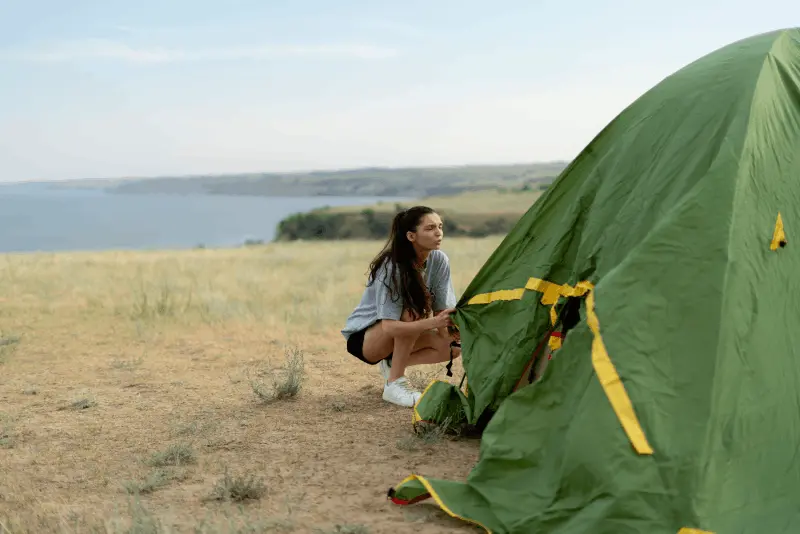
When setting up your campsite, applying the "Bear Triangle" rule minimizes interactions with wild animals. According to this rule, the place where you sleep, the place where you cook, and the place where you store your food should be located at least 70-100 meters apart and arranged to form a triangle. To prevent food odors from permeating your tent, you should cook with the wind blowing in the opposite direction. Storing your trash and food in odor-proof bags or special containers is the most effective method to prevent uninvited guests from approaching your tent at night.
How to Properly Use Bear Spray and Similar Defense Tools?
When camping alone, it is important not only to have defense tools with you but also to know how to use them. Bear spray should be used as a last resort when you encounter an aggressive animal and should always be kept in an easily accessible holster. Before using the spray, you should calculate the direction of the wind and spray in a way that creates a cloud in front of the animal's feet, not directly at its nose. Other defense tools (loud whistles, horns, etc.) are more effective and safer initial options to deter animals from a distance.
What Are the "Early Warning Systems" That Increase Personal Safety in the Campsite?
It is difficult to notice what is happening around you while sleeping alone. You can enhance your safety by setting up simple but effective early warning systems. Small bells or empty metal cans tied to a thin fishing line stretched around your tent can alert you if someone or an animal approaches your campsite. Additionally, battery-operated and motion-sensor LED lights can turn on when they detect an approaching object, alerting you and scaring off any nearby wildlife. These low-cost solutions can help you sleep more comfortably psychologically throughout the night.
What Measures Are Taken to Ensure Tent Safety Throughout the Night?
Instead of completely isolating yourself while sleeping in the tent, you should maintain your environmental awareness. Always keep your tent door fully closed but leave ventilation openings open enough to hear sounds. Always have a powerful flashlight, a knife, and bear spray at your head. Either bring your shoes inside the tent or do not wear them without checking the insides if you are leaving them outside. Most importantly, set up your tent entrance facing a more enclosed and strategic direction rather than the path or open area to optimize your visibility at night.
Why Do Social Media Posts Pose Risks When Camping Alone?
While sharing instantly may seem appealing in the technological age, sharing your location in real-time while solo camping creates a significant security vulnerability. Knowing exactly where you are can make you a defenseless target for malicious individuals. Therefore, you should make it a rule to share your photos and videos only after you have completed your camping and returned to a safe location. If you must share, you should avoid specifying your location and ensure that no obvious natural signs that reveal where you are are visible in the background.
What Technologies Are Used to Track Weather Changes?
The weather in nature can change within minutes, and being caught in a sudden storm while alone can be dangerous. Instead of relying solely on phone applications, using sports watches that can measure barometric pressure can help you anticipate approaching storms in advance. Additionally, accessing the internet...
Devices that can receive weather forecasts via satellite (like Garmin InReach) are your most reliable technological companions in remote areas. Learning to read cloud formations in the sky is an ancient safety method you can use in addition to technology; because nature always gives you signals.What Are the Critical Items That Should Be Found in a First Aid Kit for Solo Campers?
Standard first aid kits are generally for group use; solo campers need special items that they can use to intervene on their own. Your kit should definitely include a quality tourniquet that you can apply with one hand, hemostatic sprays, splints in various sizes, and broad-spectrum antibiotic ointments. Additionally, a backup of your personal medications, strong pain relievers, and electrolyte powders are also vital. Since an infection from a wound or a simple sprain can turn into a major problem when you are alone, you should practice using medical supplies in advance.
How to Create an Evacuation Plan in Case of Injury While Alone?
Panic during an injury is your biggest enemy. In the case of an ankle sprain or a fall, first calm down and assess your situation, then activate your "Evacuation Protocol." If you can move, slowly proceed to the nearest safe point; if you cannot move, you should use your emergency signaling devices (mirror, whistle, satellite device). Your evacuation plan should always have a "Plan B." Determining in advance where you will call for help (for example; if your water is about to run out or if you haven't moved for 24 hours) will facilitate your decision-making process and prevent you from making wrong decisions.
What Should Be the Safety and Purification Methods for Water Sources?
A waterborne illness while camping alone can leave you completely defenseless. No matter how clean a stream looks, it may contain microscopic parasites or bacteria. Therefore, you should always have two different water purification methods with you (for example; a filter and purification tablets as a backup). When collecting water, you should prefer locations away from animal crossing paths and settlements. Since being dehydrated will impair your decision-making ability, you should mark the water sources on your map along your route and never deplete your water supply to the last drop.
How to Overcome the "Camp Fear" That Comes with Being Alone?
Known as "Night Scares," this fear is the most common psychological barrier faced by solo campers. It is a normal evolutionary response to perceive every sound heard at night as a threat. To overcome this, you should focus on rational thinking. Remind yourself that the sounds you hear are most likely the wind, small rodents, or branches. Reading a book or listening to pre-downloaded music (without completely shutting out the outside world) can help distract you. Over time, you will get used to the sounds of nature and start to distinguish which ones are normal and which are abnormal.
What Are GPS Tracking Devices and Satellite Phones?
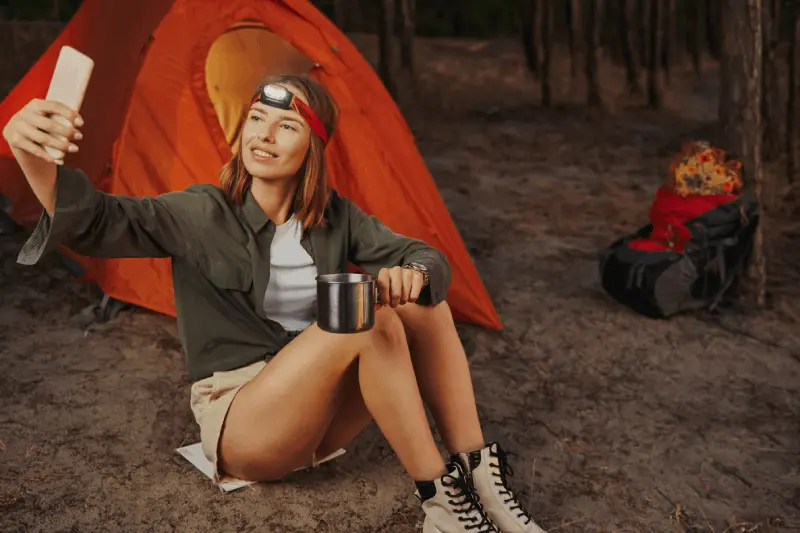
In areas where the phone network does not reach, satellite communication devices are not a luxury but a necessity. These devices allow you to send your coordinates from anywhere they can see the sky and send SOS messages in emergencies. Some models allow your family to track you live on the map. When using these devices, you should only turn them on when necessary to preserve battery life or keep charging methods like solar panels with you. Investing in a satellite device ensures that you have a lifeline even in the worst-case scenario that could happen in nature.
What Are the Risks of Starting a Fire in Terms of Safety and Visibility?
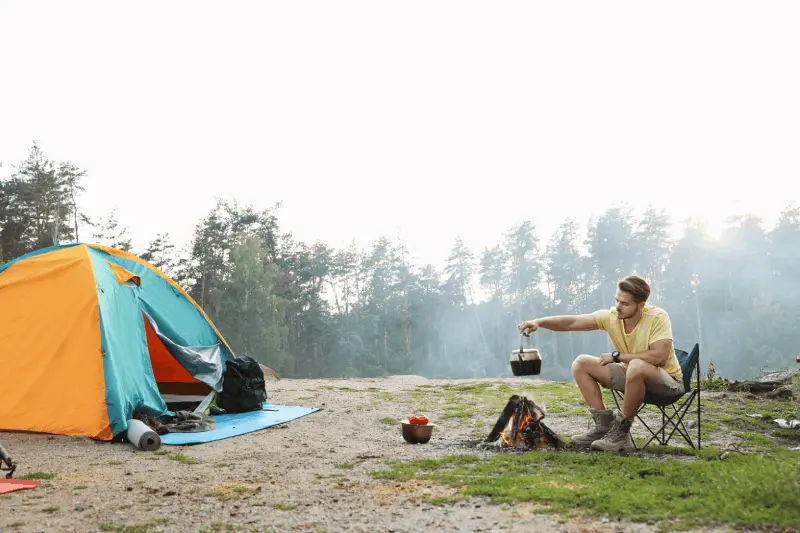
A campfire is great for warmth and keeping wild animals away; however, it also brings some risks when camping alone. A very large fire can make you noticeable from miles away, which is contrary to your stealth strategy. Additionally, when sitting by the fire, your eyes cannot adjust to the darkness, and you cannot see the dangers around you. You should always keep your fire at a manageable size and ensure it is completely extinguished before sleeping. During periods when there is a risk of forest fires, it is safest to use only a headlamp instead of starting a fire.
What Are the Safe Use Rules for Camping Knives and Multi-Tools?
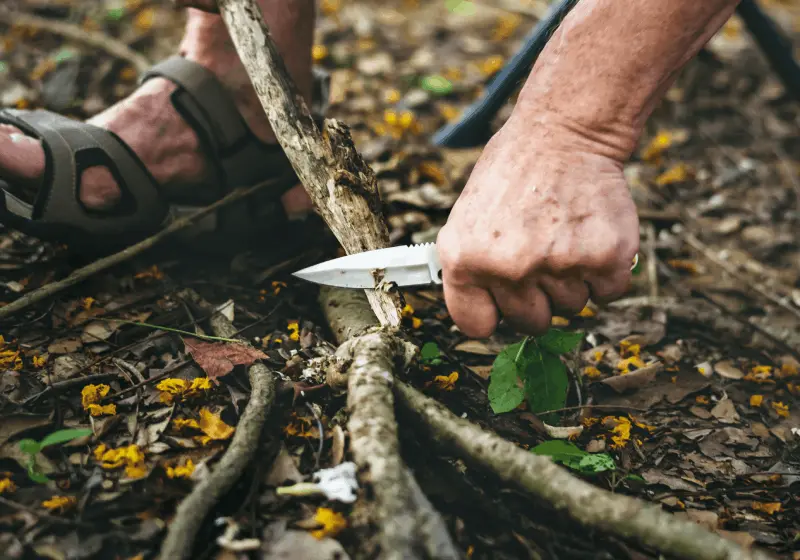
A cut while alone in nature poses serious risks in situations where reaching a hospital is difficult. When using a knife, always make cuts away from yourself and adhere to the "safety circle" rule (there should be no one or obstacle within reach of the knife). You should avoid working with cutting tools when you are tired or when visibility is poor. Remember that your knife should always be sharp; because a dull knife requires more force and increases your risk of losing control. When you are done, always put your knife back in its sheath.
Is a Vehicle-Top Tent or a Ground Tent Safer?
This choice entirely depends on the risks of the area where you will be camping. Vehicle-top tents provide better protection from insects and some wild animals (like coyotes, wild boars, etc.) due to their height above the ground. They are also insulated from moisture and cold from the ground. However, in case of danger, it may be difficult to quickly pack up and escape the area with the vehicle. Ground tents offer better concealment (stealth) and make it easier to jump out of the tent and escape in an emergency. Solo camping As a camping method, you should choose the one that feels safest to you according to the local wildlife and human density.
What Extra Safety Measures Can Be Taken for Solo Female Campers?
Solo camping for women can be an extremely safe and enjoyable experience when proper precautions are taken. One of the most effective tactics for safety is to create the impression that you are "not alone" at the campsite. Leaving large men's boots at the entrance of your tent or having two chairs outside are simple yet deterrent methods. When you encounter a stranger, saying that your friends are a little further back and will be here soon (a white lie) creates a safe protective shield. Most importantly, trust your instincts; if a place or a person does not make you feel safe, leave immediately without questioning why.
Why Is It Important to Know the Hunting and Fishing Calendar in the Area?
Knowing whether the hunting season is open in the area you are going to prevents you from accidentally entering a hunting route. If you are camping during hunting periods, you should definitely wear bright colors (orange or fluorescent yellow) and use tent covers. This prevents hunters from mistaking you for game. Additionally, areas where fishermen are concentrated mean there will be a lot of human interaction. If you are looking for peace and quiet as a solo camper, by checking these calendars, you can ensure your safety and discover more isolated and calm areas away from crowds.
How to Maintain "Safe Distance" When Encountering People at the Campsite?
The people you encounter in nature are generally helpful and friendly, but it is important to remain cautious. Avoid revealing the exact location of your tent when talking to a stranger. Appear confident and assertive with your body language, but do not be aggressive. If someone wants to set up their tent very close to yours and you feel uncomfortable, quietly pack up your camp and move to another location. Safe distance is not only physical but also informational; not giving too many details about your plans is one of the unwritten safety rules of solo camping.
How Does Sleeping Bag and Mat Selection Affect Your Safety?
Safety is not only about external threats but also about protecting yourself from the harsh conditions of nature. Choosing the wrong sleeping bag can put you at risk of hypothermia at night. Ensure that the "comfort" rating of your sleeping bag is at least 5-10 degrees lower than the expected lowest temperature. A quality mat prevents your body heat from transferring to the ground by cutting off contact with it. A tired and sleepless camper struggles to notice dangers and make quick decisions. Therefore, a quality sleeping system is actually a fundamental piece of equipment that protects your mental sharpness and overall safety.
What Precautions Should Be Taken Against Poisonous Plants and Insect Bites?
In solo camping, a small tick bite or contact with a poisonous plant can turn your entire trip into a nightmare. Do a brief research before you go to recognize the poisonous plants in the area (such as poison ivy, giant hogweed, etc.). Use repellents containing DEET to protect against ticks and mosquitoes, and tuck your pant legs into your socks. Check your body for ticks every evening. If you have an allergic body, always carry an epinephrine auto-injector or strong antihistamines with you. The rule of "don't touch, don't eat what you don't know" in nature is a fundamental pillar of your biological safety.
How to Identify Areas at Risk of Flooding and Landslides?
The geographical structure of the place where you will set up camp determines your safety against natural disasters. Dry riverbeds, although flat and attractive, are the most dangerous places for sudden flooding that can be caused by a rainstorm miles away. The base of steep slopes carries the risk of landslides and rockfalls. The safest camping spots are flat areas that are sheltered from the wind, slightly elevated, and at least 50 meters above the water level. Learning to read past flood marks from the color of the soil or vegetation cover is a very valuable skill that will protect you from nature's unpredictable hazards.
What Supplies Should Be Included in a "Survival Kit" for Solo Camping?
You should carry a small "backup kit" in case your main equipment breaks down or gets lost. This kit should include a backup fire starter (magnesium rod), a small amount of duct tape (for repairs), spare batteries or a power bank, an emergency blanket (thermal foil), and high-calorie energy bars. This kit should always be on you, in your pocket, or in your waist bag; if you lose your bag in a river crossing or need to escape quickly from your tent, this small kit will ensure your survival. Backing up doubles your chances of survival in solo camping.
What Is Mental Preparedness and the "Stop-Think-Observe-Plan" (STOP) Rule?
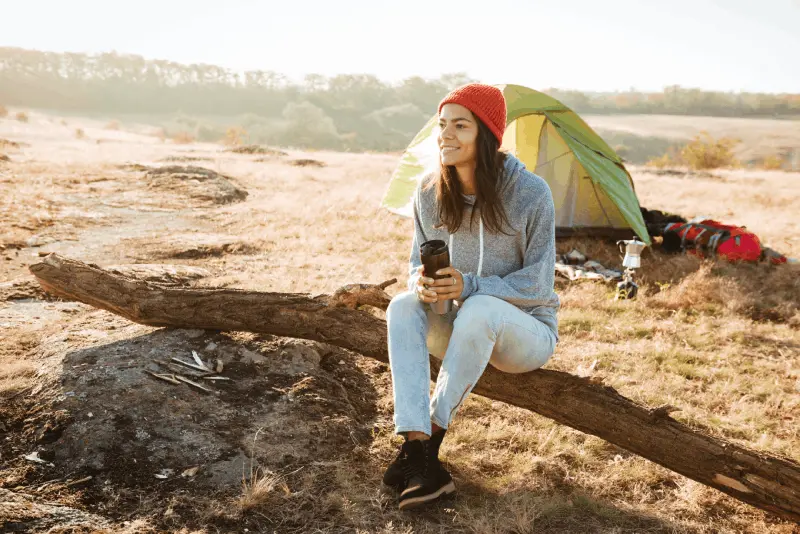
The biggest danger when you encounter a problem in nature is panic. The "STOP" rule (Sit, Think, Observe, Plan) helps you take control of your mind. When something goes wrong, first sit down (S), take a deep breath, and calm down. Think about the situation logically (T). Observe the opportunities and dangers around you (O). Finally, make a plan by determining the safest exit route (P). This discipline is the strongest defense mechanism for solo campers. A mentally prepared person can make the right decisions and survive even in the toughest situations.
How to Store Food at the Campsite and Use a "Bear Canister"?
Simply putting your food in a bag and leaving it outside your tent invites wild animals to your camp. In areas where bears are common, using "Bear Canisters" made of hard plastic that do not leak odors and cannot be opened by animals is essential. It is runny. If you do not have such a box, you should put your food in a backpack and hang it on a branch at least 4 meters high from the ground and 2 meters away from the tree trunk (the moon hanging method). Remember, not only food; scented cosmetics such as toothpaste, sunscreen, and deodorant are also attractive to animals.
How Should the Strategic Use of Lanterns and Light Sources Be?
Light is both a friend and an enemy of nighttime safety. Using a very powerful light continuously disrupts your night vision and makes you noticeable from very far away. Try not to use light unless necessary. Using the "red light" mode on your headlamp does not disturb your eyes' adaptation to darkness and prevents insects from being attracted to the light. However, if you feel threatened, having a very high-lumen flashlight (with strobe mode) ready at hand can be an effective defense tactic to temporarily blind the aggressor. Strategically using light provides an advantage in the dark.
What Steps Should Be Taken If You Get Lost Alone?
As soon as you realize you are lost, you should stop. Moving further usually leads to getting more lost and makes it harder for teams to find you. If you are on a trail, do not leave it. If it is getting dark, set up camp where you are and conserve your energy. To increase your visibility, move to an open area, wear bright clothing, or use a signal mirror. If you have a whistle with you, regularly blow the international distress signal of "three short, three long, three short" (SOS). Remember, staying still is often the smartest move to increase your chances of being rescued.
Is It Necessary to Inform Local Law Enforcement?
If you are going to camp in very remote or national park areas, it is a very good safety measure to inform the local station or forest protection office. Telling them when you will enter and when you will exit makes it easier to reach professional help if a problem arises. Additionally, local officials can provide you with information not available on maps about current wildlife activity or the status of water sources during that time. This communication makes you an "officially recorded" visitor in that area and ensures you gain priority if a search and rescue need arises.
Is Leaving a Second Pair of Shoes at the Tent Entrance a Security Tactic?
This is a psychological defense tactic popular among solo campers. Leaving a pair of large, muddy boots outside the tent creates the perception in someone looking from outside that "there are multiple people inside" or "there is a strong person inside." Similarly, leaving two camp chairs outside or talking as if someone is next to you during dinner (even if it seems a bit strange) can also be deterrent. Malicious individuals typically choose easy targets; making your campsite appear crowded or prepared can help prevent risky situations before they even start.
What Hygiene Rules Should Be Followed to Prevent Food Poisoning While Solo Camping?
Severe nausea and weakness while you are alone can leave you completely defenseless. For food safety, carry non-perishable (vacuum-sealed or dehydrated) foods with you. Always clean your cooking equipment after each use, but do this away from water sources. Clean your hands frequently with alcohol-based sanitizers. Never let raw foods come into contact with cooked foods. If you suspect the smell or appearance of a food, do not consume it, even if you are hungry. A healthy stomach is as critical for the continuity of solo camping as your equipment.
How Should You Behave in a Tent Under the Risk of Lightning Strikes?
In stormy weather, lightning poses a significant risk for campers in open terrain. If the time between the thunder and lightning is less than 30 seconds, you are in danger. Never camp under a tall, solitary tree. If you are on a ridge, move to a lower point immediately. While inside the tent, stay away from metal poles and wait by crouching with your feet touching (lightning position) on your mat. If you are near a vehicle, getting inside the vehicle is the safest option because the metal body of the vehicle acts as a Faraday cage, directing the current to the ground.
How Can the Risk of Hypothermia Be Reduced While Camping Alone in Winter?
Safety in winter camping is entirely about maintaining body heat. Remember the "cotton kills" rule and prefer synthetic or wool (merino) clothing that wicks moisture away. Getting wet is your biggest enemy in winter; you should change your clothes as soon as you start sweating. Drinking something warm before getting into your sleeping bag and placing a water bottle filled with warm water inside the bag will help you stay warm throughout the night. As soon as you notice the first signs of hypothermia, such as severe shivering, confusion, and drowsiness, you should end your camp and head to a place where you can warm up immediately.
How to Distinguish Between Local Legends and Real Dangers About the Area?
Information you hear from forums or locals about the place you are going can sometimes be exaggerated. However, you should take warnings from locals seriously, such as "there are too many wild boars in that area" or "this trail is very slippery." Set aside legends and horror stories and focus on the concrete data of the area: crime rates, wildlife statistics, and geographical risks. To filter out misinformation, review official park protection sites and reports from professional distribution groups. Focusing on real dangers helps you avoid unnecessary fears and make safer decisions.
What is the "Safety Assessment" That Should Be Done After the Solo Camping Experience?
Safety is an ongoing learning process. After your camping trip ends and you return home, you should evaluate the challenges you faced and the performance of your equipment critically. In which moments did you feel insecure? Which equipment have you never used, or which equipment was insufficient? This "art-crit" (evaluation) process will ensure that you are much better prepared for your next solo adventure. Learning from your mistakes will transform you into an experienced and professionally prepared solo camper ready for any situation. A safe camp always ends with being better prepared for the next one.