Why is Caravan Refrigerator Efficiency the Heart of Energy Management?
In caravans, energy is typically supplied by solar panels and battery banks with limited capacity. Among the devices that draw the most current in this system, the refrigerator comes first. An inefficient refrigerator not only leads to food spoilage but also causes batteries to drain quickly and can result in other vital systems inside the caravan (lighting, water pump, heating control units) becoming inoperative. An efficient usage strategy can optimize energy consumption by 30% to 50%. This means that especially for those camping "off-grid" or independently from the grid, it allows for a longer duration in nature. The frequency with which your refrigerator's compressor kicks in, its struggle with ambient temperature, and the circulation of cold air inside are factors that directly determine your caravan's overall energy balance.
What is the Logic Behind Pre-Cooling 24 Hours Before Starting Your Journey?
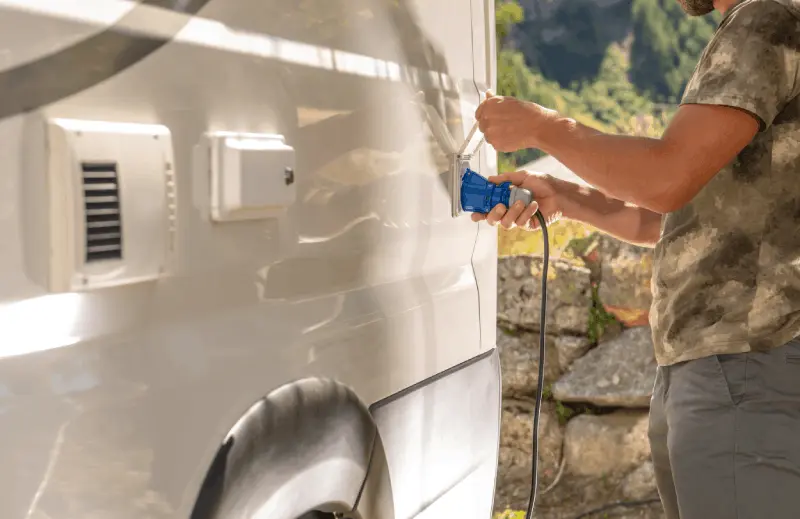
One of the biggest mistakes many caravaners make is turning on the refrigerator just before hitting the road and filling it with products at room temperature. When the refrigerator is empty and at room temperature, it consumes maximum power to cool the air inside and its walls. It is advisable to run the refrigerator at least 24 hours before starting your journey, preferably while connected to 220V city electricity from outside, to establish the device's thermal balance. This way, the device reaches the target temperature without using your battery resources. Additionally, pre-cooling the drinks and foods you will put in the refrigerator at home before transferring them to the caravan reduces the "thermal load." Moving a cold box to a cold environment prevents the refrigerator compressor from unnecessarily straining and consuming energy in the first hours. This strategy is a critical saving method, especially for those planning to travel on hot summer days.

Where Does the Efficiency Difference Between Thermoelectric, Compressor, and Absorption Systems Come From?
There are three main refrigerator technologies used in caravans, each with different efficiency characteristics. Compressor refrigerators (usually 12V/24V) are the closest technology to household refrigerators; they cool very quickly and maintain their performance independently of ambient temperature. They are the most energy-efficient. Absorption systems (three systems: gas, 12V, 220V) are silent because they have no moving parts, but their cooling efficiency is lower and they require leveling. Thermoelectric coolers are not actually real refrigerators; they can only lower the external ambient temperature by 15-20 degrees and are the weakest link in terms of efficiency due to their continuous high current draw. If you want to increase efficiency, you should know the limits of your technology and create a usage plan accordingly. In a compressor system, the thermostat setting is more flexible, while in an absorption system, ventilation and leveling are more important than anything else.
How Does the Shelf Arrangement Inside the Refrigerator Optimize Airflow?
Unlike household refrigerators, caravan refrigerators are generally smaller in volume, and the tendency to maximize this space can block air circulation. Cold air sinks while warm air rises. If you cover the shelves with plastic covers or place foods too closely together, you disrupt this natural cycle. This can cause some sections of the refrigerator to freeze while others remain warm. For ideal efficiency, there must be gaps between foods, and air channels should not be blocked. Especially, the front of the cooling grilles (evaporator) on the back panel should be kept clear. Keeping foods in thin packages instead of storage containers and placing heavy/dense items (like meat, dairy) on lower shelves increases thermal stability. When air can circulate freely inside, sensors detect the actual temperature more accurately, and the compressor does not run unnecessarily.
How Does the Loss of Shape in Door Seals Reflect on the Energy Bill?
Since caravans are constantly in motion, vibrations, dust, and temperature changes can cause door seals (gaskets) to harden or crack over time. When a seal leaks, warm and humid air from outside enters, while the valuable cold air inside escapes. This leads to the refrigerator constantly "trying to cool the inside" and the motor running continuously. You can test the integrity of the seals with a simple "paper money test"; place a bill between the door when closing it and try to pull it out. If the bill comes out easily, the seal is not functioning properly. Leaky seals not only cause energy loss but also bring about excessive frosting (icing) issues. The ice layer acts as an insulator, further reducing cooling performance. Therefore, regularly cleaning the seals, applying a softener to maintain flexibility, and replacing them if necessary is the cheapest efficiency investment.
How Does Not Leveling the Caravan Disrupt the Refrigerator's Cooling Cycle?
For caravaners using absorption (gas/electric) system refrigerators, the "leveling" issue is a vital technical detail. These refrigerators operate on the principle of heating an ammonia-based liquid to vaporize it and then re-condensing it. If the caravan is on an uneven surface, this liquid cannot flow correctly in the pipes within the system and accumulates at certain points. This can completely stop the cooling cycle or reduce efficiency by up to 80%. Although compressor refrigerators are more tolerant of unevenness, they can experience oil displacement issues due to the oil inside the compressor shifting at extreme angles. Ensuring that your caravan is parked level with the help of a spirit level is not only for your comfort but also a necessity for the healthy operation of your refrigerator. A refrigerator that is operated continuously may suffer permanent damage and may never regain its cooling performance.
Is it Really Necessary to Add an Extra Fan to the External Ventilation Grills?
Refrigerators work by taking heat from inside and expelling it outside. In caravans, this heat expulsion is usually done through the lower and upper ventilation vents on the outside wall of the caravan. However, during hot summer months, natural airflow may be insufficient to expel this heat. As the heat behind the refrigerator increases, the efficiency of the device geometrically decreases. At this point, a small thermostatic 12V fan attached to the upper vent actively vacuums out hot air, allowing the system to breathe. This method is a modification that significantly increases efficiency, especially for those traveling in hot climates. Having the fan connected to a thermostat switch ensures that it only operates when needed, saving much more energy than it consumes for the refrigerator saves energy. The most common reason for the refrigerator not being able to cool the interior, despite the compressor running continuously, is when the heat behind the refrigerator exceeds 40 degrees.
How Does the Fluctuation of Current from Solar Panels Affect Compressor Life?
Caravan refrigerators are designed to operate under stable voltage. On a sunny day, the voltage can rise to 14.4V while charging from the panels, and at night it can drop to 12.0V or lower. Excessive voltage drop causes the compressor to struggle at the moment of startup and draw high amperage. This situation shortens the life of the compressor and reduces energy efficiency. A quality MPPT charge controller and a battery bank with sufficient capacity regulate the voltage, ensuring the refrigerator operates more "peacefully". If your refrigerator has low voltage protection, it will shut itself off when the voltage drops; this poses a risk of food spoilage. Proper calculation of the cable cross-sections in your energy system is critical to minimize voltage drop. Poorly sized cables cause resistance, leading to energy being converted to heat and a decrease in voltage reaching the refrigerator, which is one of the hidden causes of inefficiency.
Does Defrosting Frozen Products in the Lower Compartment Save Energy?
This method is an extremely clever DIY efficiency strategy based on the principle of "passive cooling". If there is frozen meat or a block of ice in the freezer compartment and you plan not to use it, instead of taking it out directly, lower it to the normal compartment of the refrigerator one day in advance. As the frozen product defrosts, it releases coldness around it, helping to lower the internal temperature of the refrigerator. During this process, the thermostat of the refrigerator will sense that the interior is already cold, causing the compressor to cycle less frequently. In other words, you will be using the energy of your food for cooling purposes. Similarly, instead of leaving the freezer compartment empty while traveling, placing the ice packs you froze at home there will give the refrigerator a "cold reserve". These ice packs help balance energy consumption by supporting the system during the hours when the sun is at its peak and the refrigerator is under the most strain.
Why Does the Refrigerator Start to Struggle When Ambient Temperature Exceeds 35 Degrees?
Every refrigerator has a "climate class", and most devices lose efficiency in extreme heat. The insulation on the outside surface of the refrigerator works to prevent outside heat from seeping in; however, when the internal temperature of the caravan reaches 35-40 degrees, this insulation begins to become insufficient. Heat transfer is directly proportional to the temperature difference between the inside and outside. The hotter it is outside, the more heat seeps inside. Additionally, for the condenser behind the refrigerator to release heat into the air, the air must be cooler than the condenser. If the ambient air is too hot, the condenser cannot expel heat, and the refrigerant in the gas phase cannot condense into liquid. This means the cooling cycle is broken. To prevent this situation, passive cooling methods such as parking the caravan in the shade, protecting the outside wall where the refrigerator is located from the sun (using an awning), or installing sunshades on the windows should definitely be applied.

How Do Dust Accumulations Behind the Refrigerator Prevent Heat Expulsion?
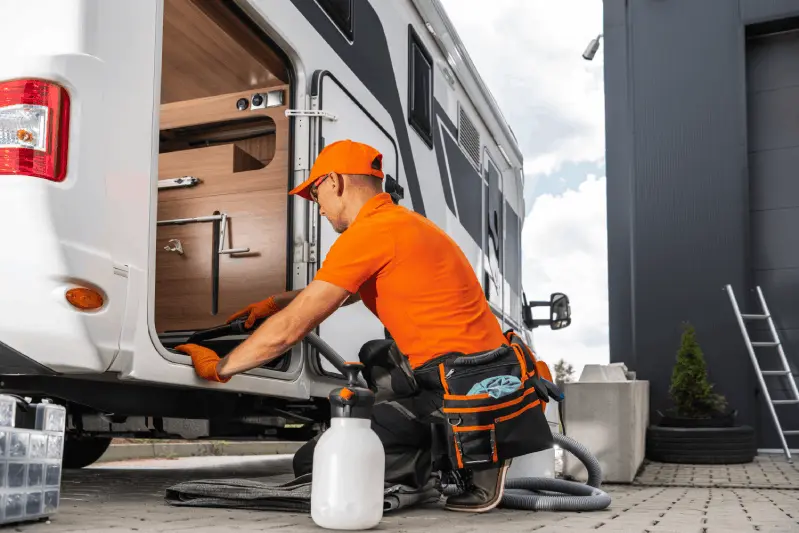
Caravan refrigerators are mounted in enclosed and narrow spaces; this creates an ideal environment for dust accumulation. The wire grills (condenser) and compressor unit behind the refrigerator can become covered with dust, dirt, and spider webs over time. Dust is a great insulator. When the condenser is covered with dust, it becomes difficult for the heat carried from inside to be expelled into the air. This situation causes the device to operate for much longer and with higher power to achieve the same cooling. Opening the refrigerator ventilation vents at least once a year and cleaning this area with a vacuum cleaner or compressed air brings the device's efficiency back to its original level. A clean condenser means faster heat expulsion and shorter operating cycles. A simple cleaning operation can significantly reduce your energy consumption while extending the life of the refrigerator.
How Does Using Lithium Batteries Improve the Night Performance of the Refrigerator?
Traditional gel or flooded batteries lose their voltage when they drop below their capacity. A gel battery drops to 12.1V when it is 50% discharged, and at this level, a refrigerator compressor... It struggles when starting up. Lithium (LiFePO4) batteries provide a very stable voltage of around 12.8V - 13.0V up to 90% of their capacity. This high and stable voltage ensures that the refrigerator operates at maximum efficiency even during the hours when it does not receive support from solar panels, i.e., throughout the night. The compressor completes its task by cooling faster at a stable voltage and then switches to sleep mode. Additionally, lithium batteries can handle sudden "inrush" currents (starting current) drawn by the compressor without experiencing voltage drops. If you want to enhance the efficiency of the refrigerator in your caravan hardware-wise, the most logical upgrade is to convert the battery system to lithium. This is a step that elevates the overall efficiency and reliability of the system to the highest level.
How Does the Entry of Hot Foods into the Refrigerator Disrupt Internal Temperature Balances?
Putting a pot of hot food into the refrigerator means an energy disaster in a confined space like a caravan. Hot food not only lets its own heat inside but also increases the humidity inside by evaporating. This humidity quickly freezes on the cooling coils, causing "frosting." The resulting ice layer creates a barrier that reduces cooling performance. Furthermore, the sudden rise in internal temperature increases the risk of spoilage for other sensitive foods (milk, cheese). It is best to wait for the food to cool to room temperature before placing it in the refrigerator, or if possible, cool it in a bowl of water. In the caravan lifestyle, where every watt of energy is valuable, utilizing the cooling power of the environment (air) instead of straining the batteries to cool a pot of food is a fundamental DIY efficiency rule. Being patient is the easiest way to maintain your caravan's energy balance.
What Strategies Should Be Followed to Reduce the Duration of Keeping the Refrigerator Door Open?
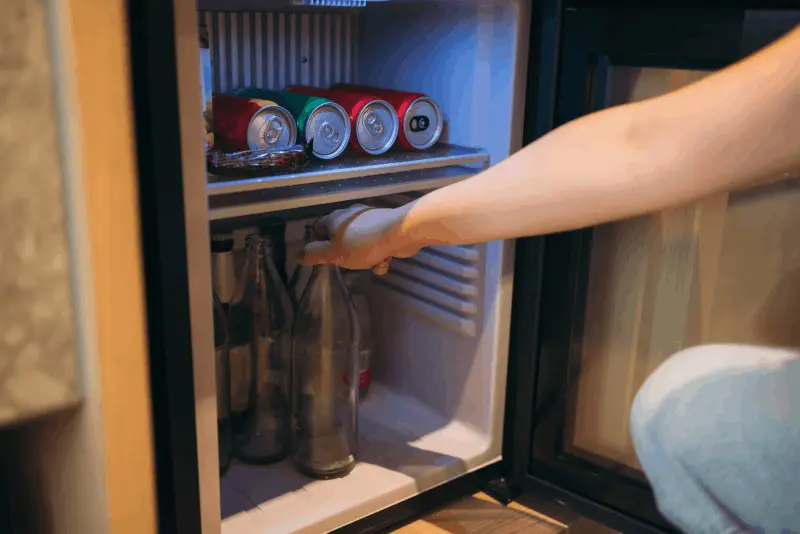
Every time the refrigerator door is opened, heavy and cold air spills out, and warm, humid air from outside fills its place. Keeping the door open for 30 seconds can cause the refrigerator to work for 15-20 minutes to regain the cold it lost. It is important to open the door "knowing what you are going to take" to increase efficiency. Many experienced campers categorize and place items inside the refrigerator. For example, breakfast items stay in a single storage container; this way, instead of searching for cheese or olives one by one, you can take the box out at once and close the door immediately. Additionally, placing the most frequently used items (water, milk) on the shelves inside the door ensures quick access to what you are looking for. Some campers keep a list on the door to note where everything is inside. This may sound excessive, but it is a very effective method in terms of energy savings and compressor health.
Why Do Gas-Powered Absorption Refrigerators Provide the Highest Efficiency?
Three-system (absorption) refrigerators can operate on 12V, 220V, and LPG. However, technically, they provide the highest cooling performance in gas mode. The reason for this is that the heat generated by the gas flame is much denser and more stable than the heat provided by a 12V resistor. The 12V mode is generally used only during driving, when the batteries are powered by the alternator, to "maintain cooling"; it is not expected to perform actual cooling. If there is no external electricity (hook-up) at the campsite, running the refrigerator in gas mode provides the highest cooling performance and completely drains your batteries. However, for efficiency in gas mode, the cleanliness of the combustion chamber, known as the "burner," is very critical. A sooty burner cannot produce heat efficiently, and cooling performance decreases. Regular chimney and burner cleaning should be at the top of the efficiency agenda for absorption system users.
Does Closing the Winter Vent Covers of the Refrigerator Increase Efficiency?
Most campers think that the efficiency of the refrigerator is only related to cooling; however, efficiency can also decrease in extreme cold. In winter camps, when the outside temperature drops below zero, the ventilation gap behind the refrigerator gets excessively cold. This situation can prevent the refrigerant (ammonia) from entering the proper cycle in absorption systems or can lead to excessive condensation in compressor systems. Therefore, it is recommended to use "winter covers" placed over the external vents during the winter months. These covers do not completely block airflow but prevent excessive cooling of the area behind the refrigerator, ensuring that the device remains within its ideal operating temperature. Additionally, they prevent strong winds from outside from filling the back of the refrigerator and disrupting thermal balances. Adjusting ventilation capacity according to the season is a fine adjustment for high efficiency throughout the year.
Are Mini Fans Used to Distribute Cold Air Inside Effective?
Since the internal volume of caravan refrigerators is small, cold air is not always distributed evenly. Areas close to the freezer section freeze while the door shelves may remain warm. The "fridge fans" powered by batteries or 12V produced to solve this problem are quite effective in increasing efficiency. These small fans ensure that the air inside circulates continuously, distributing the cold evenly to every corner. This way, the thermostat can measure the overall temperature inside more accurately, and the device does not have to operate at the highest setting unnecessarily. Additionally, air circulation delays the concentration of moisture at certain points, preventing ice formation (frosting). The effect of these fans is more noticeable, especially when the refrigerator is very full. These simple, inexpensive devices with negligible energy consumption are a great DIY solution to increase internal efficiency.
What is the Relationship Between the Refrigerator's Fill Rate and Thermal Mass?
An empty refrigerator is not an efficient refrigerator. Every time you open the door, cold air escapes from the empty space, and warm air fills its place. However, when the refrigerator is full, the food inside acts as a "thermal mass" (cold reservoir). Solid and liquid substances that are cold retain their cold much better than air. Even if the air changes when you open the door, the cold remains more stable. Cold foods prevent the rapid rise of heat inside. If your refrigerator is very empty, filling the empty spaces with water bottles increases thermal stability. However, balance is very important here; overfilling the refrigerator to the point of completely blocking airflow reduces efficiency, while keeping it reasonably full ensures the compressor runs less frequently. The principle that "a full refrigerator is like a battery that traps energy within itself" is a golden rule for energy savings in caravan life.
How Does Lowering the Thermostat Setting at Night Extend Battery Life?
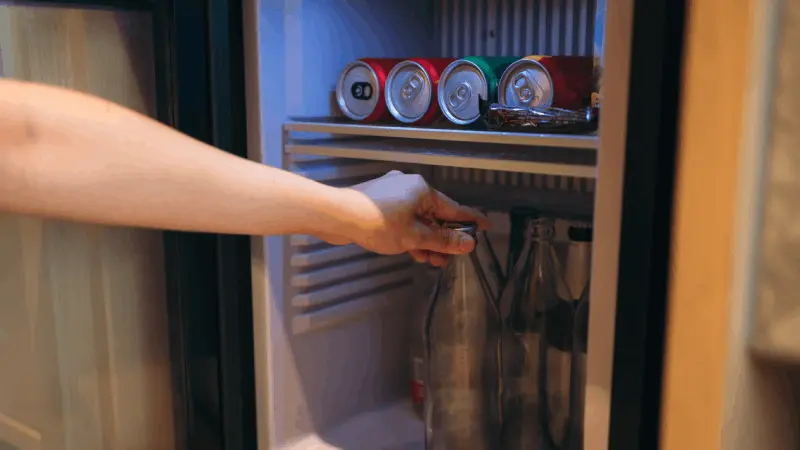
During the night, since solar panels do not produce energy, the refrigerator draws directly from the battery bank. The heat on the refrigerator decreases as the outside temperature drops at night. Lowering the refrigerator's thermostat by one or two degrees (slightly increasing the temperature) before going to bed ensures that the compressor runs less frequently throughout the night. In the morning, when the sun rises and the panels start to recharge the battery, you can reset the thermostat to normal levels. Foods inside do not spoil when they stay at 6 degrees instead of 4 degrees overnight, but this small difference provides significant savings in battery capacity. Especially in caravans with limited battery capacity, this "smart thermostat management" can ensure that the system is still running when you wake up in the morning. Energy savings can sometimes be as simple as turning a knob a millimeter.
What Effect Does Caravan Insulation Have on Refrigerator Operating Frequency?
The efficiency of the refrigerator is not only related to the device itself but also to the furniture it is integrated into and the overall insulation of the caravan. If the side walls of the refrigerator are very close to the caravan's outer shell and there is insufficient insulation in between, the heat from the sun is directly transmitted to the refrigerator body. This creates a challenging situation for the refrigerator's external insulation. In DIY projects, covering the inner parts of the compartment where the refrigerator will be placed with reflective foil-covered thin insulation materials (like bizofol) cuts off the heat transfer from outside. The area where the refrigerator "breathes" must be thermally separated from the area where it "lives." The ventilation gap at the back should be warm (to expel heat), but the side and top walls of the refrigerator should remain as cool as possible. This simple structural improvement provides a significant shield for the device in its battle against external heat.
How is Efficiency Analysis Conducted with Digital Temperature Monitoring Systems?
You cannot understand whether the refrigerator is operating efficiently just by checking inside with your hand. Using an external wired or wireless digital thermometer allows you to monitor the refrigerator's performance in real-time. By placing the sensor inside the refrigerator and the display outside (in a visible location), you can see the internal temperature without ever opening the door. If the temperature is constantly fluctuating or is well above the target value, you can detect a problem early (for example, low battery voltage or insufficient ventilation). Some smart systems also allow you to send this data to your phone, enabling you to perform retrospective analysis. The principle that "you cannot improve what you do not measure" applies here as well. Seeing that the internal temperature remains stable between 4-6 degrees and the freezer section between -12 and -18 degrees is the most concrete evidence that the system is operating efficiently.
Do Thin Cable Cross-Sections Cause Voltage Drop and Inefficiency?
In 12V systems, the most common efficiency enemy is "voltage drop." Devices that draw high current, like refrigerators, are critically dependent on the thickness (cross-section) of the cable used when mounted far from the battery. If the cable is thinner than necessary, the current encounters resistance as it passes through the cable, and some of the energy is lost as heat. In this case, while there is 12.8V at the battery, only 11.5V can be seen at the refrigerator input. A compressor operating with low voltage generates more heat, struggles to start, and draws more amps. To optimize efficiency, at least 6mm² (more depending on distance) of quality copper cable should be used in the refrigerator line. Ensuring that connection points (terminals) are tight and free from corrosion also minimizes resistance. This "silent" improvement in the electrical infrastructure is one of the most important technical investments that ensures the refrigerator operates at full capacity with minimal loss.
What Do Climate Class Labels (SN, N, ST, T) Mean When Choosing a Refrigerator?
When purchasing a refrigerator, it is not only important that it is 12V, but also which climate class it belongs to is critical for efficiency. The codes on the labels indicate the temperature range in which the device operates optimally: SN (Subnormal: 10°C - 32°C), N (Normal: 16°C - 32°C), ST (Subtropical: 16°C - 38°C), and T (Tropical: 16°C - 43°C). In regions like Turkey, where temperatures are high in the summer, choosing devices in the "ST" or "T" class ensures that the refrigerator operates without giving up even at 40-degree temperatures inside the caravan. A refrigerator in the "N" class will consume much more energy to cool the interior in a caravan exceeding 35 degrees and is unlikely to reach the target temperature. Efficiency begins with using the right device in the right geographical conditions. Therefore, reading technical specifications is a conscious consumer behavior that protects both your food safety and energy budget in the long run.
How Does Indoor Humidity in a Caravan Trigger Frost and Thus Inefficiency?
Cooking, showering, or breathing in small spaces like a caravan quickly increases humidity levels. This humid air enters the refrigerator every time the door is opened and turns into frost on the cooling coils. Frost creates an insulation layer between the cooling system and the internal air. This means that the compressor produces cold, but this cold cannot be distributed inside due to the frost layer. This causes the device to operate much longer. causes problems. To prevent freezing, the caravan should be regularly ventilated, the cooking fan should be turned on, and no open liquids should be left in the refrigerator. If the ice layer exceeds 5 mm, the refrigerator should be turned off and the ice should be melted (defrosting) to regain efficiency. A clean and defrosted freezer transfers heat in the fastest way and minimizes energy consumption.
How should the continuity of the 12V power supply be ensured during travel?
How the refrigerator is powered while driving determines your energy status when you arrive at the campsite. If you are using a "DC-DC charger", the vehicle's alternator can also power the refrigerator while charging the batteries. This way, the refrigerator can operate in the coldest mode without draining the batteries while you are driving. However, if you are using a simple relay system (like VSR) or relying solely on the solar panel, your batteries may be depleted by the end of the trip on cloudy days. Keeping the refrigerator in 12V mode during travel is important to keep the thermal load cold, but it must be ensured that this does not drain the batteries. Modern caravans with DC-DC chargers turn travel time into an "energy collection and freezing the refrigerator" opportunity. Maximizing the freezer while driving and lowering it to normal when you arrive at the camp is a very efficient tactic that means "storing" free engine power in the refrigerator.