Why Are Bushcraft Knots Essential for Survival?
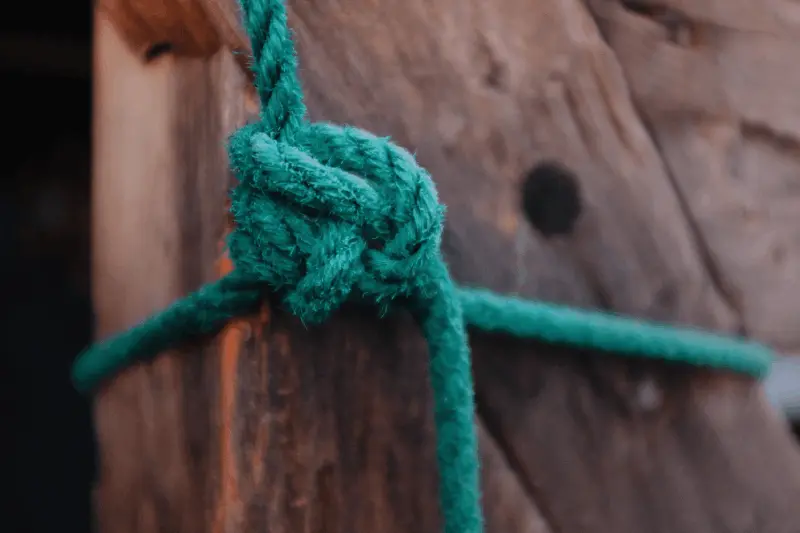
When you are away from the ready-made solutions offered by the modern world, you must use the simplest tools at your disposal in the most efficient way. A piece of rope, when combined with the right knotting technique, allows you to set up shelter, carry heavy loads, hunt, and even perform life-saving rescue operations. Knot knowledge is not just about tying a rope; it is about turning the laws of physics to your advantage. A secure knot is an engineering marvel that does not slip under load but can be easily untied when needed. Therefore, in the bushcraft world, the saying "if you don't know how to tie knots, you are not really camping" is quite common. Knots are your greatest assurance against the uncertainties of nature.
What Criteria Should Be Considered When Choosing a Rope?
Choosing a rope for bushcraft is as important as the performance of the knot you will make. Ropes known as "Paracord 550" are generally accepted as standard due to their lightweight and nearly 250-kilogram carrying capacity. However, natural fiber ropes or static climbing ropes also have different areas of use. When selecting a rope, flexibility, stretch ratio, UV resistance, and performance when wet are critical criteria. For example, nylon ropes stretch when wet, while polyester ropes maintain their shape. The pressure applied to the fibers of the knot can reduce the overall strength of the rope by 20% to 50%; therefore, you should always prefer quality ropes that have a capacity well above the load you will carry.
In What Situations Can a Clove Hitch Save Lives?
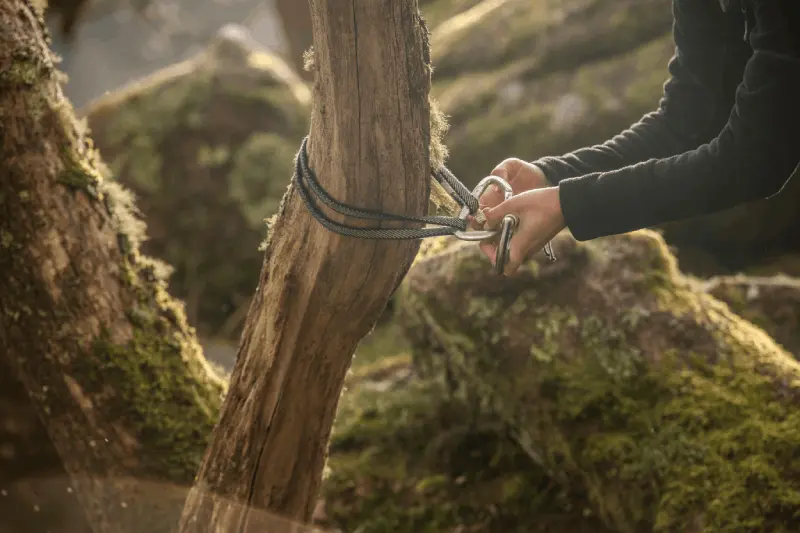
The clove hitch is one of the most basic knots used to quickly secure a rope to a cylindrical object, such as a tree branch or a post. It is indispensable when setting up a shelter frame or temporarily tying an animal in bushcraft applications. The biggest advantage of this knot is that it provides excellent grip as long as both ends of the rope remain taut. However, the load can slip if it is applied unilaterally; therefore, to increase safety, a half clove hitch is often added on top. Especially in emergency shelters that require quick setup, you can establish the main line in seconds thanks to the clove hitch and prepare your camp for the storm.
How to Join Ropes of the Same Thickness with a Reef Knot?
The reef knot is one of the oldest and most well-known techniques used to join two ropes together. Tied with the principle of "right over left, left over right," this knot is particularly used in binding and packaging. However, there is a vital point to consider: the reef knot is only secure when tied with ropes of the same thickness and made from the same material. If the ropes are of different thicknesses, the knot can easily slip and come undone. This knot is ideal for tying wood bundles in bushcraft camps or securing bandages during first aid. Its aesthetic and flat structure does not create bulges on the surface and offers comfortable use.
Why Is the Bowline Knot Considered the King of Knots?
The bowline knot, or its full name "Bowline," carries the title of "king of knots" across all outdoor disciplines from sailing to bushcraft. The reason for this is that no matter how heavy the load placed on it, it never tightens and can be easily untied by hand when the load is lifted. It forms a fixed loop at the end of the rope that never constricts or expands. It can be used in hundreds of different scenarios, from pulling someone out of a well to securing the main line of your shelter to a tree. Its ability to be tied with one hand makes this knot unparalleled in emergency scenarios. If you were to learn only one knot in the wild, it should definitely be the scout knot; because its reliability has been proven for centuries.
How to Secure a Shelter with a Taut-Line Hitch?
In bushcraft and camping, it is a common problem that the tension lines of tents or tarps loosen over time. The taut-line hitch solves this problem at its root with its mechanism that can slide on the rope but locks when a load is applied. This "sliding knot" allows you to manually adjust the length of the rope, ensuring that your shelter remains taut in changing weather conditions. When it rains, you can quickly re-tighten the wet and sagging rope by sliding the knot up in seconds. This functionality eliminates the need for plastic tensioners, giving you a true bushcraft experience and the opportunity to set up a minimalist camp.
How Does the Prusik Knot Work in Climbing and Rescue Operations?
The prusik knot is a special sliding knot tied around a main rope with a thinner rope. The miracle of this knot is that it can slide freely on the main rope when not under load, but when a weight is applied, it grips the main rope like a vise. It is used as a safety system when descending steep slopes in bushcraft or to provide mechanical advantage when lifting a heavy game animal. Additionally, it is excellent for creating sliding points on the ridgeline during tarp setups. The prusik is a highly skilled helper that gains the feature of a smart locking system on a simple rope when you do not have backup equipment in the wild.
How Does the Figure-of-Eight Knot Increase Load-Bearing Capacity?
The figure-of-eight knot is used to create a stopper at the end of the rope or to form a loop. The reason it is preferred as a safety knot in climbing is that it is the knot that causes the least damage to the fibers of the rope. It is one of the most important knots in bushcraft. The rope progresses by drawing wide curves within the loop, keeping the internal tension at a minimum and preserving the rope's original carrying capacity at a high rate. When carrying heavy logs or setting up a pulley system in bushcraft, the figure-of-eight loop is your safest harbor. Visually symmetrical, it can be easily checked at a glance to see if it has been thrown correctly, which reduces the margin of error.
Why Should the Double Fisherman's Knot Be Preferred on Slippery Ropes?
Modern synthetic ropes, such as nylon or polypropylene, are often very slippery, and simple knots cannot hold on these surfaces. The double fisherman's knot is the strongest method used to permanently join two ropes together. It works on the principle of locking two stopper knots together. Once tightened, it becomes almost a part of the ropes and is quite difficult to untie. You should use this knot to create your own loop ropes or safely extend shortened main lines in bushcraft. Thanks to the high tension it creates on the rope, it ensures absolute safety even on the most slippery surfaces.
How to Tension Heavy Loads with the Trucker's Hitch?
Sometimes in nature, you need to tension a rope with such a large force that you cannot pull it by hand. The trucker's hitch creates a "natural pulley system" that provides you with approximately a 3:1 mechanical advantage. By using a part of the rope like a movable pulley, you multiply the force you apply. It can be used everywhere, from securing a canoe on top of a vehicle to making a heavy tarp stay put in the wind. This knot is the most practical way to apply physics in nature. Once you learn the trucker's hitch, loose lines will no longer be a problem for you, and you will have a professional organization at your campsite.
How to Make Permanent Connections with the Constrictor Knot?
The constrictor knot is a much stronger and more aggressive version of the clove hitch. When wrapped around an object, the rope bears down so strongly on itself that often the knot becomes impossible to untie; however, you can escape by cutting the rope. In bushcraft projects, it is used to tightly close the mouth of a bag, wrap a handle around a rope, or temporarily secure two sticks together. This knot serves as a "clamp" in nature. If you never want a connection to loosen, the constrictor knot is your best solution. Unlike other knots, this technique grips the object by creating mechanical pressure once it is locked.
How to Create a Secure Loop in the Middle of the Rope with the Alpine Butterfly Knot?
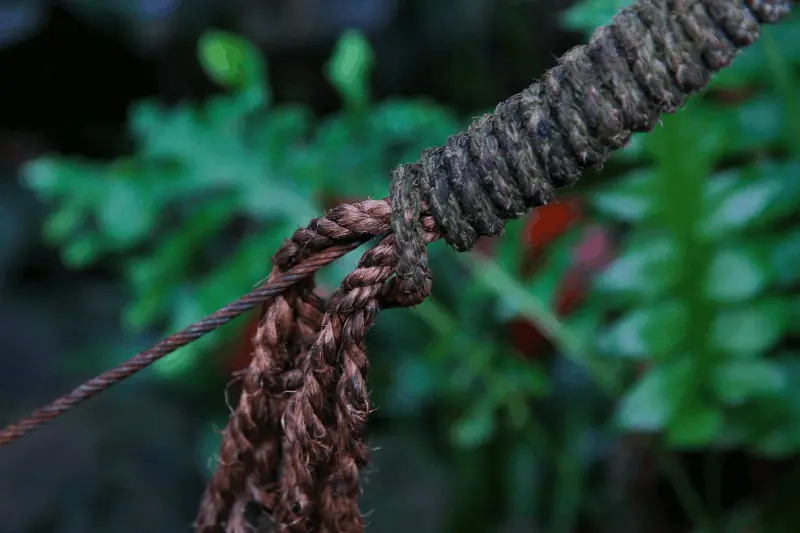
While most knots require working at the ends of the rope, the butterfly knot allows you to create a secure loop anywhere in the rope without releasing the ends. The most amazing feature of this knot is that the loop is equally resistant to loads coming from all three directions (two ends and the loop itself). In bushcraft, it is used to hang something in the middle of a long rope, isolate a damaged section on the rope, or create handles that multiple people can hold onto. Its symmetrical structure distributes the load evenly and does not distort the shape of the rope. This knot, favored by climbers, is also excellent for organization at the campsite.
What Purpose is the Poacher's Knot Used for in Hunting?
The poacher's knot, as its name suggests, is a technique knot that has been used throughout history in trapping and hunting. It creates a loop that closes on itself and tightens as the object inside the loop moves. In bushcraft, this knot is used in trigger mechanisms prepared for small game animals or to securely fasten an object to a hook/loop. It can be thought of as a one-sided version of the double fisherman's knot. It has a very compact structure and locks itself as the load on the rope increases. In a survival situation in nature, this knot will be the most critical component of the traps you set to find a source of protein.
How to Securely Move Logs with the Timber Hitch?
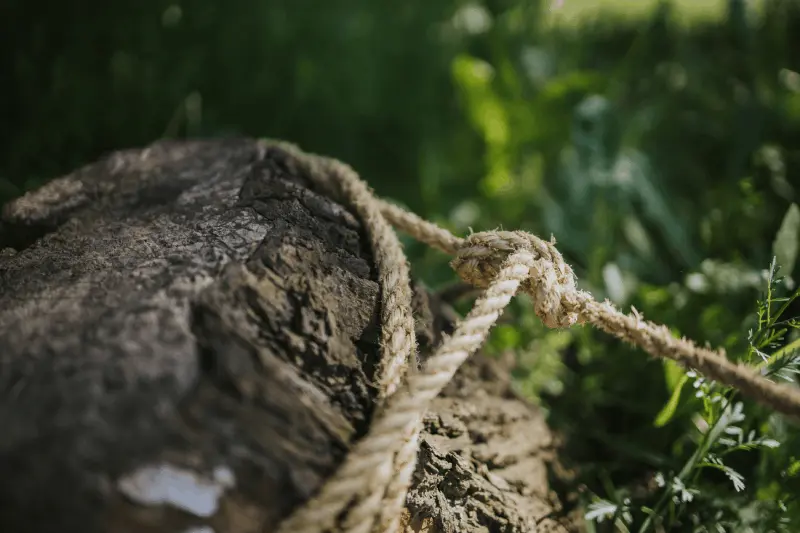
It is difficult to drag a heavy log to the campsite in the forest, but the timber hitch makes this job easier. This knot is a simple yet effective locking mechanism that is formed by wrapping around an object and twisting the rope around itself at least three times. Interestingly, the tighter you pull the log, the tighter the knot becomes. Once you stop pulling, it immediately loosens and can be easily untied. In bushcraft, it is not only used for transporting wood but is also tightly preferred as a "starting knot" when connecting vertical poles to the main line in shelter construction. With its practicality and reliability, it is an indispensable helper for heavy tasks.
How to Make a Table and Chair with the Square Lashing Technique?
While knots manage a single rope, lashings allow you to create structures by joining two or more branches together. Square lashing is used to secure two branches that intersect at a 90-degree angle. You would use this technique when making a table to enhance your comfort, an elevated bed, or a kitchen counter in bushcraft camps. The key point of lashing is to pull the ropes tight on each turn and finally perform the tightening process by passing through the ropes, known as "frapping." A good square lashing ensures you make sturdy furniture, like using nails or screws, and helps you establish a comfortable living space without harming nature.
How Does Diagonal Lashing Strengthen the Shelter Frame?
If the two branches you are joining do not come at a 90-degree angle or if you want the structure to be resistant to lateral wind loads, you should use diagonal lashing. This technique strengthens the branches against lateral forces. It creates resistance against cutting forces by closing the gaps at the points it connects. It is especially the safest way to secure branches at the top of large A-frame shelters or in ladder construction. Cross lashing can use more rope than square lashing, but the structural integrity it provides is much higher. In bushcraft, "lashing" is everything, and this technique is the unsung hero that keeps your shelter standing through a stormy night.
How to Set Up a Tripod with Shear Lashing?
When you need to set up a hanging system to cook over a fire in nature or to lift a heavy load, shear lashing comes to your rescue. This technique, which involves bringing the ends of two or three branches together and tightly wrapping them, creates a joint that locks at the top when the branches are spread apart. When setting up a tripod, as you spread the lower parts of the branches apart, the upper lashing tightens with incredible pressure and becomes strong enough to carry tons of weight. Tripods, the heart of bushcraft cooking, can be set up in seconds thanks to this simple yet ingenious lashing method and can be dismantled without leaving a trace at the end of the camp.
How is the Loss of Strength Calculated on Rope Knots?
Every knot bites into the fibers of the rope, compresses them, and forces sharp turns. This physical interaction reduces the total breaking strength of the rope. For example, a simple overhand knot can reduce the rope's strength by 50%, while a figure-eight knot can minimize this loss to around 20%. When determining your safety margin in bushcraft, it is vital to account for these losses. If you are setting up a system that needs to carry 200 kg, you should know the efficiency of the knot you are using and switch to more "rope-friendly" techniques if necessary. A knowledgeable user not only knows how to tie a knot but also understands what it takes from the rope's lifespan and strength.
What Knot Techniques Should Be Used on Wet and Frozen Ropes?
Winter camping or rainy weather conditions completely change the character of ropes. Wet ropes become heavy, slippery, and when they dry, knots can become almost impossible to untie as they "freeze". In freezing cold, your fingers lose sensitivity, making it nearly impossible to tie complex knots. In such cases, wide and easily untieable knots like the "figure-eight loop" or "bowline knot" should be preferred. Additionally, leaving the ends of the knot a bit longer makes it easier to hold with frozen hands. To reduce slippage in wet conditions, adding an extra turn to sliding knots like tension knots will double your safety.
How to Make Your Own Rope from Natural Fibers?
A true bushcraft master can create rope from nature even without having any on hand. You can make your own cordage using nettle, linden bark, or various plant fibers. The technique of twisting two fiber groups in the same direction and wrapping them around each other in the opposite direction (reverse twist) creates incredibly strong natural ropes. The knots you tie with these ropes will hold better than synthetic ropes due to the rope's more fibrous texture. However, natural fibers are more fragile, and care must be taken not to break the fibers while tying knots. Making your own rope is the highest level of declaring your independence in the wild and is a wonderful craft that requires patience.
What Methods Should Be Followed to Avoid Damaging the Rope While Untying a Knot?
Untying an extremely tight and compressed knot can sometimes seem impossible. Many people prefer to wrap a knife around it and cut the rope, but a bushcrafter respects their equipment. The technique of "feeding the knot" is used to loosen a tight knot; that is, you try to reduce the pressure by pushing the slack of the rope into the knot. Using a metal stick (marspike) or a branch as a lever can also help to pry the knot apart. Never attempt to untie a knot by damaging the fibers of the rope with your teeth or sharp-nosed pliers. Remember, a well-tied quality knot is designed to be untied eventually.
Why is Paracord 550 the Ideal Rope Type for Bushcraft?
Since World War II, Paracord 550 has been indispensable for modern bushcraft. Each of the 7-9 thin white fibers inside can be used as sewing thread or fishing line on its own. The outer sheath is durable and flexible against abrasion. Its lightweight means a 30-meter roll won't take up space in your backpack while allowing you to manage loads of up to 250 kilograms in an emergency. Paracord has an excellent balance in knot retention; it is neither too slippery nor too stiff. It is versatile in nature, and Paracord should be the first choice for every camper because it combines the maximum functionality a rope can offer into a single body.
How Do Adjustable Loops Increase Flexibility in Shelter Setup?
Using adjustable loops instead of fixed knots increases your setup speed and flexibility at the campsite. For example, an "Eskimo knot" allows you to adjust the loop size, making it much easier to tie to trees of different thicknesses. Adjustable knots allow you to change the geometry of your shelter in seconds according to the slope of the ground or the direction of the wind. In bushcraft, creating dynamic solutions instead of static ones makes it easier to adapt to changing natural conditions. Learning these knots gives you the freedom to think and act like an architect at the campsite.
How to Improve Knot Tying Practice at Home?
Tying knots is a matter of "muscle memory". In a real survival situation, you should not be thinking about tying your knot in the dark or under a storm; your hands should do it automatically. The best way to develop this is to practice tying knots during your free time at home. You can even practice with a piece of rope in your hand while watching television. Trying to tie knots with your eyes closed will elevate your skills to a higher level. By experimenting with different thicknesses and textures of ropes, you should observe how each rope reacts to the knot. Remember that theoretical knowledge does not help you in nature; only skills honed through practice, which have become reflexes, keep you safe.
How to Test if a Knot is Secure?
After tying a knot, you should not trust it immediately. A professional inspection process consists of the following steps: "Dress, Setting, Loading". First, you should dress the knot, ensuring that the ropes do not overlap, then you should set the knot by tightening it with your hands, and finally, you should test it by gradually applying load. If the knot distorts under load or is "creeping", that knot has been tied incorrectly. Symmetry is the greatest indicator of a knot's correctness. Additionally, ensuring that the working end of the rope is left long enough (usually 5-10 times the rope's diameter) prevents the knot from completely unraveling in case of a slip.
What Sensitive Knots Should Be Used When Preparing Animal Traps?
In trapping, which is a more advanced level of bushcraft, the importance of mechanical knots is significant. The special techniques we call "Trigger hitches" are designed to release a large amount of energy with very little contact. For example, the methods used in the "Figure-4" trap are actually considered "wooden knots". In rope traps, a small "eight knot" is added to the loop to reduce friction, allowing the noose to tighten smoothly. These types of knots require not only technical knowledge but also an understanding of animal psychology and physical sensitivity. These fine techniques will ensure your survival in an open situation.
Why is Knot Knowledge Necessary in a First Aid Kit?
Injuries in nature can be unavoidable, and sometimes the nearest help is hours away. Your knot knowledge is as valuable as medical intervention when applying a tourniquet to stop bleeding, securing a broken arm, or preparing a stretcher. The "Surgeon's Knot" is an advanced version of the jam knot and has an extra turn that prevents the ropes from loosening during suturing or in non-sutured closures. Additionally, the "harness" knots used to safely lower an injured person from a height define the line between life and death. When combined with first aid training, knot knowledge truly transforms into a comprehensive survival skill.
How to Set Up a Hammock Without Damaging Trees?
A responsible bushcrafter should leave nature better than they found it. When setting up a hammock, wrapping a thin rope directly around the tree trunk can damage the tree's bark and the vital tissues underneath. To prevent this, wide straps known as "Tree Hugger" should be used, and when tying knots to these straps, techniques that distribute the load, such as the "Marspike Hitch", should be preferred. This knot creates a secure point for hanging your hammock by locking a branch piece inside the rope and leaves no trace on the tree when taken down. Ethical bushcraft requires managing knots not only for their immediate use but also for their impact on nature.
How Do Rope Care and Storage Conditions Affect Knot Lifespan?
Even if you tie the best knot, if your rope is worn or frayed, your system will fail. The biggest enemies of ropes are direct sunlight (UV), sand particles, and moisture. Sand particles can get between the fibers of the rope, cutting it like an internal sandpaper. When you return from camping, you should wash your ropes with fresh water and dry them in the shade. When storing, you should never tightly coil the ropes; instead, you should use "coiling" to allow the fibers to breathe comfortably. A well-maintained rope holds knots better and will never betray you in an emergency. The care you show for your equipment is a reflection of the value you give to yourself.
How Will Bushcraft Knots Change with Technology in the Future?
No matter how advanced technology becomes, nothing can replace the reliability offered by a rope and a knot in the middle of nature. However, the widespread use of synthetic fibers stronger than steel, such as Dyneema or Spectra, is leading to a reinterpretation of traditional knot techniques. In these ultra-slick ropes, older knots can slip, so more complex "splicing" techniques are coming to the forefront. Still, the essence of bushcraft, which is "simplicity", will always keep those fundamental knots that have been used for centuries at the top. The future will be a combination of ancient and unshakeable knots made with high-tech materials.