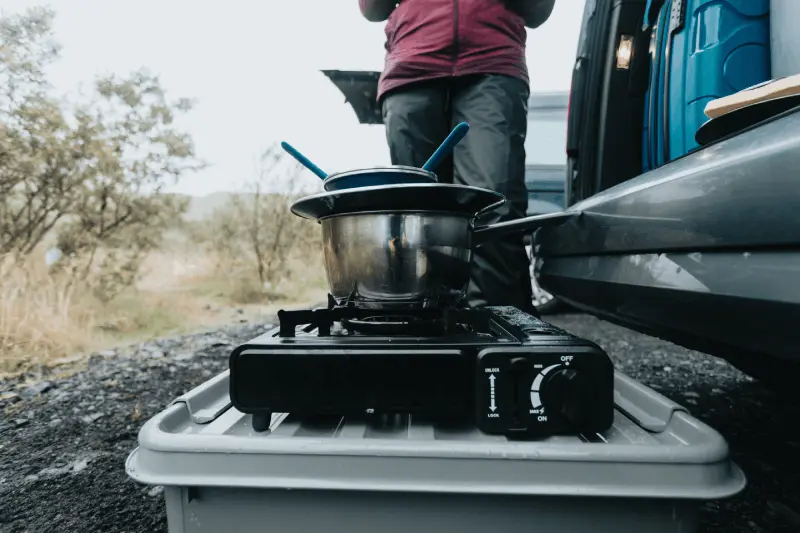
Cooking outdoors is not just about filling your stomach; it is also the most delicious combination of survival and comfort. However, that pot set you throw into your backpack affects your life not only with its weight but also with the metal inside it, which may or may not leach into your food.
Do Aluminum Pots Leave a Metallic Taste and Harmful Particles When Heated?
Aluminum is the most commonly used material in camping kitchens, yet it raises the most questions regarding health. Especially untreated, "bare" aluminum containers can react with acidic foods like tomatoes, leaving a metallic taste in your food. The "hard anodized aluminum" used in modern camping largely solves this problem; this process coats the metal's surface with an oxide layer, preventing leaching into the food. However, if the bottom of your pot is scratched, you may reach the raw metal underneath. If you have health concerns, scratched aluminum sets should be retired immediately, and you should always prefer coated or anodized versions.
Does the Fine Structure of Titanium Cause Eggs to Stick to the Bottom When Cooking Breakfast?
Titanium is a material that conducts heat very quickly despite its durability, but it does not distribute heat evenly. This can lead to the point where the flame hits becoming excessively hot while the edges remain cold. If you try to make an omelet in a titanium pan for breakfast, the middle of the egg can stick to the bottom within seconds, while the edges remain undercooked. Titanium sets are generally designed for "boiling water." If you expect real cooking performance, you should be aware of this logistical limitation of titanium and try to overcome this issue by using very low heat or constantly stirring. Otherwise, your breakfast could turn into a kitchen disaster.
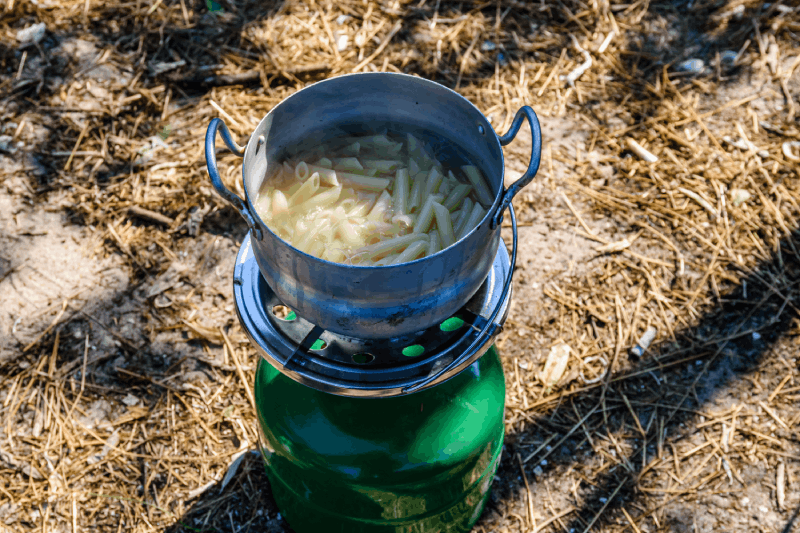
Do Steel Sets Cause Back Pain on Long-Distance Trekking Routes Due to Their Weight?
Stainless steel is the healthiest and most durable option in the kitchen, but it is completely contrary to the "ultralight" camping philosophy. A steel pot set can weigh about three times more than a titanium set of the same volume. If you are climbing a mountain for 20 kilometers, that extra 500 grams in your backpack will feel like unbearable pressure and back pain by the end of the day. Steel sets are more ideal for vehicle-based camping (overlanding) or situations where you are very close to your campsite. Logistically, if you are counting every gram in your backpack, you should avoid steel, but if you prioritize health and durability, you should be prepared to bear that weight.
Does Scratched Hard Anodized Aluminum Coating Pose a Carcinogenic Risk?
Many campers question the relationship between aluminum use and neurological diseases. Hard anodized aluminum is safe under normal conditions because it hardens the metal's surface and prevents contact with food. However, in camping conditions, cleaning with sand, using metal spoons, or harsh scouring pads can damage this protective layer. Once the layer is compromised, the risk of aluminum leaching into food increases. Although scientific studies do not directly label it as "carcinogenic," the long-term effects of aluminum accumulation in the body are being debated. Therefore, a tourist or camper who considers their health down to the finest detail should avoid using damaged aluminum equipment and should only clean these items with soft sponges.
Do Titanium Spoons and Forks Make That Annoying Metallic Sound on Your Teeth?
The biggest hidden comfort issue for users of titanium equipment is the texture of the metal. Some low-quality titanium coatings or sanded surfaces can create a sensation similar to "nails on a chalkboard" when they come into contact with your teeth or other metal utensils. This is a detail that can ruin the camping experience for those with sensitive teeth or high tactile sensitivity. Additionally, because titanium has low thermal conductivity, it won't burn your lips, but that metallic feeling may lead some users to prefer plastic or wooden utensils. If you care about such sensory details, choosing titanium sets with a polished finish will eliminate this comfort issue.
Is It Possible to Clean Stainless Steel Pots with River Water If the Bottom Burns?
One of the logistical challenges is cleaning. Steel has a naturally non-porous and very hard surface. If the bottom of your food burns, you can restore the stainless steel pot by scrubbing it with fine sand or a hard stone by the riverbank; this process does not cause permanent damage to the steel. However, if you try the same process on aluminum or titanium, you either damage the protective layer or create deep scratches in the metal. From a hygiene perspective, steel is the most successful material in preventing bacterial growth. If you want to make your pot shine without using detergent in cold river water, stainless steel is your most hygienic and practical logistical solution.
Do Titanium Pots Warp When Used Over a Campfire?
Many campers wonder if they can place their sets directly into a high-heat campfire. Although titanium is a metal with a very high melting point, it can warp due to its thin manufacturing. Especially if left over an open flame, the bottom of the pot can bulge, causing it not to sit flat on the stove. Steel is much more resistant in this regard; however, aluminum has a lower melting point than titanium and can even melt over a hot flame. If you are not limiting your cooking to just a gas stove and plan to cook directly over a wood fire, you should keep this "flexibility" risk of titanium in mind or choose a thicker steel set.
Do Cheap Camping Sets Release Toxic Gas When Heated?
Some colored aluminum or steel sets sold on the market may pose a hidden health risk due to the aesthetic paints on their outer surfaces. When these sets are exposed to the flame of a camping stove, the outer paint can burn and start to emit smoke. Inhaling this smoke can lead to serious respiratory irritation and chemical poisoning in a closed tent or poorly ventilated area. As a potential customer, you should prefer sets that are not painted on the outside but are in the natural color of the metal. If you must buy a colored set, make sure the paint is high-temperature resistant enamel or a special coating; otherwise, that beautiful-looking blue pot could become a threat to your liver.
Is the Price of Titanium Cookware Sets Really Worth It as a Lifetime Investment?
When it comes to hidden costs, titanium is at the top. A titanium pot can be sold for five times the price of aluminum and two to three times that of steel. So, is this difference worth it? If you only go on a picnic once a year, it definitely isn't worth it. However, if you are an active hiker, the fact that titanium does not rust, is not affected by acids, and its incredible lightness makes it a "lifetime" choice. Steel can rust (if of low quality), and aluminum can warp and dent. Titanium, on the other hand, is nearly indestructible. The high initial cost guarantees that you won't have to buy a new set for the next 20 years. From this perspective, the initial high price tag may actually be the most economical option in the long run.
Do Acidic Foods Like Tomato Pasta Cause Nickel Leaching in Steel Pots?
Stainless steel contains nickel and chromium. In high-quality steels (like 18/10), these metals are tightly bound within a molecular structure. However, if acidic foods like tomato sauce are left in a steel pot for too long (hours), there may be a trace amount of nickel leaching for sensitive individuals. If you have a nickel allergy, this poses a hidden health risk for you. In this case, the safest alternative is titanium, which is completely inert (it is also used in surgical implants) and never reacts with acidic foods. If your health priority is "zero metal leaching," titanium is unmatched.
Does Washing Aluminum Pots in the Dishwasher Damage Their Surface?
Many tourists want to bring their camping gear home and throw it in the dishwasher. However, aluminum sets, especially those that are not hard anodized, react with the harsh chemicals in dishwasher detergents. As a result, aluminum can tarnish, leave a gray powder, and completely ruin the surface structure. This is not only an aesthetic issue but also means the protective layer of the metal is gone. Steel and titanium are much more durable in this regard and can be safely washed in the dishwasher. Logistically, if you like to be lazy about cleaning after camping, aluminum sets are not for you; they always need to be hand washed gently.
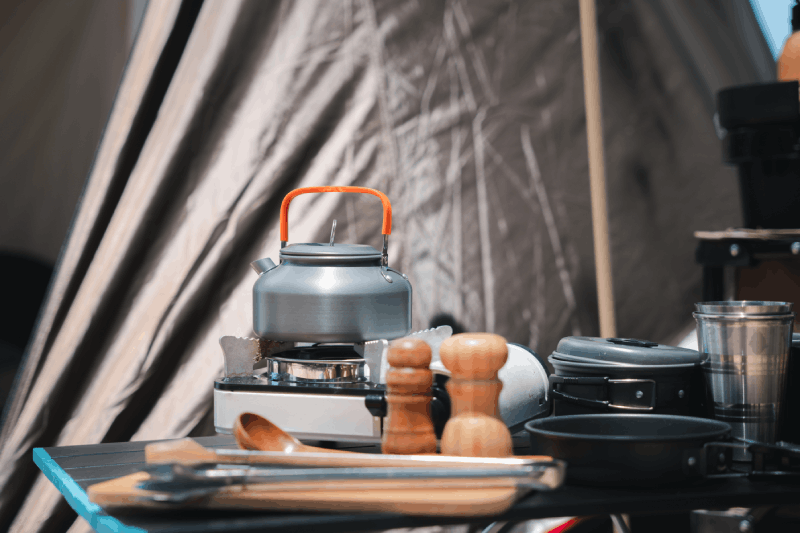
Why Is the Boiling Sound of Water in Titanium Pots Higher Than Others?
The wall thickness of titanium is generally between 0.3 mm and 0.5 mm, making it as thin as a "drum." When placed over the stove, the bubbling of water and the sounds of metal expansion are much higher and sharper compared to other materials. On a quiet morning in nature, the metallic clatter of your stove can sometimes be disturbing. Additionally, this thinness allows heat to transfer to the water instantly, but when the water runs out, it can cause the pot to burn. Steel, being thicker, produces a more muted sound and retains heat longer. If you are looking for a quiet cooking experience that retains heat, titanium's "clatter" and quick cooling properties may surprise you.
Does the Nesting Feature of Sets Cause Scratches and Bacterial Growth?
To save space in camping kitchens, pots nest inside each other. However, this logistical advantage can lead to the metal scratching against metal. Especially in aluminum and steel sets, these scratches can turn into microscopic nests where food residues can accumulate and become difficult to clean over time. If you put your set away without completely drying it after washing, bacteria growth is inevitable in those dark and damp areas. To maintain hygiene, you should place a thin microfiber cloth or paper towel between your pots when storing them. Although titanium is more resistant to scratching, the same hygiene risk applies to it as well. When purchasing your set, you should consider not only the ease of nesting but also the risk of scratching.
Which Metal Provides Faster and Safer Results for Melting Snow in Winter Camps?
In winter, you must melt snow to survive. Aluminum is the fastest metal for conducting heat, thus saving fuel in the snow melting process. Titanium is also fast, but because it is so thin, it can overheat if the bottom is empty (when the snow has not melted yet). Steel is the slowest to heat and requires more fuel for this process. Logistically, every drop of fuel is worth its weight in gold in winter camps. Therefore, those who camp in winter often prefer aluminum or titanium for efficiency, despite their weight. However, from a safety perspective, you should always keep a bit of "initial water" at the bottom while melting snow to avoid damaging your pot.
Do Meals Cooked in Titanium Pans Have a Metallic Smell?
Some users claim that food cooked in titanium pots, especially water, has a different smell or taste. Scientifically, titanium is tasteless and odorless. However, the porous structure of the metal (if not polished) can retain oils or detergent residues from previous meals. When heated, these residues can emit odors. Steel offers the "cleanest" smell in this regard, while aluminum has the highest potential for leaving odors and tastes. If you are sensitive to smells and do not want any other aromas to mix with your food, you should thoroughly clean your equipment after each use and preferably choose titanium with a smooth surface or stainless steel.
Which Set Offers a Safer Stand in Case of Camp Stove Shaking or Tipping?
Safety starts with the balance of the pot on your camp stove. Titanium sets are so light that if there is little food inside, they can easily tip over in the slightest breeze or bump. This not only risks ruining your food but also poses a serious burn risk to your legs. Steel pots sit more securely on the stove due to their weight and provide a lower center of gravity. Aluminum offers a middle ground. If you are cooking on uneven terrain or have children/pets nearby, heavier and more stable steel sets are a step ahead in terms of safety. Sometimes, lightness can mean sacrificing safety.
Is Using a Titanium Set for Cooking a Meal for 4 People in Group Camps an Economic Mistake?
In group logistics, titanium is often inefficient. The price of a large titanium pot (2-3 liters) can reach astronomical figures, and it is impossible to distribute heat evenly in a pot of this volume. For large group meals (pasta, casserole, etc.), aluminum or steel is much more logical. Aluminum allows you to cook a meal for four people simultaneously without wasting fuel by distributing heat evenly across the bottom. In titanium, while the food in the center burns, the edges can freeze. Therefore, unless you are a solo camper, investing in titanium may be a wrong strategy for both your wallet and your cooking performance.
Is the "Magnet Not Sticking" Situation in Stainless Steel Sets an Indicator of Quality?
Customers often try to test the quality of steel with a magnet. The perception that "if it doesn't stick to a magnet, it's real" is not always true. Some high-quality stainless steels (like the 304 series) are non-magnetic; however, some ferritic steels do attract magnets and are also quite durable. When purchasing camping gear, instead of relying on the magnet test, you should look at the metal code on the product (for example, 18/8 or 18/10). These numbers represent the ratios of chromium and nickel and indicate the best balance of stainlessness and durability for your health. Low-quality steels can rust over time, and cooking on these rusty surfaces poses a serious health risk.
Does Cleaning Aluminum Sets with Sand Open the Door to Metal Poisoning?
When you run out of detergent at the campsite, you resort to the traditional method of cleaning with sand or dirt. However, this process "abrades" the entire protective layer of the aluminum set. You may not even notice that your pot has started leaching aluminum ions when you cook your next meal. While this method is safe for steel sets, it is a complete hygiene and health disaster for aluminum. If your cleaning supplies are limited and you have to resort to natural solutions, you should avoid aluminum to protect yourself and your family and use steel, which offers the best response to such logistical challenges.
Are the Colors Underneath Titanium Pots a Sign of Degradation?
After using your titanium pot a few times, you may notice a "rainbow" pattern of blue, purple, and yellow colors on the bottom. Many users interpret this as a sign that the metal has degraded or that a chemical has leaked out. In fact, this is just a natural layer formed by the oxidation of titanium at high temperatures (the natural state of anodization). This layer is completely harmless and actually increases the metal's corrosion resistance. However, if you want it to look clean aesthetically, it is difficult to remove these colors. There is no need to worry about health; these "battle scars" of titanium are a testament to its quality and usage.
Handle Heating and Melting: Which Material Is More Likely to Burn Your Hand?
In terms of comfort and safety, handle design is very critical. Steel pots retain heat for a long time, so their handles (unless silicone-coated) get very hot, making it impossible to touch without a holder. Titanium has lower thermal conductivity, so the handles usually remain at a touchable level even while the pot is boiling. In aluminum, the handles generally heat up at the same rate as the pot body. However, the real hidden danger is the melting of plastic or silicone-coated handles over a campfire. If you are cooking over an open flame, you should choose steel sets with completely metal handles that do not have melting parts. Otherwise, the melting plastic can stick to your hand when you take the pot off the fire and may require serious bandaging.
Which Material Is the Healthiest and Most Practical for You?
Your choice for your camping kitchen is directly related to your camping identity. If you say, "Health comes before everything, weight doesn't matter," stainless steel is your safest harbor. It is easy to clean, durable, and does not react. If you say, "Lightness is a religion for me, I count every gram," titanium is your only option; however, you need to develop your cooking skills (to avoid burning). If you say, "My budget is limited, I need to cook practically and quickly," hard anodized aluminum offers the best performance, but you need to be very careful not to scratch it.
From a general health perspective, experts commonly agree that if you have no allergies and use them correctly, all three are safe. However, for a camper who wants to minimize risks, the ranking is as follows:
Titanium (Completely inert, zero leaching)
High-Quality Stainless Steel (Durable and safe)
Hard Anodized Aluminum (Safe with proper care, but risky if scratched)
In your kitchen, which is your home in nature, making a choice based on this information will protect both your stomach and your health. Remember, the best camping set is one that doesn't leave you stranded halfway and doesn't leach a metallic taste into your food.