Waking up to the sound of birds in the heart of nature brings an invaluable peace. However, there is a reality that every camper knows: that peace feels a bit "incomplete" until the first sip of coffee fills the cup. Choosing among camping equipment is not just a preference; it is also a logistical strategy.
Does the Aluminum Body of the Moka Pot Release Harmful Chemicals When Exposed to Heat?
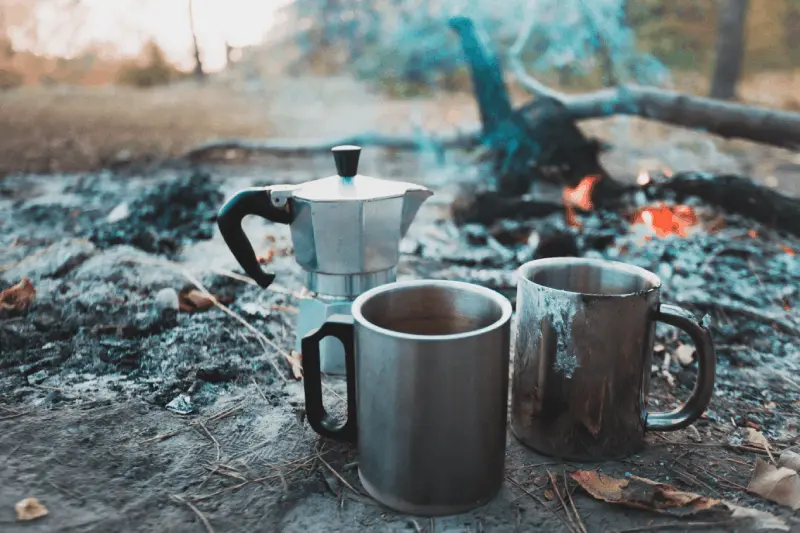
One of the biggest concerns for Moka pot users is whether the classic aluminum models leach metal into the water when exposed to high heat. In a camping environment, unlike controlled stoves at home, the irregular heat from camp stoves or campfires triggers this concern. Aluminum can react with acidic foods by nature; however, the coffee oils that accumulate over time on the inner surface of the Moka pot (the patina layer) create a protective barrier between the metal and the coffee. To minimize health risks, you should never clean the inside of the Moka pot with detergent or abrasive wires; just rinse it with clean water. If you are worried about getting a "metal taste" or long-term health effects, opting for stainless steel models is a safer harbor. Steel models exhibit a much more stable structure at high temperatures and do not oxidize, making them more durable and healthier for the harsh conditions of camping.
Is the Glass of the French Press Definitely Breakable While Being Carried in a Backpack?
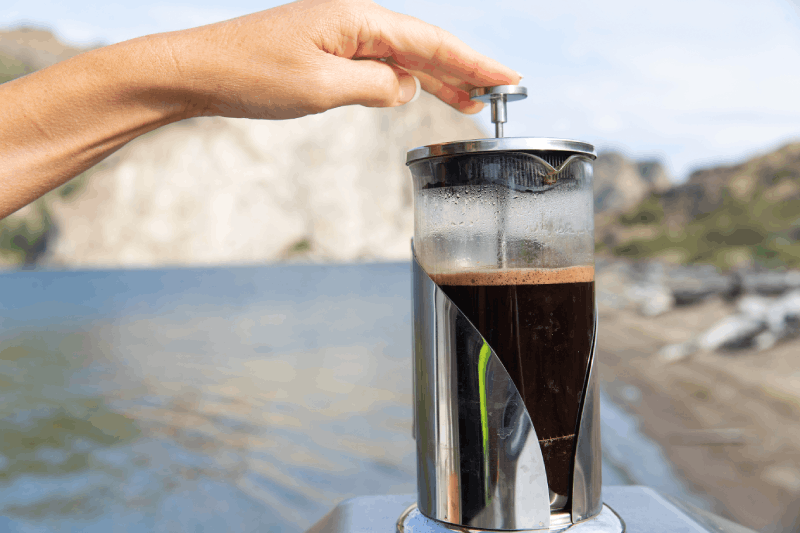
Glass breakages, a logistical nightmare, make the French Press a "dangerous" piece of equipment for campers. The glass chamber of a standard kitchen-type French Press may not withstand the pressure of other equipment in a backpack or the bumps on rugged trails. If you are taking a glass model with you, you should definitely place it in the center of your backpack wrapped in a protective cover or towel. However, this situation is a stress factor that contradicts the relaxed spirit of camping. To completely eliminate this fear, it is most logical to opt for unbreakable polycarbonate or double-walled stainless steel French Press models produced by camping brands. Steel models not only promise unbreakability but also keep your coffee hot for a longer time against the cold air outside. If lightness is more important to you than anything else, polycarbonate models are incredibly resistant to impacts while being lightweight.
Do the Unit Costs of Practical Filter Coffees Disrupt the Budget in Long-Term Camps?
When conducting a cost analysis, it is essential to balance the comfort of practical filters (single-use drip bags) with their price. These coffees, sold in single packets, often fall into the category of quality coffee, so their cost per cup can be 3-4 times higher than the coffee you would buy as beans. While this difference may be negligible for weekend getaways, the total expense can reach significant levels during a 15-day caravan tour or a long trekking route. If you want to follow an economical strategy, although equipment like the Moka Pot or French Press may seem expensive at first, bringing along a 250-gram package of coffee allows you to brew dozens of cups much cheaper. Practical filters are essentially a "time and minimal equipment" consumption product; therefore, when planning your budget, you should definitely calculate how many days you will be camping and how many cups you will consume per day.
Is There a Risk of Melting the Handle of the Moka Pot Over a Camp Stove in Windy Weather?
Many campers experience great disappointment when they notice that the plastic handle of the Moka pot has suddenly melted and turned black while trying to start their morning with the wind. The flames of camp stoves can tilt sideways due to the wind's effect and focus on the plastic handle rather than the body of the Moka pot. This not only emits a bad smell but also poses a safety risk that could cause the handle to break and hot coffee to spill on you. Using a windscreen is a must to overcome this logistical challenge. Additionally, it is wise to place the Moka pot slightly off-center, with the handle facing away from the flame. If possible, opting for models with a metal handle or high-temperature resistant silicone coating will protect you from such "burn" surprises during outdoor cooking sessions.
Do Coffee Grounds in the French Press Cause Discomfort for Those with Stomach Sensitivity?
In the intersection of comfort and health, the "grounds" issue, which is the biggest disadvantage of the French Press, comes into play. Since the French Press passes coffee through a metal filter, a significant portion of fine coffee particles and coffee oils reach your cup. While this enhances the body and flavor of the coffee, it can mean all-day discomfort or heartburn for campers with a sensitive digestive system. Brewing methods that do not use paper filters retain oils like cafestol and kahweol in the coffee, which can affect cholesterol levels or stomach acid. If you have stomach sensitivity and want to stay fit during camping, practical filter coffees (drip bags) are the safest harbor for you; because paper filters trap all those grounds and heavy oils, providing you with a clean, stomach-friendly drink. If you are determined to use the French Press, not drinking the last few drops after pouring the coffee into the cup can reduce the amount of grounds.
Is There Really a Risk of Explosion When the Safety Valve of the Moka Pot Gets Clogged?
Safety is a topic that should never be taken lightly in a camping environment. Moka pots are devices that operate under pressure and have a small safety valve that balances the pressure in the water chamber. If this valve gets clogged due to lime, coffee residue, or manufacturing defects, the pressure that builds up inside cannot be released, which theoretically can lead to the body exploding. The high and uncontrolled heat of the camp stove can accelerate this pressure buildup. To eliminate this fear, you should gently push the valve with your finger before each brewing to check if the spring mechanism is working. Additionally, you should never fill the water chamber with water that exceeds the level of the valve. Avoiding cheap and unbranded Moka pots is the best strategy to eliminate such technical risks from the start. Known brands conduct much stricter safety tests in their valve designs.
Does Cleaning the French Press with Little Water Harm the Environment with Coffee Grounds?
The principle of "leaving no trace" in nature is a rule that every conscious camper should follow. Cleaning the French Press, especially in camping areas where water is limited, poses a significant logistical and environmental problem. To clean the wet coffee grounds stuck to the bottom of the glass or metal chamber, you need to use a lot of water; moreover, dumping these grounds directly into the soil or water source can disrupt the ecosystem. Coffee is acidic and while it may be beneficial for some plant species, when dumped in large quantities, it can alter the microorganism balance. The most hygienic and eco-friendly method is to scrape the grounds into a trash bag with a spoon. If you do not want to deal with this hassle, practical filter coffees are a complete lifesaver; you simply throw the filter away as it is when you are done. The Moka pot is also more advantageous in terms of cleaning than the French Press, as the coffee grounds remain compacted and dry inside the chamber, allowing you to easily dispose of them.
Does the French Press Lose Heat Immediately in Winter Camps and Cool the Coffee?
In winter camps conducted at temperatures below zero, keeping the coffee warm is a real struggle. A standard glass French Press provides no insulation against the cold air outside. While you wait for the 4 minutes required for your coffee to brew, the coldness transferred from the glass surface can cause your coffee to cool down before it even enters the cup. This not only spoils the flavor but also does not serve the purpose of warming you up. As a solution, you should use a double-walled (vacuum insulated) stainless steel French Press or wrap the chamber with a wool sock or special cover during the brewing time. On the other hand, the Moka Pot serves coffee at much higher temperatures because it works directly over the flame and its metal body quickly transmits heat. With practical filters, you have the option to brew directly over a thermos to keep the water warm, which is a significant comfort advantage in winter conditions.
Is It Possible to Ensure Complete Hygiene Without Washing the Inside of the Moka Pot with Detergent?
The traditional cleaning method for the Moka pot, "just rinse with water," is a source of hygiene concern for many meticulous campers. Questions like "What if bacteria grow?" or "Do old coffee oils spoil and poison?" are frequently asked. In fact, the coffee oils left inside the Moka pot prevent the taste of metal from transferring to the coffee in the next brew and balance the acidity. To maintain hygiene, you should completely disassemble the Moka pot after each use, remove the rubber gasket, clean the residues underneath, and allow all parts to dry by airing. There is a risk of mold formation in Moka pots left wet or stored closed; therefore, the drying phase is critical. If you are extremely sensitive about hygiene and the "oily" texture of the Moka pot bothers you, washing stainless steel models with a mild organic cleaner may be more comforting, but you should never use detergent on aluminum models.
Is It Difficult for the Moka Pot to Stay Balanced on Portable Camp Stoves?
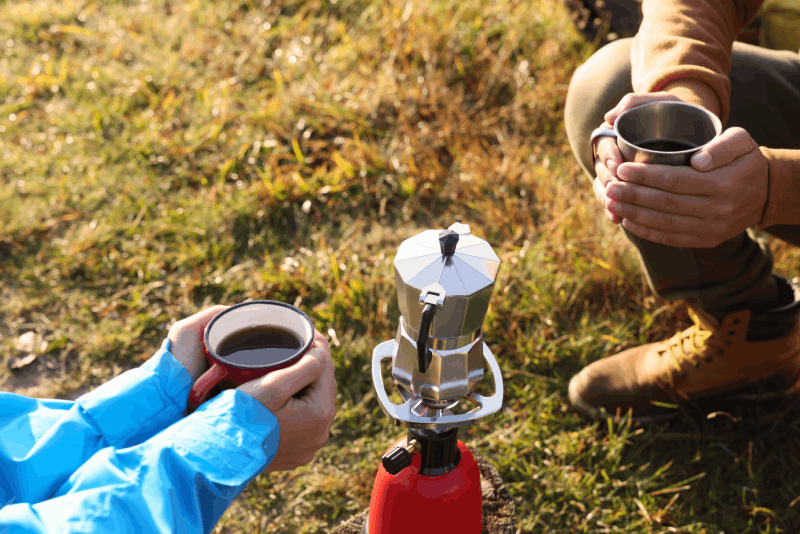
Although it may seem like a logistical detail, the mismatch between the width of the Moka pot's base and the foot structure of the camp stove can result in a disaster for your morning coffee. Especially the feet of compact, single-burner portable stoves are sometimes too wide for 1-cup or 3-cup small Moka pots. If the Moka pot wobbles or tips over on the stove, it can lead to both spilling the coffee and damaging the stove. To solve this problem, you should check the base diameter when buying a Moka pot or acquire a small metal star called a "Moka pot stove adapter." In the case of French Press and practical filter methods, since you only place a kettle on the stove to boil water, the balance issue is generally less experienced. Still, in wild camping areas where the ground is uneven, creating a controlled cooking area is always lifesaving against the risk of tipping over.
Do Practical Filter Coffee Packs Create Waste Problems and Odors in the Forest?
For a minimalist camper, practical filters, while easy to carry, can be a burden in terms of "waste management." Each coffee packet means both an outer packaging (usually a plastic/aluminum composite) and a used wet filter paper and coffee grounds. Especially in areas inhabited by wild animals (bears, pigs, etc.), the strong odor emitted by used coffee packets can attract curious animals to your campsite. It requires logistical discipline to put these packets in a non-leakable zip bag and take them with you when leaving the campsite. While you can dry and burn coffee grounds when using a French Press or Moka Pot, the wet paper of practical filters never dries. If you embrace the "zero waste" philosophy, using a reusable steel filter or Moka Pot will make it easier for you to fulfill your responsibility to nature.
Do Bleaching Agents in Filter Papers Transfer to Coffee with Hot Water?
Another health-focused concern is the chemicals in the production process of practical filters and paper filters. Many cheap paper filters undergo a chlorine process to be bleached. The possibility of these chlorine residues mixing into the coffee as hot water passes through the paper worries conscious consumers. To avoid this risk and the paper taste, you should always prefer "oxygen-bleached" (oxygen-bleached) or brown, unbleached natural filters. When choosing practical filter coffee brands, checking the food safety certifications of the paper used is a strategic approach. If your doubts about this issue are very high, the Moka Pot or metal-filtered French Press, which do not require paper filters, will provide you with the purest drinking experience. Metal filters are considered the most natural brewing tools as they do not require any chemical processing.
Does Using Coffee Ground for Moka Pot in French Press Cause Clogging?
The most common mistake in coffee logistics is trying to use the same ground coffee for all equipment. The coffee for the Moka pot should be ground to a consistency similar to table salt, meaning it should be "fine-medium" ground. If you try to use this coffee in a French Press, the metal filter will not be able to filter out these fine particles, and your cup will fill with coffee sludge. Even worse, you may encounter a lot of resistance when pushing the piston of the French Press down; when you force it to break this resistance, hot coffee may splash out from the sides. On the other hand, if you use the coarse ground coffee required for the French Press in the Moka Pot, the water will pass through too quickly, resulting in watery, weak, and flavorless coffee. It is vital to decide which equipment you will take with you before your camping trip and to grind your coffee accordingly (or adjust the grinder setting). Practical filters are the least troublesome in this regard, as the coffee inside them is specifically ground for that method at the factory.
Does Steam and Moisture Create Humidity When Preparing Coffee in a Tight Space of a Caravan?
Brewing coffee in small-volume caravans or vehicle-mounted tents can suddenly raise the humidity level in the environment. The Moka pot releases intense steam during brewing; likewise, boiling water for the French Press creates a similar effect. If ventilation is insufficient, this steam can condense on cold surfaces (windows, ceiling panels), leading to humidity odors and even mold formation over time. The cleanest method for campers is to boil water on an external portable stove and perform the brewing process in a closed area. Practical filters are the least steamy method since they pour water directly into the cup and do not retain a large water surface in the open. To maintain your comfort and prevent your textile products (bedding, curtains) from getting damp with coffee steam, you should definitely open the windows or turn on the kitchen fan while brewing.
Does Making Coffee with a Moka Pot Take Too Long for a Large Group?
When planning logistics, the number of people is a determining factor. Moka pots typically serve 1, 3, or 6 cups (based on espresso cups). If you are camping with a group of 4-5 friends and you have a 3-cup Moka pot, you will need to brew at least 3-4 rounds for everyone to have a cup of coffee. Waiting for the Moka pot to cool down after each round, cleaning the parts, and refilling means dedicating the most valuable 45 minutes of the morning to this task. In this case, the French Press is much more efficient, as its large 1-liter models can serve coffee to everyone at once. Practical filters allow everyone to make their own coffee in their own cup simultaneously, making them the fastest solution during "chaos" moments. Strategically, while the French Press reigns as the "king of speed and volume" in crowded camps, the Moka Pot is more of a tool for individual or couple "enjoyment" sessions.
Does Accidentally Putting Hot Water in the Bottom Chamber Ruin the Flavor of the Moka Pot?
Many campers think that putting boiling water in the bottom chamber of the Moka pot is a trick to speed up the process. However, this can trigger an uncontrolled extraction process. The metal body of the Moka pot heats up very quickly; if you put boiling water in the bottom chamber and place it over the fire, the temperature of the water entering the coffee bed will be very high, causing the coffee to have a "burnt" and overly bitter taste. The ideal strategy is to put warm water in the bottom chamber and wait for it to brew over low heat. This ensures that the water interacts with the coffee grounds at a more balanced rate and helps the aromatic oils in the coffee reach the cup without burning. Being hasty on a camping morning can ruin the taste of that coffee you have been eagerly waiting for; therefore, patience is the most important factor for flavor.
Do Old Coffee Residues in the French Press Poison the Next Brew?
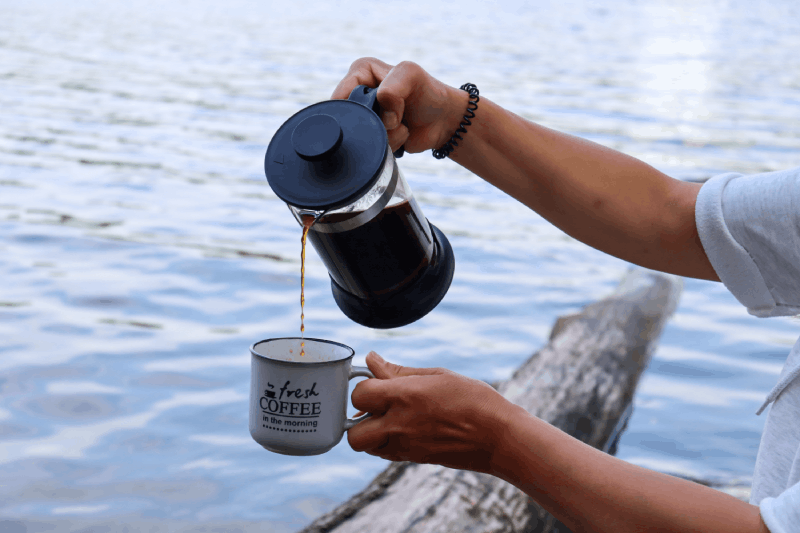
From a hygiene and flavor safety perspective, the metal filter of the French Press is the most critical part. Coffee particles trapped between the filter wires oxidize quickly in a humid environment and become bitter. If you brew new coffee without thoroughly cleaning the residues from the previous day, it is inevitable that you will taste that old, stale, and moldy flavor in your fresh coffee. Even worse, these residues can create a suitable ground for bacteria to grow when combined with hot water. The French Press filter should be washed by disassembling it into its parts (spring, filter, and plate) after each use. In a camping environment, this is a tedious task, but it is a non-negotiable rule for true coffee lovers. If this cleaning routine seems difficult to you, the "practical filter" method, which uses a new and clean filter each time, will make you much more comfortable from a hygiene perspective.
What is the Best Storage Method to Keep Coffee Beans Fresh During Long Journeys?
A logistical success story is written with the coffee staying fresh until the last day. Temperature changes in the camping environment (hot during the day, cold at night) can break down the cellular structure of coffee beans, causing the aromas to escape. You should never leave your coffee in its original packaging in a place that receives direct sunlight or in the glove compartment of the vehicle. The best strategy is to store coffee in airtight, light-blocking (opaque) vacuum containers or high-quality safety lock bags (ziploc). If possible, bringing coffee as whole beans and grinding it manually with a hand grinder at the time of brewing will enhance the flavor by 100%. With practical filters, since each portion is in nitrogen-flushed foil packets, the staleness issue is minimal; this makes them a favorite for long trips lasting months.
When Should the Rubber Gasket of the Moka Pot Be Replaced and Should a Spare Be Kept?
The unsung hero of safety and performance, the rubber or silicone gasket hardens over time due to high heat, cracking or losing its properties. A hardened gasket can cause pressurized water and steam to leak between the two bodies of the Moka pot; this reduces brewing quality and dirties the area around the stove. You should always keep a spare gasket and filter set in your camping gear. Especially if you are going on a long nature trip, being far from the nearest store, that 5-lira small piece can ruin your coffee enjoyment. To extend the life of the gasket, when not using the Moka pot, you should store the two bodies loosely without screwing them tightly together; this way, the gasket does not remain under constant pressure.
Which Method is Suitable for Your Camping Strategy?
As can be understood from this detailed analysis, there is no "best" method; there is only the method that is "most suitable for your needs." If you are looking for a real espresso intensity and trust the durability of metal, Moka Pot is your friend. If you are setting up a crowded breakfast table in the mornings and love full-bodied coffees, French Press is indispensable. However, if you are counting every gram, do not want to deal with cleaning, and prioritize hygiene, Practical Filter Coffees are lifesavers. Keeping these 20 critical questions in mind while determining your camping strategy will protect you from logistical mistakes and elevate your comfort in nature to the highest level. Remember, the best coffee is the one that makes you feel the safest and most peaceful while enjoying it in nature.