Camping in the wild is one of the purest connections that modern humans can establish with nature. However, for this connection to be safe and sustainable, it is essential to respect the true owners of the habitat, such as bears and wild boars, and to act according to their behavior patterns. In this blog post, we will address all the details that will ensure your survival and a peaceful experience while camping in risky areas in a Q&A format.
Is Camping in Areas with Bears and Wild Boars Safe?
As long as you are equipped with accurate information and gear, camping in these areas is generally safe. Wild animals tend to avoid humans, and most encounters arise from human mistakes or the animal feeling threatened. The key to ensuring safety is not to attract animals to your campsite and to know in advance what to do if you encounter them. If risk management is practiced, this exciting piece of nature can turn into an unforgettable and safe adventure. However, this is a process where there is no room for carelessness; every step must be taken consciously.
What Should Be Considered When Choosing a Campsite?
Choosing a campsite is the first and most important phase of your safety. You should avoid areas frequently used by bears and wild boars, such as trails, water edges, and regions with dense fruit trees. It is necessary to analyze the activity in the area by checking for animal tracks, droppings, or claw marks on trees. An ideal campsite is a flat area where the view is open, allowing animals to notice you and you to observe the surroundings. Additionally, it is important to anticipate where your scent will spread by considering the direction of the wind. Areas like dense thickets or cave entrances should be avoided as they may serve as resting spots for animals.
What is the "Triangle Method" and How is it Applied?
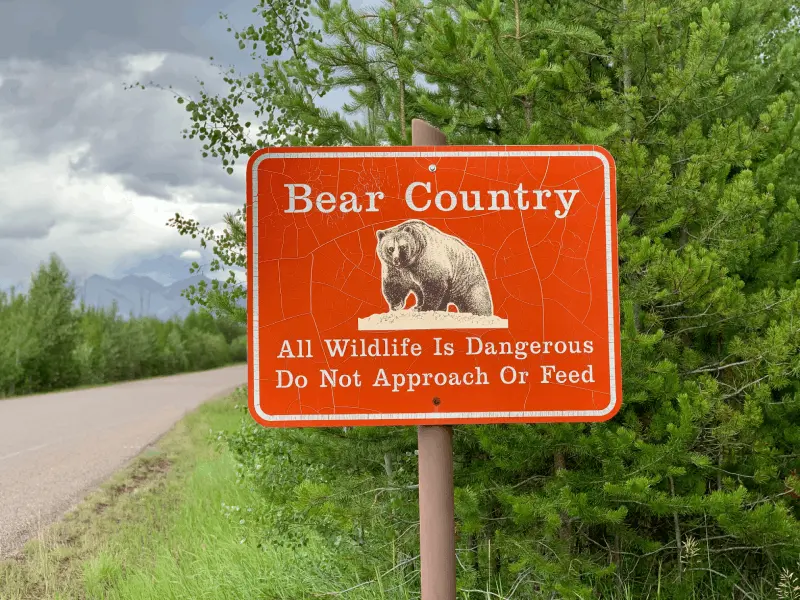
Camping in bear areas requires implementing the "Triangle Method" as the most effective strategy. According to this rule, the place where you sleep, the area where you cook, and the spot where you store your food should be at least 70-100 meters apart, forming a triangle. It is critical to position them in such a way that the wind carries the food scent away from your sleeping area rather than towards it. This way, even if a bear comes to the food scent, it will be far from where you are sleeping. This distance prevents the animal from associating food with you and gives you enough time to escape or defend yourself in case of curiosity.
What Scents Attract Bears the Most?
Bears have a sense of smell that is far more developed than that of dogs; they can detect the faintest scent from miles away. Not only food but also toothpaste, deodorant, sunscreen, insect repellent, and even dirty laundry can pique a bear's curiosity. While sweet and aromatic scents attract them, greasy food smells are the biggest invitation. Therefore, you should prefer unscented versions of any chemicals you bring to the campsite. Do not leave any scented items exposed; each should be stored in airtight bags or special containers. Remember, something that smells "clean" to you may mean "food" to a bear.
How Far Should the Cooking Area Be from the Tent?
The cooking and eating area should be at least 100 meters away from your sleeping area (your tent). The oil particles and smells released into the air while cooking can cling to your clothes and the surrounding soil. If you eat too close to your tent, your risk of encountering a curious guest who smells that scent throughout the night increases. After cooking, it is essential to clean the area meticulously, leaving no scraps behind. Ideally, you should not enter your tent with the clothes you cooked in, and these clothes should also be kept in the food storage area. This discipline is fundamental to maintaining your distance from bears and wild boars.
Why is a "Bear Canister" Vital?
Bear canisters are cylindrical containers made of special hard plastic or metal that bears cannot open with their paws or break with their teeth. The most significant feature of these containers is their odor-proof nature and physical durability. When bears learn that they cannot open these containers, they usually give up trying. Storing your food in these canisters instead of hanging it from a tree is much safer because clever bears have learned to lower hanging backpacks. You should place the bear canister at least 100 meters away from your tent on flat ground where it won't roll away. This container not only protects your food but also prevents bears from associating human food with them, thus safeguarding their lives.
How to Hang Food in a Tree (Bear Bagging)?
If you do not have a bear canister, hanging food in a tree (bear bagging) is a necessary alternative. However, this process requires technical skill. Your food bag should be at least 4-5 meters above the ground, at least 3 meters away from the main trunk of the tree, and hung on a thin branch. Since bears can climb trees, having the bag close to the trunk makes it an easy target for them. A thin branch provides protection as it cannot support the bear's weight. A rope system stretched between two trees (like the PCT method) is generally the most reliable. However, it should be noted that very experienced bears may succeed in breaking these ropes or branches, so caution is necessary. it is a condition.
Why is it Dangerous to Keep Food in a Tent at Night?
Keeping food in a tent at night is one of the biggest mistakes that can be made in the wild. You are vulnerable while you sleep, and the thin fabric of the tent poses no barrier to a bear or wild boar. When an animal catches a whiff of food inside the tent, it will try to enter directly. This situation sets the stage for a deadly confrontation for both you and the animal. Even small items like packaged foods, gum, or candy increase the risk. Your tent is only for sleeping; food, trash, or any personal care products that emit odors should never, ever be inside. There is not a single exception to this rule.
Do Personal Hygiene Products Attract Wildlife?
Yes, personal hygiene products can attract bears and wild boars just as much as food. Toothpaste, shampoo, soap, and perfumes have strong and artificial scents that are not found in nature. Bears may come into the area to discover these new scents that they are not familiar with. Even some sunscreens can have aromas that are appealing to them. Using unscented products while camping minimizes this risk. Additionally, after using these products, you should store them in bear-proof containers or odor-proof bags, away from the tent, just like food. Smelling "clean" in the wild is not safe; being "odorless" is safe.
How to Use Bear Spray and When is it Effective?
Bear spray is a defensive tool that contains capsaicin (pepper spray) in a concentrated form and stops bears by irritating their mucous membranes. For it to be effective, the spray must be easily accessible from its holster; there is no benefit to a spray that is inside a backpack. When a bear makes a direct approach towards you, you should pull the safety pin and make short, powerful bursts towards the bear's face while you are 10-15 meters away. It is crucial to pay attention to the wind direction; if the wind is blowing towards you, you may also be affected by the spray. Bear spray is a more effective deterrent than firearms because it is not lethal and creates a wide cloud, reducing the need for precise aiming.
What is the First Thing to Do When Encountering a Wild Boar?
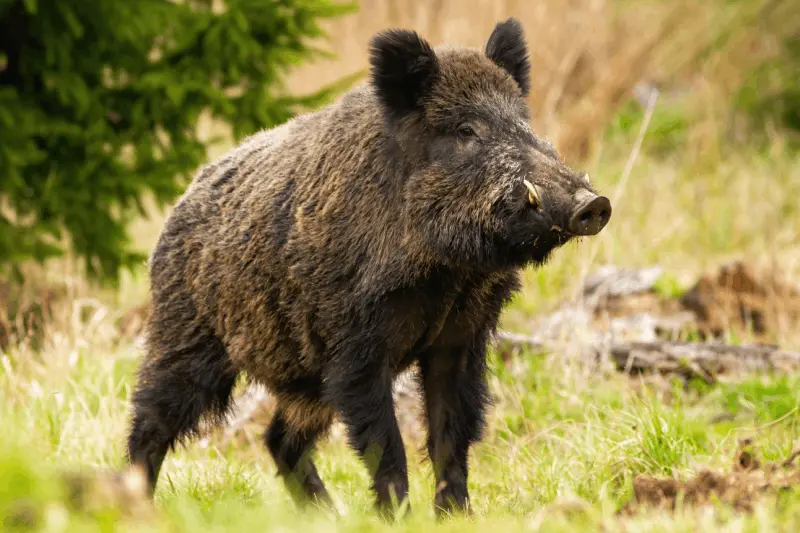
The first thing you need to do when you encounter a wild boar is to remain calm and give it space to escape. Wild boars generally have poor eyesight but have a very strong sense of smell and hearing. If it hasn’t noticed you, you should slowly back away without making noise. If it has noticed you and is looking at you, stay where you are and try to appear larger. Avoid sudden movements, as this could trigger an attack. Wild boars usually only attack when they feel cornered or when they want to protect their young. If they give you an escape route, make sure to take it.
Why is Running Away When Encountering a Bear a Mistake?
Running away when encountering a bear is one of the most dangerous actions you can take. Bears' predatory instincts are triggered when they see an object fleeing. No matter how fast you are, a bear can reach speeds of 50-60 kilometers per hour and can catch you in seconds, even on steep slopes. Running away causes the bear to perceive you as "prey." Instead, you should remain calm, raise your arms to appear larger, and speak in a low but confident voice to let it know you are human. You should back away slowly without losing eye contact with the bear (but without staring it down defiantly).
What are the Behavioral Differences Between Grizzly Bears and Black Bears?
Grizzly bears and black bears have different defense mechanisms. Black bears are generally more timid and may climb a tree to avoid a confrontation. If a black bear attacks you, instead of giving up, you should fight back with all your strength, targeting their sensitive areas (nose and eyes). Playing dead does not work against black bears. Grizzly bears, on the other hand, are more aggressive defenders. If a grizzly bear is attacking for defensive reasons (to protect its cubs), playing dead (lying on your stomach with your hands clasped behind your neck) can stop the attack. However, if the bear is silently stalking you and attacking with a predatory approach, you must resist with all your strength in both cases.
How Should Waste Management be Handled in the Wild?
When camping, waste management is a safety issue beyond the "Leave No Trace" principle. Food scraps, packaging, and even fruit peels can attract wildlife to the campsite. Never attempt to burn your trash, as the smell of burnt food can linger in the ashes and is very attractive to bears. You should place all your trash in odor-proof bags and store them just like your food in bear canisters. When leaving the area, you must take all your trash with you. A "clean camp" is not just a visual order; it is a shield that prevents wild animals from seeing humans as a food source.
What Should We Do if We Encounter an Animal with Young?
Encountering a bear or wild boar with young is one of the most dangerous situations in the wild. Mother animals can be much more aggressive and fearless than usual when protecting their young. If you see a young animal, never approach it, do not try to take a photo, and quietly move away in the direction you came from. The mother animal will be very protective of her young, and your presence can provoke a dangerous situation. Never allow yourself to enter their territory. If you have inadvertently entered their space, calmly but decisively leave the area as soon as possible. If the mother animal is in an aggressive position (growling, stomping, etc.), it means she wants to drive you away; heed this warning.
Does Campfire Keep Wild Animals Away?
Contrary to popular belief, campfires do not always keep wild animals away. In some cases, curious animals may be attracted to the light and unfamiliar smells. However, in general, animals tend to avoid fire and smoke. The main danger of a fire is that the smell of food being cooked can spread over a wide area. When you light a fire, you should completely extinguish it as soon as you finish your work and check the ashes. It is best to avoid eating near the fire. Additionally, the risk of fire can lead to a much larger disaster than the risk of wild animals, so you must strictly adhere to local regulations when starting a fire.
How to Remove Food Smell from Clothes?
The smell that clings to your clothes while cooking can make you a target while you sleep. If possible, you should use a separate outer layer (like a jacket or apron) for cooking and keep this layer away from your tent after the meal is finished. If food spills on your clothes, you should change immediately and place the soiled item in an airtight bag to dispose of it. Never enter your sleeping bag with clothes that have food smells. Some campers keep a clean set of clothes, which they call "sleeping clothes," that have never come into contact with food, to use only inside the tent; this is a very safe method.
Does Camping with a Dog Increase Safety?
Camping with a dog carries both advantages and significant risks. A well-trained dog can detect a bear or a boar long before you do and alert you. However, if your dog is off-leash and charges at a wild animal and then gets scared and runs back to you, the angry animal may charge directly at you. Bears and especially wild boars see dogs as a threat or a competitor and may become aggressive. It is crucial that your dog remains leashed and does not bark unnecessarily. Additionally, you should store your dog's food just as securely as your own food and not allow any food to spill around.
Why is Making Noise While Hiking Important?
The biggest fear of bears and wild boars is unexpectedly encountering a human. When animals hear you, they usually move away. Therefore, making noise while hiking, talking, or occasionally tapping a metal object alerts them. Especially in areas where visibility is limited, where there is running water, or in windy conditions, you should raise your voice. Sneaking quietly can cause you to startle a bear in its den or a wild boar resting with its young. The first reaction of a startled animal may be a defensive attack, so it is best to announce your presence in advance as a means of protection.
Do Bear Bells Really Work?
Bear bells have been a tool used by campers for many years, but their effectiveness is debatable. Many experts point out that the sound of the bell is at a very low frequency and that bears may not hear this sound in windy conditions or near water. In some cases, this rhythmic sound may even attract a curious bear. The most effective "noise-making" method is the human voice; shouting or whistling is a more natural alert in the wild. Even if you use a bell, it should not be your only safety measure. Using your voice and talking loudly with your friends is a much more reliable way than bear bells.
What are the Signs of Wild Boar Aggression?
Wild boars often give some warning signals before attacking. If a wild boar is stomping its feet, shaking its head up and down, making a "chop chop" sound by grinding its teeth, or growling loudly, this indicates preparation for an attack. Boars typically tend to charge directly at you or attempt to injure you with their tusks. If you observe these signs, you should not approach the animal and should slowly back away. Remember that wild boars are very fast and agile. If an attack seems unavoidable, climbing to a high place (a rock or a sturdy tree) is the best defense method.
Where Should Wet Wipes and Toothpaste Be Stored?
Wet wipes, toothpaste, lip balm, and similar "non-food" scented items must definitely be placed inside bear canisters. These items typically emit sweet or aromatic odors and can attract bears just as much as a can of food. Many novice campers only secure their food and end up spending the night in fear due to a lip balm they forgot in the pocket of their tent. You should also store your trash bags, sanitary pads, and used wet wipes in the same airtight bags and keep them away from the tent. Anything that emits odor in the wild is a potential risk factor.
What Should Be Done If Bear Tracks Are Seen in the Camping Area?
If you see fresh bear tracks (paw prints, fresh scat, overturned rocks, or broken branches) near your campsite, you should not set up camp there. Fresh tracks indicate that the animal has been there recently and is likely to return. Bears have large territories but tend to use certain paths frequently. If you see fresh scat, poke it with a stick; if it is still moist and steaming, the bear is very close. In this case, quietly but quickly leave the area. Safety is not about saying "nothing will happen here" but about correctly interpreting the signs nature gives and being able to back away.
Do Wild Boars Enter Tents?
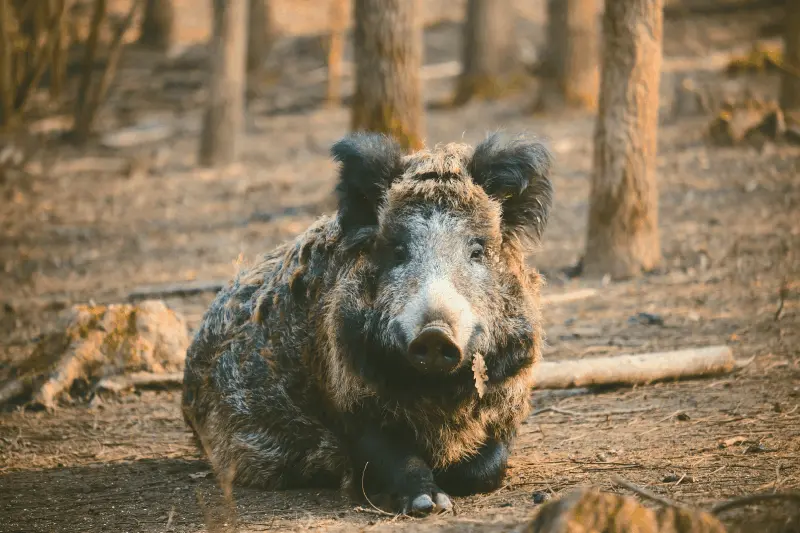
Wild boars are generally not as curious as bears, but when they catch a whiff of food, they may approach the tent and even try to get under it. They have very strong noses and teeth; they can easily tear through tent fabric to reach a food bag. Since pigs usually roam in groups (sounders), if one becomes curious about your tent, it can attract others to the area as well. If you store your food properly (away from the tent and secured), there is no reason for a wild boar to enter your tent. The only thing that attracts them to your tent is your negligence.
Why Should We Stay Away from an Area When We See a Dead Animal Carcass?
Seeing a dead animal (deer, pig, etc.) in the wild indicates that there is a large predator (bear or wolf) feeding in the area. Bears are very possessive of the carcasses they find and will often wait nearby for days to guard the carcass. Approaching a carcass can provoke the bear to attack you, perceiving you as a "rival trying to steal its food." If you smell a carcass or see birds (crows, vultures) congregating at a spot, immediately change your route and stay at least a few kilometers away from that area. This is one of the most fundamental rules of survival.
What Should Be Considered When Relieving Oneself in the Forest?
When relieving yourself, you should be at least 60-70 meters away from water sources and the campsite. Burying your waste in a deep hole (cat hole) helps prevent odors from spreading and reduces animal interest. However, some animals (especially wild boars and bears) can dig up the ground and access this waste. Instead of burying used toilet paper, it is safest to place it in sealed bags and dispose of it in the trash. Additionally, you should not stop observing your surroundings while relieving yourself; if possible, have a friend keep watch. Being vulnerable during these moments makes situational awareness crucial.
How Does Proximity to Water Sources Affect Camping Choices?
Water sources (streams, lakes, springs) are common meeting points for all wildlife. Animals typically come to drink water early in the morning and late in the evening. If you camp near a water source, you may either block a vital need for animals or invite them directly to your campsite. Ideally, you should camp at least 100 meters away from the water source. This way, animals can access water without disturbing you, and you won't be in their travel path. Additionally, the sound of water can mask the noise of an approaching animal, increasing the risk of a "surprise encounter."
Is Hammock Camping or Tent Camping Safer?
While there are differing opinions on this, a closed tent is generally considered safer in bear areas. A tent creates a visual barrier and can prevent an animal from seeing you as a direct "prey." In a hammock, however, you are completely exposed, and a swinging object may appear as an enticing toy to a curious bear or wild boar. However, in both cases, the most important safety factor is food management. If there is no food odor, animals typically show little interest in either type of shelter. If you choose to use a hammock, you should adjust your height above the ground well and select a location where you can see your surroundings.
Is Bear Spray or Firearm More Effective?
Scientific studies have shown that bear spray is more effective than firearms in increasing survival rates during bear attacks. A bear attack can happen in seconds, and hitting vital organs of a fast-moving target with a firearm is very difficult; an injured bear may become even more aggressive. Bear spray, on the other hand, creates a wide cloud that instantly impairs the bear's ability to see and breathe, allowing you to escape without causing it lasting harm. Additionally, using spray does not require professional marksmanship training. For your safety, you should always prioritize carrying bear spray.
Is Climbing a Tree a Smart Way to Avoid Wild Boars?
Yes, wild boars cannot climb trees, so climbing a sturdy tree is one of the most certain ways to escape a pig attack. Pigs usually wait under a tree for a while before moving away. However, this method is risky in bear areas; because black bears can climb trees much faster than you. If a wild boar charges at you and there is a climbable tree or high rock nearby, it would be wise to consider that option. In the case of a bear, however, it is better to stay put and use your spray or slowly back away.
What Are the Advantages of Camping in a Group?
Moving in a group instead of camping alone in wildlife areas greatly enhances safety. Larger groups make more noise, emit a wider scent area, and appear more intimidating visually. A bear or wild boar would prefer to avoid a large group of people rather than attack. Additionally, in the event of an injury or encounter, one person can distract the animal while another uses spray or calls for help. "Numerical superiority" is a very important psychological and physical defense element in nature. Groups of at least three people are considered ideal.
How Do Seasonal Changes Affect Animal Behaviors?
Animal behaviors show significant variation according to the seasons. In spring, bears wake up from hibernation and are irritable; this period is also their cub-rearing season. In summer, food is abundant, but as water sources diminish, animals may become more aggressive in seeking water.
They search for food. Autumn is the period of "hyperphagia"; bears go crazy looking for food for their winter sleep, and their interest in campers may increase during this time. Wild boars, on the other hand, will explore wider areas to find food in winter. Knowing the characteristics of the season in which you will camp informs you about which risks you need to be more cautious about. Each season should have its own safety protocol.Why is it Necessary to Get Information from Local Authorities in the Area?
Before going to an area, talking to the national park officials or local hunters can provide vital information. Questions like "Has a bear been seen in this area recently?" and "Where is the wild boar population dense?" can help you determine your route. In some areas, camping may be prohibited due to the presence of certain species (for example, a bear with cubs). Local authorities can also inform you about which food storage methods are more effective against animals in that area (some bears may have learned to open certain containers). Information is as protective as equipment.
How Should First Aid Be Administered After an Attack?
If an attack occurs despite all precautions and there are injuries, the first priority is to stop the bleeding. Wild animal bites and claw wounds carry a serious risk of infection and often lead to deep tissue damage. The wound should be washed with clean water (if possible) and pressure should be applied with sterile cloths. After the attack, you should retreat to a safe area (a vehicle or a sturdy structure) in case the animal remains in the area. Professional medical help should be sought without delay or you should go to the nearest health facility. Vaccinations against rabies and tetanus should definitely be administered.
How to Cope with Fear in the Wild?
In the wild, it is natural to feel fear, especially in response to sounds that come at night. However, panic can lead to poor decision-making. The best way to cope with fear is to "be prepared." When you know your food is secure, your spray is at hand, and you have chosen your campsite wisely, you will feel more psychologically at ease. Remind yourself that not every rustling you hear at night is a bear; it is often the sound of small rodents or birds. Information and preparation reduce the fear brought by uncertainty to a manageable level.
What Are Irreversible Mistakes?
Some mistakes made in the wild may be irreparable. Feeding animals (whether intentionally or through negligence), trying to take photos by approaching them, going out without bear spray, and storing food improperly are at the top of this list. If an animal becomes accustomed to human food (a "conditioned animal"), it is now a security threat and this situation usually ends with the animal being killed. Therefore, a mistake you make not only endangers your life but also the life of that animal. You should approach nature not as a "guest" but as a "temporary resident" who must abide by its rules.
Why Are the "Leave No Trace" Principles Important?
The "Leave No Trace" principles are not only about protecting the environment; they also prevent conflicts between wild life and humans. Every trace, every fragment, and every scent you leave in nature disrupts the natural balance of wildlife. The thing that causes animals to approach human living areas is often the trash left behind. If we leave nature as we found it (or even cleaner), animals will continue to stay within their natural cycles. This mutual respect ensures that wild nature remains for future generations and allows us to spend time there safely.
How Should the Campsite Be Left When Leaving the Area?
When leaving the campsite, you should leave the area as if you had never been there. Make sure the fire is completely extinguished and cooled down. Collect even the smallest pieces of packaging that may have been overlooked. If something has spilled on the ground in the food preparation area, clean that area or cover it with dirt to mask the smell. Check your bear canister and your main bags. A clean area left by you means a safe place for future campers and an "uninhabited" natural area for the animals there. Nature will embrace you as long as you honor it.
What Are the Final Recommendations for a Safe Sleep in the Wild?
Your final checklist for a safe sleep should include: Are all food and scented items locked away 100 meters from the tent? Is the bear spray right next to your sleeping bag, within reach? Is there no food debris around your tent? Are your clothes clean and odorless? If you can answer "yes" to these questions, you can sleep peacefully. Remember, there is no absolute safety in the wild, but 99% of the risks can be managed by your behavior. A conscious camper is not afraid but alert and understands the language of nature. By following the rules in this guide, you can have a great time in the world of bears and wild boars without harming them and without being harmed.