What Are the Basic Requirements for Off-Grid Caravan Living?
The foundation of living off-grid in a caravan is being able to survive for at least 3 to 7 days without needing any external source. There are three main pillars of this system: energy production and storage, water supply and management, and finally, climate control. On the energy side, solar panels and lithium batteries take the lead, while on the water side, large clean water tanks and hydroponic systems come into play. Each of these basic needs can change your budget by thousands of dollars depending on the quality and capacity of the chosen products. Even for a basic level system, correctly designing the electrical and water installations is vital; because a mistake in off-grid systems can leave you without power in a remote location.
Why Should Monocrystalline Perk Solar Panels Be Preferred?
Since you have limited space on the caravan roof, panel efficiency is the most critical factor. Monocrystalline Perk (Passivated Emitter and Rear Cell) panels provide high efficiency even in low light conditions, allowing for charging even on cloudy days. Although they are more expensive than polycrystalline panels, the watt value they produce relative to the area they occupy is much higher. A panel arrangement between 200W-450W is generally ideal. The unit cost of these panels varies between $0.30 and $0.50 per watt today. When mounted with quality aluminum construction and proper alignment, they can extend the lifespan of your system up to 20 years. The efficiency loss of cheap panels over time can lead to serious energy crises in off-grid systems during winter months, so it is the most logical investment not to cut back on this part of the budget.
What Is the Cost Advantage of LiFePO4 Batteries Compared to Lead Acid Batteries?
The initial purchase cost of Lithium Iron Phosphate (LiFePO4) batteries can be 3-4 times that of traditional Gel or AGM batteries. However, considering their deep discharge capacities (up to 90%) and cycle lives between 3000-5000, they are actually much cheaper in the long run. While a standard Gel battery starts to get damaged after 50% discharge, LiFePO4 batteries positively contribute to the weight balance of the caravan due to their lightness. The price of a quality 100Ah lithium battery varies between $350 and $600, while to provide this capacity with a Gel battery, you would need to buy twice as many batteries and carry three times the weight. Additionally, the fast charging feature of lithium batteries allows you to quickly store energy from the alternator or solar on days when sunlight is limited.
How Does the Selection of an Intelligent Inverter Affect the Total Budget?
An inverter converts the 12V or 24V DC current in your batteries to 220V AC current to power household devices. "Non-Pure Sine" inverters can damage sensitive devices like refrigerator motors or laptop chargers. Therefore, a Pure Sine inverter should always be preferred in caravans. Intelligent inverters also serve as a charger, filling the batteries when you receive electricity from an external source and automating system management. The cost of an inverter between 1000W and 3000W varies widely from $200 to $1500 depending on the brand (Victron, Lexron, etc.). Choosing an inverter with a higher watt value allows you to operate devices like induction cookers or air conditioners, but in this case, your battery bank must also have the capacity to handle this load.
How Much Does MPPT Charge Controller Efficiency Increase?
Devices that reduce the voltage coming from solar panels to a level that the batteries can accept are called charge controllers. While PWM type devices work like a simple voltage regulator, MPPT (Maximum Power Point Tracking) devices continuously analyze the voltage and current of the panels, providing 20% to 30% more energy harvest. MPPT is especially crucial during winter months or when part of the panels is shaded. A quality 30A or 50A MPPT device costs between $100 and $250. While PWM devices can be found for around $20, wasting 30% of the energy coming from the panel in an off-grid system is more costly than increasing the number of panels. Therefore, MPPT is one of the smartest expenses that can be made for system efficiency.
What Are the Installation Costs of Hydroponic and Water Pressure Systems?
12V hydroponic systems that ensure water flows when you turn on the tap in the caravan bring the comfort of home to the caravan. Hydroponic systems from brands like Seaflo or Shurflo, which can pump 11-19 liters of water per minute, range from $50 to $120. However, just buying a hydroponic system is not enough; a pressure tank (accumulator) must be used for the system to operate quietly, and flexible hoses must be used to prevent damage from vibrations. A pressure tank adds approximately $30-50 in extra costs. The total cost of the water pressure system, including plumbing materials, check valves, and filters, falls in the $200-300 range. If you want a quiet system, placing sound insulation pads under the hydroponic system and using quality connection elements will slightly increase the labor time and cost.
How Much Do Grey Water and Black Water Storage Solutions Cost?
Waste management is the least discussed but most important part of off-grid living. Grey water from the kitchen and shower and black water from the toilet must be stored separately or combined. Generally, polyethylene tanks between 70-150 liters are preferred. The unit price of these tanks ranges from $50 to $100. However, during the installation phase, stainless steel mounting brackets, level sensors, and discharge valves will increase the cost. For sensors and indicator panels, $40-100 is spent, while external discharge valves cost $20-50. In total, setting up a regular waste system, including tanks, requires a budget of around $300-500. Properly placing the tanks under the vehicle's center of gravity is critical for safety. This can lead to an expert labor cost.
Should You Prefer Original or Equivalent in Choosing Diesel Heater (Webasto)?
Heating is the biggest expense during the winter months of off-grid caravanning. Original brands like the German brand Webasto or Eberspächer are priced between $800 and $1200, while equivalent devices produced in China range from $150 to $250. The price difference arises from reliability, service network, and noise. Original devices offer lower fuel and electricity consumption, providing peace of mind with safety certifications. Equivalent devices are attractive for those with a limited budget but may frequently malfunction or operate at high noise levels. If you live full-time, investing in an original heater may be more profitable in the long run. You should also allocate an additional budget of approximately $50-$100 for extras like installation kits and exhaust insulation.
How Does Using an Induction Stove in a Caravan Strain the Electrical System?
Choosing an induction stove instead of traditional gas stoves eliminates the hassle of transporting gas cylinders in the caravan but places a massive load on the electrical system. A single induction stove consumes between 1500W and 2000W while operating. This requires at least a 2000W inverter and a lithium battery bank of at least 200Ah-300Ah. While the gas stove installation costs $100-$200, setting up the electrical infrastructure to support the induction stove (extra panel, larger battery, and inverter) can add $1000-$1500 to the total cost. If you don't have enough solar panel area on your roof, cooking in winter can quickly drain your batteries. Therefore, the decision to use an induction stove is one of the most critical choices that determine the size of the entire energy system and thus its cost.
What is the Price Difference Between Compressor Refrigerators and Absorption Systems?
A 12V compressor refrigerator is the standard in an off-grid caravan. While 12V refrigerators range from $400 to $800, running 220V household refrigerators through an inverter is inefficient and requires the inverter to remain constantly on. Three-system (Absorption - Gas/12V/220V) refrigerators lose efficiency depending on the outside temperature and have high prices like $600-$1000. A 12V compressor refrigerator keeps your food cold in every condition while consuming very little energy (averaging 1-2 amps per hour). Since the refrigerator is the only device that runs 24 hours, choosing the most efficient model actually helps you save on battery capacity. Investing in a quality Indel-B or Dometic brand refrigerator is essential for your food safety.
Is Starlink Satellite Internet a Luxury or a Necessity in Off-Grid Living?
If you are a digital nomad working remotely, Starlink is no longer a luxury but a necessity. It offers uninterrupted high-speed internet in canyons or mountain tops where standard GSM operators do not reach. The hardware cost is approximately $300-$500 (varies by country and promotion), while the monthly subscription fee is around $40-$100. The biggest disadvantage of Starlink is its high energy consumption; the device consumes between 50W and 75W while operating. This means approximately 1.2kWh-1.8kWh of energy for 24-hour usage, which translates to using about half of a 100Ah-150Ah lithium battery just for the internet. Therefore, setting up Starlink means you also need to increase your solar panel and battery budget by about 30%.
What is the Comfort Cost of Outdoor Awnings and Lighting Systems?
Most of off-grid living occurs outside the vehicle. A quality side awning (Thule, Fiamma, etc.) costs between $600 and $1200. An awning doubles your living space by protecting you from the sun and rain. On the outdoor lighting side, low-energy but high-lumen LED bars or projectors should be preferred. A set of quality outdoor lighting and installation costs around $50-$150. These systems are critical for security and visibility, especially during overnight stays. Additionally, to prevent the awning from being damaged in the wind, securing kits and storm straps will add an extra cost of $30-$50. While it may seem simple in appearance, a proper outdoor space design is the biggest difference that elevates caravan comfort to home level.
How Much Budget Should Be Allocated for Ventilation and Ceiling Fans?
Ceiling fans are essential for expelling moisture, cooking odors, and heat from inside the caravan. Dual-direction fans (both blowing and sucking air) with rain sensors, like MaxxAir or Fiamma, range from $250 to $450. These fans do not consume as much energy as air conditioning (1-4 amps per hour) but can lower the ambient temperature by 5-6 degrees by ensuring air circulation. If your budget is limited, you can simply place a small fan in the bathroom and install a standard hatch (ceiling window) in the living area. However, if you want to spend a summer off-grid without air conditioning, you should add at least one quality ceiling fan investment to your budget. The total cost, including insulation materials and sealing mastics needed for installation, can reach around $500.

Is the Money Spent on Wiring and Fuse Panel Safety Unnecessary?
Many caravan fires occur due to incorrectly selected cable sizes and insufficient fusing. Thick and quality copper wires should be used to prevent voltage drop in 12V systems. Every circuit from the solar panel to the battery and inverter line must be protected with a fuse of appropriate amperage. Cable channels, spools, terminals, fuse blocks, and labor can cost between $200 and $400 just for the "electrical infrastructure." This amount may seem excessive, but it is the only system that protects your thousands of dollars worth of equipment. A professional fuse... The panel allows you to quickly detect the problem in case of a malfunction and minimizes the risks of short circuits that may occur in the vehicle's metal body.
How Does Insulation Material Selection Contribute to Energy Savings?
Insulation is the "invisible hero" in a camper. Good insulation made using elastomeric rubber foam, stone wool, or foil products ensures that the heater works less in winter and the air conditioner or fan works less in summer. This directly means savings on fuel. The material cost for complete insulation of a medium-sized panel van ranges from $400 to $700. Mistakes made in insulation (such as leaving heat bridges) can lead to moisture and eventually cause the vehicle to rust over time. When moisture barriers and sound insulation panels (such as bituminous, etc.) are added, this figure can approach $1000. However, in a well-insulated camper, heating costs can decrease by 50%, which means your heater consumes less diesel and electricity.
Can Portable Power Stations Be an Alternative to Fixed Systems?
Portable power stations like EcoFlow, Bluetti, or Jackery are "plug-and-play" solutions that contain an inverter, MPPT, and lithium battery. A device with a capacity of 1kWh-2kWh costs between $1000 and $2000. They are more expensive than a fixed system, but there is no installation hassle, they are portable, and they are much safer. They are a great alternative for those who do not want to deal with small campers or complex electrical systems. However, they do not offer as high a capacity as "fully equipped off-grid systems," which is the subject of a 3200-word blog. If you only need to charge a phone and power one or two lamps, it makes sense, but if you want to run an oven, refrigerator, and heater, a fixed system will always be more economical and sustainable.
How Does Using a DC-DC Charger Extend Battery Life?
A device that charges the living batteries from the vehicle's alternator while the camper is in motion is called a DC-DC charger. Classic isolator relays (VSR) cannot charge lithium batteries with the correct voltage and current and can overload the vehicle's alternator. A DC-DC charger between 30A and 60A costs between $150 and $300. This device allows you to fully charge your batteries with just 1-2 hours of driving on days when there is no sun. It is an "essential" device, especially for winter campers. By protecting your battery health, it extends the life of your thousands of dollars worth of lithium batteries. The cost of the thick cables that will be drawn from the vehicle battery to the living battery for the installation of this system is approximately $50-$80.
What Are the Caravan TSE Approval and Projecting Fees in 2024?
For a vehicle to obtain a caravan license, it must comply with certain standards and be projected by an engineer. As of 2024, the total cost for project drawing, TSE approval, and license change in Turkey ranges from approximately 15,000 TL to 25,000 TL (average $500 - $800). This process may also include details such as gas tightness report and electrical installation compliance. Owning a licensed caravan is not only a legal requirement but also a prerequisite for being able to obtain insurance and coverage. Off-grid systems installed in unlicensed vehicles can put all your investment at risk, as they will remain outside the insurance coverage in the event of an accident or fire.
What Is the Cost of Tools for Those Who Build Their Own Caravan?
If you are going to set up the system yourself (DIY), you need to have the right tools. A set consisting of basic tools such as a jigsaw, drill, screwdriver, multimeter, wire stripper, and crimping tool costs approximately $400 to $700. Not using the "right crimping tool" especially on the electrical side can lead to loose connections and thus increase the risk of fire. By doing your own work, you can save between $2000-$5000 on installation fees, but you should also add the cost of these tools and the time spent learning to your budget. Additionally, it should be noted that the cost of correcting a faulty installation can be more expensive than going to a professional workshop.
How Much Labor Cost Do Professional Caravan Conversion Workshops Charge?
Labor in caravan conversion ranges from 30% to 50% of the total budget. In a professional workshop, the labor cost for a complete conversion, including furniture, electricity, water, and insulation, can vary between $5,000 and $15,000. This price includes the warranty provided by the workshop, engineering services, and after-sales support. If the complexity of the off-grid system (smart systems, automation, hidden lighting, etc.) increases, the labor duration and cost will also rise. A caravan that comes out of professional hands will be more valuable in the second-hand market and minimize your chances of experiencing a technical problem in remote areas.
Are Dry Type Toilet (Composting Toilet) Systems Expensive?
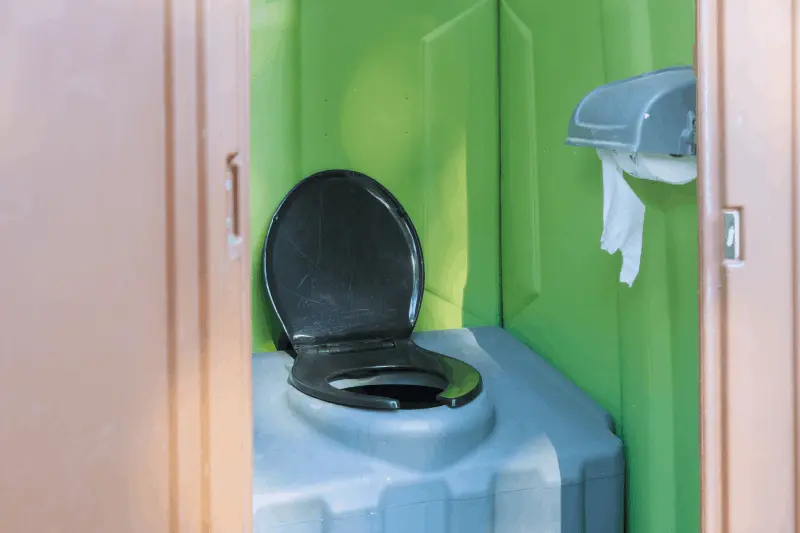
While classic cassette toilets (Thetford, etc.) cost around $600-$900 and require chemical use, dry type toilets are priced between $900 and $1500. The biggest advantage of dry toilets is that they do not require a "black water" tank and only leave fertilizer in nature. They eliminate the chemical cost and the hassle of emptying the cassette. However, the initial investment cost is quite high. For those who want to fully experience off-grid freedom in a camper, dry toilets also save on water tank costs since they significantly reduce water consumption (no flushing required). In the long run, their environmental friendliness and ease of waste management amortize this high cost.
Is It Possible to Supply Water from Nature with Water Purification Systems?
If you really want to be independent from the grid, you need to be able to convert stream or lake water into drinking water. A set consisting of a UV filter system, carbon filters, and sediment filters costs approximately $200 to $400. If you want to convert seawater into fresh water (Desalinator), costs start from $3000, which is generally excessive for campers. With a standard triple filter system, you can ensure the cleanliness of the water from streams or clean rivers. You can fill your tank by taking it. This system eliminates the need to return to the city to search for water, which is the biggest constraint (water) that determines how long you can stay off-grid.
What Is the Extra Insulation and Heating Cost for Winter Camping?
If you want to camp in winter at -20 degrees, standard insulation is not enough. Heating pads (each costing $30-$50) and pipe insulation are required to prevent water tanks from freezing. Additionally, thermal covers installed from the outside for windows ($100-$200) significantly reduce heat loss. Increasing the heating capacity from 2kW to 5kW also brings some cost increase. Preparing a caravan fully compliant with winter conditions requires a budget of about $500-$1000 more compared to a standard caravan. However, thanks to this investment, the joy of sitting inside with a heater in winter is priceless. Remember that the damage caused by a burst water system and the harm it can cause to the vehicle will be much higher than these preventive expenses.
Are Flexible Panels or Aluminum Framed Panels More Cost-Effective?
Flexible panels are known for their lightness and adaptability to the shape of the vehicle, but their lifespan is shorter (3-5 years) and their prices are twice that of aluminum panels per watt (approximately $0.80-$1.20 per watt). Aluminum framed panels are heavier and require a ceiling rail for installation, but they offer a 20-year performance guarantee and are much cheaper. Additionally, flexible panels heat up a lot because there is no gap between them and the ceiling, and their efficiency decreases as they heat up. If the roof of your vehicle is flat and your weight limit is not very critical, it is always better for your wallet to prefer aluminum framed rigid panels. Flexible panels are generally only logical for curved surfaces or small projects that need to be very lightweight.
Is It Worth Buying Smart Battery Monitoring Monitors (Victron BMV)?
Smart monitors that show the current status of your batteries, how many amps you are drawing, and your remaining usage time as a percentage cost between approximately $150 and $250. It is impossible to understand the state of charge of a lithium battery just by looking at a simple voltmeter because the voltage curve of lithium is very flat. A BMV (Battery Management Victor) or similar shunt-based monitor acts like a "fuel gauge" for your system. Living off-grid without this device is like driving a car without a fuel gauge. It ensures that you base your energy management on scientific data and protects your batteries from over-discharging, thus preserving their lifespan (and your money).
What Is the Difference and Price of Marine Type Cables Compared to Standard Cables?
A caravan is a structure that is constantly vibrating. Marine type (tin-coated copper) multi-stranded cables are much more resistant to corrosion and vibration. Standard household single-core cables can break over time due to vibration and can cause fires by arcing. Marine type cables are 50%-100% more expensive per meter than standard cables. However, this difference usually remains around $100-$150 in total wiring costs. Paying this difference to avoid vibration-related electrical failures in a vehicle you trust with your life is definitely worth it. The better grip of tin-coated cables on terminals and their resistance to oxidation keeps system efficiency high for years.
Is a Lithium Battery Management System (BMS) Necessary for Safety?
Every lithium battery needs a BMS (Battery Management System), which acts as its "brain." The BMS balances the cells, prevents overcharging and over-discharging, and controls temperature. This system comes pre-installed in quality batteries. If you are going to buy cells yourself and make a DIY battery pack, you should spend between $50 and $150 for a quality BMS. A lithium battery without a BMS is not only inefficient but also a bomb that carries a risk of explosion. Smart BMS systems connect to your phone via Bluetooth, allowing you to see the voltage of each cell, which is a great feature for technical monitoring and peace of mind.
What Is the Cost of Stocking Spare Parts in Off-Grid Living?
A small fuse or a water pump seal breaking in a remote location can ruin your entire vacation. Setting aside a budget of approximately $100-$200 for essential spare parts (fuses, spare hydrofoils, valve kits, connectors, cable joints) can be life-saving. Especially on overseas trips or very remote routes, having critical parts of the devices you use (such as the glow plug or fuel pump of a diesel heater) on hand gives you an invaluable sense of freedom. Although this "safety stock" may seem unnecessary at first, it will pay for itself at the first breakdown.
Is a Gas System in the Caravan Cheaper Than a Fully Electric System?
The cost of installing a gas system (stove, oven, heater) is between $1000 and $1500 in total. Refilling a gas cylinder is cheap and practical. Switching to a fully electric system (induction stove, electric oven, electric heater) brings an additional cost of $3000-$5000 due to the investment needed for the electrical infrastructure (battery and panel upgrades). Therefore, in terms of initial investment cost, gas systems are always cheaper. However, encountering different gas cylinder standards in different countries during long-term world tours is a hassle. If your budget is wide and you have space in your roof, a fully electric system is the pinnacle of comfort, but the shortest way to be "off-grid" with a limited budget is to switch to a gas system.
How Much Do Solar Panel Cleaning and Maintenance Kits Cost?
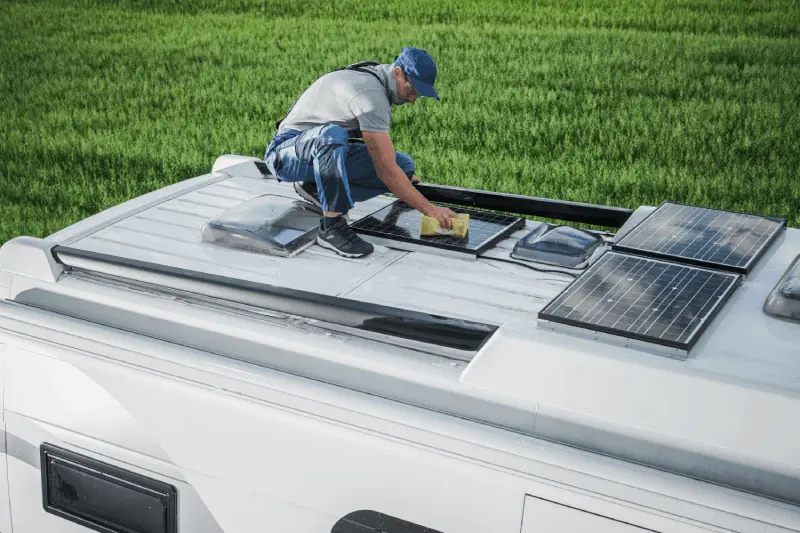
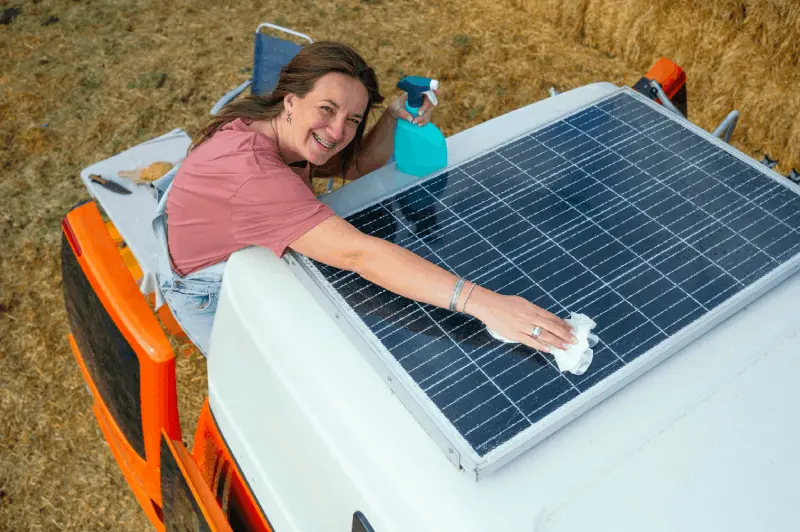
A dusty solar panel can lose up to 20% of its efficiency. The telescopic brushes and special cleaning liquids you will use to clean the panels cost approximately $30-$60. However, the biggest "cost" is accessing the panels. The investment for a staircase or ceiling basket is between $200 and $500. A proper layout plan should be made to clean without stepping on the panels. Regular maintenance ensures you make the most of the free solar energy. Additionally, it is critical to check all electrical connections for tightness once a year and to spray corrosion preventive sprays (like WD-40 Contact Cleaner, etc.) to ensure the system's health.
How Important Are Step-Up and Step-Down Converters in Device Protection?
Some devices require exactly 12V, while your batteries can go up to 14.4V when charging or drop to 11V when discharging. Voltage stabilizers (Regulators) should be used to protect sensitive devices (such as modems or some LED TVs). The price of these small devices ranges from $10 to $30 each. They create a total cost of $50 to $100 in the entire system. However, this small investment prevents your thousands of lira worth of electronic devices from burning due to voltage fluctuations. If everything in off-grid systems is considered "unstable," regulation is the cheapest insurance for system stability.
What Is the Social Area Cost of Outdoor Shower and Kitchen Units?
Taking a warm shower outside the caravan or cooking outdoors enhances the enjoyment of off-grid living. An outdoor shower box and mixer cost between $50 and $100, while rail systems and portable stoves for outdoor kitchens range from $100 to $300. These units utilize the water and gas/electricity in your storage. These expenses for outdoor comfort actually improve the quality of life by reducing humidity and odors inside the caravan. Especially after a day at the sea or a muddy nature walk, the convenience provided by an outdoor shower will remind you of how valuable that $100 investment is every time.
Is Using Second-Hand Equipment Risky?
Second-hand products like solar panels or batteries should be avoided because it is difficult to understand how worn they are. However, clean second-hand mechanical/electronic devices like inverters or heaters can save 40%-50%. Still, due to the "no tolerance for error" nature of off-grid systems, it is safest to buy zero products for critical components (especially batteries). By using second-hand items like refrigerators or furniture accessories, you can create a budget gap of $500 to $1000. Remember, a malfunctioning second-hand inverter in a place without electricity can deprive you of all your energy; therefore, you should not buy electronics from sellers you do not trust.
Do Caravan Insurance and Comprehensive Prices Cover Off-Grid Systems?
Standard vehicle insurances generally do not cover expensive lithium batteries or solar panels inside the vehicle. When getting "Caravan Insurance," you should also include the value of the internal equipment (electronics and furniture) in the policy. This increases the annual comprehensive premium by 50%-100% compared to a standard vehicle (approximately $400 - $800 annually). However, this is the only way to protect your investment of $15,000 to $20,000 in case of an accident, theft, or fire. Presenting the complete equipment list and invoices to the insurance company is vital for you to receive compensation in case of damage.
What Is the Energy and Price Difference Between 12V and 220V Lighting in Caravans?
Running everything in the caravan on 12V is always more efficient. If you use 220V lighting, the inverter must also operate every time you turn on the lights, and the inverter itself draws a "no-load" current (approximately 0.5-1A). 12V LED strips and spotlights are very cheap (between $2 and $5 per meter). The entire 12V lighting system and controllers (like dimmers) for the caravan cost between $100 and $200. Using a 12V system allows you to use your battery capacity 15%-20% more efficiently. Additionally, there is no risk of electric shock at 12V, which is a significant safety advantage.
What Are the Installation and Safety Costs of Gas Stoves?
For hot water comfort, caravan-type hermetic gas stoves (like Daxom, Truma, etc.) are preferred. These devices range from $250 to $800. For installation, an external chimney must be opened, a gas-tight box must be made, and professional plumbing must be done. The total installation costs between $400 and $1000. Hot water becomes a hygiene necessity rather than a "luxury" in off-grid living. Alternatively, electric boilers (12V/200W) are available, but heating water takes 1-2 hours and strains the battery. Gas stoves provide instant and unlimited hot water, maximizing comfort.
How Does Using Lightweight Materials in Caravan Furniture Affect Fuel Savings?
When setting up an off-grid system, the total weight of the caravan usually approaches the limit of 3.5 tons. Using lightweight and durable materials like poplar plywood ensures the vehicle is 200-300 kg lighter compared to standard chipboard or MDF. The price of poplar plywood is 2-3 times that of standard products (approximately $70-$100 per sheet). The difference in total furniture materials can add an extra cost of $500 to $1000. However, this lightweight design increases driving safety and reduces fuel consumption by about 5%-10%. Additionally, a lighter vehicle experiences less tire and brake wear, which is a hidden saving that reduces your long-term maintenance costs.
What Is the Effect of Mosquito Nets and Curtain Systems on Insulation?
A quality pleated mosquito net and curtain system not only protects against mosquitoes but also reduces heat transfer from windows by 30%. Systems specially produced for caravan windows cost between $50 and $150 per window. Equipping all windows can cost $400 to $800. By preventing the cold from entering at night, it ensures the heater operates less. Energy savings in off-grid living are always cheaper than production; therefore, a good curtain system is actually a hidden investment in the battery. Additionally, ensuring privacy makes you feel safer in places without electricity.
How Many Years Is the Amortization Period of an Off-Grid System?
If you set up this system and only camp for 1 week a year, the amortization period can reach 20 years and is not very logical. However, if you live full-time... If you are on the road for at least 10 days a month; camping site fees (nightly $15-$30), when considering electricity and water costs, the system pays for itself within 2 to 4 years. The off-grid system offers you the possibility of "free accommodation", reducing your holiday costs to just fuel and food expenses. The psychological benefits of being free and being able to survive alone in nature have no financial counterpart.
What is the cost of establishing infrastructure for future technology updates?
When building your caravan, it is wise to establish a "future-compatible" infrastructure where you can later add more solar panels or lithium batteries. For this, you need to run thicker cables and choose an MPPT or inverter that is slightly larger than the capacity. This foresight can add about $200-$400 to the initial cost. However, when the system becomes insufficient in the future, it will save you from having to remove all cables and devices to buy new ones (which means thousands of dollars). Off-grid systems are living structures; as your needs increase, the system may also need to grow, so building a modular structure is the most sensible long-term strategy.