Will a Compressor Refrigerator Drain the Car Battery Overnight and Leave Us in a Cold Mountain?
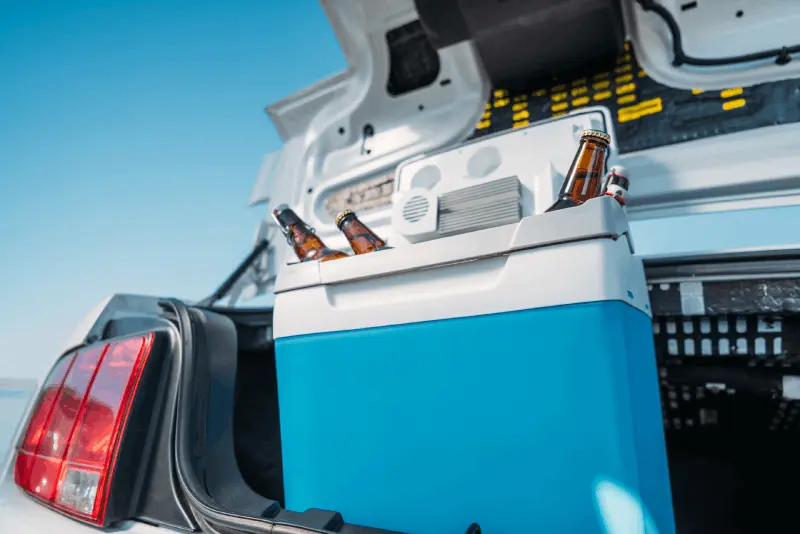
The biggest nightmare for a camper is hearing that lifeless "click" sound when they turn the key in the morning. Compressor refrigerators have a "Low Voltage Protection" (Battery Protection) system thanks to modern technologies. This system automatically shuts off the device when the battery voltage drops below a certain level (usually 10.8V or 11.2V). However, this means that the contents of the refrigerator will start to warm up. If your vehicle does not have a second life battery or solar panel, the 45-60 Watts of power drawn by the refrigerator can put you in a risky situation, especially if you have an old battery. Therefore, simply buying a refrigerator is not enough; you must also consider the health and capacity of your battery in this process.
How Long Will Ice in a Quality Cooler Last at 40 Degrees Celsius?
A high-end cooler made with rotomolded technology can theoretically keep ice for 5-7 days. However, this duration is tested in a laboratory environment with the lid never opened. In the summer heat of the Aegean or Mediterranean, this duration dramatically decreases in temperatures reaching 50 degrees inside the vehicle. If you open the lid 5-6 times a day, the warm air entering will shorten the ice's lifespan by about 30%. If the drinks you put in the cooler are at room temperature, the ice will use its energy to cool them down and can melt nearly half within the first 24 hours. In a realistic scenario, in extreme heat, a quality thermos will provide you with a maximum comfortable duration of 3 days.
If a Compressor Breaks Down on Bumpy Mountain Roads, Will I Be Out of Warranty?
Unlike household refrigerators, vehicle-type refrigerators are produced with compressors that are durable against dynamic movements. It is known that quality brands (like those using Danfoss or LG compressors) can operate even at inclines of 30 to 45 degrees. However, the high-frequency vibrations experienced on continuous "off-road" tracks can wear out the spring suspension mechanism inside the compressor over time. If your device is certified as "vehicle type," breakdowns caused by vibrations generally fall under warranty. Still, using rubber blocks or vibration-absorbing mats when securing the refrigerator to the vehicle is crucial to minimize this risk and protect your investment.
If Water from Melting Ice Leaks into Meat Packages, Will I Face a Serious Health Risk?
The most neglected issue by cooler users is hygiene and cross-contamination. As the ice melts, the water accumulates at the bottom of the cooler, and if your meat or chicken packages are not 100% leak-proof, bacteria can contaminate this water. Even worse, the contact of vegetables with this water creates an excellent breeding ground for bacteria like listeria or salmonella. In a compressor refrigerator, this risk is completely eliminated because "dry cooling" is performed. If you are determined to use a cooler, you must use inner baskets that keep your food above the water level and prefer vacuum packaging methods; otherwise, you may face stomach problems on the second day of your camping trip.
Will the Noise of a Compressor Refrigerator Disturb My Sleep in a Tight Space?
For those camping inside a vehicle (Vanlife), silence is the biggest luxury. Modern compressor refrigerators typically operate in the 35-45 decibel range. This sound is similar to a low-speed computer fan. However, in the quiet of the night, the compressor kicking in and the slight vibration and "click" sound at that moment can be disturbing for those with sensitive sleep. Especially if your bed is right above or next to the refrigerator, the fan noise from the device's air vents can disrupt the peace of camping. In coolers, there is a zero noise advantage. If you are sensitive to sound, putting the refrigerator in "Eco" mode at night or, if possible, operating it in a sheltered area outside the vehicle will enhance your comfort.
Is Using a Refrigerator Without Buying a Second Battery or Solar Panel a Hidden Cost Trap?
Many campers focus only on the price of the refrigerator, but the real cost is hidden in "energy management." If you do not plan to run your vehicle for at least 3-4 hours every day, running the refrigerator on a single battery may not be sustainable. In this case, you will incur costs for lithium batteries, solar panels, MPPT devices, and wiring. These additional components can sometimes exceed the price of the refrigerator itself. In a cooler, the only cost is the ice packs you will buy before and during each camping trip. For someone who goes camping 10 times a year, the cost of ice may seem insignificant, but the energy infrastructure cost brought by the refrigerator will pay for itself within 3 to 5 years, depending on how often you camp.
Do We Have a Backup Plan for Where to Store Fresh Foods When the Ice in the Cooler Melts?
Relying on a cooler creates a logistical dependency. As your campsite gets further away from the city and an ice-selling station, your food safety is at risk. When the ice runs out, you will have to quickly consume or throw away perishable foods like milk, cheese, and meat. This situation forces you to plan your camping route based on "where you can find ice." A compressor refrigerator gives you absolute freedom. As long as you have energy, you can access fresh food even in the hottest places on earth. If you are going to use a cooler, you must implement strict disciplines such as using frozen water bottles as ice blocks and only opening the cooler lid in the shade to extend the lifespan of your food.
Does Heat Build-Up on the Outside of the Refrigerator Damage Other Items Inside?
Compressor refrigerators work like a heat pump that expels heat from inside to the outside. During this process, significant heat is generated on the outer surface, especially at the fan outlets. If you place the refrigerator in a tight luggage space surrounded by suitcases or clothes, the device cannot breathe and will overheat. This situation increases energy consumption by 50% and shortens the lifespan of the motor. Inadequate ventilation can even lead to deformation of nearby plastic materials or heat up your camping equipment. When positioning the refrigerator, leaving at least 10-15 cm of space on the sides and back is a technical necessity for the efficient operation of the device and environmental safety.
How Safe Is It to Store Milk or Baby Food in a Quality Thermos?
For those camping with babies, food temperature is a vital issue. The WHO (World Health Organization) recommends that perishable foods be stored below 4 degrees. Keeping the internal temperature of coolers at 4 degrees is nearly impossible; generally, areas right next to the ice are close to 0 degrees, while the upper parts can rise to 8-10 degrees. This temperature fluctuation accelerates bacterial growth in products like baby food or milk. In compressor refrigerators, however, you can maintain the temperature at 4 degrees (or -18 in freezer mode) thanks to the digital thermostat. If health and hygiene are your priorities, it is more logical to choose the "guaranteed cooling" provided by a refrigerator over the "estimated cooling" offered by a cooler.
Does the Weight and Size of the Refrigerator Limit Our Movement in a Small Caravan?
A standard compressor refrigerator with a capacity of 35-40 liters weighs between 12-18 kg when empty; when you add food, this number can reach 30 kg. Carrying this weight continuously in a small passenger vehicle or a narrow caravan affects fuel consumption and complicates your luggage organization. Additionally, the refrigerator needs to be mounted in a fixed place; otherwise, it can damage both the cables and the compressor due to movement during every stop. Coolers, on the other hand, are generally lighter and can be easily taken out of the vehicle and placed next to a table or under a tree shade when you reach the campsite. If "mobility" is more important to you than "fixed setup," the cumbersome structure of the refrigerator may complicate your camping routine.
How to Prevent Rubber Seals in the Cooler from Smelling and Molding Over Time?
The biggest enemy of coolers is moisture. If you close the cooler without thoroughly drying it after your camping trip, mold colonies will start to form in just 48 hours in that damp and dark environment. Especially food liquids that seep between the rubber seals can cause an impossible-to-clean and disgusting odor over time. Compressor refrigerators have less moisture, but they also require regular cleaning and a drain plug to be effective. If you are using a cooler, you should clean it with carbonated water after each camping trip and store it with the lid slightly ajar. If you do not perform this maintenance, all the food you put in the cooler during your next camping trip will absorb that old moldy smell, completely ruining your appetite.
Is There a Chance for Manual Intervention in the Event of a Malfunction of the Refrigerator's Digital Screen?
New generation refrigerators are entirely controlled by electronic boards. If the digital control panel burns out due to high voltage fluctuations or liquid contact, it is impossible to manually operate the compressor without technical knowledge. In this case, your refrigerator turns into an expensive and heavy box. In coolers, however, there is no "part that can break"; at most, the hinge may break, which does not ruin the camping experience. Some professional camping refrigerators have an "Emergency Switch"; this switch allows you to bypass the thermostat and continuously operate the compressor to save your food. When purchasing, asking whether such a "B plan" mechanism exists can save you from being stranded in a cold wilderness.
Does the Required Cable Gauge and Fuse Selection for Compressor Refrigerators Pose a Fire Risk?
The thickness of the cable in 12V systems inside vehicles is crucial. If the cable going to the refrigerator is too thin, a voltage drop occurs, and the refrigerator stops working by giving a "low battery" warning. Even worse, excessive resistance in low-quality or thin cables can lead to overheating and, consequently, a vehicle fire. Instead of plugging the refrigerator directly into the cigarette lighter socket, you should use cables with a cross-section of at least 4mm² or 6mm², pulled directly from the battery and protected by an appropriate fuse (usually 15A). Many users consider this electrical infrastructure a simple detail; however, incorrect wiring can be the weakest and most dangerous link in your camping equipment.
Is There a Risk of Breaking Glass Bottles We Put in the Cooler During the Freezing Process?
When cooling drinks in the cooler, we usually place them between the ice. On off-road paths or sharp turns, the ice blocks inside the cooler can move, causing glass bottles to collide and break. Cleaning up the glass shards floating in the melted water is a nightmare and completely compromises food safety. In compressor refrigerators, however, there are usually metal baskets and compartments; items stay more securely and organized. If you are using a cooler, you must place towels or plastic dividers between the bottles. This can lead to even less efficient use of the already limited space.

Is Buying a Protective Cover for the Refrigerator Just a Cosmetic Preference or Does It Provide Energy Savings?
Many people find the money spent on refrigerator protective covers unnecessary. However, these covers not only prevent scratches; they also provide an extra layer of insulation. In cases where sunlight directly hits the refrigerator body, the cover can reduce the compressor's operating time by 15-20%. Additionally, the pockets on the covers are practical for storing small items like cables and adapters. If you are camping in hot climates, an insulated outer cover is actually a technical component that extends the life of the device and reduces energy consumption. In coolers, such an accessory is rare; you have to make do with whatever insulation is provided.
How Much Energy Does It Consume to Protect the Heat Inside the Refrigerator When the Vehicle is Closed Under the Sun?
The inside of a parked vehicle under the sun can reach 60-70 degrees. In this environment, a compressor refrigerator works almost continuously to keep the inside at 4 degrees. This increases battery consumption to three times the normal rate. If your vehicle does not have ventilation (like slightly open windows or a roof fan), the refrigerator will quickly switch to battery protection mode and shut down. Coolers may be a bit more resistant in this regard; because their energy intake is more passive against external factors. However, ultimately both systems will be unsuccessful in extremely hot vehicles. Finding a "shaded parking spot" in your camping strategy is actually the biggest energy source for your refrigerator.
Is the 'Dual Zone' Feature in the Refrigerator Really Useful or Just a Marketing Strategy?
Some high-end refrigerators have two separate compartments and allow you to set one as a freezer (-18) and the other as a cooler (+4). This is a tremendous luxury, especially for transporting frozen foods (meat, ice cream) on camping trips longer than a week. However, dividing a small-volume (30-40 liters) refrigerator can cause both areas to become very cramped; for example, you may not find a place to store a milk carton upright. If you are buying a refrigerator under 50 liters, a single compartment and a spacious area are always more functional. Compartmented refrigerators consume more energy because they try to maintain two different temperature balances; this can strain your energy budget.
Is Searching for Fresh Ice Every Day While Using a Cooler a Constraint on Our Camping Route?
This question challenges the philosophy of your camping style. If you want to "completely disconnect from the modern world" and not encounter any settlements for 4-5 days, a cooler is a hindrance for you. Because entering the search for ice on the 3rd day of camping forces you to deviate from your route and head to the nearest gas station or village. This situation undermines the feeling of freedom. A compressor refrigerator gives you logistical independence. Instead of searching for ice, you can venture deeper into forests or secluded bays. If your route is already along the coast and you frequently encounter markets, the cooler's limitation may not be a big problem for you; however, for wild campers, a refrigerator is an absolute necessity.
Does the Internal Lighting (LED) of the Refrigerator Make It a Nightmare to Find What We Are Looking for at Night If It Breaks?
Although it seems like a small detail, when you try to find that small cheese package inside the refrigerator in pitch darkness at night, internal lighting is everything. Holding a flashlight in one hand while rummaging through the refrigerator with the other is both inefficient and causes the refrigerator door to remain open for too long (leading to heat loss). Quality refrigerators come standard with LED lighting, which typically consumes very little energy. In coolers, however, there is almost no lighting. If you are using a cooler, installing a battery-powered and sensor-operated small LED light inside the lid can solve this practical problem. Not being able to find what you are looking for in the dark is not only frustrating but also increases the risk of food spoilage due to heat loss.
Does the Compressor of the Refrigerator Cause Vibration or Resonance Inside the Vehicle While It Is Running?
The compressor produces low-frequency vibrations while it operates. If the refrigerator is in direct contact with the vehicle's metal floor, these vibrations can spread throughout the vehicle and create a resonant sound. This sound may not be noticeable during the day, but at night while sleeping inside the vehicle, it can be irritating like a hum. In coolers, this problem does not occur because there are no moving parts. Always placing a rubber or sponge mat underneath the refrigerator during installation prevents resonance. If your refrigerator is not securely fastened, it will not only make noise but also cause the glass items inside to continuously rub against each other, creating scratches and noise.
How Much Difference Does Pre-Cooling the Refrigerator at Home with a 220V Socket Make on the First Day of Camping?
Many novice campers start running the refrigerator as soon as they put it in the vehicle. However, it can take hours for the internal volume of the refrigerator and the foods inside to drop from room temperature to 4 degrees, and during this time, your battery can be excessively loaded. Running the refrigerator at home with a 220V adapter 12 hours before hitting the road and placing the drinks/foods inside will reduce battery consumption by 70% on the first day of camping. There is a similar logic for coolers; pre-cooling the cooler with an "ice pack to be sacrificed" can double the lifespan of the main ice you will use during the camping trip. Any system that does not undergo pre-cooling is doomed to fail during the first and most critical hours of camping.
If the Latch of the Refrigerator Breaks, Will All Contents Spill Out on an Off-Road Road?
In a rough terrain ride, the vehicle constantly sways left and right and up and down. If your refrigerator does not have a solid locking mechanism, the lid can suddenly open due to the pressure of heavy items inside. Spilling all the yogurts, eggs, and cold drinks onto the vehicle's carpet means the end of your camping trip. Quality brands use physical latches in addition to magnetic locks. In coolers, rubber "T-handle" latches are usually present, which are very reliable. If the lock of the refrigerator you purchased looks weak, adding an extra tension strap is the simplest and most effective measure to prevent your head from hurting on those bumpy mountain roads.
Is Controlling the Temperature via the Refrigerator's Bluetooth App a Luxury or a Safety Requirement?
Most new generation refrigerators come with mobile app support. Being able to see how many degrees the refrigerator in the trunk is at and the battery voltage status from your phone during the ride is a great convenience. If the refrigerator gives an error and shuts down (for example, if the cable comes loose), you can immediately notice and intervene. Without Bluetooth control, you will only realize that your food has spoiled when you take a break or reach the campsite, which can be too late. This feature is not just a "toy"; especially if you are carrying expensive food, it is an early warning system. There is no such chance in coolers; everything is a gamble, and the ice's endurance is a matter of luck.
How Do We Manage the Risk of Vegetables Freezing and Becoming Inedible Between the Ice in the Cooler?
The biggest paradox of coolers is this: On one hand, you want to freeze, while on the other hand, you do not want delicate vegetables like lettuce and tomatoes that come into direct contact with ice to freeze and spoil their texture. Remember that the ice is around -10 degrees; it freezes everything it touches, including thin-leafed items. This leads to wilting of the vegetables and spoilage of their taste. In refrigerators, however, thanks to the shelf arrangement, you can place delicate foods in areas where cold air does not directly hit. If you are using a cooler, you must wrap the vegetables in paper towels and place them in the top baskets. Otherwise, the salad you prepared for dinner can turn into a mushy mess.
How Common Is the Service and Spare Parts Network for Refrigerators Across Turkey?
When buying an expensive European brand or a cheap Far Eastern brand, the least considered but most critical issue is service. During camping, for example, if your refrigerator breaks down in a district of Muğla, will you be able to find spare parts? Some brands only have service in major cities, while others operate with a central service understanding via cargo. In coolers, there is no service concern; as long as there is no physical damage, you can use it for a lifetime. When buying a refrigerator, choosing models with commonly used compressor brands (like Secop/Danfoss) increases your chances of getting it repaired at any cooling service. An electronic device that cannot be repaired is just unnecessary weight in the wilderness.
Do Fridge Slide Systems Used to Secure the Refrigerator to the Vehicle Kill the Luggage Space?
Slide systems used to facilitate access to the refrigerator provide great convenience; they allow you to pull the refrigerator out and easily open the lid. However, these slides add an extra 5-10 cm height under the refrigerator and take up space on the sides of the mechanism. In small vehicles, this means that 20% of the already limited space is wasted just for the "access mechanism." Additionally, these slides themselves weigh around 10-15 kg. Coolers generally do not require such a system and can be carried anywhere by hand. If your vehicle is large (Pick-up or large SUV), the slide system is fantastic, but if you are camping with a compact vehicle, securing the refrigerator and accessing it from above is more logical in terms of space management.
How Does the Difference in Energy Consumption Between the ECO and MAX Modes of the Refrigerator Affect Battery Life?
MAX mode quickly cools the refrigerator by running the compressor at the highest speed, but this draws a high current from the battery instantly. Once the desired temperature is reached, switching to ECO mode ensures that the compressor runs at a lower speed and less frequently. If you leave it in MAX mode continuously, your battery will deplete 40% faster than normal. The smart usage is to use MAX mode before hitting the road or during the ride (when drawing power from the alternator) and switch to ECO mode when the vehicle is stopped at night. In coolers, there is no such setting; energy management is entirely dependent on external temperature and how often you open the lid, making it a "passive defense" strategy.

Does the Drain Plug of the Cooler Cause Leakage and Result in Rusting on the Vehicle Floor?
The weakest point of many cheap coolers is the drain plug. If this plug does not seal properly, melting water will slowly leak onto the carpet of the vehicle's trunk. This leakage may go unnoticed for days, and the damp metal area will rust over time, while the trunk will develop a musty smell. Compressor refrigerators also have a plug for draining water after cleaning, but they are generally less likely to leak since they do not sit in water. When buying a cooler, you should ensure that the plug is threaded and has a seal. If it is leaking, you should protect the vehicle's floor from corrosion with practical solutions like placing a tray underneath or wrapping the plug area with Teflon tape.
How Much Does Dust Accumulation on the Condenser Grills of the Refrigerator Reduce Cooling Performance?
The camping environment is inherently dusty. Fine dust entering through the ventilation holes in the motor compartment of the refrigerator gradually covers the condenser coils like a blanket. This situation prevents heat transfer and causes the compressor to work much harder to cool. A dusty condenser can increase energy consumption by 30% and lead to overheating and burning of the motor. Cleaning these grills with a compressor or brush every 3-4 camping trips is essential for the efficiency of the device. In coolers, cleaning is limited to the inner surface; this makes them a more "low-maintenance" option.
How Does the Body Material of the Refrigerator (Plastic vs. Steel) Affect Insulation and Durability?
Stainless steel-bodied refrigerators are very sturdy and resistant to impacts, but they can heat up faster than plastic-bodied ones under sunlight. Additionally, steel bodies are heavier. Quality ABS plastic bodies are flexible, lightweight, and shock-absorbent; they also show fewer scratches. Insulation performance depends more on the density and thickness of the polyurethane foam inside than on the outer material of the body. If you are camping in harsh natural conditions where items will be placed on top of the refrigerator and hard impacts may occur, you should prefer steel or high-strength plastics. Beyond aesthetics, the UV resistance and cleanability of the material become more important in the long run.
Is It Critical for Food Hygiene Whether the Baskets Inside the Refrigerator Are Metal or Plastic?
Metal baskets (usually vinyl-coated) are better for air circulation; cold air easily reaches everywhere through the wires of the basket. However, if this coating peels off over time, the metal parts can rust and damage the food. Plastic baskets do not rust, are easier to clean, but may restrict airflow a bit more. When buying a refrigerator, you should check that the baskets do not easily come out and whether they are removable. A good organizational basket prevents you from having to empty the entire refrigerator to reach the food at the bottom. In coolers, the basket is usually a single top compartment, and you still have to perform that infamous "dipping your hand into the icy water" action to reach the food at the bottom.
Do the Poor Quality Adapters Provided with the Refrigerator Trigger Fire or Short Circuit Risks?
Many brands include cheap 12V cigarette lighter plugs and 220V adapters in the package to reduce costs. The springs inside these low-quality plugs can loosen over time and start to arc (spark). A heated plug can melt the vehicle's cigarette lighter socket or continuously blow the fuse inside. In the worst-case scenario, it can even cause a fire in the vehicle's wiring. If you notice that the refrigerator plug is getting hot, you should immediately replace it with a higher quality "heavy-duty" plug or, if possible, switch to more professional and locked connection systems like the "Anderson Plug." Ensuring the safety of connection points is more critical than the device itself for safe camping.
Does the Night Mode of the Refrigerator Only Dim the Lights or Does It Really Provide Silence?
The "Night Mode" found in some models not only dims the screen lights but also reduces the compressor's speed and fan speed to the lowest level. This significantly reduces noise but also decreases cooling performance. If it is very hot outside, the night mode can cause the internal temperature of the refrigerator to rise. When using this mode, care should be taken that the refrigerator is not too full or that the foods are already cold. There is no such thing as a night mode in coolers; they are always "silent" and "closed" systems. While it may offer a technological solution for those with sensitive sleep, even the quietest refrigerator can sometimes feel like a generator in the silence of nature.
Is It More Logical to Drain the Water Left in the Cooler or Leave It Inside to Keep It Cold?
This is an ongoing debate among campers. Technically, cold water surrounds the ice, providing more uniform cooling and preventing warm air from filling the gaps (thermal mass effect). However, having food floating in this water poses hygiene and packaging integrity risks. If your foods are in 100% waterproof containers, leaving the water inside can slightly extend the overall cooling duration. But if hygiene is your priority and your packages are risky, you should drain the water every day. In compressor refrigerators, there is no dilemma; cooling always occurs in a "dry" and "controlled" manner, simplifying food management.
Does Stacking Other Camping Gear on Top of the Refrigerator Kill Cooling Efficiency?
Campers often want to use every square inch. Using the top of the refrigerator as a table or storage space is tempting. However, the top lid and body of the refrigerator need to breathe. Additionally, placing heavy items on top can put pressure on the lid hinges and locking mechanism, leading to a breakdown of the seal over time. More importantly, in an emergency, having to remove five items stacked on top to get something from the refrigerator can cause the lid to remain open longer, leading to heat loss. Leaving an "air corridor" around the refrigerator is not only essential for the health of the device but also a golden rule in terms of practical use.
How Can We Test the Lifespan of the Compressor When Buying a Second-Hand Compressor Refrigerator?
If you are buying a second-hand device, it is not enough for it to just be "working." You should set the device to the lowest degree (-18 or -22) and observe how long it takes to reach this temperature. If it cannot drop to -10 degrees within an hour, there may be a gas leak or performance loss in the compressor. Also, listen to the sound while the compressor is running; if there is a metallic knock or excessive vibration, that device may be nearing the end of its life. When buying a cooler, it is much easier; as long as there are no cracks in the body and the seals are intact, there is no risk in buying second-hand. Buying second-hand for a complex device like a refrigerator always requires "risk management."
Does the Refrigerator's Inability to Balance on Uneven Surfaces Prevent the Lubrication of the Compressor?
Inside compressors, there is a special oil that lubricates the mechanism. If the refrigerator operates at a very steep angle (usually over 30-40 degrees) for an extended period, the oil may not reach the upper parts of the compressor, leading to excessive heating and potential failure. The balance of your vehicle at the campsite is critical not only for a comfortable sleep but also for the health of your refrigerator. If the ground is very uneven, you should place stones or wedges under the refrigerator to level it as much as possible. In coolers, there is no such precision required; as long as they are upright, they will continue to function.
Is It Logical to Use a Large Thermos and Dry Ice Combination Instead of a Refrigerator?
Dry ice is much colder than regular ice (-78 degrees) and does not leave liquid behind when it melts, transitioning directly to gas. With this property, it provides incredible freezing power in a cooler. However, using dry ice is very dangerous; the sublimated carbon dioxide gas in a closed vehicle can lower the oxygen level inside, posing a risk of suffocation. Additionally, touching dry ice with bare hands can cause serious cold burns. Unless you are a professional camper and have excellent ventilation in your vehicle, dry ice is a risky fantasy. A compressor refrigerator is the safest and most sustainable alternative to this dangerous and difficult-to-manage cooling method.
Which User Type Should Choose Which System?
If you only go camping 1-2 times a year for a weekend getaway and do not venture far from the city, a quality cooler and disciplined ice management will be both economical and sufficient for you. However, if you go on weekly camping trips, camp with a family with children, are particular about food hygiene, or truly dream of living "off-grid" in remote areas, a compressor refrigerator is no longer a luxury but a technical investment that should be at the center of your camping gear. When making your decision, consider not only your current budget but also the difficulty level of your future camping routes and your passion for freedom.