What Should Be the First Decision When Starting Your Caravan Dream?
Stepping into the world of caravanning is like holding the key to a door that opens to freedom. However, the most critical turning point in this journey is whether you will choose a motorhome or a towable caravan. This decision is not just about vehicle selection; it is also a fundamental lifestyle choice that will determine your vacation style, budget, and comfort on the road. Both types have their unique advantages and challenges. A hasty decision made without analyzing your needs can turn your dream vacation into a logistical nightmare. Therefore, it is essential to examine both options in detail before hitting the road, evaluate your travel habits, and clarify your budget limits.
What is a Motorhome and Who is it Ideal For?
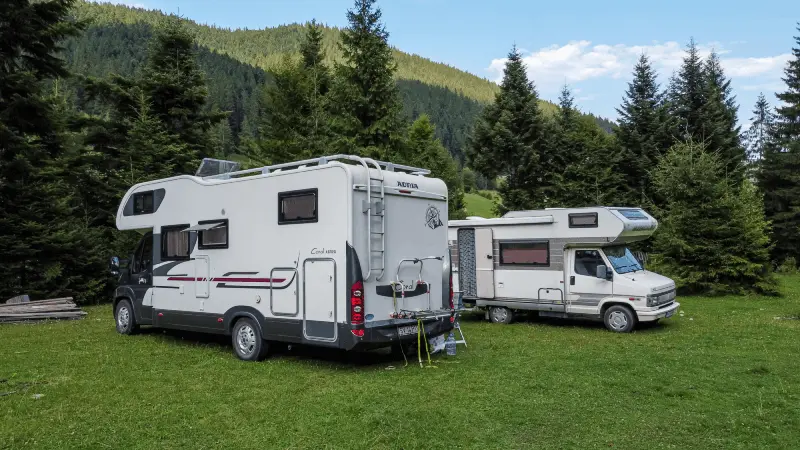
A motorhome is an integrated vehicle that combines living space with the driving cabin within the same body and has its own engine. It typically comes in campervan, alcove, or fully integrated models. These vehicles represent the philosophy of "wherever you stop, that’s home" in its purest form. It is perfect for travelers who want to wake up to a different view every day and easily access their living spaces (toilet, kitchen, bed) while on the road. If you prefer spending time in the heart of nature rather than city centers and are looking for a vehicle with high maneuverability, a motorhome might be the right choice for you. If you have a practical and speed-focused camping mindset, this all-in-one solution will make you happy.
What is a Towable Caravan and What are its Advantages?
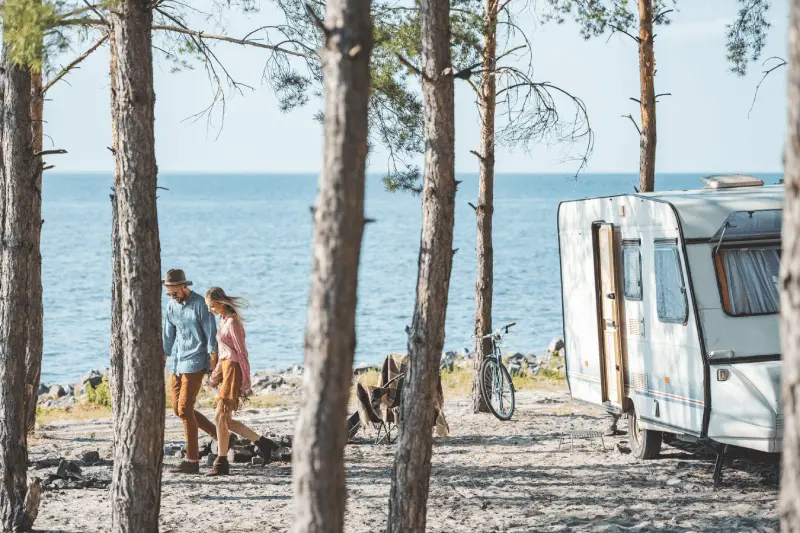
A towable caravan is a living unit that has no engine and is towed by a suitable passenger vehicle or SUV using a towing hitch. Its biggest advantage is the freedom to detach the towing vehicle from the caravan after setting up at the campsite. This allows you to leave your "home" at the campsite and explore the surrounding towns, navigate narrow streets, or go grocery shopping with your car. Additionally, it is much more affordable compared to motorhomes and reduces additional liabilities such as engine maintenance, insurance, and taxes, making them an economical option. For families planning to stay in one place for an extended period or vacationers looking for a more spacious interior at a lower cost, a towable caravan offers indispensable comfort.
Is Motorhome Driving Comfort Superior?
When it comes to driving comfort, motorhomes are generally a step ahead. Their single-body design makes them more resistant to wind resistance, and their driving dynamics are similar to a passenger vehicle. Since there is no swaying of an additional trailer at the back, reversing, turning, and parking is much easier. During travel, the driver and passengers are in the same cabin; this strengthens communication and facilitates access to the refrigerator or toilet at the back (within legal limits). Especially on long journeys, the absence of stress caused by towing something behind you means less fatigue for the driver. If you have little experience driving a large vehicle, the overall integration offered by a motorhome will feel safer and more familiar.
What Should Be Considered When Towing a Caravan?
Towing a caravan requires serious attention and technical knowledge. You should move as if there is a "tail" behind your vehicle; this means longer braking distances, a wider turning radius, and being much more affected by the wind. Especially when passing through strong crosswinds or large trucks, it can cause the caravan to sway (snaking). Reversing is like a test of patience for beginner drivers because you are dealing with a moving body when you turn the steering wheel. Additionally, it is important that your vehicle's towing capacity is suitable for the weight of the caravan. Gaining experience is necessary to manage risks such as the engine straining on hills or the caravan pushing the vehicle.
Which Type Allows Faster Setup at the Campsite?
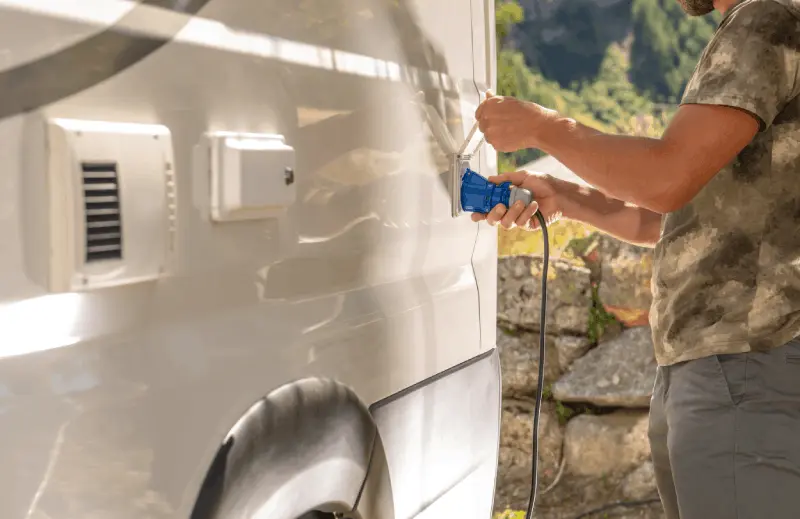
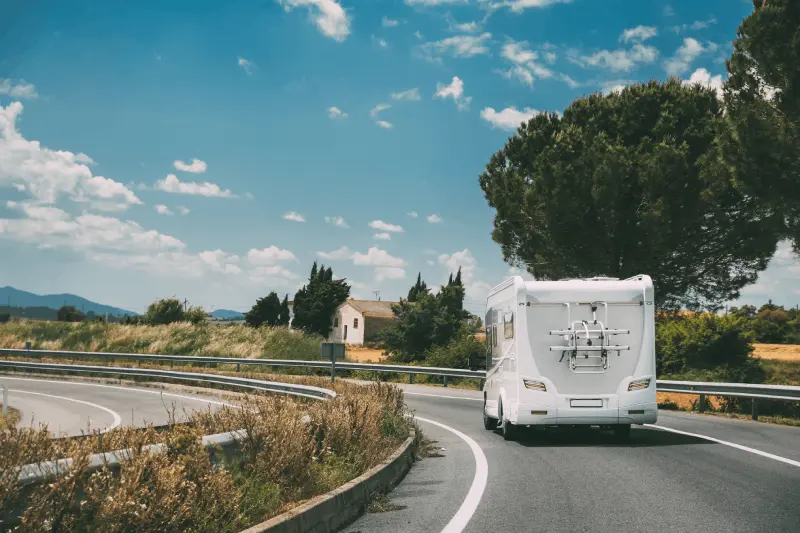
When you arrive at the campsite, the speed of a motorhome is unmatched. Parking the vehicle on a suitable surface and pulling the handbrake is enough to be ready for accommodation. Many motorhomes have automatic or very practical leveling systems. Even on a rainy day, you can move from the driver's seat to the back to start making your coffee without going outside. However, with a towable caravan, the process is a bit more cumbersome. First, you need to detach the caravan from the vehicle, lower the stabilizing legs, and make electrical and water connections. If you need to position the caravan manually or with motors called "movers," this process can take even longer. If you are in "quick camping, quick escape" mode, a motorhome is ideal for you; if you are looking for "setup comfort and spaciousness," a towable caravan is waiting for you.
Which is More Practical for Exploring the Surroundings During Vacation?
In this category, the towable caravan is a clear winner. After setting up at the campsite, you can leave your caravan there and explore the surroundings with your passenger vehicle. Entering narrow village roads, parking in city center parking lots, or climbing steep hills is much easier with a standard vehicle. However, in a motorhome, every trip (including grocery shopping) means taking your entire home with you. To leave the spot where you parked, you need to gather the awning you set up, secure the items inside, and be ready to enter city traffic with your large body. Motorhome users often face this issue. It tries to solve by carrying a bicycle, motorcycle, or scooter; however, it is difficult to compete with the mobility and protection offered by a vehicle.
Is a Towable Caravan More Economical When Cost Analysis is Done?
From an economic perspective, the initial cost and operating expenses of a towable caravan are much lower compared to a motorhome. When you purchase a motorhome, you are essentially buying both a home and a motor vehicle; this means you have to pay for special consumption tax (ÖTV), high motor vehicle tax (MTV), traffic insurance, and periodic motor maintenance. Since towable caravans do not have an engine, there is no MTV and traffic insurance (for those under 750 kg); there are only annual inspection and basic mechanical maintenance costs. If you already have a powerful towing vehicle, purchasing a towable caravan can cost only a small fraction of the motorhome budget. In long-term financial planning, the low fixed costs offered by a towable caravan make it the most logical choice for travelers who want to maintain their budget.
What Are the Differences Between Maintenance and Tax Expenses?
Motorhomes are subject to motor vehicle tax (MTV) and mandatory traffic insurance for motor vehicles. Additionally, the vehicle's engine, transmission, tires, and brake systems require regular and costly maintenance. In the event of a breakdown, not only is your living space affected, but your transportation vehicle may also be out of service. However, the situation is much simpler with towable caravans. There is no tax for models under 750 kg, and there is no registration requirement. Although models over 750 kg require registration and annual inspection, taxes are much lower compared to motorhomes. Even if there is a mechanical failure in your caravan, you can continue on your way with your towing vehicle, or you won't face accommodation issues while leaving your vehicle for service. This low maintenance burden places the towable caravan in the "stress-free ownership" category.
Which Caravan Offers More Living Space and Comfort?
When it comes to living space comfort, towable caravans generally offer a wider and more practical interior. In motorhomes, the driver and passenger seats occupy a significant portion of the total volume, whereas in a towable caravan, the entire interior volume can be used as living space. Additionally, the ceiling height and width of towable caravans feel more "home-like" because they are less restricted by motor vehicle limitations. The likelihood of finding a separate bedroom, a spacious seating area, and a larger kitchen counter in a large towable caravan is much higher. Motorhomes, on the other hand, may feel more compact and sometimes narrower because they have to optimize every square meter. For large families or those who enjoy spending time in enclosed spaces, the square meter advantage offered by a towable caravan is invaluable.
What Are the Differences in Kitchen and Bathroom Usage?
While kitchen and bathroom facilities can be offered at similar standards in both types of caravans, there are differences in practical details. In motorhomes, water tanks are usually integrated into the vehicle's body, making them more protected against freezing, but their capacities may be limited. Since the kitchen area is located in the driving cabin, it inevitably spreads food odors to the front. In towable caravans, the kitchen area is generally larger and can accommodate larger stoves and ovens. When it comes to bathrooms, towable caravans are generally more generous in offering larger shower cabins and sometimes home-type toilet features. However, it should be noted that in a motorhome, the process of filling water and emptying waste is done with the vehicle itself, while in a towable caravan, this process is usually done using containers or hoses and requires physical effort.
Which is More Suitable for Long-Term Caravan Living?
If your goal is to live full-time in a caravan, the answer will vary depending on how often you travel. If you are constantly on the move and traveling from city to city, the practicality of a motorhome will enhance your quality of life. However, if you plan to park in one place and stay for months, a towable caravan is definitely more logical. The presence of larger storage areas, separate living spaces, and a vehicle that can move independently from the campsite maximizes comfort in long-term living. Additionally, the heating systems and insulation options in towable caravans can often be designed more robustly, considering fixed accommodation. If you are using it as a "mobile office," the quiet and separate working corners offered by a towable caravan provide a more efficient environment compared to the cramped cabin of a motorhome.
How Do License Requirements Affect Your Decision?
The issue of licensing can pose a legal barrier in choosing a caravan. With a standard Class B license, you can comfortably drive a motorhome with a load not exceeding 3500 kg. However, towing a caravan is a bit more complicated. If the loaded weight of your caravan exceeds 750 kg (which is often the weight of a comfortable model), your Class B license will be insufficient; you will need to obtain a BE license or an additional license in the relevant class. This means an additional course process, exam, and cost. Smaller caravans under 750 kg can be used with a B license, but the comfort and space in these models are quite limited. Before making a decision, you need to clarify what your license allows and whether you want to face an additional exam. Many people prefer motorhomes to avoid dealing with licenses and paperwork.
What Are the Depreciation Rates in the Second-Hand Market?
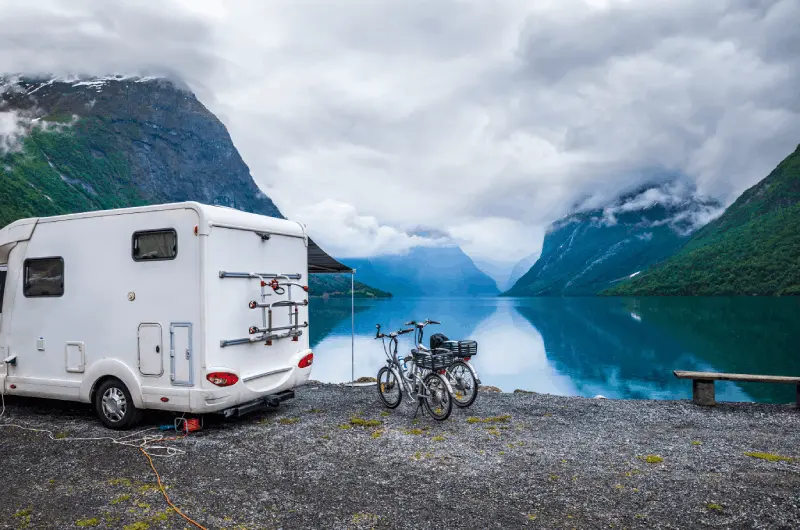
In terms of investment and value preservation, motorhomes and towable caravans exhibit different characteristics. Since a motorhome is a motorized vehicle, it carries the risk of depreciation as the mileage increases and the model ages. Like a car, its mechanical lifespan directly affects its market price. Towable caravans, on the other hand, tend to lose value much more slowly as long as they are maintained. As long as the furniture and technical equipment inside remain intact, a towable caravan can retain significant value even after 20 years. It is difficult to find a clean motorhome in the second-hand market, and prices are often very high; however, the towable caravan market is more liquid, making it easier to find options suitable for every budget. If you want to use your vehicle for many years instead of frequently renewing it, the value preservation potential of a towable caravan is higher.
Which Vehicle Performs Better in Off-Road and Challenging Terrain Conditions?
In challenging terrain conditions, a 4x4 motorhome (for example, a Mercedes Sprinter 4x4 or custom-built trucks) is a clear winner. The rigidity of the single body and the towing power make it much safer to progress on muddy or rugged roads. Entering the terrain with a towable caravan is quite risky. The load on the towing hitch can cause the rear of the vehicle to scrape the ground, and the wheels of the caravan may take a different path, which can leave you stranded at any moment. While there are "off-road caravan" models, you will need very powerful and specially equipped vehicles to tow them. If your dream is to explore uncharted mountains, sandy deserts, or roads less traveled, options other than a compact motorhome or a professional off-road truck may lead to disappointment.
How Does Heating and Insulation Performance Change with the Seasons?
If you plan to stay in a caravan for all four seasons, insulation is everything. In motorhomes, the front window (driver's cabin) is the biggest point of heat loss; you will need to use special curtains from the outside or inside to ensure insulation in winter. However, in towable caravans, windows are often made of special insulating polyurethane material, which makes it easier to retain heat. However, the completely open underside of towable caravans can allow cold air to seep in from below. Both types usually come with systems like Webasto (diesel heater) or Truma (gas heater). If you will be living in very harsh winter conditions, the heating systems of motorhomes, which can benefit from the warmth of the engine, can provide an advantage; the thicker panel structure and insulation of towable caravans provide a more stable environment for long-term stays.
How to Overcome Security and Parking Challenges?
From a security perspective, the biggest advantage of a motorhome is its ability to distance itself from danger without leaving the living area in case of any threat. However, in a towable caravan, when you notice a threat, you must first exit quickly, secure the vehicle, or if you have already secured it, quickly retract your feet; this can be a significant time loss. Regarding parking, while a motorhome can enter any parking lot (considering height restrictions) like a standard van, finding a parking space in a city with a towable caravan is nearly impossible. Towable caravan owners often prefer safe camping areas, while motorhome owners are more flexible about staying in nature or safe urban areas. Alarm and additional locking systems are crucial for both motorhomes and towable caravans in terms of theft risk.
Which Is More Supported by Social Media and the "Van Life" Culture?
In the modern world, caravanning is not just a holiday; it is an aesthetic understanding. The trend that has gained popularity under the "Van Life" tag on platforms like Instagram and YouTube often highlights converted motorhomes (Campervans). The minimalist, chic, and aesthetic lifestyle these vehicles offer attracts the younger generation. Towable caravans, on the other hand, are more associated with "traditional family camping." However, this perception has recently changed with the popularity of retro-modern towable caravans (like Airstream). If you are creating digital content or want to join this modern trend, the iconic image offered by a motorhome may satisfy you more. However, remember that the images on social media often do not reflect the challenges of the job (waste disposal, tight spaces); therefore, you should not make your decision solely based on aesthetic concerns.
Why Is It Important to Decide According to Your Family Structure?
The number of people you have and who you are traveling with is the most decisive factor in choosing a caravan. If you are a family with small children or pets, the closeness and safety offered by a motorhome is a significant advantage. You can keep your eyes on the road while your children sit at the table in the back. However, if your children are older or if two families are traveling together, the cramped space of a motorhome can become overwhelming after a while. A towable caravan provides a more peaceful environment for larger groups with its spacious sleeping capacity and separate rooms. Additionally, for families with children, setting up at a campsite and going to the beach or park is a significant advantage. If you say, "it's just me and my spouse," the romantic compactness of a motorhome; if you say, "me, my spouse, kids, and dog," the spaciousness of a towable caravan seems more logical.
In Conclusion, What Is the Most Logical Choice for You?
When making your final decision, ask yourself these questions. : Do I frequently change locations? What is my budget? Do I trust my driving skills? Is staying in one place or the journey itself my main goal? If your answer is "being in a different place every day, practicality, and adventure," then a motorhome is the most logical choice for you. However, if your priorities are "comfort, low cost, spacious living area, and the ability to explore independently of the campsite," a trailer will make you much happier. Both options allow you to breathe in the scent of nature, sleep under the stars, and feel the freedom. Remember, the most logical camper is the one that doesn't stop in front of your door but truly takes you out on the roads. Whichever type you choose, enjoy the journey.