Which Type of Caravan is More Suitable for Your Lifestyle?
The first question you should ask when choosing a caravan is what your vacation understanding is. If you want to wake up in a different place every day, navigate narrow roads, and change locations quickly, a motorhome may be a more suitable option for you. However, if you plan to stay at a campsite for a long time and then explore nearby bays and city centers with your trailer, the flexibility offered by a towable caravan is unmatched. Deciding whether your lifestyle is a mobile nomad or a settled nature holiday is fundamental to your choice.
Which is Superior in Terms of Maneuverability in Narrow City Streets?
When it comes to driving in the city and maneuvering in narrow streets, motorhomes are generally more advantageous. Their single-body design provides more control when reversing or making sharp turns. In towable caravans, dynamics such as "sway" and "pivot point" come into play. Calculating the movement of the trailer behind requires serious experience, especially in narrow streets and when parking in reverse. Therefore, if your route frequently passes through city centers or narrow village roads, the compact structure of a motorhome will significantly reduce your driving stress.
What is the Difference in Setup Times When You Arrive at the Campsite?
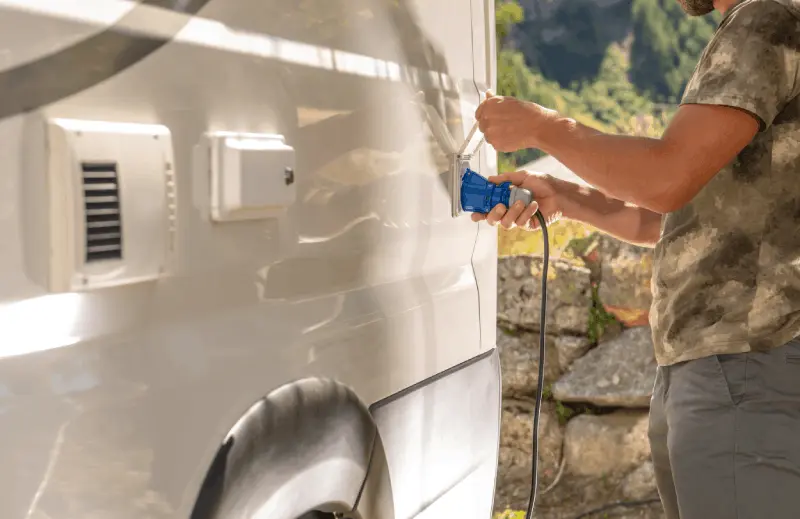
For those seeking speed and practicality, setting up a motorhome takes seconds. Pulling the handbrake and turning the seat means the camping has started. It depends on whether you want to make an external electricity connection or open the awning. In towable caravans, the process is a bit more cumbersome. Detaching the caravan from the vehicle, lowering the stabilizing legs, setting up water and electricity connections, and leveling the caravan require time and physical effort. If you are only staying for one night and plan to leave early in the morning, the "stop and sleep" comfort offered by a motorhome provides significant time savings compared to the setup phase of a towable caravan.
Which Option Offers More Freedom to Explore After Detaching Your Vehicle?
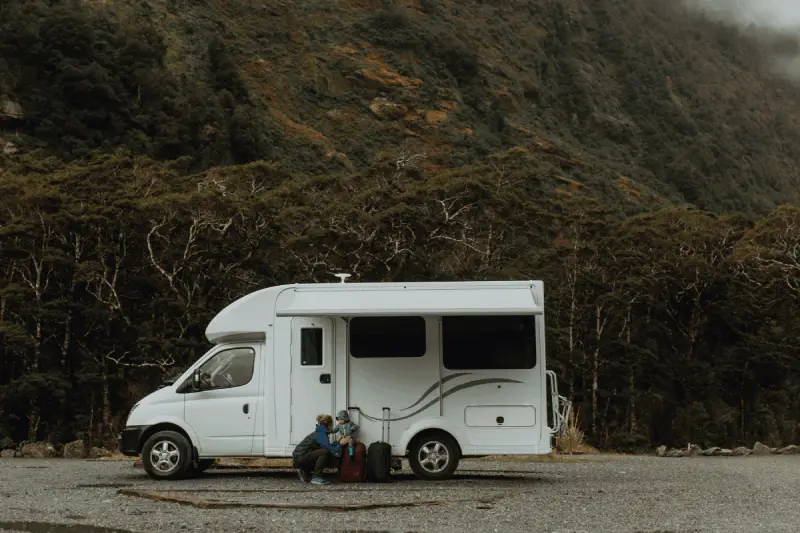
This is the biggest advantage of a towable caravan. Once you reach the campsite, you can leave your caravan like a "home" and go to the market, visit historical sites, or go to the beach with your vehicle. On the other hand, motorhome users have to carry all their belongings with them for every little need. Going to the market means collecting glasses from the table, closing the windows, and risking losing your spot at the campsite. This situation can lead motorhome owners to feel restricted after a while, especially during long stays.
Which is More Economical When Comparing Annual Maintenance Costs and Inspection Periods?
From an economic perspective, towable caravans are clearly ahead. A towable caravan under 750 kg does not require tax, traffic insurance, or inspection; it is simply considered a trailer. However, a motorhome is a motor vehicle; therefore, it incurs high motor vehicle tax (MTV), periodic motor maintenance every year, traffic insurance, and annual inspection costs. A motorhome owner has to bear the costs of a motor that stands in front of their door even if they do not use it. In a towable caravan, your only expense is the standard maintenance of your towing vehicle and the tire/brake checks of the caravan.
Which Model is More Stable in Terms of Driving Safety and Wind Resistance?
In terms of driving safety, motorhomes generally move more stably. Despite being affected by side winds, the risk of swaying is much lower compared to a towable caravan. In towable caravans, the phenomenon known as "snaking," where the trailer sways left and right, can be particularly dangerous at high speeds and during bridge crossings. The imbalance between the weight of the towing vehicle and the weight of the caravan can jeopardize driving safety. Therefore, when using a towable caravan, it is very important to adhere strictly to speed limits and continuously monitor the wind.
Which Offers More Satisfaction in Terms of Interior Space and Layout Flexibility?
In terms of interior volume, towable caravans generally offer a wider living space. In motorhomes, the driver's cabin and engine block take up significant space. However, in a towable caravan, the entire body is designed as living space. "Slide-out" sections that expand outward are generally more common in towable caravans and provide a larger living room area at the campsite. If you have a large family or do not want to feel cramped inside, a towable caravan of the same size will offer more usable space than a motorhome.
Which Caravans Can Be Used with a Class B License?
According to regulations in Turkey, you can use towable caravans under 750 kg (with O1 certification) with a Class B license. However, if you are towing a caravan over 750 kg, you need to add the letter "E" to your license (Class BE). In motorhomes, the situation depends on the total weight of the vehicle. Most motorhomes under 3500 kg (based on panel vans) can be used with a Class B license. However, heavier motorhomes that have been converted from buses or large trucks require a Class C or D license. The license restriction makes models under 750 kg more attractive for beginners.
Which is Lighter on Your Pocket When Comparing Fuel Consumption?
Fuel consumption is a complex issue. A towable caravan attached to a passenger vehicle increases the wind resistance and weight, causing the towing vehicle's fuel consumption to increase by 50%.
it can increase by %100. Motorhomes are already heavy and aerodynamically inefficient; they typically consume 10-14 liters of diesel per 100 kilometers. However, the advantage of a motorhome is that it only consumes this fuel while traveling. The economic efficiency of the vehicle you leave behind after reaching the campsite in a trailer can significantly reduce your total holiday costs. Still, motorhomes are generally a bit more "thirsty" in total travel costs.How Do Depreciation Rates Change in the Second-Hand Market?
From an investment perspective, trailers tend to retain their value better. This is because there is no motor mechanism that can wear out in a trailer. The body and furniture of the trailer can remain functional for 20-30 years as long as they are well maintained. However, in a motorhome, as the vehicle ages, engine problems arise, and its value decreases rapidly as mileage increases. While a 10-year-old trailer is still considered "young," a motorhome that is 10 years old and has 300,000 kilometers is seen as a potential cost burden. Therefore, if you are considering a long-term investment, a trailer is more logical.
Which Caravan Offers More Comfort in Kitchen and Bathroom Use?
The comfort of a caravan's bathroom and kitchen can vary depending on the segment of the caravan; however, trailers can generally offer larger bathroom cabins because they require less space-saving. Especially in trailers known as "British Style," the rear can be entirely dedicated to a large bathroom. In motorhomes, every centimeter counts, and the bathroom is usually combined with the toilet (wet area). Trailers also provide more suitable spaces to add larger refrigerators, more solar panels, or external storage boxes due to their width. In long-term stays, these small differences can directly affect the quality of life.
Which Caravans Are More Suitable for Stealth Camping?
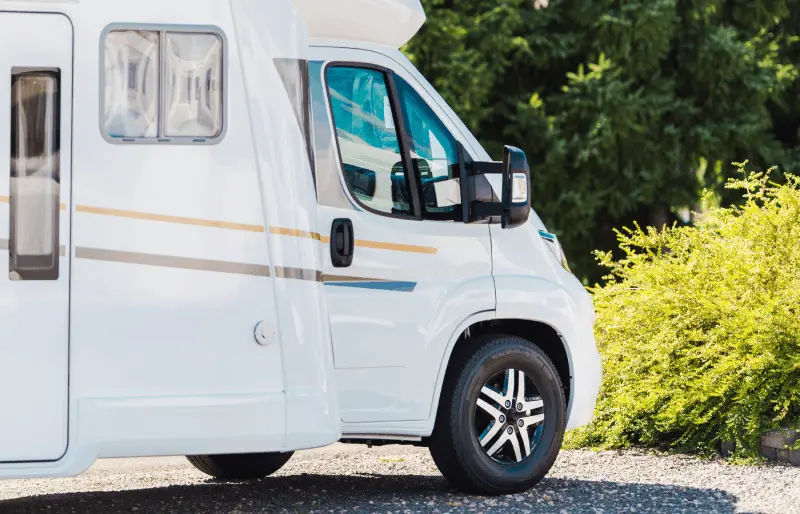
If you want to spend the night without being seen in city centers, parks, or places without caravan camps (stealth camping), a motorhome that has been converted from a white panel van is the only option. These caravans, which look like ordinary work vehicles from the outside, can park anywhere without drawing attention. On the other hand, a trailer shouts "I am here"; a trailer parked behind a vehicle always attracts attention and may be subject to parking bans by many municipalities. For urban travelers seeking adventure and privacy, motorhomes are unmatched in this regard.
Which Caravan Is Easier to Equip and Customize?
Adding equipment can be more complex in motorhomes because it may require integration with the vehicle's electrical system and engine (for example, DC-DC charging systems that charge batteries while driving). However, trailers are simpler and more suitable for DIY projects. Due to their width, it is physically easier to add a larger refrigerator, more solar panels, or external storage boxes to a trailer. However, in a motorhome, every added weight strains the vehicle's carrying capacity (load) and directly affects fuel consumption.
Which Models Are More Common in Terms of Technological Integration and Smart Caravan Features?
Next-generation motorhomes integrate much faster with smart home systems. Systems that allow you to check water levels, battery status, and indoor temperature from your phone have become standard in most modern motorhomes. In trailers, however, these technologies are usually found in higher segment models (such as Adria, Hymer, Fendt). However, the technological connection between the engine's brain and the motorhome's living battery facilitates the vehicle's transition to an "intelligent" ecosystem. Integrated screens that plan your travel route and monitor vehicle health make motorhomes more attractive to tech-savvy campers.
Which Is More Advantageous in Terms of Depreciation and Long-Term Investment Value?
If you want to protect the value of your money, a trailer is a safer haven. Even if the furniture inside the trailer is old, you can make the vehicle look new by changing the upholstery or paint. However, in a motorhome, once the mileage exceeds 200,000, even if the furniture inside is gold-plated, the vehicle's market value decreases. When you own a motorhome, you own both a home and a vehicle, and the vehicle part always depreciates. However, in a trailer, depreciation remains well below inflation, and sometimes when demand increases, you can sell it for a higher price than you bought it for.
Which Is More Critical in Terms of Towing Support and Engine Power Needs?
The most critical factor in a trailer is the power and torque of the towing vehicle. Especially on steep hills or in stop-and-go traffic, towing 1-1.5 tons behind you can put excessive strain on the vehicle's clutch and engine. However, in motorhomes, the engine and transmission are already designed to carry that weight. Most motorhomes using panel van chassis have towing support and heavy load modes as driving aids. However, in a trailer, pushing the limits of your passenger vehicle can lead to mechanical fatigue and failures in the long run.
What Are the Differences in Waste Water Management and Toilet Systems?
Most trailers have a "cassette toilet" system, and you need to manually carry and empty this cassette. In motorhomes, more professional systems may include larger "macERATOR" tanks. Motorhome users can slide the vehicle directly over a drain to empty gray water (sink water). In general, users of towable caravans have to manually transport water using a "waste master." From a practicality standpoint, the integrated tank systems of motorhomes make the "emptying" process, which is the least favorite task of camping life, a bit more bearable.
Which Caravan Offers More Space When Traveling with Pets?
For pet owners, the spacious floor area offered by a towable caravan is a significant advantage. Finding corners where you can place your dog's bed or hide your cat's litter box is easier in a towable caravan. Additionally, when you leave your dog in the caravan at the campsite and take your passenger vehicle outside, the stability of the caravan and its cooler temperature (due to insulation) is good for the animal's comfort. Motorhomes are nice for having your pets with you while traveling, but narrow corridors can be a bit restrictive for larger dogs during their stay.
What Are the Differences in Terms of Theft Risk and Security Measures?
From a security perspective, both types have their vulnerabilities. The biggest risk for a towable caravan is being towed away by another vehicle when left outside the campsite (connection locks are used to prevent this). However, a motorhome can be a direct target for vehicle theft. One advantage of a motorhome is that if you feel threatened at night, you can quickly move from the bed to the driver's seat and escape from there. In a towable caravan, however, you need to go outside to get into the vehicle and check the connection; this creates a serious security gap in emergencies.
Which Is More Efficient in Terms of Solar Panel Efficiency and Roof Area Usage?
The roof of motorhomes is generally flat and wide; this makes it easier to install 3-4 large solar panels. However, the roofs of towable caravans are often filled with ventilation holes, TV antennas, and chimneys; this can limit panel space. Additionally, the engine of a motorhome charges the living batteries while driving and provides energy even on days without sunlight. In a towable caravan, however, electrical transfer (via a 13-pin socket) usually occurs very slowly and is only sufficient to run the refrigerator. For energy independence, the technical infrastructure of a motorhome is much stronger.
Which Is Less Burdensome in Cases of Tire Change and Mechanical Failure?
If your tire blows out on a bumpy road or your engine breaks down, a motorhome can turn into a complete nightmare. Your entire home is loaded onto a tow truck, and you have nowhere to stay until repairs are completed. However, in a towable caravan, if your towing vehicle breaks down, you can send it for service and continue living in the caravan (if it's safe on the roadside). Changing a flat tire on the caravan itself is much simpler with a jack than on a motorhome. Mechanical independence makes towable caravans more resilient to unexpected breakdowns.
Which Caravan Is Better for Digital Nomads?
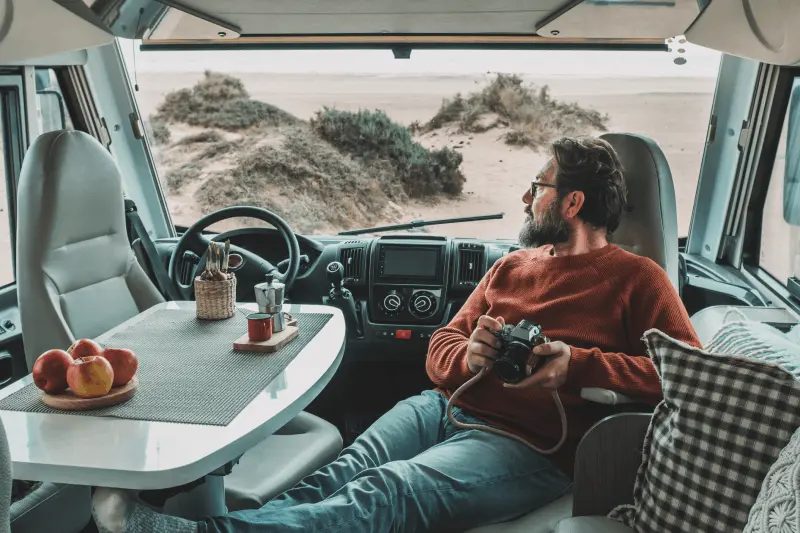
If you work remotely, the "separate table" feature offered by a towable caravan is invaluable. Many towable caravans have both a dining table and a second seating area that can be converted into a bed; this allows you to keep one as a workspace. Motorhomes usually only have one table; this serves as a dining, socializing, and working area. Having to constantly pack and set up can disrupt your work discipline. Additionally, the larger windows and spacious interior design of a towable caravan provide a less distracting environment for those who spend long hours at the computer.
How Steep Is the Learning Curve for Those Without Towing Experience?
If you've never towed a trailer before, getting a towable caravan on the road will be quite stressful for the first few days. Reversing, checking mirrors, and making wide turns are skills that are acquired over time. However, a motorhome is like driving a large van; it is much easier to get used to. If you are not very confident in your driving skills or do not want to feel stressed on every trip, the user-friendly design of a motorhome would be more suitable for you. However, if you say, "I will learn this," with a bit of practice, you can grasp the logic of towable caravans and overcome that infamous "reverse maneuver" obstacle.
Which Caravans Have More Optimized Storage Space and Luggage Capacity?
One of the biggest advantages of motorhomes is the "garage" compartment. You can easily store bicycles, camping chairs, generators, and grills in the large storage area accessible from outside under the rear bed. In towable caravans, however, storage space is usually distributed under the seats and at the front end; this makes it difficult to find space for larger items. If you are carrying a lot of outdoor equipment, the organized garage space offered by a motorhome makes your life incredibly easier.
Is It Better to Tow a Caravan with Electric Vehicles or Own an Electric Motorhome?
The future is electric, but with current technology, both options are challenging. Towing a caravan with an electric vehicle can reduce the vehicle's range by up to 60%; this means you will need to look for a charging station every 150-200 kilometers. Electric motorhomes are still very new and offer quite limited range when loaded. However, in the world of towable caravans, "self-propelled" (e-trailer) trailers are being developed that do not add extra load to the towing vehicle by pushing their own weight. Currently, traditional fuels are more practical, but the modular structure of a towable caravan may adapt more easily to future technological changes.
Which Caravans Have Standard Parking Spaces?
Is It Easier to Drive?
If your caravan's "pop-top" model is not shorter than 2 meters, it cannot fit into most covered parking lots. However, in open parking lots, a motorhome can fit into a standard vehicle parking space (even if a bit tight). A towable caravan can only be parked using two parking spaces lengthwise; this makes finding a spot in the city nearly impossible. Leaving your motorhome by the roadside while visiting friends or taking a break in the city center is much more acceptable than with a towable caravan.
What Are the Options for Using Refrigerators and Heating Systems While Traveling?
In motorhomes, refrigerators and (in some models) heating systems can operate actively while driving; this ensures your drinks are cold and the interior is warm when you reach the campsite. However, for safety reasons, towable caravans should not be left open while driving (unless there are special accident sensor systems). This means that the interior will either not be heated during the journey or the refrigerator's performance will decrease. The integrated systems of motorhomes provide uninterrupted comfort at every moment of the journey, offering great luxury.
Which Is More Practical for Accommodation at Festivals and Crowded Events?
In crowded places like concert festivals or large sports events, a motorhome is a complete lifesaver. Your home is there as soon as you park, and you can quickly leave when the event is over. Entering crowded and narrow spaces with a towable caravan requires a complete logistical operation to maneuver and find a suitable place to leave it. Additionally, the sense of security and isolation that a motorhome offers in crowded environments provides a more peaceful refuge when you want to disconnect from the outside world and relax.
If You Want to Rent a Caravan, Which Is in Higher Demand?
If a caravan is considered an investment vehicle, the rental potential of motorhomes is much higher. People generally do not want to deal with attaching a tow hitch to their vehicles and learning to use a trailer; they just want to take the keys and go. Therefore, motorhomes can be rented at high prices, especially during the summer season. The rental market for towable caravans is much more limited and usually revolves around "on-site accommodation" (caravans left in a specific area). If you want your caravan to cover its own costs, a motorhome is more logical from a commercial standpoint.
What Are the Design Differences in Terms of Ventilation and Natural Light?
Towable caravans generally have more windows because they are open on all four sides. Especially the panoramic windows at the front offer a unique view while looking at a lake or the sea. However, in motorhomes, the front is covered with the driver's cabin; therefore, the view is usually seen from the side windows. The 360-degree openness and natural light offered by a towable caravan can be psychologically much more relaxing for those who fear enclosed spaces or spend long periods indoors.
Which Option Is More Sustainable for Long-Term (Full-Time) Living?
If you plan to live full-time in a caravan, the "normalization" opportunity offered by a towable caravan is important. You can settle in a campsite and handle your daily tasks with your passenger vehicle. Living full-time in a motorhome means moving your home every time you go grocery shopping; this can become tiring after a while. However, if you are a traveler who frequently changes countries and deals with visas, the speed and mobility capabilities of a motorhome will open more doors for you in long-term living. In short, if you are a settled nomad, a towable caravan is suitable; if you are a true world traveler, a motorhome is the best way to go.
How Do Road Tolls and Bridge Usage Costs Change?
In Turkey, the number of axles and axle spacing determines the bridge and highway toll. Motorhomes generally fall into the 2nd class vehicle category. However, in a towable caravan, even if the towing vehicle is 1st class, the total number of axles increases with the trailer; this can raise the fee to 3rd class or higher. Especially at HGS/OGS crossings, a towable caravan can significantly increase highway costs. If your route frequently uses toll roads and bridges, the operating cost of a motorhome can be more predictable in these items and sometimes more economical.
What Is the Durability Difference Between the Chassis and Body Lifespan of a Caravan?
The lifespan of a motorhome is limited by the lifespan of the commercial vehicle it is built on (such as Fiat Ducato, PSA group, etc.). When the vehicle rusts or the engine fails, the caravan part also loses its functionality. However, towable caravans are generally built on galvanized AL-KO or Knott chassis with high corrosion resistance. The body panels can last for many years as long as they are not damaged. Therefore, you can still see antique towable caravans that are 30-40 years old on the roads; at that age, most motorhomes are found in junkyards or museums.
Which Caravan Reflects Your Character?
Ask yourself this final question during the decision-making phase: Am I a "driver" or a "homebody"? A motorhome is preferred by those who love to travel, enjoy driving, and are open to the freedom to stop and rest at any moment. A towable caravan, on the other hand, is the choice of those who want to enjoy the destination, not compromise on the comforts of home, and keep an eye on economic balances. Both worlds will open doors to your nature; the important thing is which key you want to use to enter that door. Whatever choice you make, being a camper will not only offer you a vacation but also provide you with a completely new perspective.