Do Gas Stoves Carry the Risk of Explosion in High Temperatures?
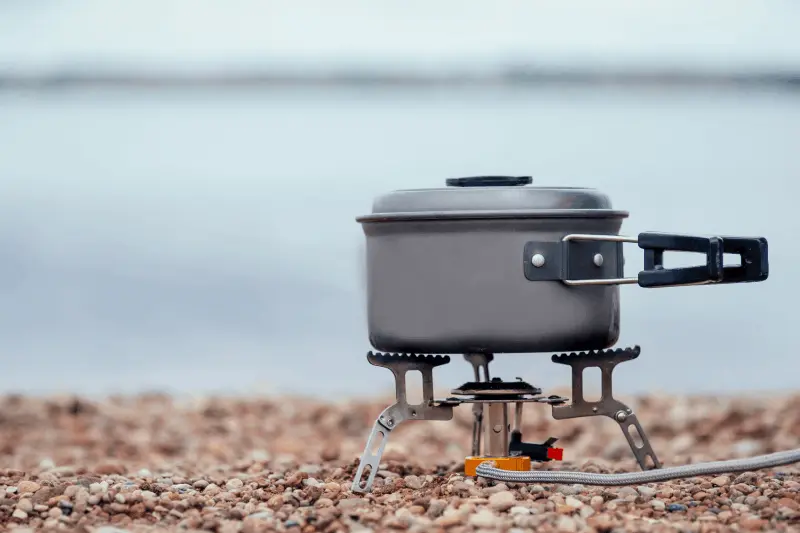
One of the biggest fears of campers is that a gas cartridge left forgotten in their luggage during the hot summer can create a bomb effect. Gas stoves expand when they exceed a certain temperature threshold (usually 50 degrees) because they contain pressurized butane or propane gas. Although modern gas stoves are equipped with safety valves, the temperature inside a device exposed directly to sunlight can reach 60-70 degrees. This situation poses a risk of explosion, albeit with a very low probability of leakage. If you will be traveling under the sun for a long time, it is vital to store gas cartridges in cooler areas like under the seat or in insulated bags.
Is Cooking with a Wood Stove Impossible in Wet and Humid Forests?
The biggest logistical nightmare for wood stove users is finding fuel in a wet environment after a rainy night. If you don’t have helpers like fire starters, gel fuel, or dry magnesium sticks nearby, igniting damp wood can turn into a serious test of patience. Wet wood not only burns poorly but also produces dense smoke that irritates your eyes and reduces heat efficiency. While gas stoves stand out with the comfort of "press and go," wood stove users can overcome this issue by always carrying a small amount of dry twigs or what we call "fatwood" for emergencies.
Does Compatibility Issues with Different Brands of Gas Cartridges Leave Us Stranded?
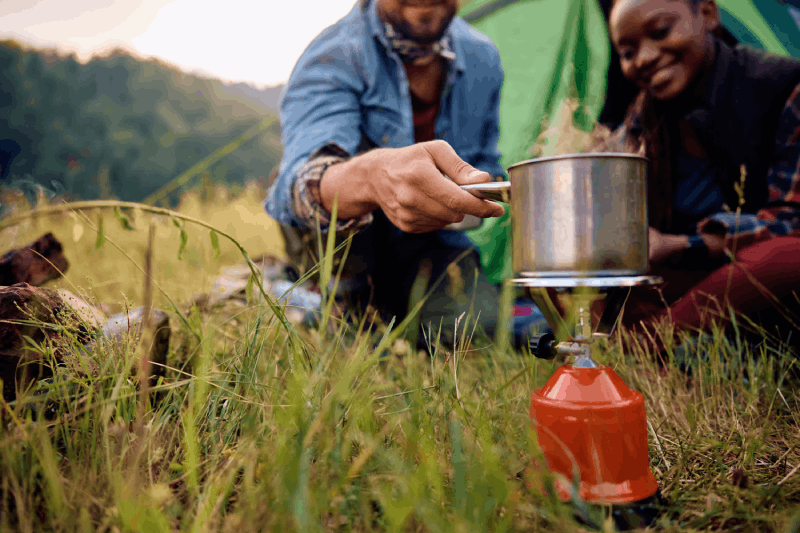
When traveling from one city to another or camping abroad, you may not always find the same brand of cartridge. There are two main systems on the market: threaded and easy-click. If your stove is designed for the threaded system and the local store only has branded easy-click cartridges, your risk of running out is high. To overcome this hidden logistical barrier, you must carry a universal converter adapter with you. In wood stoves, there is no such "brand dependency"; every dry twig in nature is your standard fuel, giving you complete freedom.
Does Smoke from Wood Fire Create an Unpleasant Odor in My Expensive Camping Tent?
For comfort-conscious campers, odor is a part of hygiene. Regardless of how efficiently wood stoves burn, the wind can blow smoke directly into your tent or technical clothing. This smoke can settle into the pores of breathable fabrics like "gore-tex," causing unpleasant odors and potentially affecting the fabric's performance in the long run. Gas stoves, on the other hand, provide almost odorless and smokeless combustion. If you plan to cook near your tent, a gas stove is definitely more advantageous in terms of hygiene; because removing a grease stain from an expensive external tent is nearly impossible.
Is the Freezing of Gas Cartridges and Loss of Pressure in Winter Camps a Myth?
When the air temperature drops below zero, butane gas enters a liquid state and cannot vaporize. This can cause your stove to burn with a weak flame or not burn at all. Seeing your cartridge frozen when you want to enjoy a warm tea in the snow at midnight can be a huge disappointment. To solve this problem, you need to buy "winter cartridges" that contain propane, which are more expensive. In wood stoves, however, the fuel does not freeze; instead, you can find warmth by the fire. Logistically, while wood stoves are a reliable friend in winter conditions, gas stoves require prior preparation.
What is the Risk of Sparks from Wood Fire Piercing My Synthetic Clothes?
Wood stoves can produce "popping" sparks, especially when burning pine cones or resinous woods. Since most camping clothes are synthetic (nylon/polyester), even a small piece of glowing ember that falls on them can instantly create a hole. Seeing your expensive goose down jacket getting burned in a second can ruin your camping experience. In gas stoves, the flame system is controllable and enclosed, so there is no risk of sparks flying. If you are camping with expensive technical gear, you may need to keep a safe distance from the fire or wear a cotton protective apron while using a wood stove.
Is Leaving Empty Gas Cartridges in Nature a Moral Burden?
One of the logistical challenges is waste management. An empty gas cartridge is a non-biodegradable metal waste in nature and continues to take up space in your bag until it reaches a recycling bin. Many campers see the hidden cost and burden of carrying an empty cartridge back (even if it is light, it takes up volume). In wood stoves, however, the fuel comes from nature, leaving only organic ash behind. You can mix this ash into the soil after ensuring it is completely extinguished. If you want to show an eco-friendly stance, the "zero waste" principle of wood stoves is far ahead of gas systems.
Do Plastic Parts of Gas Stoves Melt with Long-Term Use?
Some models of cheap gas stoves on the market have control buttons or legs made of hard plastic. If you place a wide pot on top of the stove, the heat can reflect downwards, causing these plastic parts to deform or melt. This situation shortens the stove's lifespan and poses a risk of gas leakage during use. Wood portable stoves, on the other hand, are generally made of stainless steel or titanium. They are much more resistant to heat, and even after years, the likelihood of mechanical failure is much lower compared to the electronic ignition system of a gas stove.
Do Fire Bans in National Parks Also Cover Wood Stove Use?
Many tourists and campers think that as long as they do not burn "ground fire," portable stoves are allowed. However, during the summer months with a high risk of fire, inspectors may classify wood stoves as "open fire" and ban them, imposing heavy fines. Gas stoves are generally kept outside of these bans or are treated more flexibly due to their controlled valve system. If your holiday plans include protected forests, you may face the risk of not being able to cook with your wood stove and spending the entire holiday eating biscuits. This is a practical challenge that requires thorough research into local rules before camping.
Does Extra Chemical Need to be Used to Clean the Bottom of Pots and Pans?
The dirtiest aspect of using a wood stove is the cleaning after cooking. The bottom of a pot that comes into direct contact with wood fire is covered with a layer of black soot like tar. If precautions are not taken, this soot can transfer to other items in your bag and your clothes. It is impossible to remove it with just water; usually, you need to scrub with sand or use strong dish detergents. In gas stoves, however, the combustion is so clean that the bottom of your pot remains shiny like the first day. If you say, "hygiene is everything for me" and do not want to waste your time scrubbing pots, the gas system is the only option for you.
Is the Fuel Cost of Traveling to Places that Sell Gas Cartridges a Hidden Cost?
Gas stoves may seem cheap at first glance, but they create a continuous fuel dependency. Especially if you are camping in rural areas, going to the nearest town center to replace an empty cartridge can cost you more in gas and time than the stove itself. In a wood stove, however, the fuel is free and right under your feet. From a "fuel efficiency" perspective, in long-term and stable camping situations, wood stoves are the clear economic winner. A gas stove is essentially a comfort tax, and this tax decreases with every meal from your cartridge.
Does the Inability to Adjust Heat in Wood Stoves Cause Food to Burn?
If you are a gourmet camper, adjusting the intensity of the fire is vital. Thanks to the sensitive valves in gas stoves, you can reduce the flame to the size of a candle or open it to full power. This is a great luxury when simmering rice or preparing delicate sauces. In wood stoves, however, the heat adjustment depends only on the amount of wood you feed and the airflow. It is impossible to suddenly reduce the fire, which often leads to food burning at the bottom or milk boiling over. If you want to showcase your cooking skills in nature, the uncontrolled nature of wood stoves can be an obstacle for you.
Does the Noise of Splitting Wood at Night Disturb Other Campers?
Silence is an unwritten rule in camping areas. If you decide to light your wood stove at midnight, you may have to break or chop wood. This noise can echo in the quiet nature, waking up people in other tents and leading to social tensions. The only sound from a gas stove is a soft hiss; you can secretly make your coffee and watch the stars without disturbing anyone. Within the framework of social harmony and etiquette rules, especially in crowded camping areas, gas stoves are considered a much "nicer" choice.
Do the Sharp Edges of Portable Wood Stoves Tear My Bag?
As a logistical detail, most portable wood stoves are made of interlocking metal plates. If the product does not have quality craftsmanship or if the carrying bag is thin, the corners of these plates can scratch or even tear the inner surface of your bag or other expensive equipment. Gas stoves generally have rounder edges and are sold with hard plastic protective cases. When buying a wood stove, make sure the edges are "deburred" and use a thick cover when placing the stove in your bag; otherwise, you may wake up to water leaking from the holes in your bag.
Does the Piezo Ignition System in Gas Stoves Malfunction in Humid Weather?
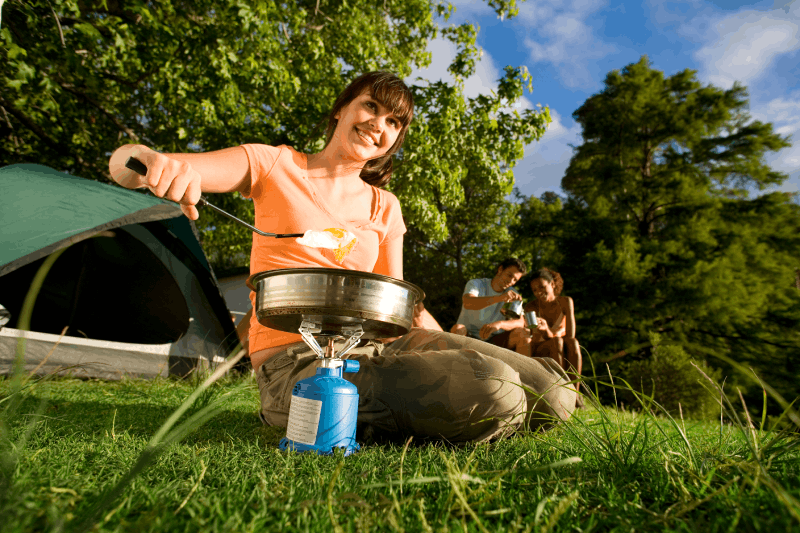
Many modern gas stoves have a self-ignition (piezo) system that does not require a lighter. However, these systems are quite sensitive to moisture, dust, and high altitude. Even if you repeatedly press the button on your stove in a thick fog or a drizzly morning, the spark may not ignite. This is a practical challenge brought by "over-reliance on technology." Wood stove users are already used to carrying a fire starter with them, so they are prepared for such surprises. Even if you use a gas stove, you should always have a waterproof match or lighter in your pocket.
Do Ashes Falling from Wood Stoves Harm the Soil and Ants?
For an eco-friendly tourist, the biggest concern is the damage done to the ecosystem. Some models of portable wood stoves do not have an ash tray at the bottom or it is very thin. The glowing pieces that fall to the ground during burning can burn the plant cover in the soil and harm the microorganisms or ant nests living there. This goes against the "leave no trace" principle. Gas stoves do not transfer any heat to the ground thanks to their elevated feet. If you are going to use a wood stove, it is a moral obligation to place a fire blanket or non-flammable mat underneath to prevent the soil from heating up.
Is It Forbidden to Carry Gas Cartridges When Traveling by Plane?
From a logistical perspective, the most restrictive rule is that of the airline. Gas cartridges cannot be carried either in cabin baggage or in checked luggage. If you are flying to another country or city, your first task upon arrival will be to find a hunting shop or camping store. This means wasting time and extra stress in an unfamiliar city. Portable wood stoves, however, can be safely transported in checked luggage since they are just metal devices. As soon as you land, you can light your fire with the first wood you find. For international travelers, a wood stove is a significant logistical advantage that eliminates the worry of finding fuel.
Can Not Being Able to Estimate the Amount of Gas in the Cartridge Lead to Half-Cooked Meals?
The biggest anxiety for gas stove users is the question, "How much gas is left inside?" It is impossible to see inside the cartridge from the outside, and shaking it to estimate is often misleading. Running out of gas just as you drop the pasta into boiling water can leave you with a half-cooked meal. To avoid this hidden risk, you should either always carry a spare full cartridge (which adds extra weight) or track the weight of the cartridge. In a wood stove, however, you can see with your eyes when the fuel is running out and add more immediately; the control of the process is entirely in your hands.
How Much Longer Does Cooking in a Wood Stove Take Compared to a Gas Stove?
Time management is especially critical after a tiring hike. Gas stoves can boil half a liter of water in about 3-4 minutes thanks to their high-pressure flame. In wood stoves, however, you first need to revive the fire, wait for the wood to turn to embers, and balance the pot; this process can take 15-20 minutes. If you are starving, a wood stove can turn into a test of patience. For short-term campers looking for practicality and speed, the gas system is invaluable in terms of time savings.
Does the Flame of a Gas Stove Go Out Constantly on a Windy Hill?
In high-altitude and open area camps, wind is the biggest enemy of the camper. The flame of gas stoves is usually fragile, and even a moderate wind can blow the heat away from the pot, increasing fuel consumption or completely extinguishing the flame. This situation makes it mandatory to carry a windbreak, which adds extra cost and weight. Some models of wood stoves create a chimney effect by their design, using the wind to their advantage; as the wind blows, the fire becomes more lively. Logistically, a well-designed wood stove can perform better in challenging weather conditions.
Do Gas Cartridges Leak and Endanger My Garage During Long-Term Storage?
At the end of the camping season, we store our equipment in the garage. The sealing systems on cartridges can wear out over the years or loosen due to temperature changes. Gas leaking in a closed and unventilated storage can pose a significant risk to your home when combined with an electrical spark. Because of this fear, many people hesitate to store cartridges inside their homes. A wood stove, however, is just a metal box; you can toss it anywhere, forget about it for years, and it poses no safety risk. In terms of long-term safety and low maintenance needs, a wood stove offers the "set it and forget it" comfort.
Does Constantly Getting Your Hands Dirty While Using a Wood Stove Create a Hygiene Issue?
Collecting wood, breaking it, and placing it in the stove can cause your hands to be covered in soot, resin, and dirt. If you do not have enough water and soap nearby (which is very valuable in camping), these dirt can transfer to your food or personal hygiene. In gas stove use, however, your hands remain clean; you just turn a valve and press a button. This "black dirt" created by wood stoves is a practical obstacle that seriously reduces camping comfort, especially for families with children or those who are cleanliness obsessed. Gas stoves are ideal for those who want to bring "urban comfort" to nature.
Does a Small Pot on the Small Legs of a Gas Stove Pose a Risk of Tipping Over?
Many gas stoves designed for lightness have foldable and very thin legs. If you try to cook with a large and heavy pot for a group of 4-5 people, the center of gravity of the stove can shift upwards, causing your food to spill on the ground (and your feet to burn) with the slightest jolt. Portable wood stoves, however, generally offer wider bases and sit more securely on the ground. In terms of safety and stability, especially when it comes to large groups and heavy meals, the physical durability of a wood stove is much more reassuring than that of gas stoves.
Does Food Cooked Over Wood Fire Really Taste Different, or Is It a Psychological Effect?
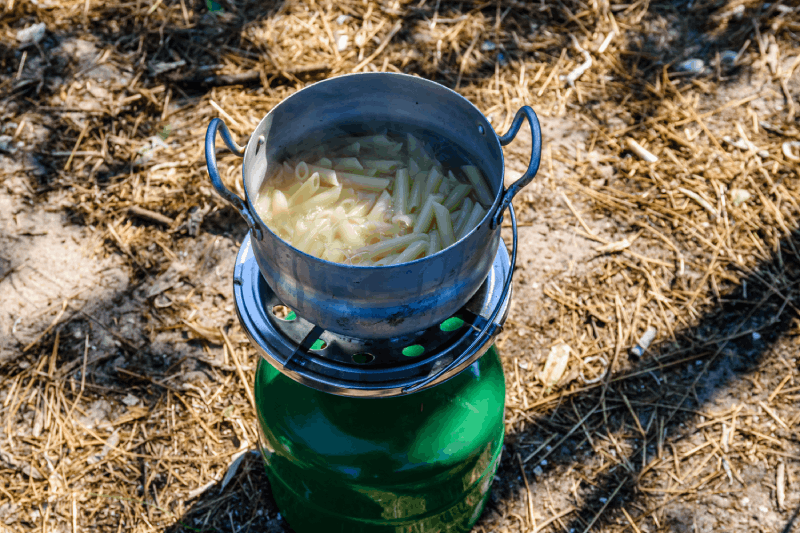
Many gourmet campers argue that the "smoky" aroma added by wood smoke to food can never be captured in a gas stove. Especially meat dishes cooked over an open flame or brewed tea bring the spirit of nature to the table. A gas stove provides completely neutral heat, adding no extra flavor to the food. If your goal in camping is not just to fill your stomach but also to have a gastronomy-focused experience, the mystical taste difference offered by a wood stove may be indispensable for you. This situation is a matter of preference and mood beyond comfort.
Can Portable Wood Stoves Also Be Used as a Heating Device?
Sitting in front of your tent on a cool evening, a gas stove will not help you much with heating; it only heats the pot on top. However, a wood stove radiates heat to its surroundings, serving as a small campfire. It can warm your hands, dry your shoes, and enliven the social atmosphere of the camp. Trying to warm up with a gas stove is both very expensive and dangerous as it quickly consumes oxygen. From a "multipurpose" strategy perspective, a wood stove provides logistical efficiency as both a cooking and heating unit.
What is the Backup Plan if the Gas in Gas Stoves Runs Out?
In logistical planning, you need to consider the worst-case scenario. You are in a remote area and realize that your last spare cartridge is also empty. If your gas stove only works with "gas," your stove is now a non-functional metal piece. However, if you have a wood stove, your fuel is inexhaustible. In fact, some hybrid stove models can work with both gas cartridges and wood. If you are going on a risky and long expedition, being dependent on only one type of fuel is a significant safety gap. A wood stove is the most reliable "Plan B" with its infinite fuel source provided by nature.
Does Setting Up and Packing Wood Stoves Take a Lot of Time?
Some models of wood stoves consist of more than 10 pieces that need to be assembled, and putting them together correctly can feel like solving a puzzle. It can be frustrating to deal with these pieces in cold weather when your fingers are numb. In gas stoves, however, setup usually consists of just "screwing" and takes seconds. Additionally, waiting for a wood stove to cool down is another time-consuming task; you cannot put the stove in your bag until the embers are completely extinguished. In terms of practicality and "pack and go" speed, gas stoves are much more advantageous, especially for travelers who change locations every day.
How to Clean a Gas Stove's Burner if It Gets Clogged with Sand and Dust?
In beach camps or dusty terrains, the fine holes (burner) of a gas stove can get clogged. In this case, the stove burns inefficiently or the flame turns orange. Cleaning may require a thin needle or pressurized air, which are usually not available while camping. In wood stoves, however, there is no mechanism to clog; the air channels are wide, and any ash or dust that enters does not affect the burning performance. In terms of the risk of technical failure and maintenance difficulty, the "rough and durable" structure of wood stoves provides an advantage over the "sensitive and technological" structure of gas stoves.
Can Eye Burning and Being Under Smoke Be Prevented While Using a Wood Stove?
Smoke management is the biggest complaint of wood stove users. When the wind constantly changes direction, smoke blowing directly into your face can turn cooking into a torture. This situation poses a health risk, especially for people with asthma or eye sensitivity. Gas stoves, however, operate completely smokeless, providing a "clean kitchen" environment. If you love the taste of smoke, but only want to enjoy the food itself and do not want to cook with tears in your eyes, there is no alternative to the comfort offered by a gas stove.
Is There a Practical Method to Detect Gas Leakage in Gas Stoves?
If you hear a "hiss" sound when connecting the stove to the cartridge and this sound does not stop, you may have a sealing problem. Using soapy water to detect leaks is a safe method, but preparing soapy water while camping is not always possible. If you can smell the leaking gas, you should never ignite the stove. In wood stoves, however, there is no "leak" that is invisible and poses a risk of sudden explosion. For campers who have safety concerns and are wary of gas systems, the predictable nature of wood stoves offers a much more peaceful camping experience.
Do Wood Portable Stoves Warp and Buckle Over Time Due to Heat?
"Warping," a heat-related deformation, is a common problem for wood stoves made of thin metal. Metal plates exposed to very high heat can warp over time, and the pieces may start to not fit together. This indicates that the stove has reached the end of its lifespan. In gas stoves, however, the flame does not directly hit the metal body, but rather the pot, so body deformation is much less likely. If you do not buy a wood stove made of quality and thick material, you may have to throw your stove away after a few camps; this is a long-term cost risk.
Which Stove Type is More Suitable for Your Camping Style?
Considering all these details, if your priority is speed, cleanliness, precise heat adjustment, and urban comfort, Gas Camping Stove is the best choice for you. It is especially ideal for short weekend camps and family trips. However, if you are a true nature enthusiast, want to break free from fuel dependency, love the taste of smoky food, and prefer the warmth of a fire, Wood Portable Stove will reflect your spirit. When making your choice, be sure to consider not only the price but also the hidden costs, logistical challenges, and safety risks mentioned above. Happy camping!