How to Calculate Daily Energy Consumption When Determining the Electrical Needs of a Caravan?
The fundamental pillar of a caravan's electrical system is creating an accurate energy budget. Without this calculation, any equipment purchased will either be insufficient or create unnecessary costs. When calculating, you need to determine the Watt value and daily average usage time of each device you will use in the caravan (refrigerator, lighting, water pump, phone charger, laptop, webasto, etc.). For example, a refrigerator that consumes 40 Watts may run for 24 hours a day, but its compressor is only active for about 8-10 hours; this means a daily energy consumption of 320-400 Watt-hours (Wh). After finding the total Wh value, you divide it by your system voltage of 12V to find your daily Amp-hour (Ah) requirement. To ensure a safe installation, calculating 25% more than this result is a critical measure for cloudy days and efficiency losses.
Should You Prefer Gel Batteries or LiFePO4 Lithium Batteries?
Although traditional gel batteries have been a favorite among campers for many years, LiFePO4 (Lithium Iron Phosphate) technology has completely changed this balance. The usable capacity of gel batteries is limited to 50% of their total capacity; meaning you can only get 50Ah from a 100Ah gel battery. On the other hand, LiFePO4 batteries can be discharged at a rate of 90%-95% and offer approximately 10 times more cycle life. The weight advantage is crucial for caravans; lithium batteries weigh one-third of gel batteries. Although the initial cost is high, considering the lifespan and performance, lithium batteries are a much more economical and efficient solution in the long run.
Why Are Monocrystalline Solar Panels the Most Efficient Option for Caravans?
The roof of a caravan has limited space, so it is essential to achieve the highest efficiency per square meter. Monocrystalline panels, made from a single crystal structure, have much higher efficiency rates (20% and above) compared to polycrystalline panels. Their energy production capacities are particularly higher in low light conditions and partially cloudy weather. Additionally, aesthetically, their black and homogeneous structures provide a more elegant appearance on the caravan. Although polycrystalline panels are cheaper, investing in monocrystalline panels for mobile and limited space projects like caravans is the most accurate decision for energy independence.
How Much Efficiency Difference Do MPPT Charge Controllers Create Compared to PWM Devices?
The charge controller that transmits energy from solar panels to batteries is the brain of the system. While PWM devices simply pull the voltage down to battery level, they waste the power difference as heat. However, MPPT (Maximum Power Point Tracking) devices lower the voltage to a suitable level for the battery while increasing the amperage, thus preserving power. This technology provides between 20% to 30% more energy gain, especially during winter months and when the panels' voltage is high. If your system has a panel power of 200W or more, you will quickly recover the price difference with the extra energy provided by the MPPT device.
What Are the Critical Differences Between Pure Sine Inverters and Modified Sine Inverters?
The output waveform of inverters that convert 12V DC energy in the caravan to 220V AC grid electricity is vital for the health of your devices. Modified sine inverters produce a stepped output similar to a square wave; this can cause overheating or damage to sensitive electronic devices (laptop, coffee machine, LED TV). Pure sine inverters, on the other hand, provide an exact replica of the grid electricity in your home, with a smooth waveform. If you will be using a refrigerator motor or sensitive adapters, you must choose a pure sine device. Modified sine is only suitable for very simple heaters or incandescent bulbs, but risks should not be taken in a modern caravan.
Is It Safe to Power the Battery from the Vehicle Alternator Without Using a DC-DC Charger?
Many campers prefer to charge their living batteries directly from the vehicle alternator, but this method poses serious risks in modern vehicles (Euro 5 and Euro 6). Smart alternators reduce voltage when the vehicle battery is full, which prevents the living battery from ever fully charging. Additionally, lithium batteries have very low internal resistance; drawing excessively high current uncontrolled from the alternator can cause the alternator to burn out. DC-DC Charger devices take the irregular electricity from the alternator and charge your living battery with ideal voltage and current suitable for its chemistry (Gel or Lithium). This both extends the battery life and protects the vehicle's electricity.
What Formulas Are Used When Calculating Cable Cross-Section in Caravan Electrical Installations?
In low voltage (12V) systems like caravans, voltage drop is the biggest enemy. As the distance increases and the current rises, energy is lost over the cable, and the cable heats up. When calculating cable cross-section, the formula S = (2 * L * I * 0.0175) / V_drop can be used (L: distance, I: current, 0.0175: resistance of copper). As a general rule, the cable between the battery and inverter should be as short and thick as possible (usually 35mm² or 50mm²). While 1.5mm² or 2.5mm² is sufficient for lighting, using 4mm² or 6mm² for devices that run continuously and have high starting currents, like refrigerators, will prevent voltage loss and increase efficiency.
Why Are Fuse Panels and Busbar Connections Vital for Caravan Safety?
Electrical fires are one of the biggest risks for caravans. The fuse panel limits the current drawn by each device and cuts the circuit in case of a short circuit, preventing fire. The busbar eliminates cable clutter and ensures that all negative and positive lines are collected at a single safe point. Loose connections can create arcs and cause overheating; using a busbar minimizes these risks. Each device's line must have a suitably rated fuse (usually 1.25 times the current drawn by the device) installed, and these fuses should be collected in a neatly labeled panel at an easily accessible location. It is.
Is It Possible to Manage Energy Without an Akü Monitoring Monitor (Shunt)?
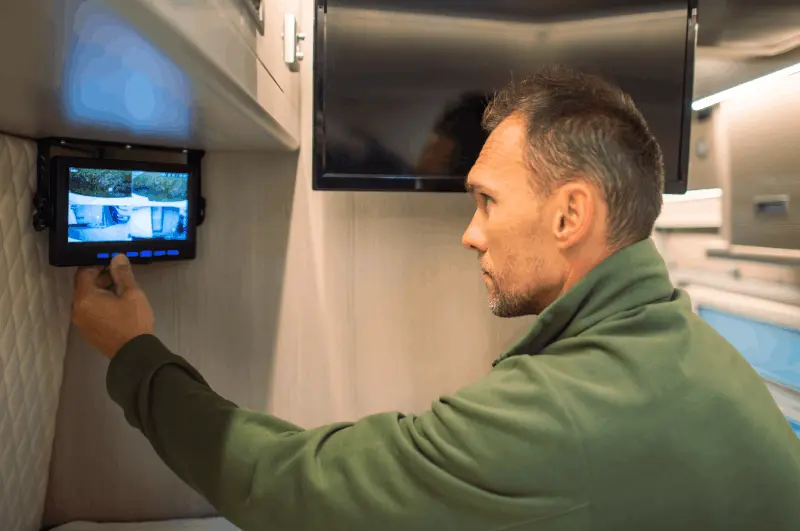
Trying to understand the state of the battery with a simple voltmeter is like trying to estimate how much gasoline is left in a car just by the sound of the engine without a fuel gauge. Battery voltage, especially in lithium batteries, can be misleading when trying to understand the state of charge. A smart battery monitor (Smart Shunt) measures every milliampere going in and out of the battery. This way, you can clearly see how full your battery is, how much longer you can manage with your current consumption, and how many Amperes are coming from the sun at that moment. Using a shunt is the most important comfort and safety equipment that eliminates the fear of being "stranded without electricity" on the road.
How Should 12V DC and 220V AC Systems Be Isolated from Each Other in a Caravan?
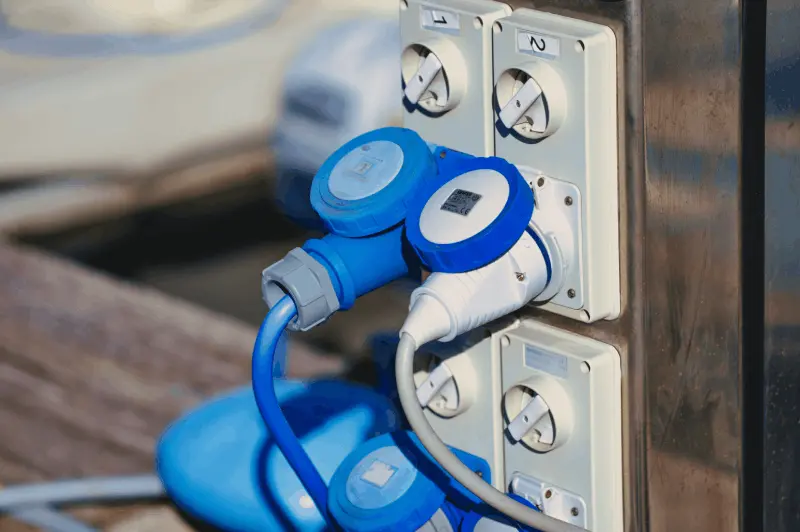
In a caravan, both 12V (direct current from the battery) and 220V (alternating current from outside or from an inverter) coexist. Physically isolating these two systems from each other is essential for both device safety and personal safety. 220V lines must be routed through non-flammable spiral tubes, and if possible, they should not be carried in the same channel as the 12V cables. A leakage current relay and a fuse must be installed at the 220V input. Additionally, establishing a grounding line between the inverter's body and the caravan chassis prevents the risk of electric shock in case of a possible leakage. Isolation is an indicator of the compliance of your electrical system with professional standards.
In What Situations Are Flexible Solar Panels Advantageous Compared to Rigid Panels?
Flexible solar panels are designed especially for caravans with curved roofs or projects that are very sensitive to weight. These panels are very thin (about 2-3mm) and lightweight, and they can be directly mounted on the roof surface. However, their biggest disadvantage compared to rigid panels is the heating problem. The efficiency of solar panels decreases as they heat up; the air gap under rigid panels helps cool them, while flexible panels absorb the heat of the roof. If your roof is flat and your weight limit is not very tight, it is technically more logical to prefer rigid aluminum framed panels that last longer and operate cooler.
Is It Better to Pull a Negative Wire Through the Caravan Chassis or to Use Direct Wiring?
In the automotive industry, the chassis is used as a negative wire to save costs; however, in a caravan, this method can lead to corrosion and electrical interference over time. The healthiest method is to carry both the positive (+) and negative (-) wires directly from each device to the busbars. This "isolated system" approach reduces voltage losses and makes troubleshooting much easier. Clean staging is vital for the efficient charging of especially sensitive electronic devices and lithium batteries. Using the chassis only as a reference point for the main safety grounding or alternator charging is the most professional approach.
How Should Battery Insulation and Heating Pads Be Planned for Winter Caravanning?
The biggest weak point of lithium (LiFePO4) batteries is temperatures below 0°C. Lithium batteries should never be charged at temperatures below freezing; this process causes permanent damage to the battery cells. For those who will use a caravan in winter, the battery compartment must be insulated, or self-heating models of batteries should be chosen. If your battery is not heated, you can keep the battery temperature above 5°C by using low wattage heating pads with thermostats. Although gel batteries are more resistant to cold, their capacities drop significantly in winter. The simplest and most effective solution is to position your batteries inside an insulated box in your living area.
What Should Be Considered When Choosing Between Victron, Renogy, or Local Brands?
Choosing a brand for caravan electrical components is not just a budget issue, but also a matter of system integration. Brands like Victron Energy offer an ecosystem where all devices (MPPT, Inverter, Shunt) communicate with each other via Bluetooth. This greatly simplifies system management. Local brands often stand out with service networks and price advantages. When making a choice, attention should be paid to the warranty period of the device, efficiency values, and most importantly, "standby consumption". A cheap inverter can quickly drain your battery even if you don't run anything. Therefore, not compromising on quality in critical components pays off in the long run.
How Does Smart BMS (Battery Management System) Extend the Life of Lithium Batteries?
Each cell inside lithium batteries must be charged and discharged in a balanced manner. Smart BMS is a computer that manages this process within milliseconds. It equalizes the voltage differences between cells (balancing), prevents excessive current draw, and monitors temperature limits. With a Bluetooth-connected BMS, you can see the status of each cell from your smartphone. If there is a problem with a cell, the BMS system completely shuts down to prevent the battery from burning or failing. A quality BMS is the insurance of your lithium battery investment; therefore, the quality of the BMS is as important as the quality of the cells when choosing a battery.
Should a Leakage Current Relay Be Used in the Caravan's External Electric Connection (Shore Power)?
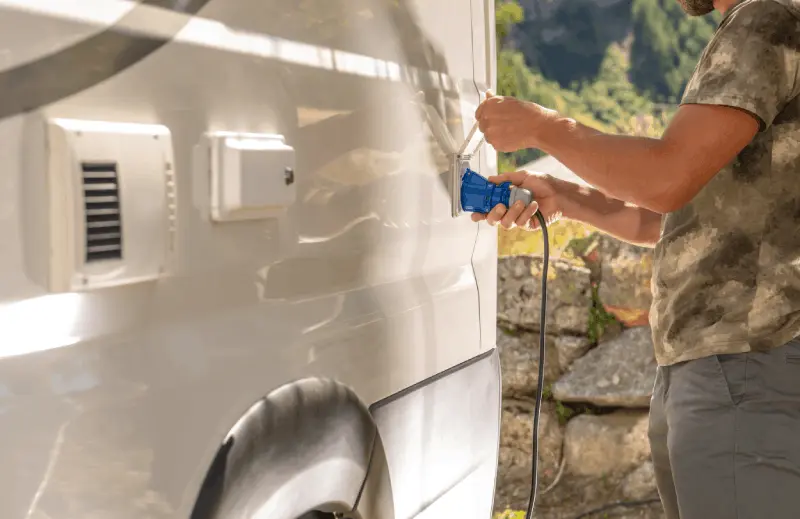
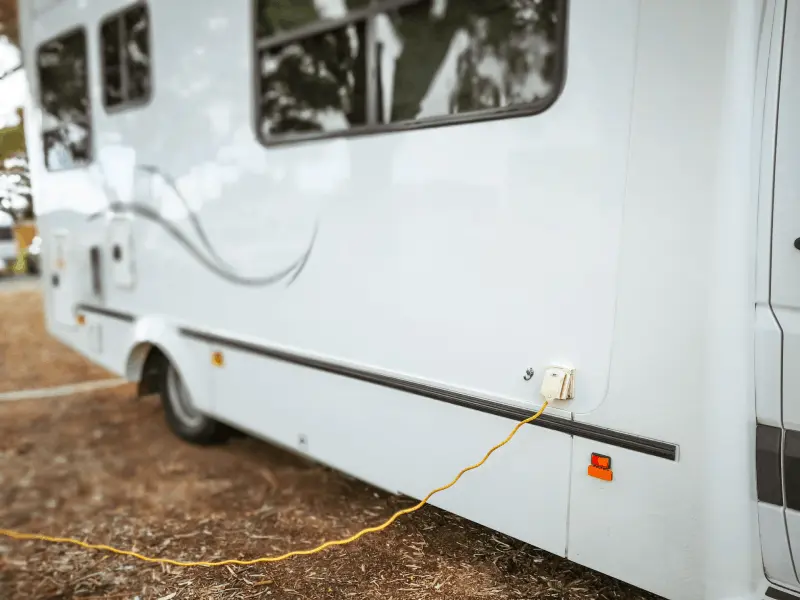
When you connect your caravan to external electricity at a campsite or in front of your home, you entrust your safety to the external installation. However, the installations at campsites are not always standard. It may not be suitable for the regulations. It is life-saving to install a Residual Current Device (30mA) and a suitable fuse immediately after the external entrance into your caravan. This device cuts off electricity within milliseconds in case of a leakage in a device inside the caravan or a short circuit in the wiring. When setting up the electrical system, you should prioritize safety as much as comfort and never overlook this small but critical component.
What Are the Effects of Series and Parallel Connections on Capacity in Multiple Battery Connections?
There are two ways to connect batteries to increase the voltage and capacity of your system. In parallel connection (positive to positive, negative to negative), the voltage remains the same (12V) but the capacity (Ah) is summed. In series connection (the positive of one battery to the negative of another), the capacity remains the same but the voltage is summed (24V). Generally, 12V systems are preferred in caravans, which is why parallel connection is common. However, to prevent batteries from discharging unevenly in parallel connection, the cable lengths and the ages/capacities of the batteries must be exactly the same. In projects requiring high power (for example, systems that will run air conditioning), setting up a 24V system is more efficient as it reduces cable cross-sections.
Why Should Only 12V LED Technology Be Preferred in Lighting Systems?
Old type incandescent or halogen bulbs convert a large part of the energy they consume into heat, which is undesirable in confined spaces like caravans. LED technology, on the other hand, provides high lumens with very low Amper values. Running lights directly on 12V DC eliminates the need to turn on the inverter; thus, you save on the inverter's own consumption. By using 12V LED strips or spotlights, you can spread heterogeneous light to every corner of the caravan and further minimize energy consumption by using a dimmer. When planning lighting, "warm white" tones will create a more homely and peaceful atmosphere inside the caravan.
What Is the Efficiency Limit of 12V Compressor Models in Refrigerator Selection?
The device that consumes the most energy in a caravan is usually the refrigerator. Old type "3-way" (LPG/12V/220V) refrigerators operate on a heating principle and have very low electrical efficiency. Modern 12V compressor refrigerators operate like household refrigerators but are optimized for DC current. These refrigerators can cool very quickly, are shock-resistant, and can maintain internal heat independently of the ambient temperature. A compressor refrigerator that draws an average of 4-5 Amper operates only when needed thanks to its thermostat. With proper insulation and solar panel support, a 12V compressor refrigerator ensures you have ice-cold drinks even on the hottest days of summer.
Is It More Advantageous to Connect Solar Panels in Series or Parallel in Case of Shading?
This is the most debated topic in caravan solar energy systems. In series connection, the voltage increases, which allows the MPPT device to start charging earlier. However, if one corner of a panel is shaded, the entire array's production drops significantly. In parallel connection, each panel operates independently; even if one panel is shaded, the others continue to produce full power. Since caravans are constantly on the move and you cannot predict where (under a tree, building shade, etc.) you will stop, parallel connection generally provides a more reliable "total energy" harvest. If you are using high voltage large panels, hybrid combinations like 2 series - 2 parallel can also be made.
Why Is It Important to Leave a Ventilation Gap in Panel Installation?
Solar panels generate significant heat while converting photons from sunlight into electricity. When the temperature of a panel reaches 65°C-70°C, its efficiency can drop by more than 20%. Therefore, instead of mounting the panels flush against the caravan roof, they should be installed with mounting feet (spoilers) that leave at least a 3-5 cm air gap between them. This gap allows the wind to pass under the panel and cool the cells. Additionally, this gap helps prevent the panel from directly heating the roof, contributing to a lower internal temperature in the caravan. Proper installation extends the life of the panel and maximizes your production amount.
What Are the Dangers of Connecting Devices Without Alternator Capacity Control?
Each vehicle's alternator has a specific Amper production capacity (for example, 90A, 120A, 180A). The vehicle uses a large part of this capacity for its own motor, lights, and air conditioning. When installing a DC-DC Charger to charge the living batteries, you must not exceed the "remaining" capacity of the alternator. If you have a 120A alternator and connect a 60A charger, you may force the alternator to run continuously at full load, shortening its lifespan. The general rule is not to use more than 25%-30% of the alternator's capacity for charging. The right choice ensures you can charge safely on the road and prevents damage to the vehicle's health.
Why Should Marine Type Cables Be Preferred in Caravans?
Caravans are constantly vibrating and may be in humid environments. Standard household single-core (rigid) cables can break over time due to vibration or loosen at connection points. Marine type (multi-core and tinned) cables are both flexible and resistant to corrosion. Tinned copper conductors prevent oxidation (greenery) in salty and humid environments like the seaside. If you want your installation to maintain its initial conductivity even after 10-15 years, you should choose quality marine type cables regardless of a few times the price difference. Poor quality cables pose a risk of hidden fires.
How Should Busbars and Distribution Points Be Positioned in the Installation Layout?
Distribution points, i.e., busbars, should be located at the center of the system but in an easily accessible place. Generally, They are placed inside a technical cabinet very close to the battery group. The negative busbar is where all the devices' negative lines and the shunt are connected. The positive line goes to the main fuse after leaving the battery, and then to the distribution bar. This centralization prevents cable clutter (spaghetti wiring). Each cable must be connected with a suitable terminal, and the nuts on the busbar must be tightened properly. A loose busbar nut is the point that will heat up the most in your caravan and cause a malfunction.
How Do Remote Monitoring (Bluetooth/WiFi) Features Contribute to Energy Savings?
Most modern caravan devices are now integrated with smartphone applications. Being able to see the efficiency of your solar panel, the state of charge of your battery, or whether the inverter is on or off without getting up from your seat is not only a luxury but also a savings tool. For example, by seeing that the batteries are charged during peak sunlight hours, you can run your electric heater or water heater (boiler) to store excess energy. Or, by noticing that the batteries are approaching a critical level, you can turn off unnecessary lights. Data-driven energy management saves you from surprise empty batteries.
How Should the Electricity Consumption of Heaters and Boilers Be Included in Planning?
Devices like Webasto (diesel heater) or Truma (gas/electric boiler) require electricity to operate, even though they run on fuel. Especially diesel heaters draw high current (10-15 Amperes) at the moment of ignition (approximately 2-3 minutes). During operation, the fan motor consumes between 1-3 Amperes. If you plan to run the heater for 24 hours in winter, this means a daily consumption of approximately 30-50 Ah. When planning electricity, you must consider not only the fuel consumption of the heater but also the fan and spark plug consumption. If your battery capacity is insufficient, it will not be a pleasant experience to have your heater stop due to a low voltage error in the middle of your warm sleep.
What Is the Reason for Pulling a Separate Fuse Line for the Hydrofor and Water Pump?
The hydrofor is a powerful motor that activates every time you turn on the tap and provides pressure. Motorized devices can create "electrical noise" and voltage fluctuations in the grid during start and stop moments. Having a separate fuse and cable line for the hydrofor, apart from the main fuse panel, prevents the entire system from collapsing in case of a possible pump failure. Additionally, being able to turn off the hydrofor's electricity with a separate switch when you leave the caravan for an extended period is a significant safety advantage against the risk of water leakage. Using 2.5mm² or 4mm² cable in the pump line ensures that the motor operates at full performance without strain.
Why Does Inverter Idle Current Rapidly Drain Batteries?
When you leave an inverter in the "On" position, even if nothing is plugged into the outlet, the device consumes some energy to power its internal circuits. This idle current can vary between 0.5A and 2A depending on the quality and power of the inverter. Although it may seem small at first glance, leaving an inverter with an idle current of 1A on for 24 hours means drawing 24Ah from your battery; this is half of the usable capacity of a 100Ah gel battery. Therefore, you must turn off the inverter when you no longer need 220V. Features like "ECO mode" or "Remote switch" found in many quality inverters are designed to prevent this waste.
How Should Static Electricity and Grounding Be Resolved in Caravans?
Since caravans rest on rubber wheels, their contact with the ground is interrupted, and they can accumulate static electricity. Additionally, if there is a fault in the inverter or external electrical connection, the metal body of the caravan (chassis) can become energized. To prevent this risk, the inverter's ground terminal should be connected to the vehicle chassis. When external electricity is taken, the ground line in the cable completes this system. Although a "grounding rod" may not be practical, ensuring that the connections within the system are grounded protects you from possible electric shocks. In a safe system, the ground line of each 220V outlet must reach the main distribution point.
How Much Does Solar Panel Cleaning and Maintenance Affect Efficiency?
A solar panel covered with dust, bird droppings, or tree leaves can lose half of its capacity. Especially in caravans where the panels are horizontal, dirt accumulation occurs much faster. You should clean your panels at least once a month using a soft brush or cloth and only water. Chemical cleaners can damage the special coating on the panel surface. Additionally, even a small leaf shadow falling on one of the cells of the panels can cause a "hot spot" and shorten the lifespan of the panel. A clean panel means maximum flow of free energy.
What Should the Charge Status Be During Battery Storage and Wintering?
If you are not going to use your caravan for a long time (for example, if it will sit in the garage for 3-4 months in winter), you should leave your batteries in the correct state. Gel batteries should be left fully charged and refreshed once a month. Lithium batteries should not be left fully charged; the healthiest storage level is around 50%-60%. Leaving lithium batteries completely drained can lead to cell deaths. If possible, when leaving the caravan, turn off the master switch to completely cut off "phantom drains" (clock, memory cards, sensors). Proper storage prevents you from facing surprise expenses when spring arrives.
Why Should Direct 12V Outputs Be Used for USB Charging and Type-C Ports?
Nowadays, phones, tablets, and even some laptops can be charged via USB-C. To charge these devices, converting 12V to 220V with an inverter and then stepping down to 5V/20V with an adapter can cause energy losses of up to 30%. Instead, using 12V outputs directly in various places in the caravan is recommended. It is much more logical to connect fast (PD supported) USB and Type-C sockets. This way, you can charge your devices in the most efficient way without ever opening the inverter. Especially when charging your phone overnight, these direct DC outputs are indispensable for a quiet system and energy savings.
What Standards Are Used to Determine Fuse Values?
The value of a fuse on a line must be smaller than the maximum current that the cable on that line can carry and larger than the current drawn by the device. If your device draws 8 Amperes and you are using a 1.5mm² cable (which can carry approximately 15A), a 10A fuse is ideal. If you install a 20A fuse, it may not blow even if the cable starts to burn. The fuse protects the cable, not the device. Additionally, a large "Mega Fuse" or automatic fuse must be installed to meet the total power of the system at the battery output. Choosing the wrong fuse is nothing more than a false sense of security that does not provide protection.
How Should Kitchen Appliances and Power Management Strategies Be?
Using high wattage devices like ovens, kettles, or hair dryers in a caravan is possible, but it requires serious planning. A 2000W kettle draws about 170 Amperes from a 12V system. This is a load that can severely strain your batteries. If you are going to use such devices, you must ensure that your lithium battery group and inverter can handle this current. As a strategy, operating these high loads during the hours when the sun is at its peak and the panels are providing support reduces the pressure on the battery. You should also adopt habits like "sequential use" to avoid running both the kettle and the hair dryer at the same time.
Hydraulic Terminal Crimping Techniques and Connection Safety?
The quality of the terminals attached to the cable ends and how they are crimped can be the weakest link in the system. Terminals crushed with pliers can become loose over time and create high resistance, leading to overheating. Especially with thick cables (battery, inverter lines), a hydraulic terminal crimping tool must be used. This tool makes a cold weld that fully connects the terminal to the cable. After the crimping process, covering the connection point with a shrinking sleeve prevents corrosion by cutting off oxygen contact. A solid connection should never move when pulled by hand; remember that these points will be shaken thousands of times while the caravan is in motion.
How Do Cable Channels and Organized Wiring Facilitate Fault Detection?
The cables pulled before the caravan's walls are closed must be organized. Labeling each cable with starting and ending points eliminates the question "where was this cable going?" years later when a fault occurs. Grouping cables and running them through spiral tubes or channels protects against mechanical damage and provides a professional appearance. A complex and messy installation is not only an aesthetic issue but also a security vulnerability that increases the risk of short circuits. A good electrical project is one that has been schematically drawn and physically organized.
How Should Lithium Battery Charging Voltages and Parameter Settings Be Made?
Charging lithium batteries (LiFePO4) with lead-acid chargers can shorten their lifespan. The charging curve of lithium batteries is flat; they generally require a maximum voltage of 3.65V per cell (14.6V for a 12V system). However, keeping them at this voltage continuously is not good either. You must select the "Lithium" mode on your MPPT charger or AC charging unit. If manual settings are being made, it is healthiest to set the "Absorption" voltage to 14.2V-14.4V and the "Float" voltage to around 13.5V-13.6V. Incorrect voltage parameters can cause the battery's BMS to continuously engage or disrupt the balance of the cells.
What Is the Importance of Drawing the Caravan Electrical Plan and Documentation?
Before starting the installation, drawing a circuit diagram digitally or on paper allows you to see the mistakes you will make while still on paper. It should be clarified in this diagram which cable will go where and what amperage each fuse will be. Keeping this document in a corner of the caravan (for example, behind the fuse panel) serves as a guide for the person who will use the caravan after you or the technician who will repair it. Additionally, clearly labeling the fuse panel ("Lights", "Refrigerator", "Pump") allows you to make the correct intervention in an emergency within seconds.
Should Lightning and Surge Protection Measures Be Taken?
Caravans can carry a risk of lightning as they are often found in open areas, but providing 100% protection against a direct lightning strike is difficult. Nevertheless, installing a "surge protector" on the solar panel line can prevent the magnetic field created by a nearby lightning strike from damaging your electronic devices. Additionally, voltage regulation units protect your system from voltage fluctuations (sudden increases and decreases to 220V) in campgrounds. For digital nomads using sensitive electronic devices, these additional layers of protection are a wise investment.
Are Smart Relays and Automation Useful in Caravans?
In recent years, automation systems similar to "Smart Home" have started to become popular in caravans. By using smart relays, you can turn lights on and off from your phone, monitor the water tank level on the screen, or ensure that some devices automatically turn off when the battery voltage drops. However, the complexity of these systems can make repairs difficult in case of a malfunction. Without forgetting the principle that "simplicity is the ultimate sophistication" in the caravan, managing critical systems (pump, main lighting) with manual switches and comfort systems with smart relays is the most balanced approach.
Energy Saving Strategies
How to Increase Your Independence Duration?
The cheapest energy is the energy that is not consumed. To increase your independence duration in the caravan, you should focus on reducing consumption instead of just adding batteries. Choosing devices with A+++ or proven efficiency ratings, converting all lighting to LED, turning on the inverter only when needed, and ensuring the heater works less by installing thermal curtains on the windows in winter are fundamental strategies. Additionally, positioning solar panels to track the sun's angle throughout the day (if they are portable) or not parking the caravan in the shade will naturally increase your energy harvest.
Should You Opt for DIY Installation or Professional Support?
Electricity is an area that does not forgive mistakes and carries the risk of fire or death if done incorrectly. If you do not have basic electrical knowledge, the right tools (multimeter, wire stripper, etc.), and the habit of reading technical documentation, it is best to seek support from a professional caravan electrical company. However, setting up the system yourself is an unparalleled learning opportunity to be able to troubleshoot any issues that may arise on the road. If you are going to do it yourself, you must adhere to standards (norms) at every stage and never compromise on cable sizes and fuses. The peace of mind that comes from a safe installation is invaluable.
What to Consider When Conducting Cost Analysis and Budgeting?
The caravan electrical system is one of the largest items in the total caravan cost. Focusing only on panel and battery prices when planning a budget can be misleading. Consumables such as cables, fuses, connectors, terminals, and mounting hardware can make up 15%-20% of the total budget. Choosing cheap equipment at the beginning (for example, gel batteries or modified sine wave inverters) may lead to more expenses as you may have to renew the system within a few years. Strategically, allocating the highest budget to the battery and charge controller (MPPT) and gradually upgrading other accessories over time is a more sensible approach.
Legal Regulations and Electrical Standards in Caravan Inspection Processes?
Caravans must comply with certain standards to be allowed on the road. During inspection processes (TÜV, etc.), the safety of the electrical system's wiring, the secure mounting of batteries, and the insulation of the 220V installation can be checked. Additionally, the lighting and signaling used outside the vehicle must be integrated with the vehicle's original electrical system without causing damage, using relays. Anything outside the standard, such as hanging wires or exposed connections, can prevent you from passing the inspection. Above all, ensuring that the system you have set up is close to the "Caravan Type Approval" standards will ensure your safety and preserve the second-hand value of your caravan.
Can Portable Power Stations Replace a Permanent System in Caravans?
Recently popular "Power Stations" (EcoFlow, Bluetti, etc.) devices offer batteries, inverters, and charge controllers in a single box. This is a great and "plug-and-play" solution for small caravans or weekend campers. However, for larger caravans that require full-time living or have high energy needs, these devices may be more expensive in terms of capacity/cost ratio. Additionally, if these devices break down, you lose your entire system; whereas in a system made up of independent components, you can simply replace the faulty part (for example, just the MPPT). Power stations are great as a backup power source, but a modular system is still superior for the main electrical hub of a large caravan.
How Does Noise and Fan Sound Management Affect Electrical Comfort?
Large inverters and some powerful chargers use internal fans for cooling. An inverter fan running in complete silence at midnight can disrupt your sleep quality. When positioning electrical devices, care should be taken to keep the fan noise in a technical cabinet away from the bedroom. Additionally, ensuring good ventilation in the cabinet where the devices are located will allow the fans to operate at lower speeds and less frequently. Choosing fanless or smart fan models from quality brands (like Victron) is a small but important detail to maintain peace inside the caravan.
Does Cable Labeling and Documentation Save Lives in Case of a Fault?
Imagine that your pump is not working at midnight or the lights have gone out. When you open the fuse panel, finding which of the dozens of cables of the same color is faulty is like searching for a needle in a haystack. Attaching transparent, numbered, or labeled tags to the end of each cable and creating a small list of what those numbers mean on the panel cover will help you find the problem within 30 seconds. A good electrical system proves its professionalism not only by functioning but also by how it responds in case of a fault. Documentation is the key to technical independence.
Are Wind Turbines Viable as Alternative Energy Sources in Caravans?
Wind turbines are very common on marine vessels (boats) but have some limitations in caravans. Turbines create noise and vibration when they catch the wind; this vibration can resonate inside the caravan's thin metal. Additionally, the hassle of installation and assembly sometimes contradicts the mobile spirit of the caravan. However, if you are staying in consistently windy areas (like coastal strips) and the solar efficiency in winter is very low, a small marine-type wind turbine can be a great "night charging" source to support your lithium batteries. Still, for most campers, adding extra solar panels is a quieter and more efficient solution than a wind turbine.
How to Optimize Battery Charging Cycles and Life Expectancy?
The lifespan of a battery is measured by the "number of cycles" rather than the calendar year. A cycle is defined as the discharge and recharge of the battery. Instead of discharging your batteries down to 0% each time, you can extend their lifespan by performing shallow discharges whenever possible (like leaving them at 80%). Especially for gel batteries, keeping the discharge depth at 30%-40%...
Keeping it in the battery can ensure that its lifespan is 8-10 years instead of 5 years. Lithium batteries are much more flexible in this regard, but it is also important to avoid leaving them in constantly extreme hot or cold environments to protect cell health. Loving your batteries goes beyond just being gentle with them.What is the Role of Panel Shading Analysis and Bypass Diodes?
Modern solar panels contain "bypass diodes". These diodes allow the current to flow from the other cells by bypassing the shaded cells when part of the panel is shaded. However, this does not always work perfectly. When placing the panel on a caravan roof, it is crucial to position the ventilation cover, antenna, or solar panel in a way that they do not cast shadows on each other. Even a shadow from a chimney as small as 2-3 cm can reduce the panel's efficiency by 30%. An installation done by creating a "shadow map" will provide maximum practical gain from the theoretical power.
Why are Inrush Currents Important When Selecting Inverter Capacity?
Motorized devices like refrigerators, water pumps, or drills draw "inrush current" that is 3 to 5 times their normal operating power when they first start (approximately 1-2 seconds). If you have a device that continuously consumes 500W but requires 2000W at startup, a 1000W inverter will not be able to operate this device and will give an error. When choosing an inverter, you should look not only at the "continuous power" value but also at the "peak power" value. Generally, selecting an inverter with a capacity of 1.5 - 2 times the total continuous power you need ensures that the system operates without strain and overheating.
Conclusion: What are the Golden Rules for Uninterrupted Energy in a Caravan?
Setting up an electrical system in a caravan is an art of balance. With a properly calculated needs list, quality lithium batteries, efficient monocrystalline panels, a smart MPPT charge controller, and safe wiring, you can enjoy the comforts of home in the midst of nature. Remember that the most expensive system is not necessarily the best system; the best system is the one that perfectly fits your usage habits and never compromises on safety. With patient planning, meticulous workmanship, and quality equipment selection, the energy heart of your caravan will beat smoothly for years. May your path be clear, and your energy abundant.