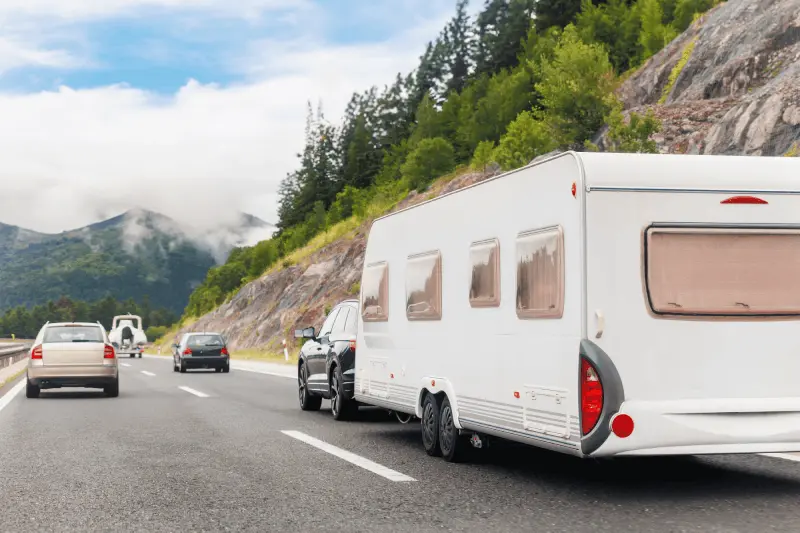
What Is the Yawing (Snaking) Phenomenon and Why Is It the Biggest Fear for Caravanners?
Yawing, technically known as "snaking", is the situation where a towing caravan sways uncontrollably to the left and right while in motion. This situation usually begins when the momentum behind the caravan reaches a level that disrupts the balance of the towing vehicle. The reason it is the biggest fear for caravanners is that this movement can intensify in a very short time, making it completely impossible to control the vehicle. Initially felt as a slight tremor, this sway can lead to the caravan being thrown like a projectile within seconds, potentially causing both the caravan and the towing vehicle to overturn. This physical event is one of the main causes of not only equipment loss but also life-threatening traffic accidents. Therefore, understanding and preventing yawing is a fundamental responsibility for every caravanner.
How Does the Interior Design and Load Placement of the Caravan Affect Driving Stability?
The placement of items inside the caravan forms the cornerstone of driving safety. An incorrect loading can shift the caravan's center of gravity upwards or too far back, inviting yawing. In an ideal arrangement, heavy items should be placed directly over the axles (wheels) and as close to the floor as possible. If heavy loads are placed in the storage areas at the very back of the caravan or in overhead cabinets, the caravan will start to move like a pendulum. This pendulum effect can be triggered even by a slight gust of wind, leading to uncontrollable swaying. Light items should be placed in overhead cabinets, while medium-weight items should be distributed in lower cabinets and around the axle. It should be noted that a heavy object that can move freely inside the caravan can easily upset your balance during turns or sudden maneuvers.
Why Should the Tow Bar Weight Be Calculated Millimetrically?
The tow bar weight is the vertical force applied by the caravan's coupling part onto the towing vehicle's tow hitch. If this weight is too low, it causes the back of the caravan to press heavily down and the front to lift up, which is the most common cause of yawing. On the other hand, if the tow bar weight is too high, it excessively compresses the rear suspension of the towing vehicle, reducing the contact of the front wheels with the ground and weakening steering control. There is a defined "ideal nose weight" range for each caravan and towing vehicle (usually between 5% and 7% of the total weight). Checking this value with a nose weight gauge is the most vital task to be done before hitting the road. A millimetric balance ensures that the caravan follows the towing vehicle like a train car.
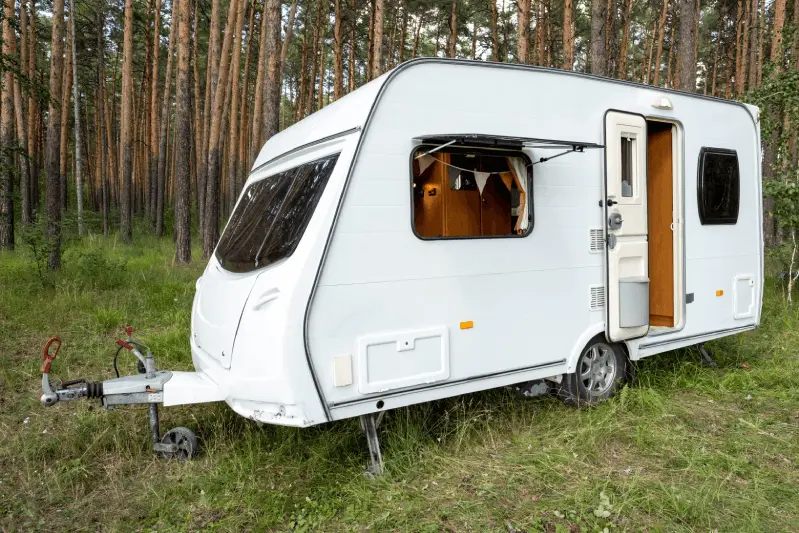
Do Stabilizing Coupling Systems Really Reduce the Risk of Yawing to Zero?
Stabilizing couplings are one of the most important safety inventions in the world of caravanning. These systems dampen the small movements the caravan would make to the left, right, or up and down thanks to the friction pads that tighten the tow hitch. However, contrary to a common misconception, these systems never reduce the risk to zero. Stabilizers only raise the "critical speed" threshold slightly and improve driving comfort. If the loading is incorrect or the speed is too high, no mechanical stabilizer can defy the laws of physics. Therefore, these systems should not be seen as an alternative to basic safety measures but rather as an additional layer of safety that tolerates mistakes. The cleanliness and wear condition of the pads should be regularly checked, and it should be ensured that the hitch is lubricated.
What Is the Golden Ratio Between the Weight of the Towing Vehicle and the Weight of the Caravan?
The safest rule accepted in caravanning literature is the "%85 rule". According to this rule, the weight of the loaded caravan should not exceed 85% of the towing vehicle's unladen weight (kerb weight). For experienced drivers, this ratio can stretch to 100%, but exceeding it poses a significant risk. If the caravan is heavier than the towing vehicle, it creates a situation where the "tail wags the dog"; that is, the caravan starts to dictate the direction. Attaching a heavy caravan to a light vehicle can cause the vehicle to sway in even the slightest gust of wind or turn. Proper matching allows the towing vehicle to establish authority over the caravan. Instead of operating within the limits of the maximum towing capacity specified by the vehicle manufacturer, it is always wise to leave a safety margin.
How Does Exceeding Speed Limits Trigger Sway Dynamics?
Speed is the biggest catalyst for yawing. Every caravan combination has a physical "critical speed". Below this speed, the caravan is in a self-damping tendency, while exceeding this speed can amplify even the smallest sway by drawing energy from the outside. For example, a tremor occurring at 80 km/h may stop on its own, while the same tremor at 100 km/h can intensify into yawing. As speed increases, the momentum and aerodynamic forces behind the caravan increase exponentially. Especially in downhill slopes, uncontrolled increases in speed create the most favorable environment for yawing to begin. When drivers exceed speed limits by saying "the road is clear", it actually means they are going beyond the safe damping capacity, which can push them to a point of no return.
How Do Electronic Intervention Systems Like ATC (Active Trailer Control) Work?
ATC and similar electronic stability systems are intelligent devices mounted on the chassis of the caravan that operate with gyroscopic sensors. This system detects when the caravan begins to sway dangerously within milliseconds. At the moment detection occurs, the system slightly applies the caravan's brakes, "tensioning" the entire combination. This tensioning effect helps the caravan return to a straight line behind the towing vehicle. Humans These systems, which respond quickly to the extent that reflexes cannot develop, prevent many potential accidents without the driver noticing. However, it should not be forgotten that systems like ATC are "lifebuoys"; they only activate in emergencies. It is an unacceptable risk management error for the driver to rely on these systems and make incorrect loadings or exceed speed limits.
How Does Tire Pressure and Load Index Play a Role at the Beginning of Swaying?
Caravan tires are designed to operate at much higher pressures and under heavy loads compared to passenger vehicle tires. Incorrect tire pressure alters the contact area of the caravan with the road, weakening lateral grip. If the tire pressure is low, the tire sidewall flexes, causing the caravan to "lean" more to the right or left. This flexing is one of the most insidious factors that trigger swaying. Additionally, the "Load Index" of caravan tires must be capable of carrying the total weight of the caravan. Old or worn tires not only pose a risk of blowouts but also directly disrupt stability. Checking the tire pressures when they are cold before each trip and replacing tires older than 5-6 years (even if the tread depth is good) is vital for your safety.
What Maneuvers Should Be Made When Facing Strong Crosswinds While on the Road?
Crosswinds are the biggest external factor that disrupts the balance of the caravan, especially on viaducts, tunnel exits, and open areas. The wide side surface of the caravan acts like a huge sail for the wind. The most appropriate action when a strong crosswind is felt is to grip the steering wheel firmly and gradually reduce speed. Sudden steering movements should be avoided because a sharp counter-maneuver against the wind's pushing force can cause the caravan to veer in the opposite direction when the wind dies down. If the wind is very strong and driving comfort is completely lost, the most professional approach is to pull over to the nearest safe area and wait for the wind to subside. Remember, no destination is more valuable than your safety, and underestimating the wind can be one of the biggest mistakes in caravanning.
Why Can Braking When Swaying Starts Be a Fatal Mistake?
Many drivers panic and brake hard when the caravan starts to sway. However, this can make the situation much worse. When hard braking occurs, the weight of the towing vehicle shifts forward, reducing the contact of the rear wheels with the ground. Meanwhile, the caravan behind continues to push the vehicle with its momentum, leading to a "jackknife" incident. The correct response, if the swaying is mild, is to lift your foot off the gas and allow the vehicle to slow down with engine braking while keeping the steering straight. If the swaying is severe, a controlled but firm deceleration should be preferred. Some experts suggest giving a quick acceleration to pull the caravan back into line, but this is a risky method that requires very high skill. The safest way is to focus on reducing speed without fighting the steering and without sudden braking.
How Much Does Shock Absorber Maintenance and Chassis Condition Affect Stability?
The caravan chassis and suspension system are the skeletons that absorb all road shocks. Many towed caravans have a torsion axle system or shock absorbers that can lose their functionality over time. A blown or malfunctioning shock absorber causes the wheel to continue bouncing after road impacts. This uncontrolled vertical movement directly triggers or exacerbates lateral swaying. Loosening, rusting, or deformation at the connection points of the chassis also disrupts the rigid structure of the caravan. During annual periodic maintenance, the torque values of the chassis should be checked, and the shock absorbers should undergo leak and resistance tests. A healthy chassis maintains driving safety by damping the caravan's oscillation within seconds, even on bumpy roads.
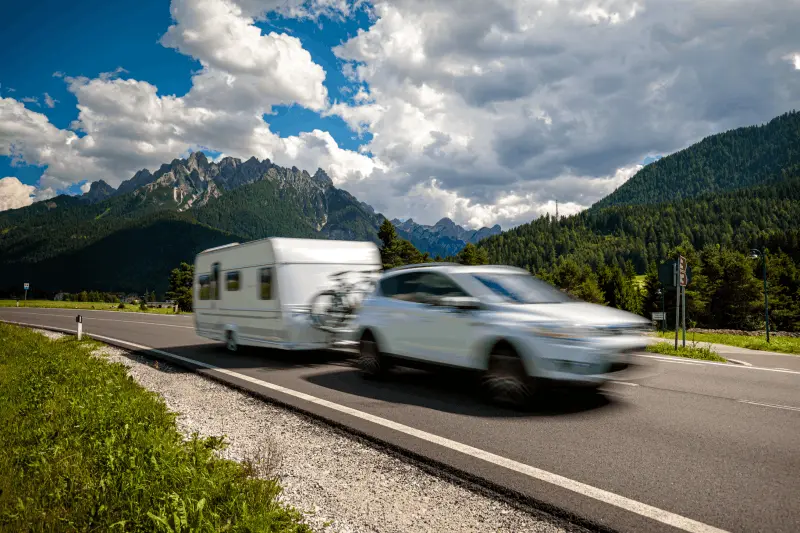
How Does the Height and Angle of the Tow Bar Affect the Caravan's Aerodynamic Structure?
The caravan's parallel position to the road is essential for ideal aerodynamics and weight distribution. If the tow bar is too high, the front of the caravan lifts, leading to "nose lightening" and inviting swaying. Additionally, air collects more under the caravan, creating a lifting force. If the tow bar is too low, excessive weight is placed on the rear axle of the towing vehicle, causing the back of the caravan to lift. Ideally, the caravan should be perfectly parallel to the road or slightly inclined forward (nose down). Adjustable tow bar plates or equipment with appropriate heights should be used to eliminate this height difference between different vehicles and caravans. The correct angle reduces wind resistance while ensuring that the tires make healthier contact with the road.
How to Manage the Air Vacuum Created When Passing Large Vehicles (Truck and Bus)?
When a large truck or bus passes quickly by you on the road, it creates an air vacuum that first pushes your caravan forward and then pulls it back towards itself. This "push-pull" effect is one of the most common triggers of swaying. When you see a large vehicle starting to overtake you, you should move closer to the right side of your lane (within safety) to increase the distance between you. This distance reduces the effect of air turbulence. Additionally, slightly lifting your foot off the gas while the truck is passing helps lessen the impact of the air current created by the truck. After the overtaking is complete, you can return to your normal speed. Continuously checking your mirrors for these types of large vehicles is essential. By noticing the development in advance and ensuring that you prepare, you can get ahead of surprise movements.
How Does an Unadjusted Caravan Brake System Increase the Sway Moment?
Most towing caravans have an "overrun" (push effect) brake system. This means that when the vehicle slows down, the push force exerted by the caravan on the vehicle activates the caravan brakes. If this brake mechanism is rusty, the cables are loose, or the pads are worn out, the caravan cannot slow down sufficiently and continues to push the vehicle from behind. This push force creates a moment that causes the rear of the caravan to sway (fishtail), especially in curves. If the brakes are uneven (one wheel gripping more than the other), it pulls the caravan to one side and immediately initiates swaying. Having a qualified technician check the brake system at the beginning of each season, adjusting the drum settings, and lubricating them is not optional but a mandatory procedure for safety during towing.
What Are the Stability Differences Between Long Chassis Caravans and Single Axle Caravans?
The length of the caravan and the number of axles are the most important geometric features that determine its road character. Tandem axle caravans exhibit a much more stable ride on the road and are less affected by lateral winds compared to single axle ones. However, the maneuverability of tandem axle caravans is lower, and stopping them when they start to sway requires more energy. Single axle caravans are more agile but are much more sensitive to loading errors. As the chassis length increases, the potential for the rear (overhang) to sway also increases. Every kilogram of load placed at the very back of a long caravan quickly alters the load on the towing hitch by creating a lever effect. Developing towing habits suitable for the type and length of your own caravan and knowing its limits can be life-saving.
Why Is the Width of Mirrors and the Field of View Important in Early Detection of Sway During Towing?
Standard vehicle mirrors are usually insufficient for seeing the back of the caravan while towing. Therefore, using additional mirror extensions (towing mirrors) is not only a legal requirement but also critical for safety. With wide mirrors, you can clearly see the position of the caravan's rear corners relative to the road lines. If you notice that the caravan has started to sway slightly early in the mirror, you can reduce your speed and regain control before it turns into a disaster. The shaking of the mirrors or the unstable movement of the caravan within its lane are the first signals of swaying. A good field of view is not only for monitoring surrounding traffic but also the most important sensor you have for reading your caravan's "body language".
How Does the Filling Ratio of the Caravan's Water and Waste Tanks Disrupt Balance?
Many caravaners overlook the danger of filling the water tanks completely or not emptying the waste tanks before hitting the road. Although water tanks in modern caravans are usually located near the axle, the sloshing of the water inside (free surface effect) can disrupt the dynamics of towing. Especially partially filled tanks can cause sudden weight transfers due to the water sloshing to one side in curves. The safest method is to keep the tanks either completely empty or only contain a very small amount (as needed) of water while traveling. Waste water tanks are usually located at the very back or sides of the caravan; the weight in these areas increases the caravan's pendulum effect, directly supporting swaying. Acting on the principle of "weight displacement," it is most logical to fill your liquid loads at the destination.
Does Using Compression Brakes on Downhill Slopes Reduce the Risk of Sway?
Downhill slopes are the riskiest areas where the caravan tends to push the vehicle and speed increases rapidly. Relying solely on the foot brake in these situations can lead to brake overheating and a decrease in stopping power (fading). Using the engine compression brake (downshifting) helps keep the vehicle's speed under control and allows you to manage the push force exerted by the caravan on the vehicle more evenly. You should not allow the caravan to "crush" the vehicle. If you feel that the caravan is pushing you and swaying while going downhill, you should know that this is the most dangerous scenario. Therefore, downshifting before the descent begins and reducing speed to a safe level prevents gravity from triggering swaying.
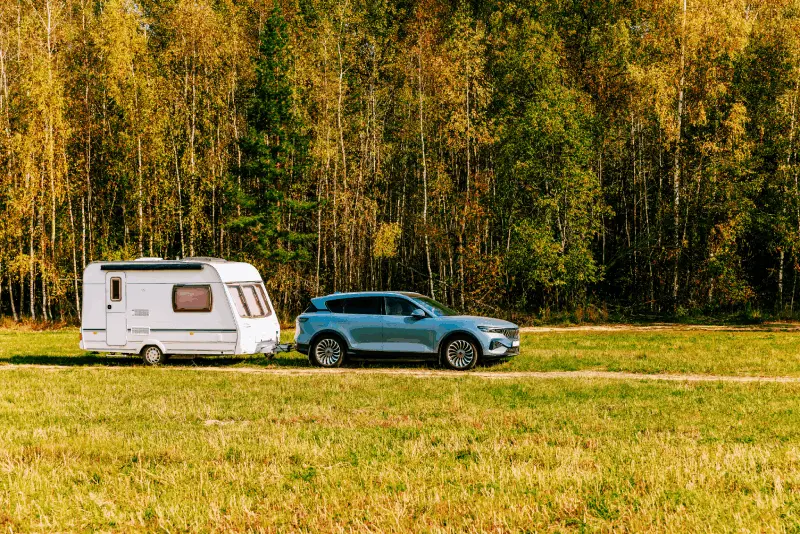
What Should Advanced Towing Techniques Training for Caravan Users Include?
Towing a caravan is based on very different physical principles than driving a normal car. Advanced towing techniques training teaches the driver the caravan's braking distance, the logic of taking wide turns, and most importantly, emergency maneuvers. In these trainings, it is often simulated how to remain calm in artificially created swaying situations and what the correct intervention is. The driver learns through practice how much to turn the steering wheel, when to downshift, and how to read the mirrors. While theoretical knowledge is very valuable, experiencing the limits of the caravan in a track environment helps you demonstrate the correct reflex in a panic moment that you may encounter on the real road. A conscious driver is more effective than even the best safety equipment.
How Do Seasonal Variations and Road Surface Quality Trigger Caravan Sway?
The surface of the road and weather conditions are external factors that directly affect the stability of the caravan. Wet surfaces reduce the lateral grip of the tires, making it much easier for swaying to begin. Additionally, roads... The truck tracks (wheel track depressions) can cause the caravan tires to get stuck in these channels and make sudden movements while trying to get out. In hot weather, the softening of the asphalt and the increase in tire pressures can also change the balance. In winter, ice formation or hidden ice can make towing the caravan dangerous, as even the slightest steering movement can cause the caravan to skid off the road. The driver should constantly analyze the physical condition of the road and adjust their speed and attention according to what "the road tells you". Reducing speed on uneven surfaces is the simplest way to reduce mechanical stress and the risk of swaying.
Frequently Asked Questions And The Final Checklist For Caravan Owners
The last five minutes before you hit the road determine how the rest of your journey will go. In this process, there are critical questions you should ask yourself: Is the weight of the tow hitch correct? Are all windows and roof hatches locked? Are heavy items on the floor and axle? Are my tire pressures correct? Is the stabilizer's handle seated properly, and is the brake light indicator green? Do the caravan's lights (turn signals, brakes) work smoothly? You should not start the engine until you have answered "yes" to all these questions. Many accidents arise from small details that are overlooked with the remark "nothing will happen." Having a disciplined checklist as a habit will not only protect you from swaying but also from many technical failures that may occur on the road. Safe driving begins with planning and diligence.