What Are the Difficulties of Living in a Caravan During Summer Heat?
Caravans are vehicles that generally have limited interior volume and are sensitive to external factors. When the sun's rays directly hit the metal or fiberglass body of the caravan during the summer months, the vehicle traps heat inside like an oven. This not only disrupts comfort but also reduces the efficiency of appliances like refrigerators and increases the humidity inside, making it hard to breathe. Searching for a solution without air conditioning provides energy savings and offers a more nature-friendly camping experience. If the caravan's insulation is inadequate, while the outside temperature is 30 degrees, the inside temperature can rise above 40 degrees within minutes. Therefore, knowing and applying passive cooling methods is vital for long-term caravan life.
What Should Be Considered for Choosing the Right Parking Spot?
The first rule of staying cool while traveling in a caravan is to take advantage of the natural shadows provided by nature. Parking under a tree can reduce direct solar radiation hitting the caravan by up to 70%. However, when choosing a parking spot, one must pay attention not only to the current shade but also to the sun's path throughout the day. A place that is shaded in the morning may be exposed to scorching heat during the hours when the sun is at its highest in the afternoon. If possible, you should prefer large trees or structures that will keep the caravan shaded during the hottest hours of the day, which are between 12:00 and 16:00. Additionally, the ground structure is also important; asphalt absorbs heat and radiates it to the surroundings, while grass or dirt surfaces remain much cooler and help balance the ambient temperature.
How Should the Caravan's Position Be Adjusted According to the Sun's Movement?
The position of the caravan is directly related to the direction of the wind and the angle of the sun. It is a strategic move to ensure that the caravan's largest windows or doors do not face the direction where the sun rises and sets, preventing an increase in internal heat. If you are in the northern hemisphere, you should position the caravan so that its side does not face the sun, leaving the less sunny northern side open. Additionally, learning about the prevailing wind direction in the area and aligning the caravan's windows to catch this wind provides natural ventilation. Creating a corridor that allows the wind to pass through the caravan is one of the most effective ways to expel stagnant and hot air.
What Materials Should Be Used for Window Insulation?
Windows are the weakest thermal insulation points of a caravan. When sunlight enters through the glass, it creates a "greenhouse effect," rapidly heating the interior. To prevent this, reflective foils like "Reflectix" or specially manufactured sunshades should be used. These materials significantly stop the heat from entering by reflecting sunlight before it can enter. Ideally, these reflectors should be installed on the outside of the glass rather than the inside; because once heat enters through the glass, it can remain trapped between the glass and the film, continuing to seep inside even if reflected. Additionally, using thick and light-colored curtains can create an extra barrier inside, minimizing radiant heat transfer.
How Do Awnings and Shade Structures Contribute to Staying Cool?
Awnings mounted on the outside of the caravan act as massive umbrellas protecting the vehicle's side walls from direct sunlight. When the caravan walls are not exposed to direct sunlight, the amount of heat transmitted to the interior significantly decreases. The shaded area created under the awning also allows you to keep the caravan's doors and windows open, supporting air circulation. If you do not have a fixed awning, you can create a similar effect using portable shade structures or tarps. The important thing is to leave some space between the shade and the caravan body; this way, hot air does not get trapped and is expelled through air flow.
How to Create Proper Airflow Inside the Caravan?
Simply opening the windows may not always be sufficient; the air needs to be "managed." The principle of cross-ventilation ensures that cool air entering from one side pushes warm air out from the other side. Using a lower-level window at one end of the caravan as an entrance and a higher-level window or roof vent at the other end as an exit is the most efficient method. Warm air tends to rise, so keeping the roof vents open is critical for expelling accumulated heat inside. If there is no wind outside, placing a fan in front of a window to draw in outside air while expelling inside air from the opposite window creates an artificial but effective airflow.
How Should Roof Vents and Fans Be Used Efficiently?
The vents located on the roof of caravans are the main centers for thermal expulsion. Modern roof fans can draw air in and expel it outside with low energy consumption. During the daytime, it is more logical to operate them in "exhaust" mode to expel the heated air inside. At night, when the sun has set and the outside air has cooled, you can reverse the fan to draw in fresh and cool air. Keeping the fan blades clean and ensuring that the screens do not block airflow directly affects the efficiency of the device. Additionally, keeping the bathroom and kitchen vents open can help prevent moisture and heat from escaping from these points.
Do Insulation Materials Protect the Caravan from Heat?
The insulation of a caravan is generally designed to keep it warm in winter, but the same insulation is also necessary to keep the heat out in summer. The stone wool placed between the walls...
elastomeric rubber or special insulation foams prevent the heat gained from the external metal surface from transferring into the interior. If your caravan's insulation is weak, staying cool during the summer months is nearly impossible. For those building their own caravans (DIY projects), the insulation phase is the most critical step. Good insulation ensures that the 35-degree heat outside reflects to 25-28 degrees on the interior walls. This is the most effective method to achieve lasting coolness without energy expenditure.
How to Reduce Heat Inside with Outdoor Cooking Techniques?
One of the biggest heat sources inside the caravan is the stove. Boiling a pot of water or cooking food inside rapidly increases the heat and humidity in the small interior space. During the summer months, kitchen tasks should be moved outside whenever possible. Cooking your meals outside using a portable gas stove or a camping grill helps keep the air inside fresh. If you must cook indoors, you should definitely run the ceiling fan and kitchen hood at the highest speed to immediately expel steam and heat. Additionally, opting for quick-cooking meals or utilizing outdoor picnic areas is also a wise strategy.
Do LED Lighting Systems Prevent Heating?
Traditional halogen or incandescent bulbs convert a large portion of the energy they consume into heat. A few halogen lamps burning inside a small caravan can significantly increase the heat, making the environment even more challenging. LED lights consume much less energy and produce almost no heat. Converting all the lighting in your caravan to LED not only extends your battery life but also prevents unnecessary indoor heating during the evening hours. While this may seem like a small detail, it is one of the important factors that enhance comfort in long-term camping life.
How Does the Refrigerator's Ventilation Affect Indoor Heat?
Caravan refrigerators release a significant amount of heat from the condenser part at the back while operating. If this heat cannot be efficiently expelled outside the caravan, it seeps into the interior, increasing the temperature. It is essential to ensure that the refrigerator ventilation vents are clean and unobstructed. Many caravan owners prefer to add small computer fans (12V fans) to this area to actively expel hot air. This process not only keeps the interior cool but also ensures the refrigerator operates more efficiently, providing energy savings. Care should be taken on this issue, as excessive heating of the refrigerator can lead to spoilage of the food inside.
Does the Wet Towel Method Work?
This method is based on the principle of "evaporative cooling" and has been used in hot climates for thousands of years. When you hang a wet towel in front of an open window or a running fan, the evaporation of water draws energy (heat) from the surrounding air. This process can achieve a few degrees of temperature reduction. However, the key point to consider is humidity. If the area you are in is already very humid (like the Aegean or Mediterranean coasts), this method may make the air even heavier. However, in dry climates like Central Anatolia, the wet towel or sheet method offers a natural and cost-free cooling option.
How to Strategically Place Portable Fans?
Fans do not cool the air; they only move it; however, this movement accelerates the evaporation of sweat, creating a feeling of coolness in our bodies. Instead of directing fans directly at yourself, it is more effective to position them in front of windows to draw in cool air from outside or to expel hot air from inside. Small fans that can be charged via USB or operate on 12V can be placed in every corner of the caravan. Especially at night while sleeping, placing a fan at the foot of the bed helps maintain airflow at mattress level, making it easier to sleep comfortably. Choosing quiet models of fans is also important for sleep quality.
Does the Color of the Roof Surface Affect Indoor Heat?
The effect of colors on heat is a physical reality. Dark colors absorb sunlight, while light colors (especially white) reflect it. If your caravan's roof is a dark color, it will absorb much more heat under the sun. Painting the caravan roof with bright white paint or special heat-reflective coatings can reduce indoor heat by 5 to 8 degrees. Some caravan owners strengthen the waterproofing by applying "elastomeric white roof coating" to the roof, which also provides excellent heat reflection. This is one of the most effective modifications that is durable and will yield benefits every summer once done.
What Are the Features of Solar-Powered Ventilation Systems?
Solar-powered fans operate using energy directly from the sun without needing an external power source. A significant advantage is that they continue to expel air even when the caravan is parked and you are not inside. Mushroom-type solar ventilators are mounted on the roof of the caravan and expel stagnant air inside as long as they are exposed to sunlight. This way, when you return to the caravan in the evening, you won't encounter that stuffy "oven effect." These devices are quiet, easy to install, and do not overload the caravan's main battery system; making them excellent helpers for off-grid camping.
Is It Possible to Cool by Spraying Water and Evaporation?
Spraying water on the outer body of the caravan during the hours when the sun is at its highest provides instant cooling. As water evaporates, it absorbs heat from the metal surface and reduces the heat that seeps inside. However, this is a temporary solution, and once the water dries, the surface will start to heat up again. Additionally, it is also...
Kireçli sular can leave stains on the surface of the caravan. Instead, wetting the outdoor surface next to the caravan may be a more sustainable method. When the soil or stone surface is wet, it cools the surrounding air, and this cool air enters the caravan through the open doors and windows with the wind. This is similar to the effect of courtyard irrigation in traditional house architecture.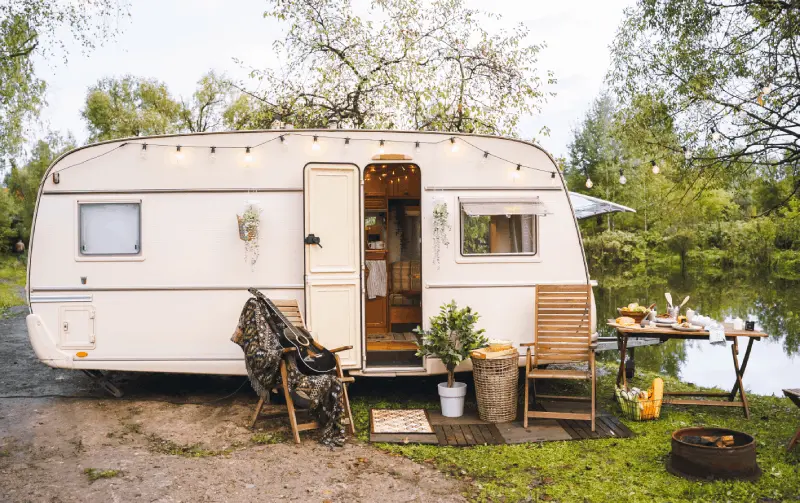
How to Plan Night Ventilation and Day Closure?
Temperature management requires disciplined timing. The basic rule is this: If it is cooler outside than inside, open; if it is warmer, close. When the sun starts to rise in the morning, around 9:00 AM, you should close all windows and pull the curtains and reflectors. Trapping the morning coolness inside the caravan ensures comfort throughout the day. After sunset, when the outside temperature drops below that inside the caravan, you should fully open all doors and windows for "night ventilation." Maintaining this cycle is the most fundamental strategy for getting through the day without using air conditioning. Many people make the mistake of letting hot air in during the day, which further heats the air inside.
How to Control Waste Heat Emitted by Electronic Devices?
Computers, large-screen televisions, gaming consoles, and chargers generate significant amounts of waste heat while operating. In a small and enclosed space, this heat accumulates quickly. If you want to stay cool in the caravan during the summer, you should turn off and unplug unnecessary electronic devices. Especially high-performance laptops can work like a small heater. If possible, using such devices outdoors on a table helps alleviate the thermal load inside. Additionally, keeping equipment like solar panel inverters or charge controllers in a well-ventilated cabinet prevents the heat emitted by these devices from mixing with the living space.
What is the Role of Textiles Inside the Caravan in Keeping Cool?
The types of fabrics used in the caravan directly affect our perception of heat. Synthetic, polyester-heavy fabrics do not absorb sweat and prevent the body from breathing, causing you to sweat more. For sofa covers, bed linens, and pillowcases, natural and breathable fabrics like 100% cotton, linen, or bamboo should be preferred. Light-colored textiles not only reflect heat but also create a sense of psychological freshness. Removing winter carpets in summer and ensuring direct contact with the ground (if the ground is cool) also helps keep your feet and thus your body cooler.
What is the Difference Between Being in Direct Sunlight and in Shade?
The difference between a caravan being in direct sunlight and being in full shade can be as much as 10-15 degrees in internal temperature. Solar radiation (radiant heat) is much stronger than the actual air temperature. Even if the air temperature is 30 degrees, direct sunlight can heat metal surfaces up to 60-70 degrees. In the shade, the caravan is only exposed to the ambient air temperature. Therefore, making an effort to change your campsite if necessary or finding a tree shade is the most effective way to cool down without air conditioning. Always try to keep not only the roof of the caravan but also its side walls in the shade.
Are There Heat Reflective Paints for Caravan Walls?
In recent years, ceramic additive or nano-technological heat reflective paints have become a popular solution for caravans. These paints have the capacity to reflect infrared (IR) rays from the sun. While a normal paint absorbs this energy, reflective paints significantly reduce surface temperature. Applying these paints to the roof of the caravan and even to the sun-exposed side panels acts as a kind of "liquid insulation." Although the application may be somewhat costly, it provides professional results and keeps the vehicle cool without compromising its external aesthetics. White is the option that offers the highest performance in these paints.
Do Solar Panels Installed on the Roof Provide Shade?
Solar panels mounted on the roof of the caravan actually serve as a secondary roof. There is usually a 2-5 centimeter air gap between the panels and the caravan roof. Instead of hitting the metal roof directly, sunlight hits the panels. While the panels convert this heat into electricity, the gap underneath keeps the roof shaded and creates airflow. This is a modern version of the system known as "tropical roof." The more solar panels you cover your caravan's roof with, the more shaded it becomes. Both free energy and free shade; this is a double benefit for campers.
Is Choosing a Travel Route Effective in Combating Heat?
The best cooling method is to escape the heat. The biggest advantage of a caravan is its mobility. Instead of staying in coastal areas during the scorching summer heat, heading to plateaus, mountainous regions, or routes further north can completely eliminate the heat problem. As altitude increases, the air temperature drops approximately 0.6 degrees for every 100 meters. At a plateau 1000 meters high, the air will be 6-7 degrees cooler compared to sea level. If your route selection is flexible, spending July and August in high-altitude areas or cool lakeside spots can completely eliminate the need for air conditioning.
How Does the Humidity Level Inside the Caravan Affect the Feeling of Coolness?
Humidity, like temperature, is a factor that affects comfort. High humidity prevents the body from cooling through sweating and makes the air feel warmer (perceived temperature). Cooking inside the caravan... , taking a shower or drying clothes increases humidity. In a humid caravan, even 25 degrees can feel stifling, while in dry air, 30 degrees can be tolerated. It is important to use dehumidifiers or minimize activities that create humidity indoors. Always use the bathroom fan to immediately expel the humid air created after a shower, and never dry your wet towels inside the caravan.
Does Using Door And Window Screens Cut Off Airflow?
Flies and insects are the biggest obstacle to keeping doors and windows open in the summer. The tighter the mesh of the screen, the harder it is for air to pass through. However, it is impossible to light up lights and open windows in an environment without screens. As a solution, high air permeability quality screen fabrics should be preferred. Some old type screens can block airflow by up to 50%. Magnetic door screens provide ease of access while keeping the door fully open. To increase airflow, screens must be free of dust; a dusty screen is harmful to health and acts as a barrier, blocking the wind.
How Should Ice Packs And Cooling Pads Be Used?
If you have a fan, you can create a However, if a canopy has been set up in front of the door and it is shaded, opening the door helps to refresh the air inside. The best method is to use the door only when a mosquito net is installed and a window is opened on the opposite side; this way, stagnant air is pushed outside. If the outside is scorching hot, use the door only for entry and exit, keeping it closed and shaded the rest of the time to preserve the coolness inside.
How to Consider Staying in a Caravan at High Altitude?
Altitude is the biggest air conditioner of nature. Every 1000 meters of elevation means a drop of about 6.5 degrees in temperature. A temperature of 35 degrees at sea level drops to 25 degrees at a plateau 1500 meters high. When planning routes for summer camps, preferring mountain passes and high plateaus instead of coastal roads is the most guaranteed way to stay cool. Additionally, temperatures at high altitudes drop significantly at night, which ensures that the caravan cools down completely overnight and starts the next day like a "cold storage." The dry and clean mountain air is also an additional factor that increases comfort.
Do Curtains Made from Natural Materials Provide Thermal Insulation?
Choosing curtains is not only an aesthetic decision but also a thermal one. Bamboo shades or thick linen curtains provide much better insulation than synthetic tulle. The porous structure of bamboo shades allows air to pass while blocking light. Additionally, reflective thermal linings sewn onto the back of the curtains (the glass side) send back the heat coming from outside directly. "Honeycomb" type shades specially produced for caravan windows also create an excellent insulation barrier due to the air pockets in their cells. Keeping these curtains closed during the day is one of the easiest ways to turn the caravan into a cool refuge.
How Do Smart Thermostats and Sensors Help in Temperature Management?
You cannot manage what you cannot measure. Digital thermometers and humidity meters placed inside and outside the caravan help you determine your ventilation strategy. With these sensors, you can instantly see when the outside air is cooler than the inside and know exactly when to open the windows. Some advanced systems can automatically turn on ceiling fans when the temperature reaches a certain level. Setting a temperature alarm linked to your smart phone can notify you when the caravan is overheating while you are outside, allowing you to return and intervene (like opening the canopy, turning off devices).
Why is Installing Awnings from Outside More Effective?
According to the laws of physics, stopping heat outside the glass is much more efficient than stopping it after it has entered. Tarps or reflectors installed outside the glass prevent the glass itself from heating up. When the glass heats up, it starts to radiate heat inside like a radiator. Awnings installed from the outside create a shade between the glass and the sun. This method provides 30-40% more cooling compared to awnings installed from the inside. Many professional campers sew special covers that can be attached from the outside with magnets or vacuum. This small investment plays a vital role in keeping the inside of the caravan cool even on the hottest summer days.
Does the Number of People Inside the Caravan Increase Heat?
Each human body radiates about 100 Watts of heat while at rest. Having 4-5 people in a small space like a caravan creates the effect of a 500 Watt heater running inside. Additionally, breathing continuously releases moisture into the environment. Using the caravan only for sleeping and essential tasks during the summer months and moving social activities to shaded areas outside reduces the thermal load inside. The more empty and conducive to airflow the caravan is, the cooler it will remain. Especially during the daytime, large groups spending time inside can undermine efforts to stay cool.
Does the Location of Water Tanks Trigger Heating?
Water tanks inside the caravan (especially those under the bed or inside cabinets) exchange heat with the surrounding air. If your water tank is exposed to heat from outside or has been filled with hot water from a hose left in the sun during filling, this tank acts like a giant "hot water bag" inside. Having tanks in insulated areas or filling them with cold water (like groundwater) can help keep the interior cool. In some cases, a cold water tank can act like a thermal mass, absorbing ambient heat. However, generally preventing the water from heating up is more critical for the overall indoor temperature balance.
What are the Differences Between Winter and Summer Caravans?
Caravans classified as "winter" (usually those with ALDE heating systems or high insulation) are actually the best caravans for summer as well. Thick wall panels and double-glazed windows force the outside heat to stay out. However, caravans designed for summer areas may have more ventilation windows. The important thing is the insulation standards of the vehicle. If your caravan has thin walls, you will need to apply the passive methods (canopy, reflector, positioning) in this guide much more aggressively. Understanding the features of your caravan and establishing a defense line accordingly is the key to summer comfort.
Does Long-Term Thermal Insulation Investment Pay Off?
The thermal insulation you will do for your caravan may initially seem like a cost with quality canopies or reflective paints. However, these investments reduce dependency on air conditioning, lowering electricity costs, fuel consumption (if a generator is used), and wear on devices. Additionally, a quiet and peaceful camping experience is priceless. A well-insulated caravan also has a higher resale value. A vehicle that can stay cool in summer and warm in winter is a true four-season living space. As a result, these methods not only enhance comfort but also... that increases the sustainability and quality of caravan life.