Why is Fuel Consumption Higher in Overcab Caravans Compared to Standard Panelvans?
Overcab caravans are recognized for their iconic protrusions that sit above the driver's cabin and are typically used as a bedroom. While this design provides a tremendous volume inside, it also brings a significant disadvantage due to the laws of physics: air resistance. A standard panelvan is designed to expel wind in a more streamlined manner, whereas the massive front surface of an overcab caravan acts almost like a sail. For a moving vehicle, air resistance increases not linearly but quadratically as speed increases. This causes the engine of overcab caravans to produce much more power to maintain the same speed, thus consuming significantly more fuel. Additionally, the total weight of these vehicles is close to the carrying capacity limits of panelvans, causing the engine to operate under constant high load.
Why is Aerodynamic Drag Coefficient More Critical in Overcab Models?
The drag coefficient, referred to as "Cd" in automotive engineering, determines how easily a vehicle can cut through the air. While the drag coefficient of a standard Fiat Ducato or Mercedes Sprinter panelvan is at reasonable levels, the value of a caravan with an overcab can nearly double. The cornered structure of the overcab causes turbulence in the airflow. This turbulence creates a vacuum effect behind the vehicle, pulling it backward. The driver has to press the gas pedal harder to overcome this resistance. Especially at highway speeds, the massive area where the wind hits the body is the main culprit for fuel consumption figures rising to 12-15 liters per 100 kilometers. In panelvans, however, the airflow is more laminar, allowing consumption to generally remain in single-digit figures.
How Does the Frontal Area of the Caravan Directly Affect Fuel Consumption?
One of the most important geometric factors determining a vehicle's fuel consumption is the "frontal area." The width and height of a standard panelvan are fixed; however, when converted to an overcab caravan, the height of the vehicle often exceeds 3 meters. The width increases due to the expansion of the caravan body, which accommodates living amenities and insulation. This significantly increases the total square meters exposed to oncoming wind. A larger frontal area means more molecules collide and more resistance. This physical reality explains why owners of overcab caravans see the fuel gauge drop rapidly when they exceed speeds of 90 km/h. As the frontal area increases, the amount of energy the engine expends to overcome this resistance increases exponentially.

How Does Total Loaded Weight Create a Fuel Gap Between Panelvans and Overcabs?
The second major factor affecting fuel consumption is weight. A standard panelvan typically travels empty or partially loaded, while an overcab caravan is equipped with a heavy furniture set, water tanks, batteries, solar panels, and insulation materials from the production stage. Many overcab caravans have an empty weight of around 3000 kg and can push the legal limit of 3500 kg when fully loaded (sometimes even exceeding it). Panelvans, on the other hand, have a much lighter body on the same chassis. An engine operating under constant maximum load consumes between 30% to 50% more fuel compared to panelvans, especially when climbing hills or in stop-and-go traffic. Every 100 kilograms increase in weight adds directly to fuel consumption as additional load.
Why is the Engine's Turbo Pressure and Torque Value More Stressed in Overcab Bodies?
Modern diesel engines rely on turbocharging to produce torque and power. In overcab caravans, due to the massive body resistance and weight, the engine operates under constant "load." This causes the turbo to remain at high pressure (boost) continuously. While a standard panelvan can turn the engine at a lower load at a constant speed, in an overcab caravan, the engine control unit (ECU) commands more fuel injection to maintain speed. The high torque requirement can push the engine out of its most efficient RPM range or cause it to consume a lot of energy within that range. This constant strain not only increases fuel consumption but also leads to faster heating of the engine oil and quicker wear of engine components.
Why Are Speeds Over 100 Km/H Not Economical in Overcab Caravans?
There is a golden rule in caravanning: speed is not the disaster, cost is. Since air resistance increases proportionally to the square of speed, increasing from 80 km/h to 110 km/h significantly raises fuel consumption beyond expectations. In overcab caravans, this effect is much more dramatic. An overcab model that consumes 10-11 liters at 90 km/h can climb to 16-18 liters when the speed is increased to 120 km/h. This is because the aerodynamic barrier created by the overcab becomes an impossible wall to overcome at high speeds. Standard panelvans can remain more stable at high speeds due to their thinner and more fluid lines, keeping fuel increases at more reasonable levels. Accelerating with an overcab vehicle on the highway means a big hole opening in your wallet.
How Do Weight Ratios Play a Role in Fuel Consumption of Overcab Caravans?
Panelvan weights are generally designed for general-purpose use. It has been designed for this purpose. However, when these motorhomes are converted into caravans, the way the torque ratios of the engine cope with this massive weight becomes important. Many modern panel vans have 6-speed manual or automatic transmissions. In alcove caravans, due to the weight of the vehicle, the transmission tends to stay in lower gears for longer periods. Especially on slopes or in windy weather, the vehicle may struggle to use the highest gear (overdrive). Continuously driving in a lower gear means that the engine RPM remains high and fuel burns quickly. Panel vans, due to their lightness, can shift to the highest gear more quickly and save fuel by cruising at lower RPMs. If the transmission software is not optimized for the caravan, the consumption difference becomes even more pronounced.
How Does Tire Resistance and Width Affect Fuel Consumption?
To safely carry the heavy bodies of caravans, "CP" type special caravan tires are generally used. These tires are resistant to high pressure, but their rolling resistance can differ from standard passenger or light commercial tires. In alcove caravans, the pressure of the weight on the tires is much greater compared to panel vans. If the tire pressure is lower than it should be, the contact area of the tire with the ground increases, which increases wear and thus fuel consumption. Additionally, to increase stability, wider tires or dual wheels on the rear axle are sometimes used in alcove caravans. Both situations eliminate the low rolling resistance advantage offered by panel vans and increase consumption by 3-5%.
How Much Does Roof Equipment Disrupt Airflow and Increase Fuel Consumption?
Alcove caravans already have a high structure, and the addition of solar panels, satellite antennas, roof air conditioners, and ventilation fans (hatches) further increases this height and air resistance. This equipment is generally not aerodynamically designed. Each protrusion that prevents air from flowing over the caravan's roof works like a small "air brake." In a standard panel van, the roof is usually not as crowded, or the equipment can be placed in a lower profile. In alcove models, these extra accessories can add an additional cost of between 0.5 to 1 liter to fuel consumption by making the turbulence created by the main body even more chaotic. Therefore, using aerodynamic spoilers during equipment placement is of great importance.
Why Do Side Winds Reduce Fuel Efficiency in Alcove Caravans?
Not only headwinds but also side winds affect the fuel consumption of alcove caravans. Due to their large side surface area, these vehicles are very sensitive to side winds. While the wind tries to push the caravan off the road, the driver constantly has to make steering corrections. This situation leads to more energy being spent to maintain the vehicle's trajectory and disrupts the engine's stable operating condition. Additionally, side winds disrupt the vehicle's aerodynamic balance and increase resistance by changing the way airflow circulates around the caravan. Standard panel vans are less affected by the wind due to their lower profile and maintain better fuel efficiency in such weather conditions.
What is the Fuel Difference Between Semi-Integrated Caravans and Alcove Models?
In the caravan world, the biggest competitor of alcove models is semi-integrated models. In semi-integrated models, instead of a massive protrusion above the driver's cabin, there is a more aerodynamic and streamlined transition structure. This small design change creates dramatic differences in fuel consumption. Tests show that among two vehicles with the same engine and transmission, the semi-integrated one consumes 1.5 to 3 liters less fuel per 100 kilometers at highway speeds compared to the alcove model. Standard panel vans represent the most economical option, being at the bottom of both groups. If interior space is not vital for you, choosing a semi-integrated model can save you thousands of lira in fuel costs in the long run.

How Does Fuel Cost Affect Your Budget on Long-Term Caravan Journeys?
Let's assume you travel 10,000 kilometers a year with your caravan. A standard panel van consumes an average of 9 liters, while let's consider that an alcove model consumes 13 liters. The 4-liter difference represents a significant additional cost at current fuel prices for every 100 kilometers. At the end of 10,000 kilometers, this difference corresponds to 400 liters of fuel. This is a significant burden added to your budget just in terms of fuel. Caravanning is not just about buying a vehicle; it is about financing a lifestyle. The spacious living area and 4-6 person accommodation capacity provided by alcove models may make this fuel difference acceptable for some. However, if you are a budget-focused traveler, the operating costs of the panel van will always be more attractive.
Can Engine Software (Chip Tuning) Reduce Fuel Consumption in Alcove Models?
Some caravan owners opt for chip tuning or software updates to increase the engine's torque and reduce fuel consumption. In alcove caravans, when the engine is constantly under strain, it is thought that the torque is lower. A software that ensures the arrival of vehicles can save fuel by optimizing gear changes. However, this situation is a double-edged sword. If the software focuses solely on increasing power, the user may be inclined to drive more aggressively, which can further increase consumption. Additionally, changes made to the software of an engine that operates under constant high load can increase heat. In standard panel vans, such modifications generally provide more noticeable fuel savings because the vehicles are already light, so the increase in engine efficiency directly reflects in savings.
How Much Can Driving Techniques Optimize Fuel Consumption in Alcove Caravans?
The most effective way to save fuel with an alcove caravan is to change the driving technique. "Cruise Control" can be helpful on flat roads, but it can sometimes increase consumption for an alcove vehicle on rugged terrain. Instead, it is necessary to use the vehicle's momentum when going downhill and to climb uphill by downshifting at the right time without straining the engine. Pressing the gas pedal as if "there's an egg underneath" helps avoid sudden accelerations and minimizes brake use (using engine braking) while maintaining a safe following distance, which can reduce consumption by 10-15% in alcove models. In panel vans, these savings rates are lower because the vehicles are already more efficient by nature.
How Does the Insulation Quality of the Caravan Establish a Connection Between Air Conditioning Use and Fuel?
Many people think that insulation has nothing to do with fuel, but this is a misconception. In a poorly insulated alcove caravan, especially during driving, the cabin and living area can heat up or cool down very quickly. This situation causes the vehicle's air conditioning (or driving air conditioning) to operate continuously at the highest level. The air conditioning compressor draws power from the engine, which directly increases fuel consumption. The volume of a standard panel van is smaller, making climate control easier. In alcove models, the heat coming from the windows of that massive upper section (the alcove) can turn the interior into an oven. Good insulation and quality curtains can help reduce the air conditioning load, thus indirectly aiding in fuel savings.
What Is the Share of Diesel Heaters (Webasto) in Total Fuel Consumption?
In caravans, diesel heaters are generally used, which are fed from the vehicle's main fuel tank for heating. Alcove caravans require more heating due to their larger interior volumes and especially because the alcove part is prone to heat loss compared to panel vans. A diesel heater consumes an average of 0.1 to 0.5 liters of fuel per hour. A heater running for 24 hours during winter camping can consume 5-10 liters of fuel per day. This is a significant item in your total fuel budget. Panel vans heat up much faster and operate the heater at a lower capacity because they are smaller and generally more compactly insulated. Therefore, panel vans are more advantageous in terms of fuel economy not only on the road but also during stays.
Is Automatic or Manual Transmission More Economical in Caravans?
While older generation automatic transmissions increase fuel consumption, modern torque converter (for example, ZF 9-Speed) or dual-clutch transmissions can offer better fuel efficiency than manual transmissions by keeping the engine in the most efficient torque band continuously. In alcove caravans, due to the heavy load, the driver may sometimes be late in achieving the correct revs in manual mode. An intelligent automatic transmission detects the vehicle's load and terrain and makes the most appropriate gear changes. While gear selection does not dramatically affect fuel in standard panel vans, incorrect gear selection in alcove models can instantly spike fuel consumption. Therefore, a new generation automatic transmission is a logical investment for alcove caravans in terms of both comfort and fuel management.
How Do Corner Lines in the Caravan's Exterior Design Affect Fuel Consumption?
Aesthetic preferences sometimes conflict with economy. Some boutique caravan manufacturers prefer very angular and boxy designs in alcove models due to ease of production. However, rounded corners allow air to flow more smoothly around the body. These corner radii, known as "corner radius," can significantly reduce drag. While standard panel vans are produced after passing these aerodynamic tests, caravan conversions sometimes overlook these details. Even the angle of the front window of the alcove can affect fuel consumption; a vertical window faces the wind like a wall, while a slanted window directs it upwards. Paying attention to how "streamlined" the exterior of the caravan looks when purchasing can help you visit fuel stations less often.
How Do Seasonal Conditions and Air Temperature Affect the Fuel Efficiency of Alcove Caravans?
Air density is related to temperature. Cold air is denser, which means the "streamlined" air the vehicle has to pass through is heavier. When traveling with an alcove caravan during the winter months, both the engine's heating time increases and aerodynamic resistance rises due to the dense air. Additionally, winter diesel fuels may have slightly lower energy density compared to summer fuels. All these factors combined can lead an alcove caravan to consume 10% more fuel in winter compared to summer. Panel vans are also affected by this situation, but due to their better aerodynamic structures, the increase in resistance caused by dense air is not felt as sharply.
How Do the Age of the Caravan and Engine Technology Determine Consumption Differences?
There is a significant difference between an old 2.8 JTD engine alcove caravan and a new generation 2.2 Multijet 3 engine caravan. Modern engines, with high-pressure injection systems and advanced technology, provide better fuel efficiency. Thanks to the emission control units, it is much more efficient. While old generation alcove campers consume 15-18 liters per 100 kilometers, it is possible to achieve 11-12 liters with a modern alcove vehicle. Standard panel vans, on the other hand, have been able to reduce their consumption to levels as low as 7 liters with this technological advancement. Therefore, when making comparisons, it is necessary to consider not only the body type of the vehicles but also their engine generations. New technology can somewhat mitigate the disadvantages of the alcove.
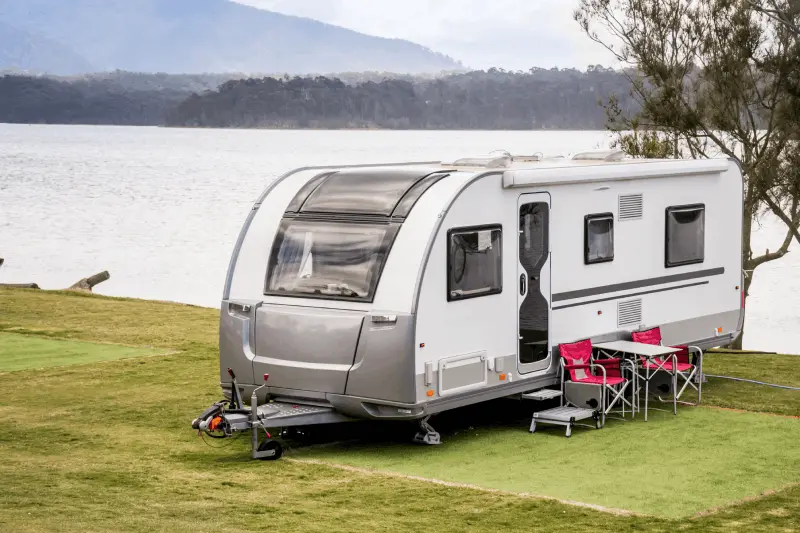
How Does Towing a Trailer Affect Fuel Consumption in Alcove Campers?
Some campers attach a motorcycle carrier or an additional trailer behind their alcove vehicles. This means extra weight and additional air resistance for the engine already working within its limits. The vacuum area created behind an alcove camper complicates the turbulence even more when a trailer is being towed. In this case, it would not be surprising to see fuel consumption approaching 20 liters. A standard panel van, however, generally has a more "comfortable" towing capacity because its own body weight is less. The use of a trailer is one of the biggest factors that make economical driving impossible in alcove models.
What Do Real User Data from Camper Owners Indicate?
When forums and user groups are examined, it is seen that a standard panel van motorhome owner usually states that they consume "generally 9-10 liters". In contrast, owners of alcove campers traveling the same route share figures around "13-15 liters". The 4-5 liter difference has also been confirmed by user experiences. Some users report seeing 11 liters in alcove vehicles while driving very calmly (below 80 km/h), but a realistic mixed consumption is always much higher than that of a panel van. This data is invaluable for conducting a "needs analysis" during the purchasing phase. If you will be traveling 20,000 km each year, this difference is greater than the annual maintenance cost of a camper.
How Should Camper Rental Companies Warn Renters About Fuel Consumption?
Many people renting campers are using such a large vehicle for the first time in their lives. Rental companies generally recommend alcove models to large families. However, it should be emphasized to the renter that this vehicle should not be driven at speeds of 130 km/h like a passenger car; otherwise, the fuel costs will disrupt the holiday budget. The "economic driving speed" of 90 km/h is vital information for rented alcove vehicles. Many renters are shocked when they see the fuel bill they paid at the end of the holiday, realizing that they would have paid much less if they had rented a standard panel van.
Can Hybrid and Electric Camper Technologies Solve the Fuel Consumption Problem?
Although the future seems to be electric, this situation is not a major challenge for alcove campers. The range of electric vehicles is much more affected by air resistance (aerodynamics). The body of an alcove can reduce the range of an electric camper to half the value on paper. With current battery technology, it is quite difficult to transport such a heavy and aerodynamically inefficient vehicle over long distances. However, hybrid systems can lighten the load of the diesel engine with electric motor support, especially during starts and climbs. This can provide fuel savings in the "high load" situation, which is the weakest point of alcove campers. Still, an aerodynamic panel van body will always be more advantageous in an electric future.
Should You Choose an Alcove or a Panel Van?
In conclusion, the fuel consumption of alcove campers is on average 30% to 50% higher than that of standard panel vans. The main reasons for this increase are the massive air resistance, increased frontal area, the necessity to operate at maximum capacity continuously, and weight. If you have a large family and comfort is more important to you than fuel costs, the spaciousness offered by an alcove camper is invaluable. However, if your route is long, you are traveling with fewer people, and you want to keep your budget in check, a panel van (van-conversion) or semi-integrated model would be a much more rational choice for you. Remember that the best camper is not the one that leaves you stranded on the road, but the one that encourages you to hit the road and does not strain your budget.