What is Caravan Roof Ventilation (Heki) and What is its Purpose?
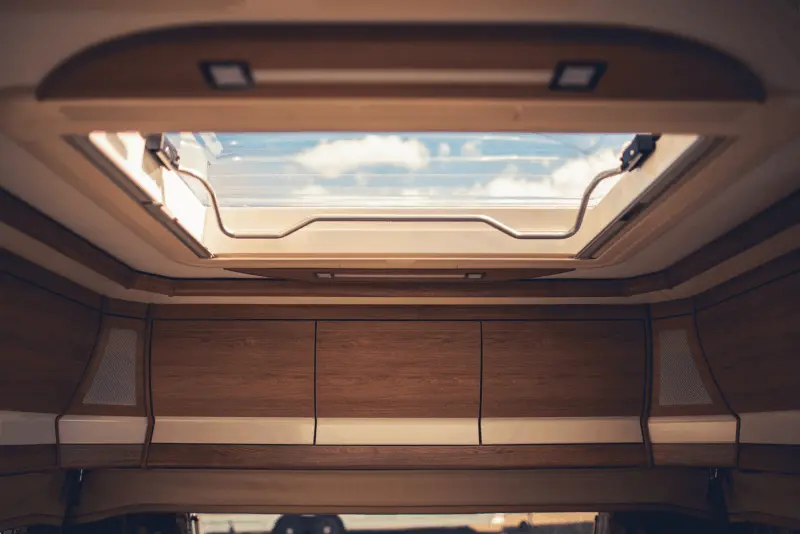
The roof windows referred to as "Heki" in the caravan world are not just glass panels used to observe the outside. These systems are vital components designed to maintain the air quality inside the caravan, expel moisture, and provide natural light. In confined spaces like a caravan, activities such as breathing, cooking, or taking a shower can quickly lead to the accumulation of carbon dioxide and humidity. Heki systems allow for the expulsion of these waste gases and humid air while enabling fresh oxygen to enter. Especially during the summer months, due to the tendency of heated air to rise, roof ventilation is much more efficient than side windows for expelling heat.
How is the Ideal Number of Ventilations in a Caravan Determined?
The question of how many roof ventilations a caravan should have cannot be answered with a single number. This number varies depending on the internal volume of the caravan, the arrangement of furniture, and how many people will use the caravan. As a general rule, at least one ventilation point should be considered for each independent living area (kitchen, bathroom, sleeping area). However, in a small "teardrop" caravan, a single central Heki may be sufficient, while in a 7-meter motorhome, this number can rise to three or four. To ensure healthy air circulation, the principle of "cross ventilation" should be observed. This allows air to enter from one point and exit from another. Therefore, when determining the number, not only the quantity but also the positioning of these units relative to each other should be taken into account.
Is One Heki Sufficient for Small Caravans?
In small trailers or panel van conversions under 4 meters in size, sometimes a single large Heki (for example, 50x70 cm) is preferred. If the caravan does not have a bathroom or if there is a vent in the side wall for the bathroom, a single roof ventilation can meet basic needs. However, when ventilation is done from a single point, it is difficult for the airflow to reach every corner of the caravan. Especially if the sleeping area is at one end of the caravan and the seating area is at the other end, a single Heki will only refresh the area it is located in. In this case, using two smaller (28x28 cm or 40x40 cm) Hekis can provide a much more functional result in terms of air circulation than a single large Heki.
How Many Roof Ventilations Should Be Used in Large Caravans?
In large caravans that are 7 meters or longer, multiple ventilation units are typically provided as standard due to the spacious roof area. In an ideal scenario, there should be at least three Hekis in these types of caravans. The first unit should be a model that offers a wide view above the seating group, the second unit should be a fan model that expels cooking odors in the kitchen area, and the third unit should provide fresh air in the bedroom area. If the caravan has a separate shower and toilet area, small additional vents or Hekis should also be added to these sections. In large caravans, since the internal volume is spacious, the air renewal process takes longer; therefore, increasing the number of units directly affects comfort.
Why is a Separate Ventilation Requirement Important for the Kitchen Area?
Cooking inside the caravan not only means delicious meals; it also means intense steam, grease particles, and odors. Having a roof ventilation directly above or very close to the kitchen counter ensures that these negative effects are expelled outside without permeating the caravan's textiles (curtains, bedding, sofas). Ideally, the Heki used in the kitchen area should preferably be a fan model (with extractor features), which is a significant advantage. While a normal window only provides passive ventilation, a fan-equipped Heki actively vacuums smoke and steam. This is especially the most effective way to protect the interior from humidity when you cannot open the windows during winter months.
Is Ventilation in the Bathroom a Requirement?
The bathroom is the narrowest and most moisture-producing area in the caravan. The hot steam generated when taking a shower can cause condensation, which can damage the caravan's ceiling structure and furniture if not quickly expelled. Additionally, the use of cassette toilets in bathrooms inevitably leads to odor formation. For these reasons, it is essential to have at least a small Heki of at least 28x28 cm in the bathroom ceiling. While some users may find a side window sufficient, roof ventilation not only maintains privacy but also utilizes the natural upward movement of steam to provide much faster expulsion. Having a Heki with a mosquito net and frosted glass in the bathroom will also enhance user comfort.
How Many Hekis Should Be in the Sleeping Area?
During sleep, the human body continuously emits carbon dioxide and moisture. In a narrow caravan sleeping area where two people sleep, the air quality can quickly deteriorate within a few hours. Therefore, having at least one Heki in the bedroom section is critical for a healthy sleep. If the sleeping area is very spacious or if the caravan has an "island bed" layout, a ventilation positioned directly above the bed can create a refreshing effect by providing a breeze throughout the night. In the summer months, having a fan above the Heki in this area can help you cool down without needing to run the air conditioning. For campers who do not want to open the side windows at night for safety reasons, roof ventilation is the safest source of air.
Is a Large Heki Better or Multiple Small Hekis?
This choice is entirely about design and functionality. It is related to the balance. Large Hekis, such as 70x50 cm or 90x60 cm, fill the inside of the caravan with tremendous natural light and make the space appear much larger than it is. They are visually very impressive. However, from a technical standpoint, two or three 40x40 cm Hekis distributed to different areas are much more successful in creating air circulation (airflow). While a large Heki creates a massive void in a single point, smaller units allow you to create an uninterrupted air corridor from the front to the back of the caravan. Additionally, the cost and maintenance of smaller Hekis are generally lower. If your budget and ceiling space allow, using a large Heki in the living area and smaller Hekis in other areas is the most balanced solution.
Do Fan Ventilations Affect the Number of Hekis?
Yes, a fan ceiling ventilation (such as brands like Maxxfan or similar extractor models) can perform the work of 2-3 standard passive ventilations in terms of performance. Fan systems significantly increase the air change rate (ACH) because they force the indoor air out or draw fresh air in from outside. If your caravan has a powerful, dual-directional fan Heki, you can keep the number of units lower. For example, in a 5-meter caravan, one powerful fan Heki and one small bathroom vent can provide sufficient performance instead of three standard Hekis. However, it should be noted that fans consume electricity and produce noise; therefore, it is recommended to combine them with passive ventilations.
How Do Climate Conditions Determine Ventilation Needs?
The climate in which you will use your caravan the most plays a key role in determining the number and type of ventilation. If you are camping in constantly hot and humid areas (like the Aegean or Mediterranean coasts), you must keep the number of ventilations at a maximum and definitely prefer fan models. In hot weather, the inside of the caravan can create an oven effect, and ceiling ventilations are the only outlet for this heat. On the other hand, if you are focusing on winter camping, having too many Hekis can lead to heat loss. In caravans used in winter, the ventilations should have "double glazing" and high insulation values. Still, even in winter, it is essential to ventilate from at least two points (bathroom and kitchen) to expel the indoor humidity.
How Many Ventilations Are Needed to Prevent Moisture Problems in the Caravan?
The biggest enemy of caravans is moisture. The swelling of furniture, the smell of mold, and worst of all, the formation of harmful black mold that is detrimental to health all stem from insufficient ventilation. For moisture control, it is not only the number that matters, but also whether the ventilation has the "permanent ventilation" feature. Some Heki models are designed to allow a certain amount of airflow even when fully closed. To completely solve the moisture problem, there should be a mutual ventilation at both ends of the caravan (front and back). This creates a natural airflow and prevents moisture from being trapped inside the caravan. Having three units, especially one in the kitchen, one in the bed area, and one in the bathroom, is ideal for moisture management.
How Should Ceiling Ventilation Be Installed?
When installing Hekis, the principles of "heat" and "fluid dynamics" should be kept in mind. Warm air rises; therefore, the highest heat accumulation points, which are the kitchen ceiling and the bed area, are priority installation areas. Another important issue to consider in the installation plan is the structural integrity of the ceiling. Care should be taken not to cut the support beams (framework) in the caravan ceiling. Additionally, the position of the solar panels, satellite antennas, and any air conditioning units to be mounted on the outside ceiling should not interfere with the Hekis. Hekis should be placed in a way that does not cast shadows on the solar panels, as even a small shadow can reduce the efficiency of the solar panel by more than 50%.
Do Solar Panels Limit the Number of Hekis?
In modern caravans, ceiling space is quite valuable real estate. On one hand, you want more solar panels for more energy, and on the other hand, you want more Hekis for more air. This situation often creates a limitation. If your ceiling is completely covered with panels, you may not find a place to install a large Heki. In such cases, it is advisable to strategically choose narrow but efficient ventilations, such as 28x28 cm or 40x40 cm, that can fit between the panels. Some users prefer to gather the solar panels in one part of the ceiling and leave the remaining area free for a large Heki. Determining the Heki locations first during the planning phase and then arranging the panels ensures that you do not compromise on ventilation comfort.

How to Establish a Balance Between Insulation and Ventilation?
Insulating the heat in caravans means sealing the interior like a thermos. However, if you make the interior completely airtight, oxygen runs out and moisture accumulates. Therefore, the stronger the insulation, the more important controlled ventilation becomes. When determining the number of ventilations, we must remember that each Heki unit also serves as a "heat escape" point. To maintain this balance, high-quality, polyurethane-framed, and double-layered acrylic glass Heki models should be chosen. These models minimize the escape of heat from the ceiling window while keeping the summer heat outside. Using fewer but high insulation value Hekis instead of many low-quality ones increases winter comfort.
Can Extra Hekis Be Added to Old Caravans?
If you think the number of ventilations in your existing caravan is insufficient, it is possible to add more later. However, this process requires meticulous craftsmanship. It requires k. Selecting the correct point without damaging the electrical installation or structural supports inside the ceiling is critical. Installing an extra Heki will instantly change the air quality inside the caravan. Especially in older model caravans, it is common to find only one small vent. Adding a modern Heki above the kitchen or bed can make the caravan much more livable. The important thing is that the sealing (insulation) processes at the cutting point must be done very carefully with professional mastics (like butyl tape).
What Should Be Considered When Choosing a Heki?
Instead of focusing solely on the number, the characteristics of the selected units should also be considered. The first feature to pay attention to when buying a Heki is that it should have a "mosquito net and blackout blind" combination. A Heki without a mosquito net can cause thousands of insects to fill the inside of the caravan during summer evenings. The blackout blind is essential to protect from the morning sun and to ensure that the light inside is not visible from outside at night. The second point to consider is the opening mechanism. Some models only open 10-15 degrees, while others can lift up to 60-70 degrees or slide completely to the side. Models that open wider should be preferred for maximum airflow. Additionally, UV-protected glasses prevent the interior furnishings from fading due to sunlight.
Does Aerodynamic Structure Affect the Number of Ventilation Units?
Every unit added to the caravan roof increases wind resistance (drag) while driving, thus affecting fuel consumption. Additionally, at high speeds, the wind noise coming from the roof windows can disrupt travel comfort. Therefore, instead of using too many and high-profile Hekis, aerodynamic, low-profile models should be chosen. Some Heki models can be safely left slightly open while the vehicle is in motion, while others are only suitable for use when parked. If you are going to install too many ventilation units, adding a wind deflector (spoiler) to the front will reduce noise and contribute to fuel economy.
What is the Ideal Number of Hekis According to the Type of Caravan?
The type of caravan directly dictates the number of units you need. In an "Alcove" caravan, there must be at least one ventilation unit in the alcove (overhead bed) area because air circulation is very difficult in that narrow space. In a standard "Panel Van" (Van) conversion, two 40x40 cm Hekis, one at the front and one at the back, are usually the most popular solution. In "Semi-Integrated" or "Fully-Integrated" luxury caravans, there is usually a panoramic large Heki above the living room and a standard Heki in the bedroom. Regardless of your caravan type, you should always add an extra mini vent for the bathroom as an additional unit. The architecture of the caravan determines how the air will flow; therefore, the number should be chosen by analyzing the architecture.
Does the Noise Level Increase with the Number of Hekis?
This is a topic that caravan users often overlook. Every roof window is a weak point for outside noise (rain, wind, noise from the campsite) to enter. Especially during heavy rain, the sound of raindrops hitting a plastic roof window can be felt very loudly inside. As you increase the number of ventilation units, your exposure to outside noise will also increase. However, this can be minimized by choosing high-quality "double-glazed" acrylic units. Additionally, some users prefer to maintain silence by opting for fewer but thicker and insulated professional Heki systems instead of installing many simple vents just for ventilation.
Is the Number of Hekis Important from a Security Perspective?
Ventilations can create potential security risks as well as allowing air entry. A very large and easily opened roof window can become an entry point for thieves. However, modern Hekis can usually be locked from the inside and have mechanisms that are difficult to force from the outside. Another security issue is evacuation during a fire or accident. Some large Hekis have an "emergency exit" certification. If you have many ventilation units in your caravan, your chances of escaping through these windows in an emergency increase. Especially, having a ventilation unit in the sleeping area that is large enough for a person to pass through (at least 50x50 cm) is a detail recommended by security experts.
How to Clean Ventilation Covers?
Having too many caravan ventilations also brings maintenance burdens. Roof windows quickly get dirty with dust, pollen, leaves, and bird droppings. A dirty Heki reduces the quality of light entering and, more importantly, blocks airflow when the mosquito nets' pores are closed. Harsh chemicals and abrasive cloths should never be used for cleaning; acrylic glasses scratch very easily. Cleaning should be done only with plenty of water and soft soap, using a microfiber cloth. The more ventilation units you have, the mechanisms of each (hinges and arms) should be lubricated with silicone-based sprays at least once a year. This extends the lifespan of the windows and prevents squeaks.
What Should Be Done to Optimize Airflow Inside the Caravan?
No matter how many Hekis you install, if you do not apply the right strategy, the inside can still remain stuffy. To optimize airflow, you should use the "intake and exhaust" principle. For example, while opening the Heki at one end of the caravan to let in outside air, you should position the Heki at the other end (especially in the kitchen) to expel the air inside. If one of your windows has a fan, you can manage this process much faster. Additionally, if you slightly open the side window on the shaded side of the caravan throughout the day and fully open the roof ventilation, you will create a cool airflow from the floor to the ceiling. you will create airflow. More than the number, the comfort of being able to create these "airflow channels" determines the comfort.

Does the Number of Ventilations Create a Disadvantage in Winter Camping?
The biggest concern in winter camping is heating. Having too many holes (Heki) in the ceiling means more opportunities for valuable warm air to escape outside. However, when the heater inside the caravan is running in winter, humidity formation reaches its maximum level. If you do not expel this humidity, you may find your blanket and walls damp when you wake up in the morning. Therefore, in winter, at least one or two of the ventilations should be left open at a "micro-opening" level. If you have many Hekis, you can prevent heat loss by placing insulation covers (covers) over the items you do not use in winter from the outside. Ideally, in winter, it is best to use controlled ventilation only in the kitchen and bathroom and keep the others closed.
What is the Ideal Number in Terms of Price and Performance?
When building or buying a caravan, budget is always a limiting factor. The price of a quality Heki unit can be quite high depending on its size and brand. To achieve a good price/performance balance; you can choose a quality 40x40 cm or 50x70 cm Heki for the living area, a more affordable locally produced fan vent for the kitchen area, and the most basic 28x28 cm frosted glass unit for the bathroom. A total of 3 units (2 Heki + 1 Bathroom Vent) is the most economical and efficient combination for a standard caravan. Less than this disrupts comfort, while more can unnecessarily strain the budget.
What are the Best Brands for Caravan Ventilation?
There are a few brands that have become the "gold standards" in the caravan world. Dometic (Heki series) is the most well-known and widespread brand for caravan roof windows. They are excellent in terms of durability and availability of spare parts. MaxxAir (especially the Maxxfan Deluxe model) is favored by professional campers with its lid design that can remain open even in rainy weather and its powerful fan. Fiamma and MPK brands offer more mid-range, functional, and affordable solutions. The Remis brand stands out with its aesthetic designs and quality shading systems. Regardless of which brand you choose, always inquire about the service support of the brand in Turkey and the availability of mosquito net/shading spare parts.
What is the Relationship Between Carbon Monoxide Safety in Caravans and Heki?
If you are using a stove, oven, or diesel heater (like Webasto) in the caravan, there is a risk of combustion products accumulating inside. Although these devices take air from outside and exhaust it outside, any leakage can pose a life-threatening danger. Roof ventilations serve as a safety valve for the evacuation of gases resulting from gas leaks or incomplete combustion. Especially "fixed ventilation" models guarantee fresh air enters even while you sleep, reducing the risk of carbon monoxide poisoning. Therefore, regardless of how many Hekis you have in your caravan, it is recommended for at least one of them to be of a type that does not completely seal off airflow, ensuring continuous ventilation for safety.
What are the Dimensions and Standards of Heki?
There are specific standard cut dimensions in the caravan sector. The most common size is 40x40 cm; this size is the segment that almost every brand produces the most models in. The standard size for bathrooms and narrow spaces is 28x28 cm. In large and spacious caravans, 50x70 cm and rarely 90x60 cm sizes are used. If you are building your caravan yourself, sticking to these standard sizes will provide great convenience if you want to change the unit later. For example, you can replace a simple 40x40 cm unit you installed today with a Maxxfan in the future without changing the hole location. When choosing a size, do not forget to consider other equipment (air conditioning, etc.) inside the ceiling.
How is Ventilation Safety Ensured in Caravans with Children?
For families with children, the location and safety of Hekis are of extra importance. A child sleeping on the upper bunk will be very close to the roof ventilation. In this case, safety lock models should be chosen to prevent the child from playing with the ventilation mechanism or getting their finger stuck. Additionally, ensuring that the mosquito nets are sturdy prevents children from throwing anything (toys, etc.) outside. Having ventilation on the upper bunk prevents the child from sweating while sleeping but also ensures that the wind does not directly hit them, so "diffuser" (air-dispersing) lids should be preferred. When determining the number of ventilations, calculating the air exchange for each sleeping level ensures safety.
What is the Need for Ventilation in Caravans with Pets?
If you are traveling with a dog or cat in the caravan, your ventilation needs double. Pets regulate their body heat not by sweating but by breathing (panting), which means a rapid increase in humidity and heat inside. Additionally, to prevent pet odors from settling, continuous fresh air is essential. The ideal setup for pet owners is a Heki with a thermostatic fan. These devices automatically start working when the indoor temperature exceeds a certain degree. This way, even if you leave the caravan for a short time, you can ensure that your friends stay cool and safe. In this case, having at least one "smart" fan Heki is of vital importance.
How Should Ventilation Selection Be in Terms of Privacy and Seclusion?
Roof ventilations are much more advantageous in terms of privacy compared to side windows. From the outside, the only thing that can see the roof of the caravan is birds or a tall building. Therefore, the bathroom and dressing areas should be designed with this in mind. In areas requiring privacy, such as bedrooms, it is a popular choice to use only roof ventilation instead of windows. The glass used for this purpose is often "frosted" or "opaque" white. This way, the inside remains bright while no one can see you from the outside. When determining the number, planning a small Heki for each closed space that requires privacy will enhance your living comfort and freedom in the caravan.
How to prevent night ventilation and wind noise?
Many campers love to sleep with the night ventilation open. However, sometimes the blowing wind can create noises like damp sounds from the edges of the lid or bring dust inside. To prevent this, multifunctional Heki models that can be opened from the opposite side (downwind) depending on the wind direction should be preferred. Some luxury models have wind and rain sensors; they automatically close the lid when the wind becomes very strong or when it starts to rain. If you have many ventilation openings, you can ensure that the air inside is refreshed by only opening the unit at the foot end and closing the one at the head end, so that the wind does not blow directly into your face.
What is the correct number of Heki's for your caravan?
To summarize, the "standard" number for a caravan is three: one in the living area, one in the kitchen (preferably with a fan), and one in the bathroom. If your caravan is larger than 5 meters and has a separate bedroom, a fourth Heki should be added to this number. Remember that ventilation is not just a "window" but the lungs of the caravan. When determining the number, you should weigh your budget, the size of the caravan, and what types of climates you will be traveling in. The correct number and properly positioned roof ventilations will transform caravan life from living in a "cave" to an experience that is in harmony with nature, spacious, and healthy.