Why is Lumen Value the First Criterion to Consider When Choosing a Headlamp?
When purchasing a headlamp, the term "lumen" that you encounter actually refers to a basic unit of measurement that expresses the total amount of visible light emitted by a light source in all directions. In nature, when you are away from city lights, your eyes try to adapt to complete darkness. However, you need an artificial light source to create a safe movement area. Since the lumen value directly determines how bright this light will be, it helps you notice the details in your surroundings and manages your depth perception. A lamp with low lumens may illuminate nearby areas well but can prevent you from seeing potential dangers at a distance. Therefore, lumen is not just a technical data; it is the first and most important performance indicator that guarantees your safety throughout the night.
How Many Lumens are Sufficient While Preparing Dinner at the Campsite?
Activities at the campsite are generally defined as "close-range" tasks. When cooking a meal, setting up a tent, or searching for something in your backpack, you do not need a very high light output. For these types of static and close-range tasks, a value between 50 and 100 lumens is usually more than sufficient. If you hold a 300-400 lumen lamp directly in front of a task, the reflection of the light from white surfaces can dazzle your eyes and create a temporary "snow blindness" discomfort. An ideal camping lamp should have modes that can spread light with a wide beam even at these low lumen levels. This way, you can see not only the point you are looking at but also the entire workbench with soft light.
How Many Lumens are Required to Illuminate Our Path During Technical Night Hiking?
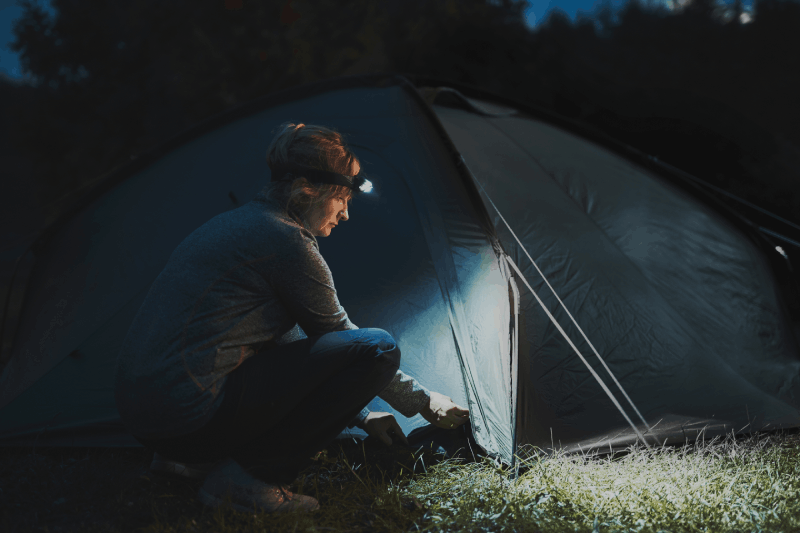
Night hiking requires much more light output and range than activities at the campsite. To be able to notice stones on the trail, tree roots, or sudden changes in elevation beforehand, the light must illuminate not only in front of you but also at least 20-30 meters ahead. If you are walking on a standard flat path, around 150-200 lumens of brightness will provide a safe view. However, when the terrain becomes challenging, when you enter unmarked paths, or in foggy weather, this need can rise to 300 lumens or more. High lumens do not just mean brightness; it also means that the light is "thrown" further away. As your speed increases (for example, during night running or fast-paced hiking), you will need more light for your reaction time.
Is Wide Beam Light or Focused Light More Suitable for Night Hiking?
Regardless of the lumen value, how this light is distributed (beam pattern) determines your usage purpose. Wide beam lights (flood) increase your environmental visibility by spreading light over a large area; this is ideal for camping. However, during night hikes, especially when following a trail, you will need a focused, narrow beam light known as a "spot". A focused light can illuminate much further distances with the same lumen value. The best headlamps usually offer both modes or are hybrid in design. While using the spot mode during hiking to see markers ahead, it is safest to have a slight wide beam light support to notice obstacles on the ground where you step. Therefore, it is critical that the lamp you choose has an adjustable light beam.
What Should be the Power and Color of the Headlamp in Foggy and Misty Weather?
Natural conditions do not always provide a clear sky. Using a very high lumen, cold white light in foggy or heavily rainy weather can actually worsen your visibility. The reason is that water droplets in the air reflect the strong light back to you; this phenomenon is called "backscatter". In foggy weather, a more controlled light output of 100-150 lumens and preferably a "warm white" or "yellowish" light color should be preferred. Some professional headlamps have special low-power modes for fog. Instead of using a very strong light, trying to achieve a clearer view from below or at a lower level using lighting can help you avoid getting lost during night hiking.
Why is the Red Light Mode Critical in Night Camping?
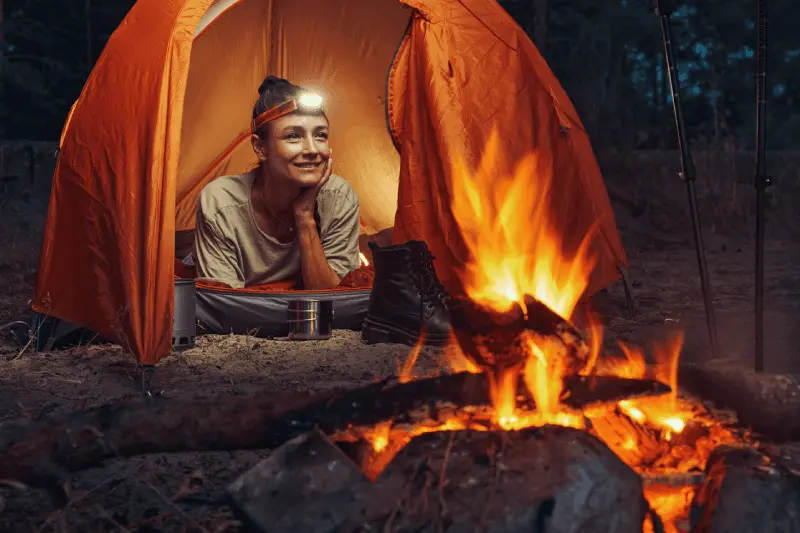
The small red LEDs found in most headlamps are not just an accessory; they serve a scientific purpose. The human eye needs about 20-30 minutes to adapt to darkness. If you use white light, your pupils immediately constrict, and you cannot see anything until your eyes readjust to the dark after you turn off the light. However, red light has a wavelength that does not disrupt your "night vision". When you need to exit the tent at midnight or look at a map, using red light will not disturb your eyes' adaptation to darkness. Additionally, red light does not dazzle the eyes of your camping friends and attracts fewer insects than white light. This feature indicates that a minimum of 10-20 lumens of red light support is essential for creating a peaceful and respectful environment at the campsite.
How Do High Lumen Values Establish a Relationship Between Battery Life and Weight Balance?
As the lumen value of a headlamp increases, the amount of energy required to power that light also increases exponentially. This situation initiates the "lumens vs. battery life" battle. A 500-lumen lamp can provide you with tremendous visibility, but it can drain its battery in just 1-2 hours in that mode. If you are going on a long expedition, it is not logical to operate continuously at the highest lumen. Additionally, high-capacity batteries can increase the weight of the headlamp, causing discomfort on your forehead. For an ideal balance, you should choose models that provide the minimum lumens you need (for example, 200 lumens for hiking) and can last at least 6-8 hours at that level. New generation lamps with lithium-ion batteries can offer high lumen performance for longer periods with lower weight, but you should always have a backup power source with you.
What Should be the Ideal Brightness Range for Fast Night Runs or Fastpacking?
Speed is one of the most fundamental variables that determine your light needs. For a person running at a slow pace, 150 lumens is sufficient, while a runner can cover much more distance in seconds. This situation requires a wider and further illumination area to notice obstacles and analyze the route. For trail runners, a minimum value between 300 and 500 lumens is recommended. The flickering of the light due to the shaking of the lamp while running can cause eye fatigue; therefore, regulated output and high-lumen devices should be preferred. When moving quickly, the shadows can be harsher, disrupting depth perception, so in running-focused lamps, the distribution of light is as important as the lumen value.
How Many Lumens are Required for Emergency Signals and SOS Mode?
A headlamp is not just a lighting tool; it is also a rescue device. When you have an accident in nature or get lost, you need to use the "flasher" or "SOS" mode to signal your location to rescue teams. In this mode, the lamp is expected to operate at the highest lumen value possible. Because a 400-500 lumen strobe light can be detected from miles away or from a helicopter. Emergency modes send light in a pulsing manner to conserve battery, allowing the lamp to signal for 20-30 hours at a brightness level that would normally last 2 hours. As a minimum safety standard, it is critical that your headlamp has at least a 200-lumen "strobe" feature, which increases your chances of survival.
Does Waterproofing and Impact Resistance Directly Affect Lumen Performance?
As important as how bright a headlamp shines is how well it can maintain that brightness under various conditions. An IPX rating (water resistance) ensures that the headlamp continues to operate without lumen loss even in heavy rain. If water enters your lamp, the lens can fog up, which can reduce the light output (lumens) by more than 50%. Similarly, a body that is not impact-resistant can damage the LED chips or battery connections, causing the light to flicker or suddenly turn off. To prepare for the possibility of being caught in a sudden storm during night hiking, it is advisable to choose a model with at least IPX4 (splash resistant) or preferably IPX7 (submersible) certification, ensuring that your lumen performance remains stable regardless of external factors.
How Does Reactive Lighting Technology Smartly Optimize Lumen Needs?
In advanced headlamp models, reactive lighting technology measures the amount of light in the environment using a sensor placed on the lamp. When you look at a map, the lamp detects this and automatically reduces the lumen value to prevent glare; when you lift your head and look into the distance, it instantly increases to maximum lumen level. This technology eliminates the need for the user to constantly press buttons while significantly optimizing battery life. It saves energy by not using unnecessarily high lumens and provides full power when you need it. If your budget allows, opting for models with such smart systems instead of manual lumen adjustment will elevate your night hiking and camping comfort to a higher level.
What Lumen Level Should You Choose to Avoid Dazzling Your Friends During Group Hiking?
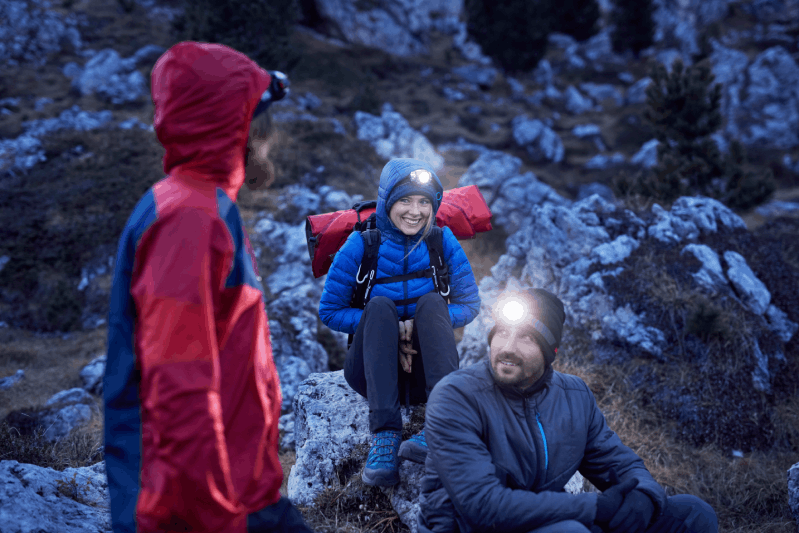
When moving in groups in nature, you need to strike a balance between your individual lumen needs and social etiquette rules. Looking back at your friend suddenly while walking with a 500-lumen lamp or shining light in someone's face during a break can completely blind that person’s night vision and lead to serious eye discomfort. It is most appropriate to reduce the lumen value to between 50-100 or switch directly to red light mode during interactions within the group. If you are the leader, you can use high lumens to illuminate the path, but while in the group, directing the light downwards and preferring lower modes is an ethical outdoor behavior. Therefore, when choosing a headlamp, having easy and quick transitions between modes provides a significant advantage in terms of group dynamics.
How Many Lumens Should Be Used to Protect Eye Health While Reading a Map or Book?
Focusing on text or a detailed map in the dark is a task that can strain your eye muscles significantly. In these situations, the logic of "more light is better" is absolutely wrong. White paper or bright surface maps reflect the light that falls on them like a mirror. The ideal value for reading a map is generally between 15 and 40 lumens. This level provides enough contrast to see details while minimizing glare. The "reading mode" found in some headlamps spreads the light in a more homogeneous and soft manner, reducing eye fatigue. If you are doing professional navigation, using a low-lumen mode with a high CRI (Color Rendering Index) value will allow you to see contour lines or riverbeds much more clearly on the map.
How Should Lumen Adjustment Be Made While Night Hiking on Snow and Ice to Avoid Reflections?
Winter camping and hiking on snow present a completely different challenge in terms of lighting. Snow is one of the most reflective surfaces in nature, and a large portion of the light is reflected back to the user. In this case, the 300 lumens you normally use on a dirt path can feel like 1000 lumens on a snowy surface. Reducing the lumen value while hiking on snow (for example, to 100-150 lumens) helps reduce eye strain and allows you to better notice icy areas or postholes in the ground. Additionally, in cold weather, using lower lumen modes allows the battery to "survive" longer. In winter activities, you should definitely consider carrying models with external battery cases that can be kept warm inside your jacket.
How Can the Lens Structure of a Headlamp Affect Lumen Efficiency?
The performance of a headlamp is determined not only by the power of the LED inside but also by the optical system (lens or reflector) in front of that LED. A poor-quality lens can lose a significant portion of the produced lumens due to internal reflections or distribute the light unevenly. Models with "Total Internal Reflection" (TIR) lens technology collect light much more efficiently and direct it to the target with minimal loss. Thus, a quality lamp with 200 lumens can provide much more effective lighting than a low-quality lamp that claims to be 400 lumens. The cleanliness of the lens structure is also critical; a scratched or dirty glass can scatter light and reduce lumen efficiency. Therefore, when looking at lumen figures, researching the optical quality and lens technology of the brand will be decisive for real-world performance.
Do Rechargeable Batteries or AA Batteries Support High Lumen Output Better?
The choice of power source determines how long you can reach the highest lumen value your lamp offers. Standard alkaline batteries (AAA or AA) quickly lose their voltage in high current situations (maximum brightness mode), causing the light to flicker in a short time. On the other hand, special lithium-ion (Li-ion) rechargeable batteries can provide much higher currents at a stable voltage. This means that when you need high values like 500+ lumens, Li-ion battery systems will perform much more stably. However, in long-term outdoor trips, if your charging options are limited, hybrid models that can work with both their own battery and standard batteries when needed are the safest choice. For high lumen enthusiasts, special rechargeable cells are always a more efficient solution.
What Minimum Lumens Should Be Increased to Enhance Depth Perception in Forested Areas?
There is a significant difference between hiking in open terrain and moving through dense forests at night. Every tree trunk and every branch creates an obstacle in front of your light, leaving dark shadows behind. These shadows can distort your depth perception and make it difficult to understand how deep a pit is or how close a branch is. In such "shadowy" environments, you need a stronger light to illuminate the shadows a bit. In forested hiking, a minimum of 250-300 lumens and a wide beam light support will increase your environmental awareness and help prevent accidents like branch collisions or sprains. Sufficient brightness for the light to "navigate" around objects and reveal details is a vital comfort factor in the forest.
How Much Lumen is Required for Caving or Exploring Very Dark Environments?
Caving or visiting abandoned mines are among the most extreme situations where a headlamp's backup is essential. In these environments, there is no such thing as "natural light"; when the lamp goes out, you are in complete darkness. For caves, you should prefer very powerful and wide beam models between 500 and 1000 lumens to see not only in front of you but also the ceiling height and deep cracks. Cavers usually do not settle for a single lamp; they use multiple lighting systems mounted on their helmets. The lumen output at this level will illuminate the vast halls of the cave, helping you find your way and determine safe climbing routes. Additionally, lamps used in such environments must be completely waterproof and extremely impact-resistant.
Why is the Fit and Ergonomics of High Lumen Models More Important?
As the lumen value increases, the weight also increases due to the size of the battery and the cooling blocks used to prevent the lamp from overheating. A lightweight lamp with 100 lumens can stay on your head with a thin strap, while a professional model with 600 lumens requires a more advanced fit system to avoid bouncing on your head. Models with overhead straps, in particular, reduce the pressure on your forehead by distributing the weight across the top of your head. Additionally, high-lumen lamps heat up during use; quality brands use insulation pads and ergonomic plastic housings that do not transmit this heat to your head. If your headlamp is uncomfortable, even the 1000 lumens it offers can become torture for you after an hour. Ergonomics ensures the sustainability of high-performance lighting.
What Differences Exist in Lumen Preferences Between Summer and Winter Camps?
Seasons not only change the temperature but also the light needs. Summer nights are shorter and the environment is generally more colorful (green leaves absorb light). In winter, however, nights are much longer, and the snow cover reflects light. In summer, since you spend more time at camp, battery life and low lumen modes come to the forefront. In winter, since you break away from daylight much earlier, a large portion of your hiking may take place in darkness; this necessitates lamps with higher lumen capacity and batteries that do not lose performance in the cold. Features such as large buttons suitable for use with gloves and the ability to mount on a helmet are also as important as lumen usage in winter. In both seasons, the lumen needs should be adjusted according to the duration of the activity and the reflectivity of the terrain.
Why are the ANSI/PLATO FL 1 Standards Set by Brands a Reliable Guide for Measuring Lumens?
You may see unrealistic figures like "5000 Lumens" on cheap and unbranded headlamps sold in the market. However, these figures usually only represent the theoretical maximum of the LED chip and do not reflect the actual lamp performance. Serious outdoor brands comply with international standards called ANSI/PLATO FL 1. This standard determines how lumen value, battery life, and waterproofing will be measured. For example, according to the ANSI standard, the lumen value is measured based on the brightness 30 seconds after the lamp is turned on. Additionally, battery life refers to the duration until the brightness drops to 10% of the initial value. A lamp you purchase from a brand that adheres to these standards will provide much better and more reliable results than a "2000 lumens" lamp produced outside the standard.
How Does Light Color Temperature (Kelvin Value) Manipulate Lumen Perception?
When measuring lumens, the Kelvin value determines the "color" (whether it is warm or cold) of the light. Cold white light (6000K+) appears brighter and sharper to the eye; therefore, this color is generally preferred in high lumen models. However, cold white light can wash out colors and tire the eyes more quickly. Warm white or daylight color (4000K-5000K) is more relaxing for the eyes, even if the lumen value on paper is the same, and shows natural colors (brown earth, green leaves) more naturally. For maintaining depth perception during night hiking, lamps with high CRI values and natural color warmth are more functional than those that emit excessively bright but "ice blue" light. The quality of the light is sometimes much more important than the quantity (lumens).
How to Reduce Heating Problems in Long-Term Use of Lumen Output?
High-powered LEDs generate significant amounts of heat while operating. If this heat cannot be dissipated properly, the LED chip can be damaged. To prevent this disaster, headlamps have "thermal management" systems. If your lamp is running in the highest mode and its body gets too hot, the system automatically reduces the lumen value (thermal step-down). This can cause the brightness you started at 500 lumens to quietly drop to 200 lumens after 10 minutes. Quality brands minimize this brightness drop by using aluminum bodies or special cooling fins. When purchasing, researching the "sustainable lumen" value of the lamp will be a much more realistic approach than just looking at the burst output.
How Many Lumens Should Be Used for Night Safety Signals and SOS Mode?
Night safety does not only mean signaling your location but also being noticed in traffic or crowded routes. If you are walking along a roadside or riding a bike, having a small red flasher behind your headlamp (some models have it on the battery pack) can be lifesaving. These flashers are usually low-powered, around 5-10 lumens, but their flashing frequency can be detected by the human eye from miles away. The main light in front should operate at 100 lumens or more to signal someone or warn of a danger. The energy-efficient use of this mode makes your headlamp your best friend in situations where you may need long-term assistance.
How Does the Distribution of Light Change When You Hang a Headlamp Like a Lantern from the Tent Ceiling?
Many campers prefer to illuminate the interior by hanging the headlamp from a hook on the tent ceiling. However, headlamps are generally designed to project a beam forward, so when hung from the ceiling, they only create a bright spot on the ground, leaving the rest of the tent dark. To solve this problem, some brands design the headlamp's storage case to also serve as a "diffuser" (light distributor). When you place the lamp inside this case and hang it from the ceiling, the light spreads softly in all directions, and with a power of 50-100 lumens, you can turn the entire tent into a comfortable room. If you do not have such an accessory, placing a thin white cloth or toilet paper in front of the lamp can also create a similar diffuser effect, enhancing lumen efficiency for area lighting.
What Should Be the Lumen Limit for the First Headlamp to Be Purchased for Children?
Having their own lights while camping increases children's confidence and helps them cope with the darkness. However, the lumen limit in children's headlamps is very critical. Children tend to shine the lamp in each other's eyes. Therefore, lamps designed for children are generally limited to between 20 and 40 lumens. Additionally, these lamps should have screw-on battery covers (to prevent them from swallowing the batteries) and be certified for "eye safety" (photobiological safety). A very bright headlamp can be both dangerous and unnecessary for a child. Soft, low-lumen, and preferably colorful-bodied models are the most ideal and safe starting point for little campers.
How Does Lumen Need Differ in Special Activities Like Hunting or Fishing Compared to Standard Camping?
Some outdoor hobbies require lumen values that exceed standard headlamp levels. For example, if you are night fishing, you may need light modes that are not very powerful but prevent glare to illuminate the water or blue/green light options that do not scare the fish. In hunting, high-lumen modes (400+) that emit light in a special wavelength are used to track the blood trail of an injured animal. Additionally, very long-range (throw) focused lights compatible with the rifle range are of vital importance. In these special activities, the amount of lumens, as well as the spectrum of the light and how far it can focus, are key factors for success. A standard camping lamp may not meet these special needs, so it is necessary to turn to "professional" series designed for the activity.
In Choosing a Headlamp, is Lumen or Maximum Light Distance a More Important Indicator?
While people often focus on the lumen figure, "Beam Distance" is often a more meaningful metric. For example, a very wide beam lamp with 500 lumens may only illuminate 40 meters ahead, while a focused lamp with 200 lumens can illuminate 100 meters ahead. If your goal is to notice trail markers or an animal in the distance, you should pay attention to the distance data. If your goal is to illuminate a wide camping area or your workbench, you should focus on the lumen amount and light beam angle. In an ideal scenario, choosing a model where both data are balanced is the most logical. Remember that lumens are the "amount of fuel," while distance is how efficiently that fuel is carried away by a "motor" (lens).
How Do Hybrid Power Sources Provide an Advantage in Situations Requiring High Lumens?
One of the biggest innovations in the outdoor world in recent years is "Hybrid" power systems. These systems allow the headlamp to operate with both its rechargeable lithium battery and standard alkaline batteries. In challenging situations requiring high lumens, you can achieve full performance using the Li-ion battery, and when your battery runs out, you can continue your journey by inserting backup AA batteries from your backpack. This flexibility ensures that your lumen output never drops to zero, especially on multi-day routes or in cold weather. Hybrid systems set a new standard in headlamp usage by offering users both economy (rechargeability) and safety (backup battery options).
What Are the Technical Advantages of Using a Headlamp Instead of a Flashlight During Night Hiking?
Some people still prefer powerful flashlights, but in a technical night hike, a headlamp is unmatched. The biggest advantage is that the light always goes in the direction you are looking. When walking with a flashlight, one of your hands is occupied, and you cannot use a trekking pole to maintain your balance; also, not being able to use your hands in case of a sudden fall can lead to serious injuries. A headlamp, with its hands-free lighting, increases your safety and provides freedom of movement. Additionally, having the light source close to eye level naturally creates the perspective of shadows, helping you better understand ground details. Modern headlamps can now produce as much lumen as flashlights, so the need for a flashlight is decreasing in the outdoor world every day.
Does Using a Headlamp in Economic Mode Provide a Safe Lumen Output for Hiking?
Most lamps have "Eco" or "Low" modes to extend battery life. These modes typically provide light between 5 and 20 lumens. So is it safe to hike with this value? On a flat, familiar path, and if your eyes are fully adapted to the dark, 20 lumens may be enough to see where you step. However, this is an "emergency" solution and is not recommended for long-term use. Hiking in low light can strain your eye muscles excessively and may lead to distraction after a while. For a safe hike, you should always consider the "Medium" mode (at least 100-150 lumens for hiking). Economic modes should only be used for sitting in camp or when your battery is about to die.
How Many Lumens Should a Headlamp Have While Riding a Mountain Bike at Night?
Night riding is one of the most challenging areas for headlamp use. When your speed reaches 20-30 kilometers per hour on a bike, you need very wide and far-reaching illumination to notice obstacles ahead and react. For cyclists, a headlamp (helmet lamp) should have a minimum of 500-800 lumens. However, this alone is not enough; it is usually combined with a main headlight of 1000+ lumens mounted on the handlebars. The helmet lamp is critical for seeing the inside of the turn, independent of the bike's direction. To avoid lumen loss at high speeds and not be affected by vibrations, professional "high-power" series headlamps are indispensable for cyclists.
How Can Cleaning and Maintaining the Lens of a Headlamp Prevent Lumen Loss?
No matter how powerful a headlamp is, if the lens in front gets dirty, the lumen performance drops dramatically. Mud, fingerprints, or a layer of dust can cause the light to scatter and distribute unevenly, shortening the range and degrading the quality of the light. Cleaning the lens (or glass) of the headlamp with a microfiber cloth after each activity ensures that the lumen output remains at its maximum. Additionally, scratches on plastic lenses can scatter light, making it dazzling; therefore, you should keep the lamp in a special case or a cloth that prevents scratching while carrying it in your backpack. A well-maintained lens can increase the efficiency you get from the lamp technology by 20-30%.
What Should Be the Minimum Lumen Output for Small Backup Lights to Carry?
In nature, the rule "one lamp is no lamp, two lamps are one lamp" applies. You should always have a backup lamp in your backpack in case your main lamp breaks, runs out of battery, or gets dropped and broken. This backup lamp does not need to be huge; its main purpose is to help you return to the campsite safely or signal your location. A minimum of 50 lumens is considered sufficient for a backup headlamp or keychain flashlight. This value allows you to slowly follow the path and manage your camp tasks. The most important feature of backup lamps is not their lumens but that their batteries do not leak (using lithium batteries is recommended) and that they are ready to work at the moment of need, even if they have been sitting in a drawer for years.
How Should Lumen Adjustment Be Made While Taking Night Photographs?
If you are doing star exposure (astrophotography) or night landscape shots, your headlamp is not just a lighting tool but also a "light painting" tool. Cameras are very sensitive to even a small amount of light during long exposures. Therefore, when taking a shot, you should use very low modes of 10-20 lumens or red light to illuminate the surroundings. If you want to light up an object in the foreground (for example, a tree or tent), moving a wide beam light of 100-200 lumens over the object for a short time yields great results. It is also important that the lumen value of the light is "flicker-free" and accurately reflects colors. Excessive light can cause "blowouts" in photographs, so controlling the lumens in photography is an art.
Why is Using the Right Lumen Important for Ethical Choices to Prevent Light Pollution?
Nature is not just a home for humans but also for nocturnal animals. Using unnecessarily high-lumen lights causes "light pollution" and can negatively affect the ecosystem. You may disrupt the migration paths of birds or impair the vision of nocturnal creatures. Additionally, you harm the experience of other campers who want to watch the stars. The ideal outdoor ethic is to use only as much light as you need (Leave No Trace - Light Principle). If you are using 200 lumens while hiking, reducing the lumen when you stop or at the campsite is the most respectful and mature approach to nature and helps preserve your battery life.
How Does the LED Technology Used in Headlamp Production Determine Energy Consumption per Lumen?
Not every LED operates with the same efficiency. The "lumens/watt" ratio is a measure of how efficient a headlamp is. Older generation LEDs consume much more energy to provide the same brightness, while modern LEDs from leading manufacturers like "Cree" or "Nichia" offer much more brightness with much less energy. Efficient LED technology provides you with both higher lumens and longer operating time with the same size battery. Therefore, when purchasing a headlamp, it is essential to consider not only the lumen figures but also the generation and brand of the LED inside, ensuring you have a technologically superior lighting experience. High efficiency means lighter batteries and less heating headlamps.
How Does the Focusing Mechanism of a Headlamp Control Lumen Intensity?
Some headlamps have a "Zoom" or focusing ring that allows you to control the intensity of the light without changing the lumen value. When you push the focusing lens forward, the light converges into a narrow point (spot) and the lumen intensity combines at a center, allowing you to see far away. When you pull the lens back, the light spreads over a wide area (flood) and the lumen intensity decreases, softly illuminating close distances. This mechanical control allows you to shape the light according to your needs without switching between digital modes. However, mechanical zoom systems may be weaker in terms of water resistance; therefore, professional models usually use two different LEDs (one spot, one flood) to control this electronically.
How Does the Lock Feature Prevent Lumen Waste in Harsh Weather Conditions?
The biggest nightmare of a headlamp is accidentally turning it on while it is in your backpack, causing the battery to drain before you need it. If your lamp turns on by itself in the 300-lumen mode while in your backpack, it will drain the battery and may damage other equipment in your backpack with its heat. Therefore, the "Lock" feature is a passive but vital part of lumen management. Most modern headlamps can be locked by pressing the button for a long time or with a special combination. This feature ensures that your lamp can only use its full lumen power at your command when you are out in nature. You should make it a habit to use this small but critical feature to avoid being left with a dead battery when you start your night hike.
Does the Charging Cable Use Standard Type-C or Only a Brand-Specific Expensive Cable?
Hidden costs are often in accessories. Some premium brands use cables with magnetic connectors or special pins to charge the lamp. If you forget this cable at home or lose it on the road, you cannot charge the lamp with a standard USB cable, and buying a new cable can sometimes cost as much as half the lamp. Models with universal Type-C ports charge faster and are compatible with your phone's cable, reducing cable clutter in your backpack. For logistical practicality, I recommend avoiding devices with non-standard ports.
Does Salty Humid Air at Beach Camps Oxidize and Damage the Charging Port of the Lamp?
If your campsite is by the sea or in a high-humidity area, the salt and moisture in the air are the number one enemies of electronic circuits. USB charging ports left exposed in the open can quickly oxidize and start to lose contact. The most frightening aspect of this situation is getting stuck in the dark when you need light the most, during the heaviest rain. If you are planning a night hike, you should prefer products with at least IPX6 or fully waterproof IPX7 certification so that you can continue your way safely even underwater.
Does the Headlamp's Light Flicker While I Am Walking, Causing Me to Lose Sight?
The "PWM" (Pulse Width Modulation) technology is used in some cheap lamps to adjust the light intensity. This technology rapidly turns the light on and off. The human eye usually does not see this, but while in motion, this flickering can create a strobe effect, especially in peripheral vision. This can lead to nausea, dizziness, and serious eye fatigue during long night hikes. Lamps with "flicker-free" or "Constant Current" technology provide a smooth light output regardless of the lumen value, preventing these types of neurological discomforts.
Is a Rear Red Light Necessary for Others to See Me While Night Hiking?
During group hikes, it is not enough to see just in front of you; your friends behind you also need to know your location. Especially on crowded trails or routes with cyclists, having a steady or flashing red light (rear safety light) on the back of your headlamp can prevent rear-end collisions and help keep the group together. If you are hiking alone and there is a risk of vehicles passing (like on paved roads), this rear light is a vital layer of safety. This feature is usually found in professional models and should definitely be sought after.
Is SOS or Flasher Mode Really Life-Saving or Just an Unnecessary Mode?
A headlamp is not just a lighting tool; it is also a communication device. In cases of injury, getting lost, or emergencies, having an SOS (three short, three long, three short) mode allows you to signal your location to rescue teams from much greater distances. Trying to signal manually with your hand consumes battery and can lead to mistakes due to fatigue. A lamp with an automatic SOS mode continues to signal your location until morning, even if you remain still. This is a feature that you might say "I will never use," but in a moment of need, it can become the most important function of your life.
Should I Pay Extra for Warranty Period and After-Sales Support?
Outdoor equipment is exposed to harsh conditions; it can fall, get wet, or get dusty. When an unbranded product breaks, you have no chance of repair, and it goes straight to the trash. Guarantees offered by well-known brands ranging from 2 to 5 years are actually an indicator of the product's durability. Paying 20% more at the time of purchase for a guaranteed product will save you money in the long run. Additionally, having parts like backup headbands or backup batteries available can save you from having to replace the entire lamp for a small malfunction. This is a critical question in terms of the product's life cycle cost.
How Many Lumens Are Safe for You?
The minimum lumen value for camping and night hiking varies according to your usage scenario; if you are just sitting at the campsite, 100-200 lumens is sufficient, if you are hiking, 300-450 lumens is ideal, and if you are engaging in technical climbing or activities requiring speed, 600 lumens and above is ideal. However, as we examined in the 23 questions above, lumens are just the tip of the iceberg.
As a real content strategist, I recommend evaluating all parameters holistically, from battery management to body comfort, from light quality to logistical practicality. What protects you in the dark is not just brightness, but how long and how safely that brightness can continue to shine under the most challenging conditions. The right headlamp should be a piece that allows you to focus not just on your path but also on your adventure.