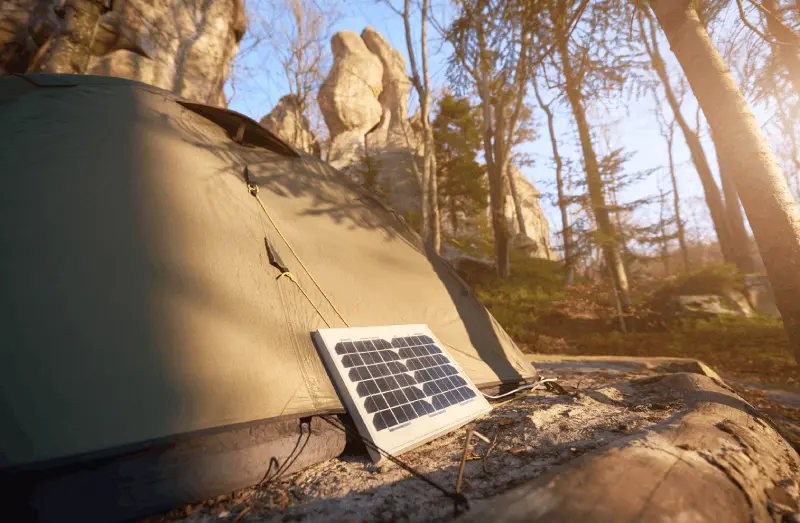
Is Using a Solar Panel While Camping Really a Practical Solution?
Solar panels have become a modern lifesaver, especially for those who camp for extended periods and far from the city. Converting energy from the sun into electricity in places where finding a power outlet is impossible sounds fantastic. However, the practicality of this system is directly related to your expectations and the capacity of the equipment you carry with you. If lightweight is a priority for you, you should prefer foldable models that can be hung on a backpack instead of massive panels. Solar panels can meet your energy needs not only during the day but also throughout the night with a proper energy storage strategy. The installation of these systems takes seconds and their silent operation does not disturb the peace of nature. As a result, when the right equipment is chosen, solar panels are an extremely functional and environmentally friendly solution that completely transforms the camping experience.
Should You Prefer Portable Foldable Panels or Flexible Panels?
When choosing a panel for campers, two main options emerge: foldable rigid framed models and thin, flexible panels. Foldable panels generally have higher efficiency because the cell quality used is usually "monocrystalline." You can easily position these panels in front of your tent or on a rock. On the other hand, flexible panels are popular among trekkers as they allow charging while walking, especially when hung on a backpack. However, the heat dissipation capacity of flexible panels is lower, and the efficiency of the heated panel decreases. If you will stay stationary at the campsite, the sturdiness and high efficiency of foldable panels will satisfy you more. However, if you are a constantly moving backpacker, flexible models become an indispensable option due to their lightweight and ergonomics. Since both types have advantages depending on their intended use, you should analyze your camping style before making a decision.
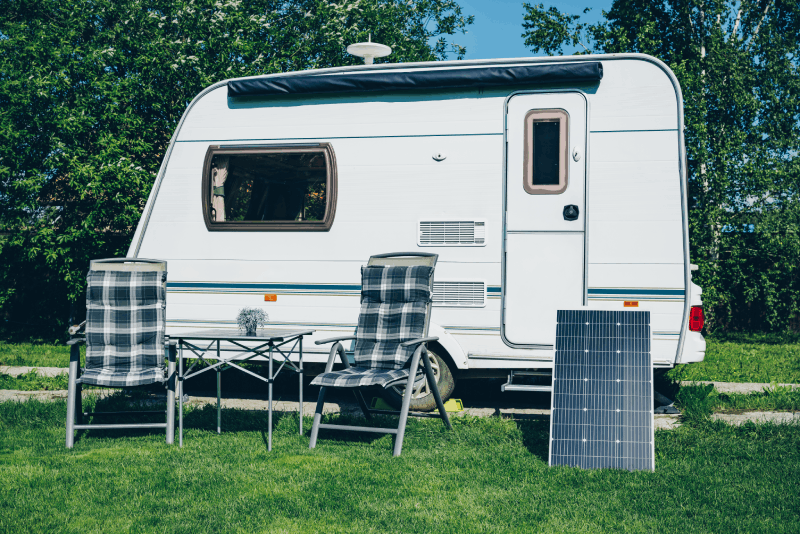
Is It Possible to Charge a Phone in Cloudy Weather?
One of the most curious topics for many campers is whether the panels work on days when the sun is not directly visible. Solar panels do not become completely inoperative in cloudy weather, but their production capacity drops significantly. Since clouds scatter sunlight, the number of photons reaching the panel surface decreases. This situation can cause a 21W capacity panel to produce only 2-3W of energy in cloudy weather. Although modern panels have the ability to capture "diffuse light," the charging speed will visibly slow down. Smartphones are sensitive to current fluctuations, so they may completely stop charging when low current is detected. Therefore, instead of connecting the phone directly to the panel in cloudy weather, it is much safer and more efficient to first store the energy in a power bank and then charge the phone from there. Cloudy weather is an obstacle, but it can be overcome with the right strategy.
How Does the Watt Value of the Panel Affect Your Phone's Charging Speed?
The "Watt" value that you encounter when purchasing a solar panel represents the maximum power it can produce under ideal conditions. For example, a 14W panel is suitable for entry-level use but may struggle to charge today's high-capacity battery phones. Panels rated at 21W or 28W are considered the "gold standard" for camping. This is because the panel does not always operate at 100% efficiency; factors such as dust, air temperature, and angle of incidence reduce power. A 21W panel can reliably provide the 5V/2A (10W) current your phone needs, even if efficiency losses occur. In lower wattage panels, the charging time will increase, as the energy consumed by the phone's screen while it is on may exceed the energy being charged. Therefore, it would be wise to aim for the highest watt value your budget allows for a fast charging experience and the ability to charge multiple devices simultaneously.
Should You Charge Directly with a Solar Panel or Use a Power Bank as an Intermediary?
Connecting the panel directly to the phone may seem like the quickest way, but this method can be risky under camping conditions. When a cloud passes in front of the sun or a tree branch casts a shadow, the voltage can suddenly drop. Some phones stop charging when they detect this drop and do not restart charging even when the sun comes back out. To prevent this situation, the "buffer battery" concept should be used. The irregular energy from the solar panel is transferred to a power bank; the power bank can tolerate these fluctuations and store the energy inside. Then, when evening comes or the sun goes down, you can draw a stable and safe current from the power bank to your phone. Additionally, using a power bank prevents your device from overheating by staying under the sun. From the perspective of device safety and energy continuity, having a power bank in between is always the most professional approach.
How Many Watts Should a Panel Installation Have for Lighting Systems?
Camping lighting typically consists of low-power LED bulbs. An average tent interior light or camping table lamp consumes between 2-5W of power. If you are only going to charge these types of devices, even a small 10-15W panel will suffice. However, if you plan to have lighting that will last all night at the campsite, you will need at least a 10,000 mAh power bank to store this energy during the day and a 21W panel that can charge this bank in a few hours. Although many modern camping lamps have small solar panels on them, the surface area of these panels is so small that it can take up to 20 hours to fully charge. Therefore, powering USB-rechargeable lamps through a central panel is a much more sustainable lighting strategy. When determining your lighting needs, you should also consider the lumen value of the LEDs used and the total operating time.
How Much Does Tree Shade Reduce Efficiency in Forested Areas?
It is quite difficult to get efficiency from a solar panel while camping in a wooded area. Solar cells are connected in series or parallel; even a small corner shaded by a leaf can reduce the entire panel's production by more than 50%. This is called the "hotspot" effect and can damage the panel cells in the long run. When using a panel in forested areas, it is essential to track the shade. You should constantly adjust the position of the panel by observing the sun's movement throughout the day. If you are under a dense forest canopy, you should place the panel in an open area that sees the sky at the widest angle possible between the trees or, if available, near the water's edge. A panel that remains in complete shade will produce almost zero energy. Therefore, it may be more practical for forest campers to extend their panels to a sunny clearing with a long USB cable or rely on high-capacity power banks.
Is Energy Stored During the Day Sufficient for Night Lighting?
The biggest handicap of solar energy is that the time we need it (night) is different from the time it is produced (day). However, this situation can be turned into an advantage with the right energy management plan. A quality 21W panel can fully charge a massive 20,000 mAh power bank within 6-7 hours on a sunny day. This capacity can power a standard camping lamp for more than 30 hours at maximum brightness and for a week on low mode. Additionally, you can also charge your phone 3-4 times with the same energy. So, the energy you store during the day will be more than enough not only for one night but also for the next day if it will be cloudy. The important thing is to never miss the hours between 11:00 and 15:00 when the sun is at its highest and to operate the panel at maximum efficiency during these hours. If you manage your energy budget correctly, the risk of being left in the dark will be eliminated.
How Should Maintenance Be Done to Extend the Life of Solar Panels?
Solar panels are quite durable as they do not contain moving parts, but they need to be protected from external factors. Dust, pollen, bird droppings, or fingerprints that accumulate on the panel's surface reduce efficiency by preventing sunlight from reaching the cells. Gently cleaning the panel surface with a microfiber cloth and a small amount of pure water before each use can increase efficiency by 10-15%. Additionally, overheating of the panels is also a factor that reduces efficiency; it is important to position the panel in a way that allows airflow behind it. The cable entries should not be left in humid environments to prevent oxidation, and when you finish using the panel, you should fold it and store it in a cool place that does not receive direct sunlight. Quality panels with PET or ETFE coatings are resistant to scratches but should still be kept away from sharp objects. These simple maintenance routines can comfortably extend the life of a solar panel to 10-15 years.
Do Panels Get Damaged While Being Transported in a Backpack?
Foldable solar panels are usually covered with fabrics that are close to military standards in durability (Canvas or Oxford fabric). However, the silicone cells inside the panel are fragile. When placing the panel in your backpack, you should not put heavy camping stoves, cast iron pans, or sharp-tipped tools on top of it. It is best to place the panel in a flat section close to the back of your backpack to maintain weight balance and prevent breakage. If the outer surface of the panel is not protected with quality laminated material, abrasions inside the bag can cause the surface to become dull. This dullness can affect the efficiency by impacting the light transmission. The safest method is to carry the panel in its own case or between soft clothing to protect it from potential impacts. Although modern designs are generally impact-resistant, even if cell cracks are not visible, they can permanently reduce the panel's output power.
Is It Possible to Get Efficiency from Solar Panels in Winter Camping?
A common misconception is that solar panels work better in hot weather. In fact, solar panels operate much more efficiently in cold weather; as the internal resistance increases with temperature, their efficiency decreases. The main problem in winter camping is not the temperature but the low angle of the sun in the sky and the short duration of daylight. The reflection on the snow (albedo effect) can significantly increase the amount of light reaching the panel by providing extra illumination. However, since the sun's rays appear to be lower in winter, it is crucial to position the panel at a steep angle facing directly towards the sun rather than laying it flat on the ground. Additionally, since battery performances drop in winter, you should keep the power bank or phone you are charging inside an insulated bag or next to your sleeping bag. In summary, if the sky is clear, using a solar panel in winter camping can be even more efficient than in summer camping.
Do Smart Phones' Sensitive Circuits Get Damaged by Solar Current?
In older generation solar panels, the absence of voltage regulators made direct charging dangerous. However, today's quality "portable solar chargers" are equipped with internal voltage stabilizing chips. These chips stabilize the fluctuating energy from the sun to a standard 5V level coming out of a USB port. Still, in very cheap and unbranded panels, this protection circuit may be inadequate, and sudden voltage spikes can damage the phone's motherboard. Devices like iPhones are particularly sensitive to current quality and may display a "This accessory is not supported" warning. To ensure your safety, it is wiser to charge your smart devices from a quality power bank instead of connecting them directly to the panel. The power bank acts as a kind of insurance, protecting the sensitive circuits of your phone and providing you with a peaceful usage experience.
How Should the Angle Adjustment Be Made to Increase Panel Efficiency?
The only way to get maximum efficiency from a solar panel is for the sunlight to hit the panel surface at a perfect 90-degree angle. Simply leaving the panel flat on the ground may yield good results when the sun is overhead, but the efficiency can drop by up to 40% in the morning and after noon. When positioning the panel at the campsite, you should either place a support behind it or hang it from a branch to direct it towards the sun. Manually adjusting the panel's direction according to the sun's movement every couple of hours will ensure that you collect much more energy by the end of the day. Some advanced panels have a "solar alignment point"; with this small accessory, you can quickly find the steepest angle by looking at the shadow. Remember, even a 10% angle deviation can lead to a noticeable loss in production; therefore, making angle adjustments is not just a detail but the key to efficiency.
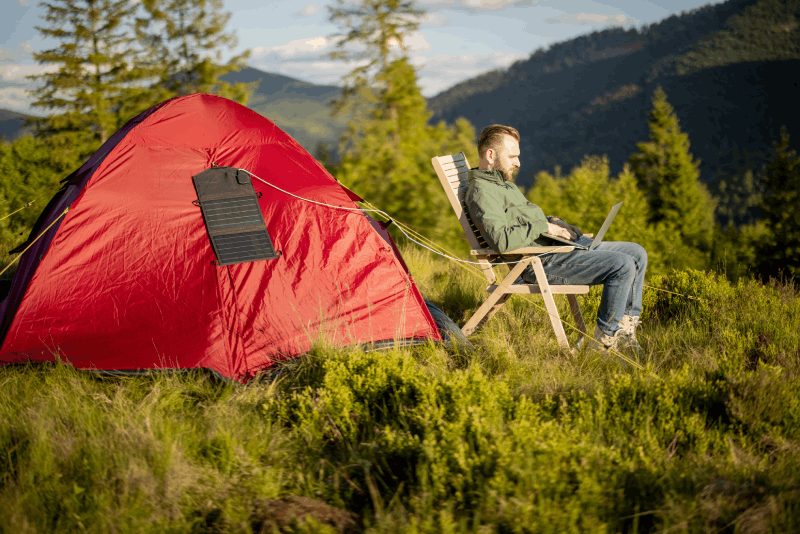
How Should the Distribution of USB Outputs Be for Charging Multiple Devices?
Panels rated at 21W and above typically have two or three USB outputs. However, the total power of the panel is fixed. For example, if you try to charge two phones simultaneously from a 21W panel, approximately 7-8W of power will go to each device. If one of the phones supports fast charging, it will charge much faster when plugged in alone, but when both devices are connected, they will switch to slow charging mode. The most efficient method is to first charge your main energy source, which is the power bank, alone, and then, when evening comes, power all other devices from that bank. If there is an emergency, you should prefer panels with smart distribution features; these panels can detect which device needs more energy and optimize the current accordingly. Prioritizing devices and charging them in order will help you use energy more efficiently.
Do the Costs of Camping Solar Panels Pay Off in a Few Camps?
Solar panels may seem like an expensive investment at first purchase. However, when a long-term cost analysis is done, the situation changes. If you frequently go camping and buy battery-operated lighting products or disposable energy solutions each time, the panel will quickly pay for itself. A quality panel set costs around $100-150. When considering the daily fees paid for electricity services at a campsite or the costs of broken/used-up batteries, your panel will be considered free after about 20-30 days of camping use. Additionally, the "freedom" it provides is invaluable; you can stay in even the most remote coves without experiencing energy issues without being tied to paid campsites. Solar energy is not only an economical choice but also an investment that symbolizes independence in the philosophy of camping.
What Are the Best Solar Solutions for Ultralight Camping?
In ultralight camping, every gram counts. In this discipline, 150-200 grams of single-cell or small flexible panels are preferred instead of larger foldable panels weighing 500-600 grams. Ultra-light panels between 7W and 10W are designed to provide just enough energy for emergency calls and GPS route tracking. These panels are usually sized to fit perfectly on the top flap of a backpack. Ultralight campers use the solar panel to support the phone's battery with a "trickle charge" method instead of combining it with a massive power bank. This way, while walking all day, the phone's charge can rise from 20% to 60%. If lightweight is your priority, you should minimize your energy needs and opt for the smallest quality panels that will only power essential devices.
Does Saltwater and Sand Damage Panels in Beach Camps?
Camping by the sea presents both an opportunity and a threat for solar panels. While the light reflected from the sea surface increases efficiency, saltwater vapor and fine sand particles can damage the panel. Salt can cause corrosion (rust) at the metal connection points and USB ports on the panel. Sand can scratch the surface of the panel, reducing its light permeability. It is vital to choose panels with an "IP67" or higher waterproof and dustproof certification in these environments. After use, the panel should be wiped with a very lightly damp cloth moistened with fresh water to remove salt crystals. Ensuring that the USB ports are covered and kept closed when not in use prevents sand from getting inside. Instead of laying the panel directly on the sand, it is safer to hang it on a chair or towel.
Are Solar Regulators (Charge Controllers) Necessary for Small Panels?
While charge controllers are mandatory in large caravan systems or home-type installations, the situation is a bit different for portable camping panels. Portable USB panels already contain a miniature 5V regulator circuit. Therefore, there is no need to carry an additional device. However, if you are setting up a system by connecting a 12V flexible panel to a battery, you must use a PWM or MPPT charge controller. Otherwise, the high voltage from the panel can short-circuit or blow up your battery. USB output camping panels designed with a "plug-and-play" concept spare the user from these technical details. If you are not setting up a professional energy system, choosing a quality brand with an internal regulator will save you from extra weight and hassle.
How Can the Efficiency Loss of Heated Solar Panels Be Prevented?
Solar panels need light, not heat. When a panel's temperature exceeds 25 degrees, efficiency decreases by approximately 0.5% for each degree increase. Especially in summer, a panel exposed to the sun can reach temperatures of 60-70 degrees, resulting in a 20% power loss. To prevent this loss, you should leave an air gap behind the panel. Instead of placing the panel directly on a hot rock or car hood, elevating it or hanging it from a branch allows airflow behind it, keeping the panel cool. Additionally, instead of placing the phone or power bank you are charging in the shadow pocket behind the panel, keeping them completely in the shade or in a cool bag with the help of a long cable will prevent the devices from overheating and stopping charging. The cooler your panel stays, the more electron movement and thus more energy production will occur.
Are Integrated Solar Systems for Camping Lamps More Advantageous Than External Panels?
Camping lamps with small solar panels on them are very common in the market. These products are easy to carry because they are "all-in-one," but their performance often leads to disappointment. The panel area on these lamps is only about the size of a palm, and they may need to receive uninterrupted sunlight for 2-3 days to fully charge. This situation is generally designed for "emergency charging." On the other hand, using a quality camping lamp charged via USB with an external and powerful solar panel is a much more professional approach. An external panel can fully charge the lamp in 1-2 hours. Integrated systems should only be considered as a backup solution for short weekend camps and light lighting needs. In long-term stays, the power of an external panel is always superior.
Why Do Solar Panels Charge Faster at High Altitudes?
Those at high altitudes often notice that solar panels work much more effectively. There are two main reasons for this: the thinning of the atmosphere and the lower air temperature. As you ascend, the layer of atmosphere that sunlight must pass through becomes thinner and is filtered less, meaning that UV rays and photon density increase. Additionally, the freezing cold at high altitudes prevents the solar panel from overheating, keeping its efficiency at its peak. Thus, at altitudes of 3000-4000 meters, you can receive 20%-30% faster charging with the same panel compared to sea level. However, the intense radiation at high altitudes can cause panels with low-quality plastic coatings to deform and yellow more quickly. Therefore, in mountaineering activities, high-durability panels with ETFE coatings should be preferred. Solar energy at the summit is the strongest ally against the capacity loss of batteries due to the cold.
How Much Do Dust and Pollen Layers Hinder Energy Production?
Especially during spring months or in arid regions, a thin layer of dust or pollen accumulates on the panels. This fine layer, which is not visible to the eye, can reduce panel efficiency by 10% to 25%. Dust particles prevent sunlight from reaching the cells by reflecting or absorbing the sunlight. If you are spending a windy day at the campsite, shaking the panel lightly or cleaning it with a brush every few hours will instantly increase the charging speed. While it may be tempting to clean the panel by pouring water on it, if the water is hard, it can leave mineral stains on the surface when it dries, worsening the situation. Therefore, it is best to use pure water or lens cleaning cloths during the cleaning process. A clean panel not only looks better but also makes a significant difference in gaining extra phone charges.
How Does Panel Selection Differ Between Caravan Camping and Tent Camping?
In caravan camping, where space and weight issues are less of a concern, larger fixed or semi-flexible panels between 100W-200W are generally preferred. These systems power the caravan's deep cycle battery and can operate high-power devices like refrigerators and water pumps. In tent camping, portability is everything. Here, foldable portable panels rated between 21W-28W come into play. While caravan systems require more complex wiring and charge control units, tent-type panels offer direct USB output. If you have a caravan but sometimes set up a tent away from it, you can establish hybrid systems that meet both needs; that is, having a fixed panel on the caravan while also carrying a small portable panel in your bag. Both disciplines benefit from the sun, but engineering and capacity expectations differ completely.
Are LiFePO4 Batteries Compatible with Solar Panels?
In recent years, Lithium Iron Phosphate (LiFePO4) batteries have become popular among campers as the ideal storage units for solar panels. Although they are heavier than standard lithium-ion batteries, they offer 10 times more charge cycles and are much safer (the risk of fire or explosion is lower). They can handle the irregular current from solar panels very well and do not get damaged in deep discharge (using the battery down to 0%). If you are using a small "power station" (portable power station) at the campsite, you should ensure that the battery type inside is LiFePO4. Charging these stations with energy from solar panels allows you to power not only your phone but also a small fan or projector. For tech-savvy campers, the combination of solar panels and LiFePO4 represents the highest level of energy solution in nature.
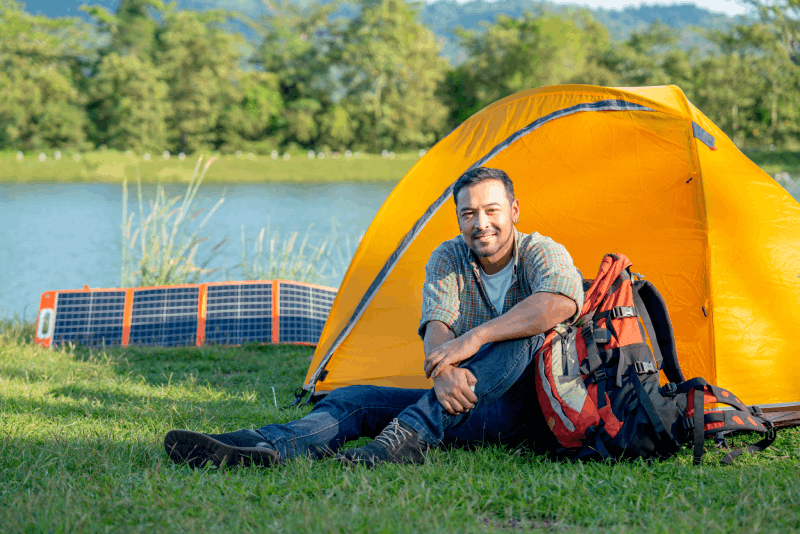
How to Plan an Energy Budget in a Camping Day?
Energy management at the campsite should be planned just like water management. You should calculate your daily consumption on your camping day. A smartphone consumes about 10-15 Wh (Watt-hours) of energy. Let's assume you need 40-50 Wh of energy daily for two phones and a flashlight. If a 21W panel produces an average of 12W per hour with efficiency losses, you will need about 4-5 hours of quality sunlight to meet this need. Setting up the panel during breakfast and charging the power bank until dinner is the best way to balance the budget. If the weather is cloudy, you should limit phone usage, reduce screen brightness, and only turn on navigation when necessary. If you plan your energy budget in advance, you won't face surprises and won't experience the stress of being left in the dark.
What Are the Psychological Reasons for Choosing Solar Panels Over Noisy Generators?
Our purpose for going into nature is often silence and peace. While gasoline generators can quickly solve energy needs, the noise and exhaust fumes they produce are completely contrary to the spirit of camping. Solar panels, on the other hand, are completely silent; while you listen to the sounds of birds or read your book, they quietly move electrons. This silence does not break the camper's connection with nature and provides the peace of knowing that it does not harm the environment. Additionally, using solar energy makes you more in harmony with the cycle of nature (the rising and setting of the sun). Psychologically, getting your energy directly from nature gives you a greater sense of self-sufficiency. Solar panels, as a silent, clean, and sustainable energy source, are not just a technical choice but also an ethical and aesthetic lifestyle choice.
How Reliable Is Solar Energy for Emergency Signaling Devices?
In extreme camps where there are life-threatening risks, emergency signaling devices (Spot, Garmin inReach, etc.) that work via satellite are among the most important equipment. The batteries of these devices running out can eliminate your chance of calling for help. Solar panels are a critical backup system in this regard. Most signaling devices consume very little energy; therefore, even the smallest solar panels are sufficient to keep these devices alive. However, relying solely on a solar panel for reliability is a mistake; you should always have a fully charged backup battery with you. The solar panel should be used to recharge that backup battery. In harsh weather conditions (snowstorms, heavy rain), since the panel will not work, you should store and save your emergency energy during the times when the sun is out. When used correctly, solar energy can be the thin line between life and death in emergencies.
Is There a Performance Difference Between Locally Produced Camping Panels and Imported Products?
In Turkey, with the development of camping culture in recent years, local solar panel brands have started to emerge. Since the production of solar cells requires a significant investment, most cells from both local and imported brands are sourced from a few global manufacturers (usually from China, Taiwan, or the USA). The main factors determining performance differences are stitching quality, the efficiency of the regulator circuit used, and the external coating of the panel. Some quality local brands can stand out with local service support and price advantages. However, in very cheap imported products, the stated "Watt" values often do not reflect reality. When making a choice, you should look not only at the brand's origin but also at user reviews, cell efficiency rates (ideally 22% and above), and warranty conditions. A well-designed local panel can comfortably showcase the same performance as its global competitors.
What Will Be the Role of Flexible and Transparent Panels in Future Camping Technologies?
Solar energy technology is rapidly evolving. In the future, we will see more "smart textiles" products where the tent fabrics themselves will serve as solar panels. This way, you won't need to carry an external panel, as your tent will collect energy throughout the day. Additionally, the developing "perovskite" type solar cells may be much lighter, more flexible, and even transparent compared to today's silicon panels. This technology will allow us to generate energy without even realizing it while we are on the move, by integrating it into our clothing or backpacks. Transparent panels will also allow phones to charge themselves by being placed over the screens. The future of camping promises an experience where technology seamlessly integrates with nature, completely eliminating energy issues.
Is It a Dream to Establish a Sustainable Life in the Wild with Solar Panels?
Living in the wild, completely independent of the outside world ("off-grid" living) is a dream for many campers and adventurers. Solar panels are a crucial building block of this dream. At this point, with a powerful panel set and high-capacity lithium batteries, it is possible to access the internet, cook, and heat (within certain limits) in the middle of nature. However, this is not just about having the equipment; it also involves "energy literacy." Learning to use the limited energy that nature provides you in the most efficient way requires changing your consumption habits. For a sustainable life, solar panels provide you with the electricity you need; however, the thing that will make this freedom sustainable is your planning ability and respect for nature. Living in the wild with solar panels is not a dream but a reality that can be realized with the right knowledge and equipment.
This guide covers all the technical and practical details about using solar energy while camping. With the right equipment selection, you too can meet your energy needs in nature with the sun, allowing for a freer and more sustainable camping experience. Remember, the best energy source is not what you carry with you, but the sun that rises in the sky every day.
Do Solar Panels Work for Charging While Camping?
When you embark on a journey into the heart of nature, running out of charge on your phone, which is your only connection to civilization, or having your camping lamp go out in the dark is not just a comfort issue but also a safety concern. While solar panels promise to solve this problem, many users can't help but ask, "Do they really work, or is it just a marketing gimmick?" Here are the details about the performance of solar panels in camping, from the perspective of a content strategist.
Is It a Dream to Charge a Phone 100% in Cloudy Weather?
Many campers think that a solar panel will only work under a bright blue sky. However, in real-world conditions, the weather is not always clear. In cloudy weather, the efficiency of the panel can drop between 10% and 25%. If you do not have a high-efficiency monocrystalline panel next to you, you may witness that the charging level of your phone does not increase but only maintains its current level. This situation arises from the current drawn by your device being more than what the panel produces. Therefore, in cloudy weather, it is much more logical to charge a power bank instead of connecting the phone directly to the panel and store the energy there.
Will Connecting the Phone Directly to the Panel Burn the Motherboard?
This is one of the biggest fears of every camper with technical knowledge. Solar panels produce variable voltage depending on the intensity of the sun. If your panel does not have a quality voltage regulator (usually found in the box where the USB output is), a sudden drop and rise in voltage during a cloud passage can damage the sensitive circuits of your phone. Modern and branded panels use circuit breakers to balance this fluctuation; however, cheap and low-quality products lack this protection. To minimize the risk, it is vital to first send the current to a power bank unit and charge your phone from a stable source.
Will Rain on the Panel Cause a Short Circuit?
You can get caught in a storm at any moment in nature. Most camping-type solar panels are marketed as "water-resistant" (IPX4 or IPX5), but this does not mean they are completely waterproof. The surface of the panel is usually coated with PET or ETFE to repel water, but the area where the USB output ports are located is the weakest point. If water gets into these ports during rain, it can cause a short circuit, potentially damaging not only the panel but also your phone connected at that moment. Therefore, if you plan to leave the panel outside in rainy weather, you must ensure that the connection points are in a waterproof case.
Can I Get Efficient Energy While Walking with Panels Hung on My Backpack?
Many advertisements show panels hung on backpacks, depicting hikers walking in nature. However, the physical reality is a bit different. For solar panels to work efficiently, they need to receive sunlight at a vertical angle (90 degrees). As you walk, the backpack sways, and as you enter tree shadows, the angle of the panel constantly changes. This intermittent current can cause devices like iPhones to display the message "This accessory is not supported." If you want to get efficiency from the panel while walking, it must be secured and the shadow transitions must be minimized; otherwise, at the end of a 5-hour hike, you may only achieve a 5% charge.
Does the Panel's Efficiency Decrease If It Gets Too Hot?
Paradoxically, solar panels do not like hot weather. A standard solar panel achieves its highest efficiency at 25 degrees Celsius. In hot summer weather, a panel exposed to the sun can reach temperatures of 60-70 degrees. This increase in temperature can raise the internal resistance of half-conductive cells, reducing energy production by up to 20%. If you place your panel on the sand or in a location without airflow, you will experience efficiency loss due to overheating. Positioning the panel slightly elevated to allow airflow behind it is a small but effective trick to maintain efficiency.
Can Electricity Be Produced from the Panel with Light Inside the Tent?
This question is often asked by users who do not want to go outside during winter camping or stormy days. The short answer: No. Solar panels convert the energy of light particles called "photons." The fabric of the tent or a window glass absorbs a significant portion of these photons. Even a panel behind a transparent nylon will lose half of its efficiency. Artificial lights in enclosed areas (flashlights, camping lamps) do not have wavelengths that can activate the panel's cells. If you want energy, there should be no obstacles between the panel and the sky.
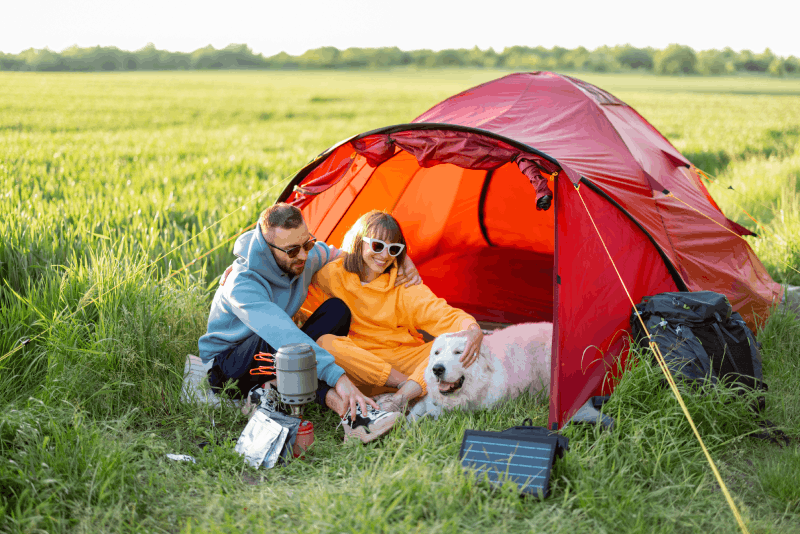
Can I Spend the Night with Just the Panel Without a Power Bank?
A solar panel is not a battery; it is just a generator. From the moment the sun sets, energy production drops to zero. If you do not transfer the energy you produced during the day to a storage unit (power bank or portable power station), you will be left with just a shiny plate at night. In camping, what is referred to as a "Solar System" is actually the combination of "Panel + Storage." Relying solely on the panel is like having kitchen supplies without any food. For lighting and phone charging at night, you must have at least a 10,000 mAh power bank charged throughout the day.
Do Cheap Chinese Panels Drain Your Phone's Battery Life?
Solar panels sold at very low prices on the market often contain "inefficient polycrystalline" cells and low-quality charge control circuits. The current provided by these devices is "dirty" current; that is, the amperage and voltage values fluctuate significantly within seconds. Lithium-ion batteries in smart phones hate these fluctuations. The constant starting and stopping of the charging process disrupts the chemical structure of the battery and quickly depletes the "charge cycle" count. In the long run, you may see your phone's battery health drop from 90% to 70%. The difference you pay for a quality panel is actually less than the cost of replacing your phone's battery.
Does Saltwater Vapor from Beach Camps Damage the Panel?
Microscopic salt particles suspended in the air at beach camps are the biggest enemy of electronic devices. The layer of salt that accumulates on the surface of the solar panel over time not only prevents the absorption of sunlight but also causes corrosion (rust) at the connection points of the panel. If you do not wipe your panel with a damp cloth moistened with fresh water every evening, you may find that the connection cables are corroded and not making contact by the end of the season. Especially in foldable fabric panels, saltwater can penetrate the fabric's texture, leading to a loss of flexibility and breaking of the cells.
Will the Panel on Top of the Caravan Fall Off While Driving?
The biggest fear of amateur campers trying to secure portable panels on top of their caravans is wind resistance. The air pressure on a panel on a vehicle traveling at 80-90 km/h is tremendous. If the panel is only held with magnets or simple suction cups, it can fly off in a jolt or in the airflow created by an oncoming truck. This not only poses a financial loss for you but also invites a potentially fatal accident for vehicles behind you. In caravan setups, professional mounting feet and adhesives should always be used, and portable panels should be brought inside while the vehicle is in motion.
Does the Charging Speed Decrease If the Panel's Cable Is Long?
While this may seem like a logistical detail, it relates to the fundamental laws of electricity. Solar panels typically produce low-voltage (5V-12V) DC current. As the distance of the cable increases, DC current encounters resistance, leading to voltage drop. If you place your panel under the sun and use a thin 5-10 meter USB extension cable to sit in the shade, the energy reaching your phone may decrease so much that the charging process may not occur. For maximum efficiency, the cable between the panel and the device should be as short and thick (high-quality copper) as possible. If a long distance is necessary, higher voltage (like 18V) panels should be preferred.
Will the Panel Provide Light for Someone Coming Late at Night?
For a friend returning to camp after a nature walk, the solar panel cannot provide any light at that moment. Even if there is a small LED indicator on the panel, it only means "energy is being produced." Some new generation panels have small internal batteries, but these usually only store enough energy to provide an emergency signal. If you plan to return to the campsite late, you should have used the panel during the day to charge a camping lamp. The panel is not a flashlight; it is a refinery that prepares the fuel (electricity) for the flashlight.
Does Dust and Pollen on the Panel Stop Energy Production?
While dust, tree pollen, and even bird droppings on the panel may seem harmless, they actually act like a black curtain drawn over the panel. A small leaf or bird droppings on a single cell can reduce the entire panel's efficiency by up to 50% (due to the series connection of the cells). The answer to the question "Why is my phone not charging even though it is sunny?" is often a dirty panel surface. You should always keep a microfiber cloth in your camping bag and gently clean your panel every morning. Using harsh cleaning materials can scratch the panel surface and lead to permanent efficiency loss by damaging the cells.
Do Foldable Panels' Cables Break at the Hinges?
The weakest point of foldable panels designed for portability is the folding lines. The thin cable lines passing through these areas can suffer from metal fatigue over time due to constant opening and closing, leading to internal breaks. While the panel may appear solid from the outside, if it does not produce current from some sections, the total output power will decrease. To avoid this logistical issue, always fold the panel gently, do not place heavy loads on it, and avoid sudden movements in cold weather (when the material hardens). In unbranded products, the lifespan of this hinge is usually limited to 200-300 folds.
Do I Have to Constantly Rotate the Panel Towards the Sun?
If you leave the panel as you placed it in the morning, your production capacity will dramatically decrease in the afternoon as the sun's angle changes. When the angle between the sun and the panel drops below 45 degrees, energy production nearly comes to a halt. This is the fundamental mistake of users who ask, "Why is my panel slow?" For maximum efficiency, you need to manually adjust the panel's direction according to the sun's position every 2 hours. While this may seem like a chore, it is the only way to fill your battery during limited sunlight hours. If you do not have time for this, you should consider getting a panel that is twice the size of what you need to compensate for the loss.
Can the Panel Cause a Fire If It Gets Sunlight While Inside a Bag?
This is a critical question from a safety perspective. A solar panel starts producing energy as soon as it sees light. If the panel is inside a bag, folded, and positioned in a way that light can penetrate, the energy it produces will convert to heat since it cannot dissipate (unless a device is connected). The panel can overheat and may not pose a risk of igniting nearby synthetic sleeping bags or clothes, but it can damage its own circuits. Even more dangerously, if a power bank connected to the panel is inside the bag and cannot breathe, it may overheat and pose an explosion risk. Charging should always be done in a cool place with airflow.
Do Solar Panels Work in Snow?
Surprisingly, solar panels can sometimes work better in winter camps than in summer. The white surface of the snow reflects sunlight like a mirror (albedo effect), increasing the amount of light that reaches the panel. Additionally, cold weather ensures that the panel cells operate more efficiently. The only logistical challenge here is the low angle of the sun in the sky and the short duration of daylight. When using the panel on snow, you should not bury it in the snow; instead, support it with a small mat and continuously clean the snowflakes that fall on it. A heated panel can melt the snow and cause water to seep underneath, which brings the risk of freezing.
Does Hanging Towels on the Panel Affect Charging?
Camping space is limited, and every sunlit area is precious. However, placing a damp towel on the panel can instantly turn that device into a non-functional piece of plastic. Shading only a portion of the panel's cells can cause localized heating known as "hotspot" effects. This can damage the internal structure of the panel. Additionally, moisture from the towel can seep into the electronic circuits, leading to oxidation. The thought that "the sun is out, the towel will dry, and the phone will charge" can lead to the failure of both processes. The panel should always be kept clean, unobstructed, and in an open area.
How Many Phones Can the Panel Charge in a Day?
This entirely depends on the watt value of the panel and the number of sunny hours during the day. For example, a quality panel rated at 21W typically provides an average of 1.5 - 2 Amper of current per hour under ideal conditions. A standard smartphone battery (4000 mAh) can fully charge in approximately 3-4 hours at this rate. So, on a perfect summer day, you can charge 2 phones from morning to evening, or if you push it, 3. However, to be realistic; considering shadows, openings, and losses, it is considered a success for a panel to fully charge a large power bank and one phone in a day. You should adjust your expectations according to this reality.
Can People with Pacemakers Use Solar Panels?
Solar panels generate electricity statically and do not emit a large electromagnetic field (EMF) around them. The radiation emitted by a solar panel is much lower than that of the smart phone you carry or a Bluetooth speaker at the campsite. Therefore, they do not pose a direct health risk for users with pacemakers. However, caution should be exercised when near charge control units and inverters (if a large system is being used), and the safety warnings in the device's technical manual should be read. When it comes to health, it is more accurate to focus on the magnetic fields created by the connected electronics rather than the panel itself.
Can the Panel Continue to Work If Its Glass Breaks?
The glass of rigid-surfaced panels can crack due to falling or impact. If the crack is superficial and the cells are undamaged, the panel can continue to function. However, even the slightest moisture seeping through the crack will cause the cells to oxidize and die in a short time. Additionally, cracked glass can misdirect the light, reducing efficiency. Flexible (flexible) panels do not crack, but internal cell breaks can occur. If you notice visible damage on your panel, you should avoid using it in humid environments and, if possible, cover it with a transparent, heat-resistant tape to prevent water seepage. However, this is only a temporary solution.
Will the Panel Work If I Place It Next to Me While Sunbathing?
One of the most "human" logistical challenges is the risk of theft. Solar panels are expensive and attractive products. Leaving the panel in the open while you go to the beach in a crowded camping area invites the device to "get up and leave." Some campers try to hide the panel under the tent, but this reduces efficiency. The safest method is to connect the panel to a power station and place the station inside the tent or a locked box while keeping the panel outside with a long cable. Writing your contact information on the panel with an indelible marker may also deter potential thieves.
Is It a Long-Term Investment or Will It Become Trash in 2 Years?
The cell life of a quality monocrystalline panel is 20-25 years. However, in camping-type portable panels, the problem arises not from the cells but from the outer coating material. Cheap panels with PET coatings will yellow, dull, and lose efficiency after 2-3 seasons under the sun. Panels with ETFE coatings are much more durable and can maintain their performance for up to 10 years. Therefore, choosing the "cheap" option will actually lead to the cost of buying a new panel every 2 years. If you are a professional camper, investing in the best coating and cell technology from the start will be much more economical in the long run.
Is It Worth Buying a Solar Panel for Camping?
Considering all these details, solar panels do not promise "unlimited energy" in nature; they only offer "sustainable support." If you are camping for more than 2 days, and your phone is a navigation and safety tool for you, and you are walking kilometers every day, a quality solar panel is definitely lifesaving. However, if your expectation is to charge your devices instantly with the comfort of a home outlet, you may face disappointment. With the right equipment selection (ETFE coating, monocrystalline cells), a good storage unit (quality power bank), and a bit of patience, solar energy will become your most loyal friend in camping.