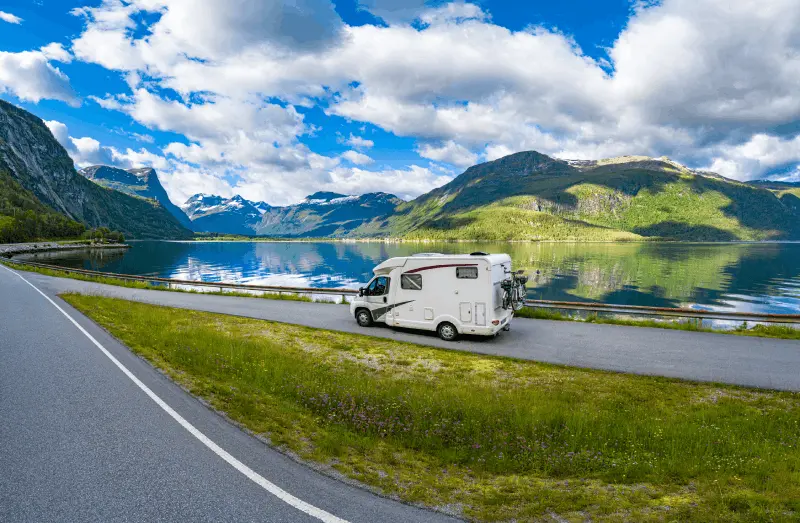
What Does Traveling Abroad with a Caravan Mean for Your Freedom?
Traveling abroad with a caravan is a unique form of freedom where many travelers can wake up to a different view every morning without being tied to hotel reservations. However, this freedom comes with a series of serious planning and legal responsibilities. Traveling by caravan from Turkey to Europe or neighboring countries does not end with just determining the route; your vehicle and your legal status must comply with international standards. Among the most frequently asked questions during this process are Green Insurance and international driving license requirements. In this guide, we will examine all the details that a caravanner needs to know to travel safely without getting stuck at the border or facing penalties. Overcoming bureaucratic obstacles in advance is crucial to enjoy your journey.
What is Green Insurance (Green Card) and Why is it Necessary?
Green Insurance, officially known as the International Motor Vehicle Insurance Certificate, is a system that covers damages to third parties in accidents that may occur when you travel abroad with your vehicle. This system, which has been in place since 1953, is currently valid in 48 countries, and Turkey is part of this system. Obtaining Green Insurance when traveling abroad with a caravan is not just a safety measure; in many border crossings (especially in European countries), it is a mandatory legal requirement. Your traffic insurance in your own country is only valid within Turkey's borders; once you cross the border, you need this certificate for your vehicle to legally circulate in a foreign country. Otherwise, you may be denied customs clearance or forced to purchase very expensive local temporary insurances.
Should Green Insurance Be Obtained Separately for Caravans?
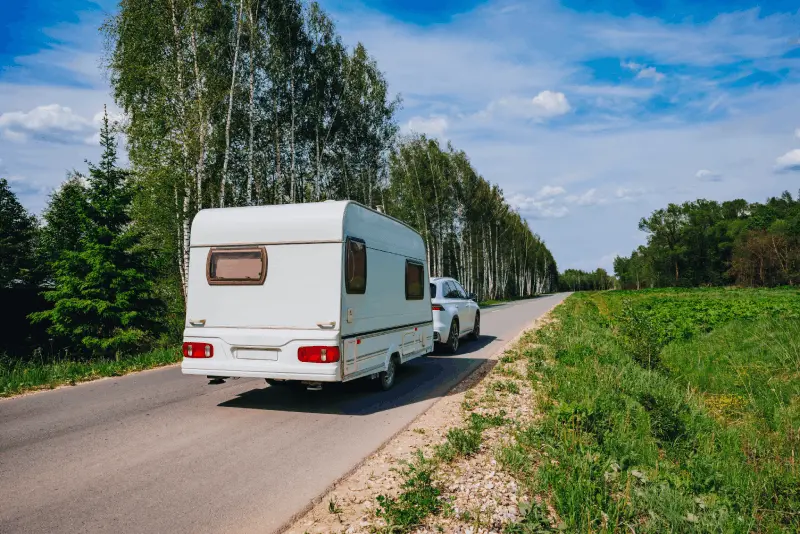
One of the most frequently asked questions by caravan owners is whether the insurance is separate for both the vehicle and the living area. If you are using a motorhome, a single Green Insurance policy is sufficient since your vehicle has only one registration. However, if you are using a trailer caravan, the situation is a bit different. Trailer caravans have a separate plate and registration from the towing vehicle, so some countries may require separate insurance for both the towing vehicle and the caravan. In practice in Turkey, the Green Insurance policy for the towing vehicle usually includes the term (trailer) or a separate certificate is issued for the caravan. To avoid issues at the border, you should ensure that the terms "Trailer" or "Caravan" are clearly stated in your policy and that both plates are registered in the system.
In Which Countries is Green Insurance Valid?
The Green Insurance system covers a wide geography, primarily including European Union countries, as well as Russia, Ukraine, Morocco, Tunisia, and Iran. If your route is to a European country such as Greece, Bulgaria, Italy, or Germany, Green Insurance is as important a document as your passport. However, it is essential to remember that not every country is included in this system. For example, Georgia is not part of the Green Insurance system; therefore, when entering Georgia with a caravan, you are required to obtain a local insurance specific to that country at the border. Similarly, there may be countries that are excluded from the system or have been suspended. Checking the current list of countries you will visit on the Turkey Motor Vehicle Bureau website just before your trip will protect you from surprises at the border.
How are Green Insurance Fees Determined?
Green Insurance fees are not determined according to free market conditions but are applied based on standard tariffs set by the Turkey Motor Vehicle Bureau. These fees are generally calculated in foreign currency (Euro), but payment is made in Turkish Lira based on the exchange rate of that day. The main factors determining the price are the type of vehicle (car, van, motorhome) and the duration of the insurance. Motorhomes can generally be priced differently according to the "Car" or "Van" classification. For trailer caravans, an additional premium for the trailer is paid. Different duration options such as 15 days, 1 month, 3 months, or 1 year are available. Obtaining a policy that lasts a little longer than your travel duration eliminates the risk of being uninsured in case of possible delays.
How Should the Duration of Green Insurance Be Selected?
When selecting the insurance duration, you should consider not only the planned holiday duration but also possible setbacks. For example, if you are planning a 10-day tour in Greece, you may prefer the shortest duration policy of 15 days. However, if you are embarking on a long trip like a European tour, 3-month or annual policies may be more economical. It is recommended that the insurance duration continues for at least one week after the end date of your trip. Because you may encounter situations such as vehicle breakdowns, road closures, or decisions to extend the route during your journey. It is illegal for a vehicle with an expired policy to enter traffic in a foreign country, and if detected, your vehicle may be impounded or you may face very heavy fines.
What is an International Driving License (International Driving Permit)?
An International Driving License is essentially a multilingual translation of the driving document you hold in your own country and a certification that has international validity. It is mandatory for travelers who have an old type (non-chip) Turkish driving license to obtain this document when traveling abroad. This document confirms the class of your driving license and your authorization to operate a vehicle in 10 languages, making it easier for foreign police and customs officers to understand the document. Hello. However, International Driving License alone is not sufficient as an identity or driving license; it must be carried together with your original driver's document. The document is generally valid for 1 year and is issued by the Turkish Touring and Automobile Association (TTOK).
Are New Type Turkish Driving Licenses Valid Abroad?
The new type, chip-enabled Turkish driving licenses, which started to be issued from 2016 and contain codes in accordance with European Union standards, have eliminated the requirement for an International Driving License in many countries. Since the information on these licenses is in international standards, they are directly accepted in most countries that are parties to the Vienna Convention. However, there is a critical point here: Although these new type licenses are accepted without issues due to bilateral agreements with neighboring countries like Greece and Bulgaria, some countries may still require additional translation or international permits due to their local laws or to avoid issues during police checks. Nevertheless, if you have a new type license, you are considered exempt from the cost of an international driving license in most parts of Europe.
Which Countries Require an International Driving License?
If you are still using the old pink license, it is mandatory to obtain an International Driving License in almost all countries worldwide. However, even if you have a new type license, especially countries outside of Europe (for example, some Middle Eastern or Far Eastern countries) and states not included in the Vienna Convention may insist on this document. In countries like the United States, although rules may vary by state, a Turkish license is generally sufficient for short-term tourists. For campers, the most critical point is the countries you transit through. The driving license regime may differ in each country you pass through. Therefore, it is vital to check the current driving license requirements on the TTOK or the consulate websites of the country you will be visiting before traveling.
Where Can You Obtain an International Driving License?
The authority to issue an International Driving License (International Driver's Document) in Turkey belongs to the Turkish Touring and Automobile Association (TTOK). To obtain the document, you must apply in person at TTOK offices or use online application options. For the application, it is sufficient to have your original driving license, your Turkish ID number, and two photographs. The process is usually completed within the same day. The document has a validity period of one year and must be renewed each year. If you frequently travel abroad and have not switched to a new type license, it would be much more economical and practical to change your license to the new type instead of paying this fee every year.
What Class of License is Required to Tow a Caravan?
This is one of the areas that creates the biggest confusion for campers. If you are using a motorhome and the maximum weight of your vehicle is below 3500 kg (which most standard motorhomes fall into), a Class B license is sufficient both in Turkey and abroad. However, the rules change if you are using a trailer. If the weight of your trailer is below 750 kg, a Class B license is again sufficient. However, if your trailer exceeds 750 kg (which most equipped trailers do), you must have a Class BE license. During traffic checks abroad, the police will check the technical documents of your vehicle and trailer to determine whether your license is sufficient; in case of insufficient license, you may face heavy fines and risks such as the vehicle being impounded.
What Are the Document Differences Between a Motorhome and a Trailer?
Motorhomes are technically registered as "M1" class special purpose vehicles and have a single registration. Therefore, all documents (inspection, insurance, tax) are processed through a single vehicle. In the case of trailers, the classification changes according to "O1" (below 750 kg) or "O2" (above 750 kg). O1 class trailers are not subject to registration and separate license plates; only the plate of the towing vehicle is attached. However, when traveling abroad, this trailer must also have its invoice and technical compliance document with you. O2 class trailers are independent vehicles with their own registration, license plate, and inspection. In this case, both the vehicle's and the trailer's original registrations, insurances, and inspections must be complete. The customs officer will examine the documents of both vehicles separately.
Whose Name Should the Vehicle Registration Be Under When Traveling Abroad?
When traveling abroad with a caravan, the ownership of the vehicle is of great importance at customs crossings. Ideally, the vehicle registration should be in the name of the person driving or the person in the vehicle. If the vehicle is not in your name (for example, if it is in the name of a friend, your company, or a family member), you must obtain a notarized power of attorney for a specified period allowing you to take the vehicle abroad. This power of attorney officially documents that the vehicle owner has granted you permission to use the vehicle abroad. If the vehicle belongs to a rental company, you must also have the official permission document and rental agreement from the company. Some countries may require this power of attorney to be translated into the language of that country or to be in English.
Can You Travel Abroad with a Caravan Using a Power of Attorney?
Yes, it is possible to travel abroad with a caravan using a power of attorney, but the standards for this document are high. The power of attorney obtained from a notary must include the statement "Authorized to take the vehicle abroad, use it, and carry out insurance and customs transactions." Additionally, if a triptych or customs document is to be obtained from the Turkish Touring and Automobile Association, the name of this institution must also be included in the power of attorney. At some border crossings (especially in countries like Iran), the power of attorney may need to be approved by the consulate of that country or have an apostille certification. may be required. European countries generally consider a notarized and preferably translated power of attorney in English sufficient. However, due to ownership issues, it is necessary to complete this paperwork in advance to avoid waiting for hours at the border.
What Additional Documents Are Required for Caravans at Customs?
Passport, visa, registration, and insurance are the basic documents. However, some additional documents can be lifesavers while traveling with a caravan. For example, documents containing the technical specifications of solar panels, lithium batteries, or fixed valuable equipment in your caravan can eliminate the suspicion of "commercial goods" in some customs checks. Additionally, documents showing your vehicle's emission class (such as Euro 5, Euro 6) are required for applications for the "environmental sticker" needed to enter certain cities in Europe (for example, low emission zones - LEZ). Customs may also request declarations regarding whether your vehicle has a standard external fuel tank or whether prohibited substances are being transported. Preparing a complete "vehicle technical file" is a professional approach.
How Should the Route Be Planned When Touring Europe with a Caravan?
While Europe is a paradise for caravanners, you should prioritize logistical and legal factors when planning your route. It should not only be scenery-focused but also consider the frequency of caravan camps, the suitability of roads for caravan passage, and planning according to the caravan policies of the countries. For example, while "wild camping" is much freer in Scandinavian countries, staying outside of campgrounds in countries like Croatia or Italy can lead to serious fines. Additionally, narrow roads in mountainous areas can be risky for towing caravans. Using caravan navigation applications (like Park4Night, Campercontact) while planning your route helps you find safe accommodation points and guides you on roads suitable for your vehicle's dimensions.
Is Reservation Required at Caravan Camps?
The biggest advantage of traveling with a caravan is the ability to move spontaneously, but during the high season (June-August), it can become impossible to find a spot without a reservation in popular coastal areas of Europe. Especially in countries like the Netherlands, France, and Spain, popular campgrounds fill up months in advance. If you are traveling on a popular route, it is wise to book a spot online at least a few days in advance. However, it is generally easy to find spots in more inland or northern areas. Many caravanners prefer to make reservations for their first and last stops and leave the rest of the journey to chance. Still, you should also consider more affordable options like "Municipal Campsites" that usually do not require reservations.
What Are the Legal Aspects of Staying in a Caravan Abroad?
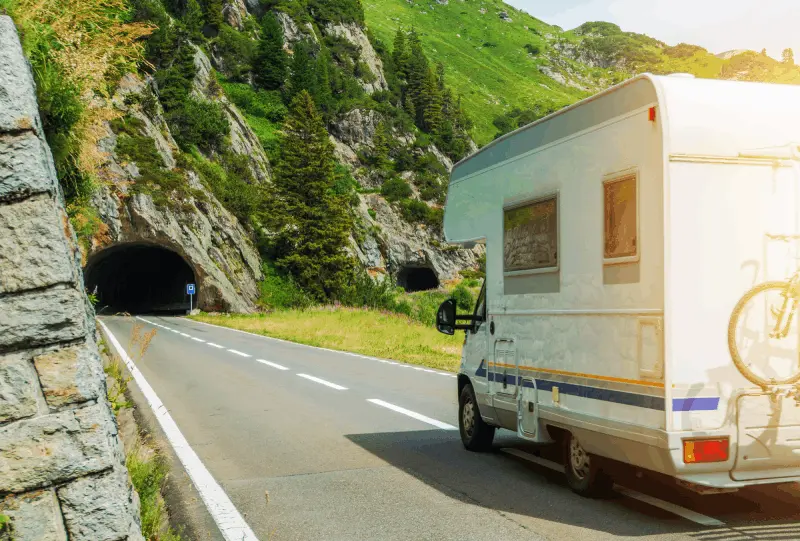
Where you can sleep in a caravan abroad depends on the rules that vary from country to country. In many European countries, there is a legal distinction between "camping" (setting up a tent, taking out tables and chairs) and "parking" (sleeping only inside the vehicle). While some countries allow overnight stays in parking lots in city centers, others completely prohibit this and direct you only to official campgrounds. For example, the rules in Switzerland and Austria are very strict; staying on unauthorized land or by the roadside can result in a police officer knocking on your window in the morning and issuing you a fine of several hundred Euros. Except for countries like Sweden and Norway, where the "Right to Roam" law applies, you should always pay attention to local signs and laws.
Is Caravan Insurance and Comprehensive Coverage Valid Abroad?
Green Insurance only covers the damage you cause to the other party; you need comprehensive insurance for damages to your own vehicle. The comprehensive policy you have in Turkey is generally only valid within the country. Before taking your caravan abroad, you need to consult with your insurance company to add a "Foreign Extension" to your policy. This additional coverage ensures that your vehicle is protected against theft, accidents, or natural disaster risks abroad for a specific period (for example, 15 days or 1 month). While some insurance companies offer this service for free, others may charge an additional premium. Traveling with an uninsured caravan in Europe, where spare parts and labor costs are in Euros, poses a significant financial risk.
How Are Caravans Inspected at Border Crossings?
Caravans attract the attention of customs officers because they contain household items and food. Customs inspections are usually conducted after passport control at border crossings. The officer may ask you to open the cabinets of the caravan, check under the beds, or look into technical areas. The most important issue at this point is to comply with each country's "prohibited import goods" list. For example, carrying animal products (meat, milk, cheese) when entering the European Union is strictly prohibited, and if detected, both the goods will be confiscated and a fine will be imposed. Additionally, you should not exceed the personal limits for alcohol and tobacco products. Being polite and transparent with the officer always speeds up the inspection process and ensures it is completed smoothly.
What Documents Are Required for Pets in the Caravan?
Many caravanners also include their furry friends in their travels. However, taking a pet abroad requires a series of documents. Firstly, the animal must be microchipped and have a valid "Pet Passport." The most critical document is the rabies vaccination and the subsequent "Rabies Titer Test." The result of this test should generally be obtained at least 3 months in advance; otherwise, you may be turned back at the border. Additionally, a "Health Certificate" obtained from a veterinarian a few days before travel is also required. You should be aware of the restrictions in the countries you will visit, especially regarding certain dangerous species. The European Union countries are very sensitive about this. You should research in advance whether there are any bans in the countries you will be visiting.
How is Gas and Water Needs Met Abroad?
Gas and water, which are the lifeblood of caravanning, are among the areas where the most difficulties can be experienced abroad. The cylinders and regulator systems used in Turkey may differ from European standards. In Europe, "Campingaz" or local brands' cylinders are generally used. If your Turkish cylinder runs out during long trips, you may have to buy a local cylinder and use a suitable adapter set (Euro Adapter Set). For water needs, gas stations, caravan parks, and campsites are the most reliable sources. Many European cities have special "Sani-Station" points for caravans; here, you can obtain clean water for a small fee and legally dispose of your gray and black water. Remember that disposing of wastewater in nature carries very heavy penalties in Europe.
What is the Cost of Traveling Abroad with a Caravan?
While the cost items may vary depending on the route and duration, the basic expenses are fixed. Green Insurance (approximately between 50-100 Euros), overseas travel expenses, comprehensive insurance endorsements, and any international driving license costs are fixed starting costs. Your largest expense on the road will be fuel; fuel prices in Europe may differ from those in Turkey. Additionally, highway tolls, tunnel crossings, and ferry tickets take up a significant part of your budget. The nightly fees for caravan camps range between 20 Euros and 60 Euros. You can minimize your kitchen expenses by cooking for yourself in the caravan. As a general rule, when determining your daily budget, setting aside 20% for unexpected expenses will also psychologically relieve you.
Are Highway Tolls (Vignette) Different for Caravans?
In Europe, highway usage systems are divided into two: toll booths and the "Vignette" sticker system. In countries like Austria, Switzerland, Slovenia, the Czech Republic, and Bulgaria, you must purchase a Vignette before entering the highway and affix it to your windshield (or register it digitally). These fees for caravans vary according to the weight of the vehicle. Motorhomes under 3.5 tons are generally classified in the passenger vehicle category, while vehicles over 3.5 tons (such as heavy motorhomes) require expensive devices and tariffs based on kilometers like the "Go-Box". In some countries, only the towing vehicle requires a Vignette, while in countries like Switzerland, two separate Vignettes are required for both the car and the caravan. You should carefully follow the signs and sales points at border entries.
Do Speed Limits for Caravans Vary from Country to Country?
Absolutely yes. Caravans are subject to lower speed limits compared to standard passenger vehicles. For example, while you can drive at 120-130 km/h on the highway in Turkey, your speed limit with a trailer caravan in most of Europe (except for some special permits in Germany) is restricted to 80 or 90 km/h. The limit for motorhomes is generally the same as for passenger vehicles, but if you are over 3.5 tons, you are required to comply with truck speed limits. Restrictions with truck symbols on speed signs generally also apply to heavy caravans. Speed checks abroad are often conducted with radar systems and cameras. Even a small speed violation can result in a significant traffic fine arriving at your home months later. To ensure a safe and economical drive, it is best not to exceed these limits.
Should Caravan Equipment Comply with International Standards?
When traveling abroad, your vehicle's technical equipment must comply with the laws of those countries. For example, if you are traveling in winter, many countries require you to have winter tires or winter equipment, and tires marked with "M+S" may not be sufficient (real winter tires with a snowflake logo may be required in mountainous areas). Additionally, the use of a safety cable (breakaway cable) in towing caravans is strictly monitored in Europe; this cable must be directly connected to a special ring on the tow bar, and simply passing it over the knob can be a reason for penalties in some countries (like the Netherlands). Furthermore, the lighting system of the caravan (signals, brake lights) must function perfectly to avoid issues during night drives and customs checks.
Is a First Aid Kit and Safety Equipment Mandatory?
In most European countries, it is legally required to have certain safety equipment inside the vehicle. This includes; a separate fluorescent vest for each passenger (to be worn when exiting the vehicle in case of an accident), two reflectors, a current first aid kit, and a fire extinguisher. Some countries also require drivers to carry a spare bulb set and fuses in the vehicle. Local rules, such as the obligation to carry a breathalyzer in France, may also come into play. These items are generally not checked at customs, but if they are missing during an accident or police inspection, you may face serious penalties. You should always keep this safety set accessible in the "garage" part of your caravan.
How is Internet and Communication Provided During Caravan Travel?
While traveling abroad with a caravan, you will constantly need the internet for navigation, finding campsites, and communication. Thanks to the "Roam Like at Home" application within the European Union, you can use the SIM card you obtained from one EU country in others without paying extra fees. However, the international packages of operators in Turkey are generally expensive and have low data limits. The best solution for caravaners is to purchase a local SIM card in the first EU country where the journey begins (for example, Greece). They purchase a local data line (Data SIM) in countries like Greece or Bulgaria. Additionally, 4G/5G antennas and routers mounted on caravans provide stable internet even in campgrounds with weak signal reception. Satellite internet solutions like Starlink are also quite popular among digital nomad caravanners.
What Should Caravanners Do in Emergencies Abroad?
Getting stranded with a caravan in a foreign country or experiencing a health issue can be stressful. First of all, you should know the emergency number 112, which is valid across Europe. It is crucial to have a comprehensive roadside assistance service for vehicle breakdowns while abroad. Some insurance policies or memberships from organizations like Turing offer this service. In a serious breakdown, towing the caravan and covering your accommodation can be a significant financial burden. Additionally, you should always note the contact information of the nearest Turkish Consulate. Being able to communicate with locals using basic English or translation apps (like Google Translate) can be lifesaving. Staying calm and being prepared is key to managing emergencies.
Is It Safe to Travel Abroad with a Caravan in Winter?
Winter caravanning can be a rewarding experience with proper preparation, but it also comes with risks. Your heating system (Webasto, Truma, etc.) must be fully functional, and your gray water tank should be heated or insulated to prevent freezing. There are camps in ski resorts across Europe that offer special heated areas and electricity for caravans. However, driving in winter, especially with towing caravans on icy roads, can be quite challenging. Attempting to go to Alpine passes or Northern Europe without winter tires and chains is akin to suicide. Additionally, you should be aware that most campsites are closed in winter, and only "Winter Camps" are operational, so you should update your route accordingly. Remember to keep a spare tire, considering that gas consumption increases 3-4 times in winter.
What Are the Rules for Cooking and Food Storage in a Caravan?
The greatest comfort of a caravan is being able to cook your own meals. However, you must comply with food storage regulations when traveling abroad and crossing borders. It is prohibited to bring fresh meat and dairy products into the EU from outside. Therefore, instead of filling your pantry in Turkey, it is more sensible to take basic dry foods and obtain fresh products from your first stop. Ensure that your caravan's refrigerator is functioning properly while in transit (12V or gas) to prevent food spoilage. Additionally, waste management is as important as kitchen culture; you should dispose of your organic waste and packaging according to strict recycling rules in Europe (paper, plastic, glass separation). Many campsites have separation bins available.
How to Track Waiting Times at Border Crossings?
Especially during the summer months and holiday periods, border gates (İpsala, Kapıkule, Hamzabeyli) can have kilometers-long queues when exiting Turkey. Waiting in these queues with a caravan can be challenging in terms of water and energy management. There are mobile applications and live camera feeds available to track waiting times in real-time. Generally, late-night hours during the week are the calmest times for crossing. Additionally, instead of focusing solely on main gates (for example, choosing Pazarkule over Kapıkule), opting for smaller border crossings can sometimes save you hours. While waiting at the border, you can enjoy the comfort of your caravan by brewing tea, turning that tedious wait into a pleasure; this is one of the best aspects of being a caravanner.
What Common Mistakes Do Those Traveling Abroad with a Caravan Make?
The most common mistake is setting off with missing documents, thinking "nothing will happen." Especially, having an expired insurance or an incompatible driver's license can be major issues. Another mistake is not researching the special rules of the countries along the route (Vignette, emission stickers, speed limits). Exceeding the weight limits of the caravan (overloading) is also a frequent mistake that poses a safety risk; in Europe, police may weigh caravans, and if you exceed the limit, they may not allow you to leave without offloading. Finally, behaving in a way that disturbs the peace of the locals (noise, littering, unauthorized camping) increases prejudices against caravanners and can lead to legal penalties. The philosophy of "Leave only footprints behind" is the constitution of caravanning.
Why Is Travel Insurance Important for Caravanners?
While Green Insurance protects your vehicle, Travel Health Insurance protects you and your family. This insurance, which is mandatory for visa applications, should also be obtained in situations where a visa is not required (like with a green passport). A simple dental pain or a minor accident abroad can lead to hospital bills amounting to thousands of Euros if you do not have insurance. You should carefully read the coverage of your policy, especially ensuring that it covers potential risks (accidents, emergency transport, medication costs) during a "mobile" holiday like a caravan trip. Some insurances may also cover the costs of a trip cut short due to health issues or the return of the vehicle. Health comes before everything; therefore, you should view insurance not as an expense but as a necessary need.
What Are the Customs Rules When Returning to Turkey with a Caravan?
When you enter Turkey at the end of your trip, you are also subject to customs rules. The souvenirs, alcohol, and tobacco products you bring from abroad must be within legal limits. is required. If you have purchased and installed expensive equipment for your caravan from abroad (for example, a mover set or a large lithium battery), it may need to be declared at customs. Additionally, you should pay attention to the "duration of stay abroad" noted in your vehicle's passport; a vehicle leaving Turkey must return within a certain period (or conversely, there are time limits for foreign license plates). Don't forget that pet checks and food inspections may also be conducted at the entry point.
Is it difficult to travel abroad with a caravan?
Taking a caravan abroad may seem daunting at first glance, as it requires a lot of documents and rules. However, once you have experienced all these processes, they actually turn out to be quite logical and manageable. Once you have met the green insurance and driving license requirements in advance, the rest of the journey is just about exploration and enjoyment. Modern technology, navigation apps, and contributions from the caravanning community make it much easier to reach even the farthest corners of the world. For a patient, well-prepared, and rule-abiding caravanner, the limits are just lines on a map. Make sure you are fully prepared, have your documents in order, and turn that key to drive towards freedom; you will see that it will be worth every second.