Is the Decathlon Forclaz Series Really Durable for Tough Mountain Conditions?
Decathlon's Forclaz series is a lifesaver for price-performance focused users. However, when it comes to "tough mountain conditions," it is expected that the backpack not only remains tear-resistant but also maintains its shape under extreme humidity, abrasion, and heavy loads. Forclaz backpacks generally use 600 denier polyester fabrics, which are quite sufficient for standard trails. However, they may deform more quickly compared to professional competitors in abrasions on rocky terrains or under very heavy loads. Nevertheless, high-end models like the MT900, developed in recent years, meet expectations to a large extent with reinforced base fabrics and improved stitching structures. If you are not doing extremely challenging climbs, these backpacks can serve you for years.
Is the Price Difference of Professional Brands Just Due to Their Name?
The price tags of brands like Osprey, Deuter, or Gregory may seem intimidating at first glance, but this difference is not just paid for a "brand logo." These brands allocate huge budgets for R&D processes to develop patented suspension systems, air channels, and load transfer technologies. For example, the Anti-Gravity system in an Osprey backpack distributes weight so evenly across your body that a 15-kilogram load can feel like just 10 kilograms. Additionally, the materials used are generally made of high-strength fibers like Ripstop nylon or Cordura. These materials are both very lightweight and incredibly durable. So, the difference you pay for is a guarantee of comfort, lightness, and a lifetime of use.
When Determining Backpack Volume, Should Body Measurements or Equipment Quantity Be Considered?
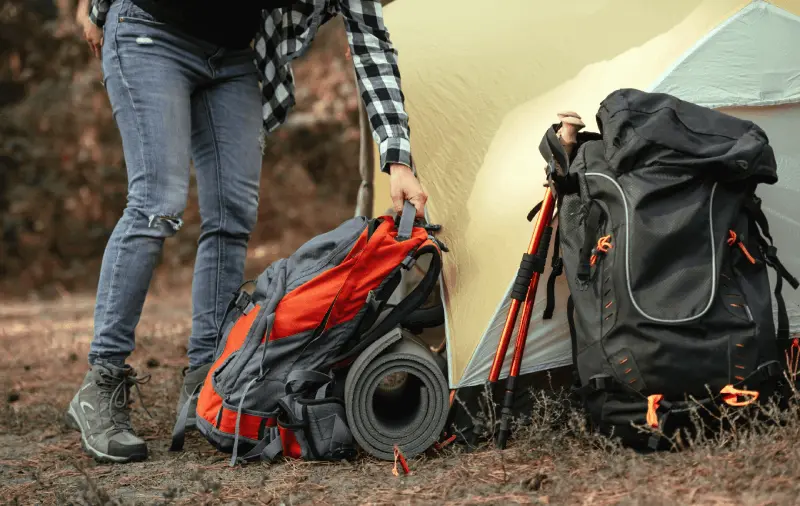
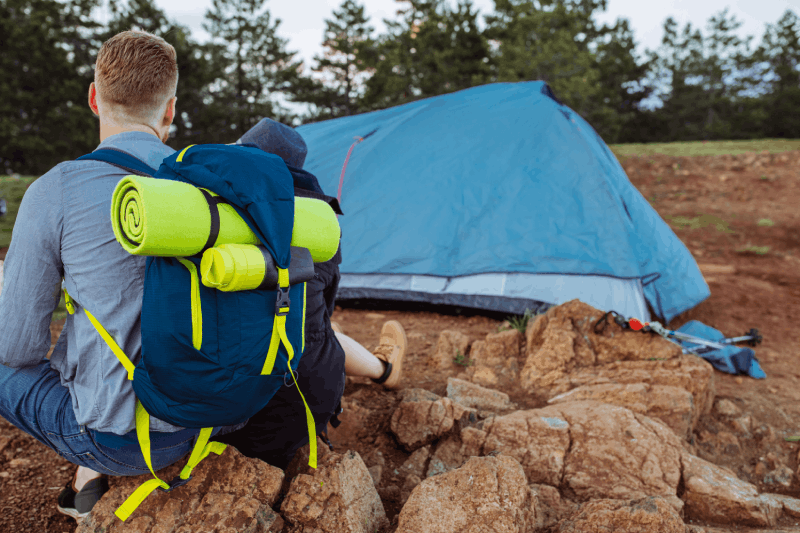
The biggest mistake when choosing volume is only looking at the equipment list. In fact, the most important criterion is your torso length. If someone with a small body structure carries a very large backpack, the load will rest on the shoulders instead of the lumbar spine, which can lead to serious injuries. The amount of equipment is a secondary but critical factor. If you have ultralight gear, you can go on a 5-day camping trip with a 40-liter backpack. However, if you have standard and bulky equipment, you will need a volume of 60-70 liters for the same camping trip. Ideally, you should first gather your equipment and measure the volume they occupy, then choose a backpack that fits your body size.
How Do Volume Requirements Change for Summer and Winter Camps?
In summer camps, clothes are thin, sleeping bags are light, and kitchen supplies are more limited. During this period, a backpack between 30-45 liters is usually sufficient for weekend activities. However, winter camps are a completely different scenario. The sleeping bags used in winter take up much more space, spare clothes (fleece, down jackets) are bulky, and additional materials like stove fuel are required. Therefore, for winter hiking or camping, backpacks of at least 55-65 liters should be preferred. When volume is insufficient, hanging materials outside the backpack can disrupt your balance and increase the risk of your equipment getting wet in rainy weather.
What Are the Main Differences Between Decathlon and Premium Brands in Backpack Ventilation Systems?
Back ventilation reduces sweating during long hikes, enhancing comfort and regulating body temperature. Decathlon models typically use sponge-supported channels. While this system is economical, after a while, the sponges can become heavy due to sweat, and air circulation may decrease. On the other hand, systems like Deuter's "Aircomfort" or Osprey's "AirSpeed" create a taut mesh panel between the back and the backpack. This way, the backpack body does not touch your back, allowing airflow from all directions. This engineering marvel makes a significant difference, especially in hot climates and intense paces, making you feel much more energetic.
Which Brand's Suspension System Offers More Comfort for Long Expeditions?
In expeditions lasting weeks, the backpack becomes a part of your body. At this point, the dynamic suspension systems of brands like Gregory's "Response A3" come into play. The hip belt and shoulder straps rotate according to your body's movements. This prevents the backpack from swaying side to side and minimizes energy loss. Decathlon's high-end models also have adjustable back systems and are quite successful, but in very heavy loads (20 kg+), the dynamic suspension systems of professional brands have undeniable superiority in reducing fatigue. Professional backpacks offer more sophisticated solutions for transferring the load directly to the lumbar spine.
Lightness or Durability: Which Preference Makes More Sense for Ultralight Equipment?
If your goal is to go "fast and light," you should opt for ultralight backpack models. These backpacks typically weigh between 800 grams and 1.2 kg. While Decathlon does not offer many options in this area, Osprey's Exos or Levity series are leaders in this niche. However, it should be noted that the lighter a backpack is, the thinner its fabric is. So, you need to be much more careful when passing through thorny bushes or rubbing against sharp rocks. If the rest of your equipment is heavy, it does not make sense to get a lightweight backpack; because lightweight backpacks are not designed to carry heavy loads.
How Long Does Material Quality in Budget-Friendly Backpacks Maintain Performance?
Brands like Decathlon use more standard materials to reduce costs in order to reach a wider audience. For example, in zipper quality, they may prefer their own production or cheaper alternatives instead of YKK. This can lead to issues like zipper failures or the coating inside the fabric peeling off after 3-4 years of heavy use. Professional brands, on the other hand, almost always use top-tier YKK zippers and Duraflex buckles. These small details are crucial to ensure that the lid of your backpack does not remain in your hand on a mountain peak. If you are considering a long-term investment, material quality is more consistent in professional brands.
Do Warranty Policies of Giants Like Osprey and Deuter Justify the Investment?
Osprey's famous "All Mighty Guarantee" policy promises that no matter what happens to the backpack (even if it's user error), it will be repaired or replaced. This essentially means you can use a backpack for 20-30 years. Decathlon usually offers a 10-year warranty, but this warranty only covers manufacturing defects, not user misuse. If you have made outdoor sports a lifestyle and see your backpack as a lifelong companion, the guarantee offered by professional brands offsets the price difference. Buying once and not looking back can be more economical in the long run.
Why Is Weight Distribution Critical in Backpacks Over 50 Liters?
The biggest mistake in large-volume backpacks (50L+) is allowing all the weight to rest on the shoulders. A quality backpack should transfer 80% of the weight to the lumbar spine. Professional brands' lumbar belts usually have special pads that can mold to your body temperature. These pads fully embrace your lumbar spine and prevent the backpack from sliding down. Decathlon models also have thick pads, but the density of these pads may decrease over time. Poor weight distribution in a backpack can lead not only to fatigue but also to chronic health issues like lumbar disc herniation. Therefore, more attention should be paid to technical details and frame structure in high-volume backpacks.
How Much Difference Do Gender-Specific Designs Make in Backpack Selection?
Male and female anatomy shows significant differences, especially in shoulder width and hip structure. In women-specific (W or SL) models, shoulder straps are designed to be more curved so as not to discomfort the body structure, and the back distance is shorter. Additionally, the lumbar belt comes with a wider opening to fit the female lumbar spine's angle. While professional brands make this distinction very sharp, Decathlon also has women's models. However, the ergonomic adjustments in professional brands significantly increase comfort for female users during long hikes. Unisex backpacks generally do not fit anyone perfectly.
Should You Buy a Second-Hand Professional Backpack or a New Decathlon Backpack?
This is the toughest question for those on a budget. A clean, undamaged second-hand Osprey or Deuter may perform better than a new Decathlon backpack. However, there are critical points to consider when buying second-hand: whether the fabric has lost its water repellency, whether the inner lining has peeled off, and whether the frame has been bent. If you are not experienced in these matters, buying a new Forclaz with a warranty may be a safer option. However, a professional backpack you find at a very reasonable price can elevate you to a whole new level with proper care.
Are Details Like Rain Covers and Number of Compartments Decisive in Selection?
Many campers think that having too many compartments inside the backpack is an advantage. However, too many zippers and compartments increase the weight of the backpack and multiply the points of water leakage. Professional backpacks generally have a "minimalist" design; a main compartment, a front pocket, and side mesh pockets. Decathlon backpacks usually offer user-friendly compartments with plenty of zippers. The rain cover issue is critical; while some professional brands sell rain covers as optional, Decathlon includes them in almost every backpack. If you are camping in a very rainy area, you may need to buy an external and quality rain cover. Rather than the number of compartments, the functionality and accessibility of these compartments (like zippers from the bottom or side) are more important.
What Are the Most Common Mistakes When Adjusting a Backpack?
Even if you buy the best backpack, you cannot expect comfort as long as you do not adjust it correctly. The most common mistake is tightening the shoulder straps first. The correct order is as follows: First, the backpack should be placed on the lumbar spine, and the belt should be tightened. Then, the shoulder straps should be slightly pulled. Finally, the "load lifter" straps, located above the shoulder straps, should be pulled to bring the backpack closer to the body. The adjustment mechanisms in Decathlon backpacks are quite simple. In professional backpacks, these adjustments can be made more precisely. It is essential to refresh these adjustments with every outfit you wear to maintain your balance. An unadjusted backpack can make a 50-liter load feel like 100 liters.
What Is the Ideal Volume Range for Seasonal Outdoor Hikes?
If you are only doing day hikes, a backpack between 15-25 liters is ideal. This volume can comfortably hold your water, food, rain cover, and first aid kit. If you are going to do a "fast packing" with an overnight stay, you should aim for 30-35 liters. However, if you want "one backpack that I can use in every season," a volume of 45-50 liters is the most sensible middle ground. This volume may be a bit loose in summer but can be tightened with side compression straps, while in winter, it can accommodate your essential gear. For those looking for versatility, 50 liters is like the "Swiss Army Knife" of the camping world.
Where Should the Center of Gravity Be in a Backpack During Technical Climbs?
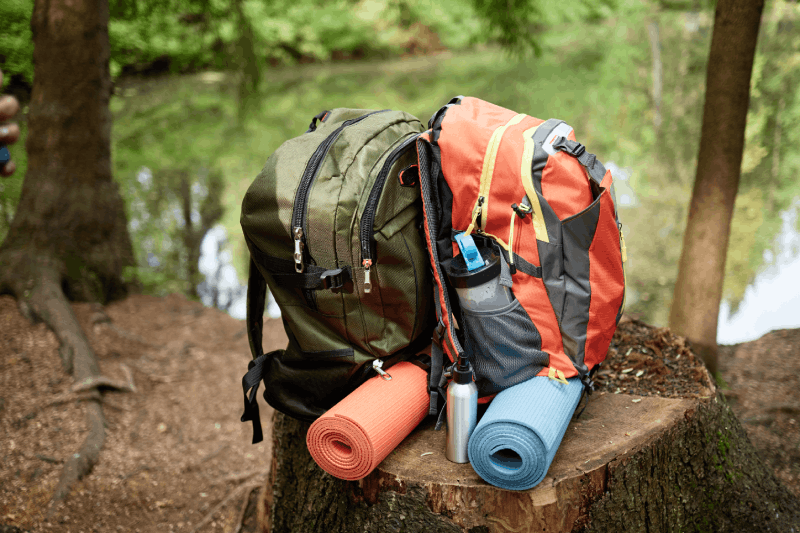
When hiking on a technical route, rocky stage, or narrow ridge, the backpack should not disrupt your balance. Backpacks designed for this type of activity, known as "alpinist" type, have a thinner and longer structure. The center of gravity should be as close as possible to the body's center of weight and slightly elevated. Decathlon's climbing series (under the Simond brand) is quite successful in this regard and offers models that come very close to professional brands. Professional brands increase the maneuverability of the arms by making the body of the backpack narrower. When climbing, the backpack should almost mold to your back and flex with every movement.
What Are the Differences Between Ripstop Fabric and Cordura in Material Technology?
Ripstop is a technique where thick threads are woven in a square pattern, preventing the fabric from tearing completely if it gets torn in one place. Decathlon uses standard Ripstop in most of its models. Cordura, on the other hand, is a licensed thread brand with much higher abrasion resistance. The lower parts of professional backpacks (areas that touch the ground) are usually made of 500D or 1000D Cordura. This means that even if you throw your backpack against rocks, it is unlikely to wear out. If you are rough with your backpack, just having Ripstop fabric is not enough; you should also check whether it has a high "denier" (thread thickness) value.
Which Brands Are Suitable for Intercity Travel and Camping Hybrid Use?
Many people want to use their backpack for both travel, like Interrail, and camping. In this case, "panel-loading" (opening like a suitcase) backpacks provide great convenience. Decathlon's "Travel" series is tailored for this need and offers advantages in airports with its stowable suspension systems. Osprey's Farpoint or Fairview Trek models take this hybrid use to the next level; they are as comfortable as a professional hiking backpack and as organized as a suitcase. In city travels, security (lockable zippers) is paramount, while comfort is prioritized in nature. Hybrid models combine these two worlds.
How Should Cleaning and Maintenance Be Done to Extend the Life of a Backpack?
The biggest enemy of a backpack is salty sweat and sunlight. After every major activity, wiping the shoulder straps and back panel with a damp cloth prevents salt from damaging the fabric fibers. You should never wash the backpack in a washing machine; this ruins the waterproof coating of the fabric and the technical sponges inside. If it is very dirty, you can clean it by scrubbing it with lukewarm water and mild soap in the bathtub. Additionally, renewing spray-form DWR (Durable Water Repellent) coatings every 2-3 years prevents your backpack from getting soaked in the rain. Instead of drying your backpack directly in sunlight, drying it in the shade can double the lifespan of the fabric.
How Important Will Sustainability and Recyclable Materials Be in Future Camping Equipment?
Now, not only quality but also production processes are becoming a preference. Professional brands are leading the way in using recycled fabrics from ocean plastics and reducing carbon footprints. Decathlon has also joined this movement in recent years with its "Ecodesign" label. In the future, how durable a backpack is will be as important as how little damage it causes to nature during production. Recycled materials are now performing on par with original plastics. Choosing with this awareness is actually a part of the debt we owe to the nature we are trying to protect.
In conclusion; if you are just starting out or camping a few times a year as a hobby, Decathlon backpacks will be more than enough for you. However, if you are staying in nature for long periods, carrying heavy loads, and seeing comfort as a necessity rather than a luxury, investing in a professional brand will enhance your quality of life. Always remember the rule of "body measurements > equipment volume" when choosing the right volume.
Do Decathlon's 600 Denier Fabrics Tear Immediately in Sharp Rocky Passes?
The biggest fear of an outdoor hiker is that their backpack will get caught on a thorn or sharp rock and tear from end to end in the middle of the route. Decathlon's entry-level and mid-range backpacks generally use 600 denier polyester fabrics. While this fabric appears quite durable for daily use and clean trails, it does not show the same resistance as the Cordura or Ripstop technologies used by professional brands in rugged and rocky areas like the Lycian Way. Professional brands (Osprey, Deuter) weave micro squares into the fabric to prevent a tear from spreading if it occurs. If your route is only flat dirt roads, Decathlon won't let you down; however, in challenging terrains where the vegetation cover is tough or you will be throwing the backpack on hard ground, the fabric density and stitching reinforcements of professional backpacks provide you with a vital safety layer. This is not just a fabric difference, but also the answer to the question of whether your thousands of lira worth of equipment will spill out onto the ground.
Does the Lumbar Support System in Professional Backpacks Bruise My Lumbar Spine with a Load of 15 Kilograms?
Many campers know that when they wear a backpack, the weight should rest on the lumbar spine, not the shoulders. However, in Decathlon's lower segment models, lumbar pads are usually made of thin sponges. If you walk for 6 hours with a load of 15 kilograms or more, these thin sponges can compress, transferring the weight directly to your lumbar spine, which can lead to serious bruising. On the other hand, patented lumbar belt systems like Gregory or Osprey's "Anti-Gravity" or "BioSync" wrap the load around your body like a glove, distributing the weight evenly across muscle groups rather than on the bones. If you have sensitivity in your lumbar area or have experienced issues like lumbar disc herniation in the past, opting for the dynamic lumbar supports of professional brands instead of Decathlon's standard sponges is not just a luxury but a necessity for your health. The physiological damage a cheap backpack can cause you may end up costing you much more in doctor bills in the long run.
Do Decathlon's Zippers Risk Freezing and Breaking in Extreme Cold Above 2000 Meters?
At high altitudes or in winter camps, each piece of equipment is exposed to extreme cold. The zippers used in Decathlon backpacks are generally made of standard plastic components. At temperatures below -10 degrees, plastic hardens and becomes brittle. When you try to open your backpack after getting out of your tent in the morning, the zipper teeth may freeze or break when you force them, preventing your backpack from closing and causing everything inside to fall into the snow. Professional brands, on the other hand, usually prefer large-toothed zippers made by YKK that are resistant to freezing and can be easily gripped even with gloves. These zippers have special coatings for winter conditions. Keeping your backpack's mouth open in the mountains can trigger the risk of hypothermia; because you cannot protect your sleeping bag or spare clothes from wind and snow. This niche detail goes beyond a simple zipper issue and becomes a survival element in harsh climates.
Does the Back Panel Sweat Issue Cause Rashes or Itching on My Skin During Long Summer Hikes?
When hiking 20 kilometers in the summer heat, every point of contact between your back and the backpack sweats profusely. In Decathlon's basic models, the back panel is usually made of a flat sponge structure, and air circulation is quite limited. This humid and warm environment can lead to the skin being unable to breathe for hours, causing severe rashes and even bacterial fungal infections. Professional brands solve this problem with tensioned mesh systems that create a 3-4 centimeter gap between the back and the backpack, known as "Trampoline Back." As air flows freely from your back, your sweat dries, and your body temperature is regulated. If you have sensitive skin and experience skin rashes after sweating, choosing a professional backpack instead of Decathlon's closed-cell sponge systems will significantly enhance your comfort. Hygiene is not only about clothing; the air gap between your backpack and your skin is the most critical hygiene barrier.
Is There a Risk of Straps Getting Caught on Luggage Belts When Checking in a Decathlon Backpack?
When you hand over your backpack to the airline for an international climbing or trekking trip, there is always a risk. The strap mechanisms and plastic buckles of Decathlon backpacks are made from softer and more flexible plastics compared to professional competitors. In hard impacts during baggage handling or situations where the straps get caught between the conveyor belts, there is a high likelihood of these buckles breaking. Professional brands anticipate this logistical challenge by offering additional protective covers alongside the backpack or designing compartments where the straps can be completely hidden. Additionally, high-strength buckles like "Duraflex" can bend instead of breaking even under tons of weight. Seeing that one of your shoulder straps has broken when you arrive at the airport in the country you are visiting can ruin your entire vacation before it even starts. Therefore, the logistical security of professional brands surpasses the economic advantage offered by Decathlon, especially in international travels.
Does Decathlon's 10-Year Warranty Get Denied for User Error in Case of a Zipper Burst?
The most commonly used argument in Decathlon's marketing is the "10-year warranty" promise. However, this warranty coverage is often limited to "normal usage conditions." If your backpack's zipper bursts because it was too full or tears in a rocky passage, you have a 90% chance of encountering a "user error" response at the store. In contrast, professional brands like Osprey's "All Mighty Guarantee" policy offers free repairs or replacements regardless of whose fault it is, no matter how old the product is. They even sometimes repair a 20-year-old backpack and send it back to you. This is especially a "buy once, use for a lifetime" guarantee for professional users. Having to buy a new Decathlon backpack every three years can be more costly in the long run than paying a high amount once for a professional brand and is more harmful to the environment.
Does the Sleeping Bag Compartment Inside a Decathlon Backpack Leak Water in a 2-Hour Downpour?
The yellow or orange rain covers that come with Decathlon backpacks may work in light drizzles, but in heavy and prolonged downpours, they usually leak water from the stitching points. Especially the sleeping bag compartment located at the bottom of your backpack is the riskiest area as it is close to water puddles on the ground. Professional brands' fabrics usually come factory-treated with high DWR (Durable Water Repellent) coatings. This ensures that even if you don't use a rain cover, water beads and runs off the fabric. In Decathlon, however, the fabric is more prone to absorb water, and after a while, the water seeping from under the rain cover can wet your sleeping bag. Spending the night with a wet sleeping bag in the mountains not only causes discomfort but also poses a serious risk of hypothermia. Choosing a professional backpack brand essentially means insuring your thousands of lira worth of sleeping bag and electronic devices.
Do Strap Adjustment Buckles Loosen Themselves During Hiking, Leading to Loss of Balance?
When descending a slope or climbing steep rocky terrains, it is vital that your backpack fits your body perfectly. Some Decathlon users report that the buckles of the shoulder straps loosen millimeter by millimeter due to the impact of heavy loads. This can cause the center of gravity of your backpack to suddenly shift backward, leading to loss of balance and potential falls. Professional brands (Lowe Alpine, Deuter) incorporate special locking systems into the buckles that grip tighter as the load increases. An unstable backpack not only leads to fatigue but also means ankle sprains or dangerous tumbles near cliffs. The niche detail of "buckle grip strength" can be life-saving on technical routes. While Decathlon is designed for more stable hikes, professional brands engineer their designs according to the challenges of dynamic and dangerous terrains.
Do Lumbar Pads Cause Allergic Reactions or Irritation on My Skin After Sweating?
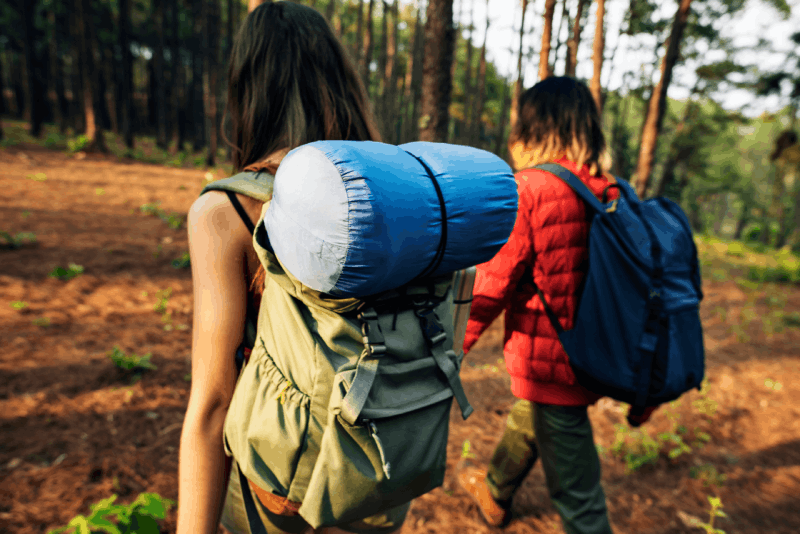
For individuals with sensitive skin, equipment selection is a health issue. The cheap foam and synthetic lining materials used by Decathlon can lead to severe irritations and "friction burns" when combined with sweat. Additionally, the cheapness of the dyes used can penetrate your skin through sweat and trigger allergic eczema. Professional brands typically use OEKO-TEX certified, skin-friendly, and anti-bacterial fabrics. Even if these fabrics get wet with sweat, they do not irritate your skin like sandpaper. If you have developed itchy red spots on your lumbar area after using a backpack, the issue may not be with your skin but with the material quality of your backpack.
Are Decathlon's Side Pockets Flexible Enough to Reach a Water Bottle While Hiking?
As a logistical challenge, being able to drink water without taking your backpack off is critical for energy conservation. Decathlon's side mesh pockets are usually quite tight, making it impossible to fit a standard water bottle into them when the backpack is fully loaded. Additionally, these mesh pockets are often not durable and can easily tear if caught on a branch. Professional brands design their side pockets at a 45-degree angle, allowing users to easily grab their water bottle when reaching back. Additionally, the "Stretch Mesh" fabrics used do not lose their shape even if a sharp object passes through them. If you find yourself having to put your backpack down every time you get thirsty, it will slow your pace and break your motivation. Professional designs analyze your body mechanics and moving needs much better than Decathlon's standard molds.
Does the Resale Value of Professional Backpacks Protect Your Investment Compared to Decathlon?
As a content strategist, we also need to consider financial sustainability. When you buy a Decathlon backpack, its value drops by 50% the moment you leave the store. Decathlon products are hard to sell on second-hand sites because they are seen as "cheap and temporary solutions." However, you can sell an Osprey or Deuter backpack for 70-80% of its original price even after 5 years of use. These backpacks are like the "gold" of the outdoor world; they do not lose value. Even if you are not sure whether you will continue camping, investing in a professional brand is financially more sensible. Because the amount you will lose when you want to sell it will be less than Decathlon's depreciation. Buying professional equipment is not just an expense; it is acquiring a highly liquid asset.
Do Decathlon Backpacks Retain Moisture Odor When Stored in a Caravan?
Storing equipment in tight spaces like a caravan or tent brings moisture and dampness issues. The inner linings of Decathlon backpacks are usually made of cheap PU (polyurethane) materials that are not breathable. When this material traps moisture inside, after a while, your backpack can develop that "old tent smell" or damp odor. Professional brands use technologies that prevent odor formation (Odor Control) and membranes that expel moisture inside the backpack. Especially during prolonged journeys, the breathability of your backpack is critical to prevent your clothes from smelling musty. While a Decathlon backpack can emit a musty smell after sitting under a caravan for a month, a professional backpack circulates air inside to keep your belongings fresh. For hygiene-conscious travelers, this odor issue can be a significant problem that leads to throwing the backpack away.
Can the Whistle on the Decathlon Backpack's Chest Strap Carry My Voice 500 Meters Away in an Emergency?
Decathlon backpacks usually have a small whistle on the chest strap. However, these whistles are generally of toy quality and cannot transmit sound more than 50 meters in windy conditions. Professional brands design their whistles to pass decibel tests. When something happens to you in the mountains or when you get lost, the quality of that whistle can determine the difference between life and death when you use your last breath to call for help. While Decathlon adds such details just for the sake of it, professional brands design each piece as "mission-critical." The sound frequency of a whistle is even a niche safety detail, and professional backpack manufacturers calculate how that frequency propagates in foggy weather. Safety is the sum of unseen details.
Do the Sponges in Decathlon's Shoulder Straps Compress and Collapse After One Year?
The quality of the sponge is the quietest factor determining the lifespan of a backpack. The open-cell sponges used in Decathlon's lower-end models lose their shape and compress over time when subjected to continuous pressure (for example, long hikes with 10-15 kg loads). When this compression occurs, the backpack no longer cushions your shoulders but presses directly against your bones. Professional brands typically use "Closed Cell EVA Foam" or "Multi-Density" sponges. These sponges are resilient; no matter how much pressure they experience, they return to their original shape and provide the same cushioning comfort as on the first day, even after years. If you are only going to use your backpack for a weekend once a year, Decathlon's sponge may be sufficient. However, if you go camping every month, you will start to feel that your Decathlon backpack is cutting into your shoulders by the end of the second year. The continuity of comfort depends on material quality.
Does Decathlon's Backpack Have a Separator Panel for Wet Clothes in the Main Compartment?
The internal organization of a backpack determines your efficiency at camp. Many Decathlon models are like a single large sack; a wet t-shirt can contaminate all your dry gear. Professional backpacks usually offer special compartments separated by waterproof panels called "Wet/Dry Compartment." This requires logistical ingenuity. These compartments are vital to prevent the smell of dirty socks from contaminating clean clothes or a sweaty towel from dampening your sleeping bag. If you are a meticulous user and want to maintain hygiene inside your backpack, the intelligent compartment systems offered by professional brands provide you with the same organization as your home wardrobe. In Decathlon, you may try to solve this issue by putting everything in plastic bags, which leads to hassle and wasted time every time.
Does the Frame of the Backpack Touch My Back When Carrying Loads Over 20 Kilograms?
The aluminum or plastic frame inside the backpack is the spine that transfers the load to your waist. In Decathlon's lightweight models, this frame is sometimes made of flexible plastics. When you load the backpack beyond its capacity (for example, over 20 kg), the frame can bend, causing the body of the backpack to mold to your back and the load to rest on your spine in a hunched position. Professional brands (for example, Deuter's Aircontact series) use high-strength X-frames or steel frames. These frames never bend and keep the shape of the backpack upright, transferring the weight directly to the lumbar spine, no matter how heavy the load is. If you are carrying heavy camping gear (tent, stove, 3-4 liters of water), the strength of the frame is your guarantee of lumbar health. A weak frame is not just a backpack defect; it poses a potential injury risk to your spine.
Which User Type Should Choose Which Option?
To summarize as a content strategist: If you go to a festival 1-2 times a year, do day hikes on flat trails, and do not want to strain your budget, Decathlon is unbeatable. However, if you plan to tackle technical routes like the Lycian Way, go winter camping, care about your lumbar/spinal health, and want to use the product you buy for generations (10-20 years), investing in a professional brand (Osprey, Deuter, Gregory) is actually an investment in your health and safety. Remember, the most expensive equipment in nature is the cheapest equipment that leaves you stranded in the middle of the route or jeopardizes your health.