Are Datça Roads Narrow and Is Driving with a Tow Caravan Troublesome?
Although the main arteries of the Datça Peninsula have been significantly improved with widening works in recent years, the road conditions change dramatically the moment you turn off the main road and head towards those much-praised pristine coves.
Especially the famous Balıkaşıran area extending from Marmaris to Datça is known for its wind and sharp bends. The secondary roads leading to the coves are generally single-lane, gravelly, and sometimes have cliff edges without barriers. Driving on these roads with a tow caravan may require reversing if a vehicle comes from the opposite direction. The narrow structure of the road necessitates constantly considering the width of the caravan and the sway margin on the bends.
Is It Difficult to Use a Tow Caravan in Datça?
Using a tow caravan in hilly and steep terrains like Datça requires much more attention, patience, and advanced driving skills compared to standard motorhomes or towing vehicles.
Sway Tendency: The biggest disadvantage of a tow caravan is the increase in the total length of the vehicle and the tendency to "sway" (wobble), especially in bends and windy areas.
Mechanical Strain: On Datça's steep slopes, the towing power of your vehicle combined with the weight of the caravan can excessively strain the clutch plate, transmission, or engine.
Limited Escape Area: When encountering an oncoming vehicle on narrow cove roads, the limited space to pull over restricts the maneuverability of the tow caravan.
Therefore, when traveling with a tow caravan in Datça, you must fully trust the torque power (towing capacity) of your vehicle and your own maneuvering experience.
Is Balıkaşıran Pass Safe and What Should Be Considered While Passing?
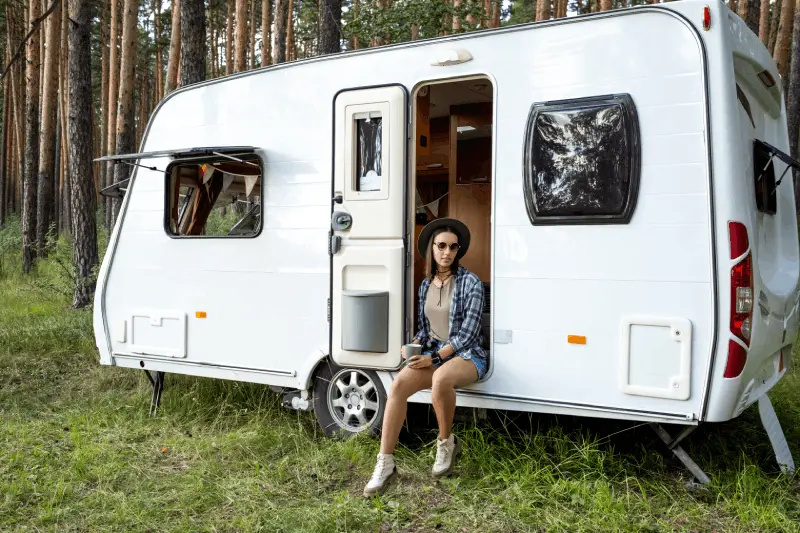
The Balıkaşıran area connecting Marmaris and Datça is the narrowest, most strategic, and at the same time, the windiest point of the peninsula. Geographically, it is a unique pass where one side is the Aegean and the other side is the Mediterranean, and the wind always blows hard.
For tow caravan owners, the wind is the biggest enemy on the road. Sudden side winds can cause the caravan to veer off the road or sway the towing vehicle. It is vital to strictly adhere to speed limits on this part of the road and to be extra cautious, especially for high-profile caravans with high wind resistance. If the wind speed appears very high in meteorological data, postponing the passage for a while or reducing your speed to the 40-50 km/h range during the journey will be the safest choice.
How Is the Palamutbükü Road and Is Access Easy with a Caravan?
The road from Datça center to Palamutbükü is one of the most popular routes in the region, but this popularity does not mean the road is very easy to drive. The roads passing through Mesudiye village are quite winding, hilly, and narrow. In some parts of the road, the asphalt quality may decrease, and you may encounter gravelly areas, especially on the road edges.
Technically, it is possible to descend to Palamutbükü with a tow caravan; because it has a more developed infrastructure and wider areas compared to other completely pristine coves. However, you should still consider the heavy tourist traffic in the summer months and the blind spots where the road narrows. The most logical strategy is to set off very early in the morning (at sunrise) to minimize oncoming vehicle traffic.
Kurubük is one of Datça's most naturally preserved, turquoise-colored, untouched coves. This cove, located between Palamutbükü and Ovabükü, is generally preferred by day-trippers and nature campers.
Although the main road to Kurubük is asphalt, the descent point to the cove is quite steep, narrow, and sharp. Technically, it is possible to descend to this cove with a tow caravan, but the safe area to park the caravan near the beach is quite limited. Additionally, as you approach the shoreline, the sandy and soft structure of the ground may cause the tow caravan to get stuck. If your vehicle is not 4x4 and you have a heavy tow caravan, you should consider staying on the flat areas along the asphalt above instead of descending into Kurubük.
Is the Murdala Cove Road Dangerous and Can You Go with a Caravan?
Murdala Cove, located on the northern strip of Datça, is one of the most inaccessible and isolated points of the peninsula. This road is a real extreme test for tow caravan users.
A large part of the road is earthy, rocky, rugged, and quite narrow. The sharp bends and steep slopes you will encounter along the road can cause the caravan's chassis to scrape the ground, the tires to burst, or the vehicle to skid and get stuck. Entering this road with a standard passenger vehicle and a large tow caravan can result in serious mechanical damage with no return. Generally, only 4x4 vehicles with high off-road capability and small off-road caravans are recommended for this route.
Is the Historical Knidos Road Steep and How Is Driving Safety Ensured?
The road to the ancient city of Knidos, located at the farthest point of the peninsula, offers magnificent Aegean views while also having a tiring character for the driver. After Palamutbükü, the road narrows significantly, and the altitude rises rapidly.
Road Section | Road Condition | Caravan Suitability |
Datça - Palamutbükü | Asphalt, intense curves and slopes | Suitable for careful driving |
Palamutbükü - Knidos | Very narrow, steep "U" turns, high altitude | Only for experienced drivers |
The steep slopes and consecutive sharp "U" turns on the Knidos road constantly shift the center of gravity of the trailer caravan, adding extra load to the towing vehicle. On this route, your braking system must be in excellent condition; because steep descents heat the pads as much as the ascents and create danger. The parking area of Knidos is spacious, but until you reach there, you should constantly monitor the vehicle's temperature gauge and use the engine brake (compressor) very effectively.
How to Meet the Water Needs of a Caravan in Datça Bays?
While freely staying in the pristine bays of Datça, one of the biggest logistical challenges you will face is access to fresh water. It is almost impossible to find a ready fountain right next to bays like Kurubük, Akvaryum, or Murdala.
Filling Points: You need to fill your caravan's water tank from gas stations in Datça center or Palamutbükü, from the fountains of village mosques, or from municipal filling points.
Conservation: Water conservation is the most critical factor determining your stay duration in this bay. You should definitely have spare water cans (20-30 liters) with you.
Nature Conservation: To avoid pouring chemical and detergent-laden water into nature, you should definitely prefer ecological, biodegradable cleaning products. The preservation of the region's pristine state depends on this sensitivity.
Is It Possible to Have a Caravan Holiday in Datça During the Summer Months?
Datça hosts both extreme heat and a very large crowd of people in July and August. Trying to descend to pristine bays with a trailer caravan through narrow roads during this period can turn into a major stress due to traffic and the difficulty of finding a spot in the bays.
Moreover, high summer temperatures can make life inside the caravan unbearable without air conditioning and a strong energy infrastructure . Although Datça's famous wind (Meltem) cools the air a bit at night, the scorching effect of the sun is always at its peak during the day. The most ideal, calm, and enjoyable periods for a caravan holiday in Datça are late September, October (Indian Summer), or May.
How Do Datça's Steep Slopes Affect Vehicle Traction and the Engine?
Datça's geography consists of steep hills and mountain ranges rising suddenly from sea level. This means a constant cycle of climbing and steep descent for a vehicle carrying an average load of 1000-1500 kg behind it.
If your vehicle's engine capacity is low or its torque (traction power) value is insufficient, starting on steep slopes when you have to stop and start can become almost impossible. Especially on gravel slopes, the risk of wheels spinning freely (spinning and skidding) is very high. If you have to stop on these slopes, you can cause permanent damage to your clutch pad. Therefore, analyzing the road in advance, watching out for the back of the curve, and climbing the slopes without stopping, at a constant speed and in the appropriate gear is the healthiest method.
What Are the Free Caravan Areas and Camping Options in Datça?
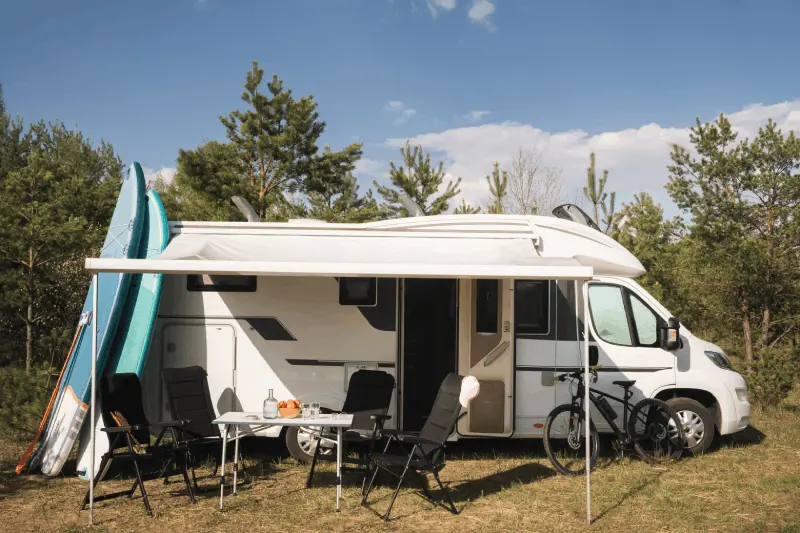
Professional camping areas in Datça are generally concentrated in residential areas or popular bays like Palamutbükü, Hayıtbükü, and Ovabükü. There is no official caravan camping area within completely untouched, pristine bays. This situation directs you to "wild camping" (wild/free camping).
Important Warning: In Datça, especially during the summer months, accommodation bans may be enforced by the governor's decision in forested areas, protected sites, and some bays due to the extreme fire risk. Before settling your caravan in a bay, you should check local signs and heed the warnings of law enforcement.
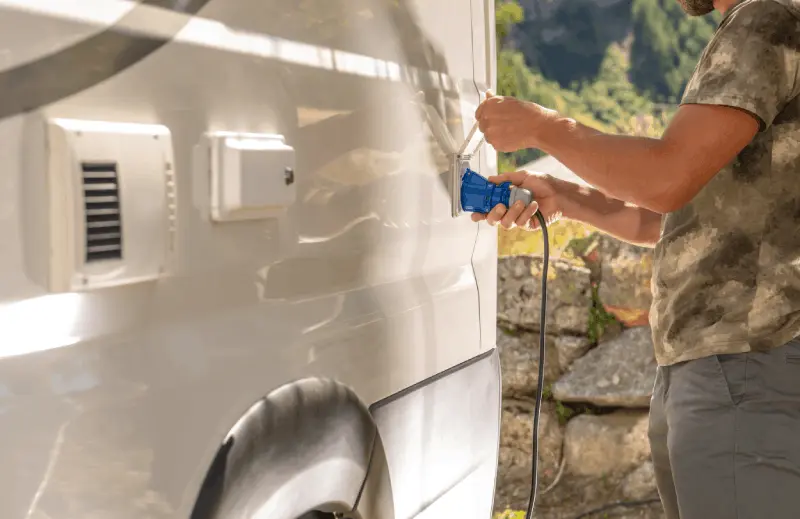
Private camping businesses offer uninterrupted electricity, clean water, and waste disposal facilities for trailer caravans, making them a much safer haven, especially for inexperienced caravanners.
The Most Difficult Point to Reach: Can You Go to Domuzbükü with a Caravan?
Domuzbükü is one of Datça's most special bays, almost impossible to reach by land, usually accessible only by sea (by boats). The existing land road leading here is definitely not suitable for a standard trailer caravan to progress.
The road is extremely rough, filled with large rocks, and has deep potholes, characterized as a narrow forest road. It can only be reached with very specially modified, elevated off-road vehicles and professional equipment. Dreaming of Domuzbükü with a standard passenger vehicle and trailer caravan can result in leaving your vehicle's undercarriage, engine oil pan, or caravan chassis there. If you want to see the beauty of this bay, you should park your caravan in a safe spot in Datça center or a campsite and prefer to go to the bay with daily boat tours.
Is Tire Pressure Important on Rough Roads for Caravans?
Datça's gravelly, sharp stone On gravel and sometimes sandy roads, tire pressure is the most fundamental building block of your driving safety and comfort. The pressure of the trailer's tires should be in perfect balance with the current total load of the caravan.
On gravel and rocky roads, overly inflated tires reduce road grip and cause the caravan to bounce; while under-inflated tires can lead to sharp stones cutting the tire sidewall. When you enter dirt and slightly sandy roads, it may be necessary to slightly reduce tire pressure to increase grip (contact area), but when you reach hard asphalt, you must definitely bring the tires back to their ideal pressure. Always having a quality vehicle compressor and tire repair kit with you can be life-saving to avoid being stranded in the middle of deserted coves.
Is There Enough Maneuvering Space for a Trailer Caravan on Narrow Cove Roads?
The most challenging handicap of traveling with a trailer caravan is that reversing and directing the caravan backwards requires serious reflexes and experience. At the end of the narrow roads descending to the coves of Datça, there are usually no wide turnaround areas, meaning there are no pockets where you can comfortably make a "U" turn.
If you have gone uncontrollably to the end of the road and there is no space to turn the caravan, you may have to reverse for hundreds of meters on steep and cliffy roads. This situation creates a great panic and accident risk. If you are descending to a cove for the first time, the most basic safety rule is: Stop your vehicle in a safe place, check the road on foot or with a lookout. The mentality of "let's go as far as it goes" can leave you in very difficult situations in the geography of Datça.
Is Overnight Camping with a Caravan Prohibited in Datça Coves?
As with environmental laws throughout Turkey, in Datça, the issue of camping with a caravan in free areas is at the discretion of local administrations and law enforcement. Especially in first-degree protected areas, archaeological sites, and forested areas with national park status, overnight camping is strictly prohibited.
Gendarmerie teams may regularly patrol and warn caravanners in these coves, request evacuation from the area, or impose administrative fines. To avoid fines and reactions while staying in untouched coves, the following rules should be observed:
Never litter and do not make noise.
Do not light fires in the open.
Avoid giving the appearance of a "permanent camp" by setting up too many tables, chairs, and awnings outside. Positioning your caravan as just a parked vehicle can greatly reduce the likelihood of intervention by the gendarmerie.
Where Are the Caravan Waste Disposal Points (Chemical Waste) in Datça?
The most critical and hygienic issue of long-term camping in trailer caravans is the management of grey water (kitchen/shower water) and black water (toilet waste). In Datça's high biodiversity and sensitive ecosystem, discharging these chemical wastes directly into the soil or sea is both a major environmental disaster and carries severe penalties.
Unfortunately, none of Datça's untouched coves have a public waste disposal unit or chemical dumping point. Therefore, you should go to the nearest professional camping area at regular intervals to empty your cassette toilet or waste tank, or use the points permitted by the municipality. If you are not disciplined and prepared in waste management, staying in untouched coves for more than 3 days can become an unhealthy situation for you.
Energy Management in Nature: Is a Solar Panel Sufficient in Datça?
Due to its geographical location, Datça is one of Turkey's most efficient and sunniest regions in terms of solar energy. Since you will not have the opportunity to get electricity from outside in untouched coves, it is essential to have a strong solar panel and battery system (preferably Lithium battery) in your caravan.
To continuously meet basic needs such as the compressor refrigerator, lighting, water pump, and phone charging in the caravan, there should be a panel system with at least 200W - 300W power on top of your caravan. However, you should remember that the refrigerator will run continuously due to the heat in the summer and consume a lot of energy. If you have parked your caravan in the shade of a tree to protect it from the heat, the efficiency of fixed panels will decrease significantly; therefore, having portable, long-cabled foldable solar panels with you will provide great energy comfort in Datça.
Logistical Preparation: Where to Do Grocery Shopping and Food Supply?
Before descending into the depths of the coves and deserted spots, you need to complete your logistical preparation and food stock. There are large national market chains in the center of Datça, and you can easily meet all your needs from these places.
In relatively larger villages like Palamutbükü and Mesudiye, there are also local grocery stores, butchers, and weekly markets on certain days. However, when you go to completely untouched spots like Kurubük or Murdala, even the nearest grocery store to buy bread will be kilometers away. Planning your fresh fruit-vegetable, drinking water, and basic food stock to last at least 3-4 days will prevent your holiday from being cut short. Additionally, you should definitely procure local olive oil, pine/thyme honey, and the famous Datça almonds from the stalls of villagers on Datça roads.
Do Strong Winds Shake the Caravan and How to Take Precautions?
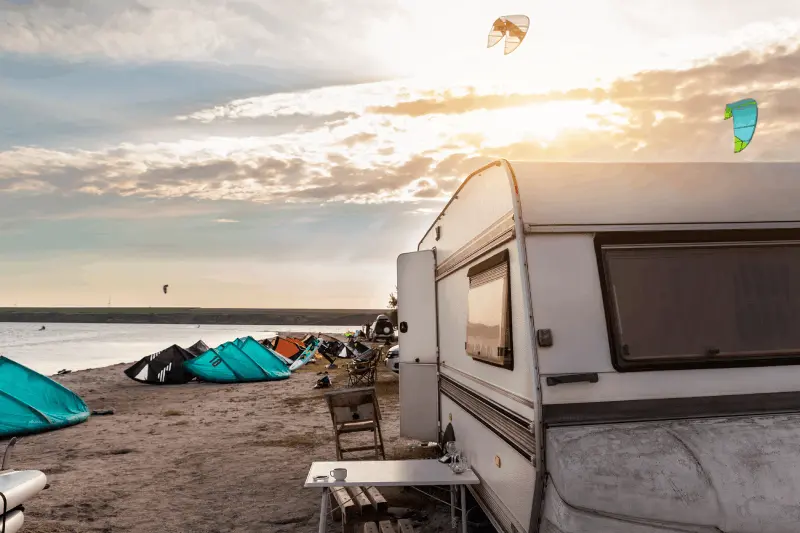
The wind of Datça is world-famous, and these winds can sometimes reach frightening levels for those not accustomed to caravan life. Special While staying right by the sea on the coastal strip, sudden strong storms at night can shake the caravan, destabilize it, and cause irreversible damage to open awnings.
Positioning: When parking your trailer caravan, you must consider the prevailing wind direction (usually blowing from the north in Datça) and position the caravan in a way that offers the least resistance to the wind (aerodynamic).
Awning Safety: In windy or potentially windy weather, you should never leave light items outside and always keep your awning fully closed.
Stabilization: You must ensure that the wide pads placed under the stabilizing legs (support legs) at the four corners of the caravan are fully seated on solid ground and locked.
Is Hayıtbükü Suitable for Trailer Caravan Camping?
Hayıtbükü is one of the most charming, sheltered, and circular bays of Datça, known for its calm sea. However, the physical area of the bay and the settlement behind it are quite small. Especially in the summer months, it is flooded with local tourists and becomes so crowded that you can hardly find a spot.
Entering Hayıtbükü with a large trailer caravan can turn into a nightmare due to narrow streets, improperly parked vehicles, and dead-end blind spots. This area is more suited for boutique pensions and day-trippers with cars. If you definitely want to see Hayıtbükü, it would be much wiser to park your caravan in the geographically much wider and more spacious Ovabükü area and walk or cycle to Hayıtbükü.
Is There Space for Caravans in Ovabükü and What Are the Advantages?
Ovabükü, compared to its neighbor Hayıtbükü, has a much wider, longer coastline and a broad plain behind it. This flat terrain makes it one of the most suitable and risk-free stops for trailer caravans in Datça.
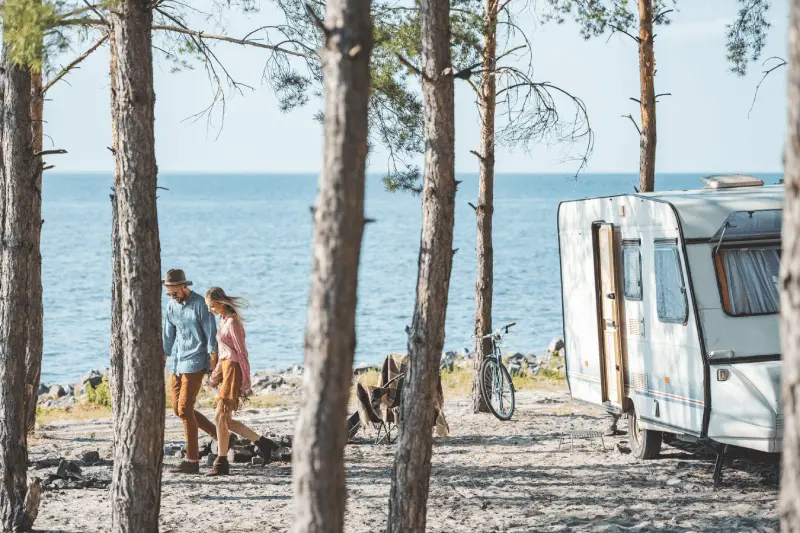
Along the beach strip, there are suitable pockets, flat areas, and a few boutique camping businesses that accept caravans where you can safely park your caravan. The sea is magnificent, clean, and has a deepening structure. The biggest advantage of staying in Ovabükü is being within walking distance to local markets and restaurants while fully experiencing that pristine bay atmosphere. However, finding a spot can also become difficult during the high season (July-August); if you go in June or September, you have the chance to park your caravan at the most beautiful spot on the beach.
Can You Go to Akvaryum Bay with a Caravan and Is the Parking Safe?
The famous Akvaryum Bay (Gerence Bay) in Datça is renowned for its turquoise and aquarium-clear waters that reveal the interior like glass. However, the road to this natural wonder is quite steep, rugged, and has low ground stability (soil quality).
Trying to descend directly to the beach next to the bay with a trailer caravan is a highly risky action. The slope of the road and narrow bends can cause the caravan to slide from the back or the front of the towing vehicle to lift and lose traction. Experienced caravanners prefer to leave the caravan on the flat areas along the main road above and walk down to the bay. If you want to watch the unique view of Akvaryum Bay from inside the caravan, staying on the flat areas above the high cliffs, directly facing the sea view, is both safer and much more enjoyable.
For Those Without Their Own Caravan: Can You Rent a Caravan in Datça?
If you don't have your own caravan or don't trust your vehicle's towing capacity and clutch to tackle Datça's challenging roads, you can consider caravan rental options in the area. However, finding a direct professional caravan rental office or company in Datça center is difficult.
Generally, if you are coming to Datça by air, you can rent a motorhome/trailer caravan via Dalaman Airport or through Marmaris and Muğla center on the road and transition to Datça. When choosing the type of caravan to rent, you should never forget Datça's geography. If you are new and inexperienced in this matter, renting a compact motorhome or a panel van converted into a caravan (campervan) instead of dealing with the maneuvering difficulties of a trailer caravan will provide you with great driving ease and psychological comfort on Datça roads.
How Many Days Should You Stay in Datça with a Caravan and What Should the Ideal Route Plan Be?
Datça is such a peaceful, non-tiring, and enchanting place that you will surely want to stay much longer than you initially planned. However, as we mentioned before, your logistical capabilities (water, energy, food supply) are the main factors determining how long you can stay in pristine areas.
If you are staying in a well-equipped camping area offering electricity and water facilities, you can spend weeks without getting bored.
If you are camping completely off-grid in pristine bays, on average, after 3-4 days, your water will run out, and your toilet cassette will fill up. At this point, you need to change locations and refresh your logistics.
To fully explore and enjoy Datça's Aegean (north) and Mediterranean (south) coasts, the historical Knidos Ancient City, and the famous Old Datça with its stone houses, you should plan your stay accordingly. Planning a minimum 10-day caravan route is the ideal approach.
How Do Locals Treat Caravanners?
The locals of Datça are generally extremely calm, tolerant, highly intellectual, and respectful of nature. However, the uncontrolled increase in caravan tourism worldwide and in Turkey in recent years, some irresponsible users leaving their trash in the bays and discharging their gray water into nature, have understandably caused a reaction and prejudice against caravanners among the locals and villagers.
If you behave respectfully towards nature, meticulously clean your campsite, avoid noise pollution, and contribute to the local economy by shopping from local village tradesmen instead of chain stores, the people of Datça will warmly welcome you. The sincere friendships you establish with villagers you meet along the way and the secret bay tips you receive from them can turn into the most unforgettable memories of your journey. The principle of "Don't leave your trash, protect nature" is the only key to being respected in Datça.
Is There a Mosquito Problem in Datça Bays and How to Take Precautions?
Datça generally has a low humidity level due to the Mediterranean climate and therefore does not host a dense mosquito population like excessively humid areas such as Antalya. However, serious mosquito problems can occur in the evening near water edges, reeds, and river mouths.
Having a mosquito net system working smoothly on the windows and doors of your caravan is vital for a comfortable sleep. Additionally, having mosquito repellent body sprays, herbal incense or natural oils (such as lavender, eucalyptus, lemon grass oil) for outside the caravan will enhance your comfort during outdoor sessions. Using yellow or amber-colored bulbs instead of white for your outdoor lighting is also a practical way to keep mosquitoes and other flying insects away from your caravan. Datça's famous breezy wind is actually your greatest natural ally in combating mosquitoes; because strong winds make it difficult for mosquitoes to fly and navigate.
Is Fishing with a Rod Allowed on Datça Beaches?
Datça bays are like a hidden paradise for amateur fishing enthusiasts and rod fishermen. It is completely free to cast your rod and fish from the shore in the bay where you have safely parked your caravan, and it is a wonderful activity that makes you forget how time passes.
However, you should not forget that a significant part of the peninsula is within the scope of the Gökova Special Environmental Protection Area and some sensitive bays are under the status of underwater national parks and may be subject to fishing bans. Especially activities such as night spearfishing or commercial net casting are strictly monitored and have severe penalties. Cooking a fresh sea bream, mırmır, or calamari that you caught yourself in the small kitchen of your caravan is one of the most luxurious and enjoyable moments of caravan life. You should never neglect to respect the marine ecosystem while fishing and release small fish below the legal size limit back into the sea.
Is the Risk of Forest Fires High in the Summer Season?
Yes, Datça is under a very high, critical risk of forest fires especially in July, August, and September. The region's extremely windy structure and the pine trees and dry scrubland that make up the vegetation can cause even a small spark to destroy thousands of hectares within hours. This high risk is the biggest restriction and responsibility area for caravanners.
While staying in a caravan in Datça, you should never light an open fire, have a barbecue, and even make sure your cigarette butts are completely extinguished before disposing of them. Many pristine forest bays are completely closed during the summer months by the decisions of the governor's office and the forestry directorate due to this fire risk. You must ensure that your fire extinguisher is easily accessible, visible in the caravan, and that its pressure is full. Loving nature requires protecting it unconditionally; therefore, you should always adopt the fireless camping model in Datça and cook your meals on the safe gas stoves inside the caravan.
Is It Necessary to Have a First Aid Kit When Going to Pristine Bays?
When you descend to Datça's much-praised, secluded pristine bays, the nearest health center, pharmacy, or fully equipped state hospital will be dozens of kilometers away and behind winding roads. Therefore, a comprehensive, non-expired first aid kit is the most important safety element of a Datça caravan trip.
Beyond the standard band-aid, your kit should definitely include disinfectant liquids, bandages, painkillers, antihistamine (allergy) medications, high-factor sunscreens, burn creams, and antidote-effective ointments against possible insect/bee stings. Additionally, you should be very careful against sea urchins that you may frequently encounter on Datça's rocky beach structure and untouched sea, use water shoes, and have a quality tweezer and antiseptic solutions in your kit to remove embedded spines.
Do Phones and Internet Work in Datça's Bays?
In Datça's district center, on main roads, and in populated areas like Palamutbükü and Mesudiye, mobile internet and phone networks (4G / 5G) are quite good and uninterrupted. However, in isolated pristine bays located behind high mountains and deep valleys, the signal level drops significantly. may disappear completely.
Cove Name | Mobile Internet Status | Suggestion |
Ovabükü & Palamutbükü | Strong (4G/5G) | Very suitable for remote work |
Kurubük & Akvaryum | Weak / Intermittent | Better reception in hilly areas |
Murdala & Domuzbükü | Mostly No Signal | No network except for emergencies |
Especially in northern coves like Murdala or some steep closed bays, your phone may not get any signal. If you are a remote-working caravanner (digital nomad), you should test the coverage of the cove you plan to visit in advance, use an external signal booster antenna, or if your budget allows, opt for satellite internet systems (like Starlink).
Is It Worth Going to Datça with a Tow Caravan Despite All These Challenges?
Despite all these challenges, narrow roads, steep slopes, water shortages, and waste management problems, going to Datça with a tow caravan is definitely and absolutely worth it.
When you wake up with the first light of the morning, opening the door of your caravan and letting yourself into those sheet-like, pristine turquoise waters in front of you gives a sense of freedom that no luxury hotel in the world can match. Watching Datça's unique tranquility, unspoiled nature, and the thousands of stars appearing in the sky at night from under the awning of your caravan will truly cleanse your soul. The quiet and secluded cove you reach at the end of challenging roads and steep slopes is so enchanting that it will make you forget all the effort and fatigue you endured in seconds. Caravaning in Datça is the purest form of freedom and unity with nature.
When to Go to Datça with a Caravan?
If you want to minimize the stress caused by roads and crowds with the load of a tow caravan behind, and enjoy nature in peace, the most ideal time for Datça is the period from mid-September to the end of October, known as "Yellow Summer". During this period, the scorching and oppressive heat of summer is left behind, the air temperature reaches the most ideal level for caravan life, and the sea water temperature is still perfect for swimming. With the opening of schools, roads, villages, and untouched coves become completely empty; this gives you the chance to freely park your caravan against any unique view you desire.
The spring months (April and May) also offer a visual feast to witness the awakening of nature and the blooming of almond trees, but during this period, the sea water may be a bit cool for swimming. In winter, Datça is quite deserted, calm, and rainy; during this period, sudden severe storms and the strength of the wind can make life inside the caravan quite challenging.