
What is the Nostalgic Effect of Traditional Gas Lanterns in Camping Area Lighting?
Gas lanterns are among the most iconic equipment that has been carried from the golden age of camping to the present day. The warm and flickering light emitted by these lamps creates a unique mood that complements the natural atmosphere provided by the campfire. For many experienced campers, the soft "hiss" sound produced by the gas lantern becomes a soothing meditation tool when combined with the silence of nature. Aesthetically, the metal body and glass globe of gas lanterns add a classic elegance to the camping table. For nostalgia enthusiasts, these lamps are not just lighting tools, but also time machines that revive past camping moments.
What are the Practical Advantages of Rechargeable LED Camping Lamps in Modern Camping Experiences?
Rechargeable LED camping lamps, which have entered our lives with modern technology, are a revolution for campers seeking practicality and efficiency. These devices provide instant lighting with a single button press, offering users different brightness levels and color temperatures for flexibility. Thanks to their rechargeable nature, they eliminate the hassle of carrying external fuel. Additionally, their lightweight structures, durable plastic bodies, and advanced battery technologies provide great convenience for long-term use. Especially in family camping or situations requiring quick setup, the "plug and play" logic offered by LED lamps allows campers to use their time in nature more efficiently.
Why is the Light Color and Warmth of Gas Lanterns Still Preferred?
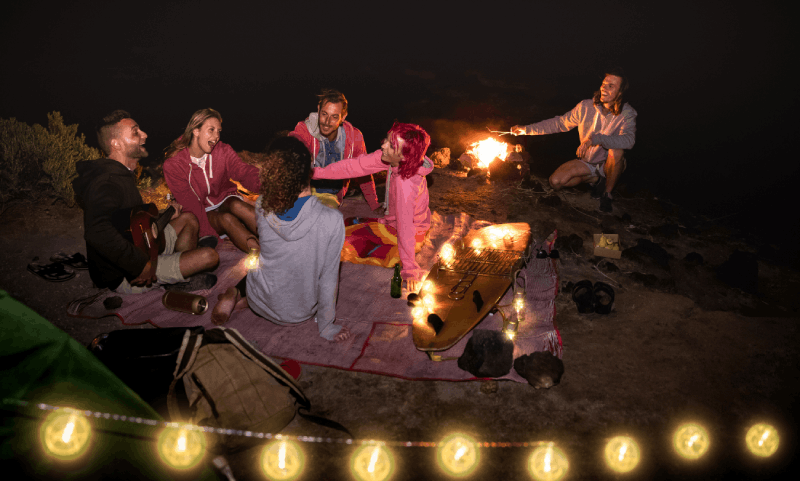
The light produced by gas lanterns is created by burning butane or propane gas over a mantle. The light that emerges as a result of this combustion has a warm and natural character, close to sunlight. The cold, bluish, and artificial light tone seen in some models of LED lamps can sometimes be disturbing in the midst of nature. Gas lanterns, with a color temperature around $3000$ K (Kelvin), show surrounding colors more naturally and do not strain the eyes. Especially during evening meals, a gas lantern placed in the center of the table creates a more intimate and livable atmosphere with the depth and shadow play it offers.
Are the Multiple Brightness Levels and Adjustable Color Temperatures of Rechargeable LED Lamps an Advantage?
The new generation rechargeable LED camping lamps offer users incredible control thanks to advanced circuitry. The brightness of a gas lantern is limited, and it tends to extinguish at very low levels. However, an LED lamp can be adjusted over a very wide range from $1$ lumen to $2000$ lumens. Additionally, thanks to the color temperature adjustment available in some models, it is possible to switch to white light while reading a book and to daylight mode while resting. This flexibility allows the lamp to be used both as a dim night lamp inside a tent and as a projector illuminating a wide area in the campsite. This means that multiple needs can be met with a single device.
How Does the Performance of Gas Lantern Flames Compare to LED Lights in Windy Conditions?
Wind is one of the biggest enemies of camping lighting. Although gas lanterns try to protect the flame with their glass globes, combustion stability can be disrupted in very strong winds, or the mantle inside the lamp can be damaged. Additionally, wind can reduce the combustion efficiency of the gas, causing the light to flicker. Rechargeable LED lamps, on the other hand, are completely unaffected by wind since they are a fully enclosed circuit system. Even in stormy weather, you can safely use your LED lamp without any reduction in light intensity or flickering. This factor makes LED models an absolute preference for professionals camping in challenging weather conditions.
What Are the Life Risks of Using a Gas Lantern Inside a Tent?
Using a gas lantern for indoor lighting in a tent is definitely a behavior that should be avoided in the camping world. There are two main reasons for this: First, gas lanterns emit toxic gases such as carbon dioxide and carbon monoxide during combustion. The accumulation of these gases in a small and enclosed space like a tent poses a life-threatening danger. The second risk is the fire hazard. The metal bodies of gas lanterns can become excessively hot during use and can ignite the synthetic fabric of the tent upon contact. Rechargeable LED lamps, on the other hand, produce no emissions and do not generate heat. Therefore, they can be safely used by hanging them from the ceiling of the tent.
Is the Battery Life of Lithium-Ion Rechargeable Lamps Sufficient for Long Camping Vacations?
The lithium-ion batteries used in rechargeable camping lamps, such as the $18650$ or $21700$ types, offer very high capacities today. A quality LED lamp with a $10000$ mAh capacity can provide over $100$ hours of lighting in low brightness mode. This is generally sufficient for a week-long camping vacation. However, if the lamp is used at maximum power, this duration can drop to $4-6$ hours. In gas lanterns, replacing the fuel cartridge takes only seconds when it runs out. If you are planning a long camping trip and do not have a solar panel or a large power bank with you, the uninterrupted power supply advantage of a gas lantern still retains its validity.
Is Changing and Maintaining the Gas Lantern Mantle Difficult for Beginners?
The most delicate part of gas lanterns is the mantle, which is called "mantle." This part becomes as fragile as ash once it is lit. It can easily break due to shocks during transport or if the lamp falls. Installing a new mantle and properly pre-burning it requires a certain level of skill and patience. For novice campers, this process can sometimes be frustrating. Rechargeable LED lamps, on the other hand, do not require such maintenance. You do not need to replace any parts, ignite it, or handle it delicately. LED lamps offer a much smoother experience for those who love the "use and remove" convenience.
Can I Charge My Phone Using the Power Bank Feature of Rechargeable Lamps?
Multi-functional features are the most prominent aspect of modern camping equipment. Many high-end rechargeable LED lamps serve as a power bank thanks to the USB ports on them. When your phone runs out of charge at the campsite or you need to charge your smart watch, you can transfer energy from your lamp to these devices. This feature can be life-saving in emergencies to keep communication channels open. Gas lanterns do not have such technological capacity; they focus solely on providing light and a bit of heat. For campers who are dependent on technological devices or ensure their safety with technology, this extra feature of LED lamps is a significant advantage.
Does the Heat Emitted by a Gas Lantern Provide Any Benefit While Cooking in a Camping Kitchen?
One of the side effects of gas lanterns is the heat they produce. In winter camps or cool highland nights, a gas lantern placed on the dining table can help warm your hands with the radiant heat it emits. While preparing dinner in the camping kitchen, this mild warmth emitted by the lamp increases the comfort of the environment. However, in summer camps, this situation can turn into a disadvantage; dealing with the heat of the lamp in already warm weather can be oppressive. Rechargeable LED lamps, on the other hand, produce almost no heat due to their high energy efficiency. This makes LEDs a more stable option for staying cool in summer and creating a safe environment in winter.
How Does the Loss of Pressure in Gas Cartridges Affect Lighting in Low Temperatures?
The biggest technical weakness of gas lighting systems is extreme cold weather conditions. Butane and propane gas mixtures struggle to convert from liquid to gas when the temperature drops below zero. This situation can lead to a decrease in pressure inside the cartridge, thus reducing the light intensity or completely extinguishing the lamp. This is a serious problem for those camping in cold or snowy conditions. On the other hand, lithium batteries are also affected by cold, but quality batteries can maintain their performance up to $-20$ degrees. Additionally, LED lamps do not require pressure, so they continue to work under any conditions as long as the batteries do not freeze. This shows that in winter conditions, reliability is on the side of LEDs.
How Important are the Shock Resistance and IPX Waterproof Certifications of LED Lamps?
Unexpected events can happen at any moment in nature; your lamp can fall off the table or suddenly get caught in a downpour. The glass globes of gas lanterns are extremely fragile to shocks and can crack when they come into contact with water. Rechargeable LED camping lamps, on the other hand, generally have shock resistance rated to military standards (IK rating) and waterproof certifications such as IPX4 or IPX7. Even if you accidentally drop an LED lamp into a stream, it is likely to continue working after you take it out and dry it. This durability factor makes LED models indispensable for campers who have to use their equipment roughly or move in challenging terrain conditions.
How Does the Soft Hiss Sound of a Gas Lantern Affect the Camping Atmosphere?
Lighting is not only related to the sense of sight; the sense of hearing is also a part of the camping atmosphere. The "hiss" sound produced by gas lanterns while they are working is perceived by some campers as a part of nature and creates a meditative environment when combined with the crackling of the campfire. This sound can serve as a kind of "white noise" that masks indistinct sounds from outside amidst the silence. Rechargeable LED lamps, however, are completely silent. For some, this silence means modernity and tranquility, while for others, the absence of that characteristic sound of a gas lantern means a lack of camping spirit. This is entirely a matter of personal preference and depends on the "mood" the camper is looking for.
Which is More Economical in Terms of Fuel Costs: Gas Lantern or Electric Rechargeable Lamp?
From an economic perspective, rechargeable LED lamps are a much more profitable investment in the long run. While the cost of charging an LED lamp from your home outlet is expressed in cents, using a gas lantern requires purchasing a new gas cartridge each time. Considering the current prices of gas cartridges, the weekly cost of a gas lantern that burns for $4-5$ hours each night can be quite high. Additionally, the mantle replacement in gas lanterns is also an additional cost item. Although the initial purchase price of a rechargeable LED lamp may be high, it pays for itself within a few camping seasons. If you are a budget-focused camper, rechargeable systems are wallet-friendly heroes.
Which Lamp is More Suitable for Backpacking Campers in Terms of Weight and Volume Balance?
If you are planning to hike for miles with your backpack, every gram counts. Gas lanterns are quite bulky and heavy due to their heavy metal bodies, fragile glasses, and the extra gas cartridges that need to be carried. They also require extra protective cases to prevent the glass from breaking. Rechargeable LED lamps, on the other hand, have extremely compact designs; some models are even small enough to fit in the palm of your hand. Their lightweight allows them to fit into any pocket of your backpack. Modern backpacking campers often minimize their load by choosing "fast and light" (fast and light) philosophy, typically opting for minimal weight LED lanterns and headlamps.
Do the Glass Globes of Gas Lanterns Cause Problems During Transport Due to Their Fragility?
The weakest link of gas lanterns is the thin glass globe that ensures the light is emitted. A gas lantern left among other heavy equipment in a vehicle trunk or placed on a hard surface can become inoperable due to a broken glass. A broken glass not only renders the lamp unusable but also creates a difficult mess of glass shards at the campsite. The light-emitting surfaces of rechargeable LED lamps are generally made of shatter-resistant, flexible plastic materials like polycarbonate. This way, they do not require any special protection during transport and are not affected by shocks in the trunk. In terms of safe transport, LED lamps are undoubtedly superior.
Is the Red Light Mode of Rechargeable LED Lamps Necessary to Protect Night Vision?
In the dark, our pupils dilate and adapt to night vision. When a bright white light is turned on, this adaptation is disrupted, and when the light is turned off, you may not see anything for a while. The "red light" mode found in many rechargeable LED camping lamps allows for lighting without disturbing the human eye's night vision. This feature is a tremendous advantage when reading a map at night, searching for items inside the tent, or going to the bathroom without disturbing other campers. Gas lanterns do not have such a mode; the light is always bright and white/yellow toned. The support of red light provides a tactical advantage in professional camping.

Can the Maximum Light Output (Lumens) of a Gas Lantern Compete with LED Lamps?
When it comes to light output, traditional gas lanterns are still quite competitive. A large gas lantern can reach the brightness of approximately $80-100$ watts (around $1000$ lumens) and emits this light at a full $360$ degree angle. However, today's high-powered LED lamps can exceed $2000$ lumens. The fundamental difference is that LEDs quickly drain batteries at this power. Gas lanterns, on the other hand, can maintain the same high brightness for hours with a steady fuel flow. If your goal is to keep a large area, such as a main campsite or a large dining table, very bright throughout the night, a quality gas lantern is still a very strong competitor.
Which is a Bigger Problem for Eco-Friendly Camping: Disposable Gas Cartridges or Old Batteries?
Both systems have disadvantages in terms of environmental impact. Gas lanterns emit carbon emissions into the atmosphere by burning butane/propane mixtures, and empty metal gas cartridges become difficult waste to recycle. Unfortunately, many campers can leave these cartridges in nature. Rechargeable LED lamps do not burn fossil fuels, but the production process and lifespan of the lithium batteries inside them pose an environmental risk when they are disposed of as chemical waste. However, the ability of an LED lamp to be charged thousands of times prevents the creation of thousands of gas cartridges, so it can be said that rechargeable systems cause less harm to nature in the overall life cycle analysis.
Why Should LED Lamps Be Preferred for Emergency Signals and SOS Mode?
When you have an accident in nature or get lost, light is a vital tool for calling for help. Most rechargeable LED camping lamps have pre-programmed "Flash" (strobe) or "SOS" signal features in Morse code. These modes ensure that the light is noticed from a great distance and burn intermittently to maximize battery life. It is impossible to manually give such a signal with gas lanterns; the lights are continuous and have low attention-grabbing capacity. Additionally, you can wave an LED lamp like a flashlight to indicate direction. In security and search-and-rescue scenarios, thanks to their technological features, LED lamps become lifesaving assistants.
Is the Initial Lighting Phase and the Need for Matches/Lighters a Barrier for Gas Lanterns?
Lighting a gas lantern is a ritual; you open the gas, hear that characteristic hiss, and then ignite the flame with a lighter or match (although some models have magnetic ignition, it is not always reliable). If you have no source of fire nearby or your lighter is broken, it means you have no light. Rechargeable LED lamps, on the other hand, are independent; you simply press a button to get light. In rainy and windy weather, trying to light a gas lantern with a lighter while your hands are shaking can be quite challenging. The ease of use and quick response of LED lamps create a much more user-friendly profile, especially in stressful moments.
Can Rechargeable LED Lamps Be Fixed with Magnetic Bases and Hook Clips?
The creativity in the design of rechargeable LED lamps expands their areas of use. Many models have strong magnets on their bases; this allows you to attach the lamp to the body of your car, the metal parts of your caravan, or any iron surface in seconds. Additionally, they can easily be hung on tree branches, tent ropes, or the back of your backpack thanks to adjustable hook clips and carabiners. Gas lanterns, on the other hand, are usually designed to either stand upright or be hung from a chain above. Due to their heat, they cannot be placed close to plastic surfaces or fabrics. These limited mounting options confine the usability of gas lanterns to a narrower frame compared to LEDs.
Is the Risk of Fuel Leakage Dangerous When Transporting Gas Lanterns in a Vehicle?
Safety is the top priority when transporting camping equipment in a vehicle. If gas cartridges are exposed to high temperatures or their valves are damaged, a gas leak can occur inside the vehicle. This situation can pose a risk of explosion or fire, especially in a closed trunk on hot summer days. It is recommended to always transport gas lanterns upright and in a protected manner. Rechargeable LED lamps, however, have no such risk of gas leakage. Although overheating of batteries is rare, electric devices are considered much safer than flammable and pressurized gas cylinders in terms of overall transport safety. This is especially a comforting factor for campers on long journeys.
Do Solar-Powered Rechargeable Camping Lamps Provide Full Efficiency with Solar Energy?
Some rechargeable LED lamps released in recent years have small integrated solar panels on them. In theory, these panels aim to charge the lamp during the day with sunlight and provide lighting at night. However, in practice, the efficiency of these small panels is quite low, and they may need days of direct sunlight to fully charge. This feature should be considered more of an "emergency charge." However, if you connect your lamp to an external foldable solar panel, you can establish a completely independent and sustainable energy cycle in nature. Gas lanterns do not have such renewable energy options; when the fuel runs out, you are left needing logistical support.
How Successful Are Retro-Designed LED Lamps in Imitating the Appearance of Gas Lanterns?
If you love the classic look of a gas lantern but cannot give up the practicality of LED, "Retro LED" lamps may find a middle ground for you. These lamps resemble an old gas lantern or a ship's lantern from the outside; they have a metal body, a glass-like globe, and even LED chips that look like "filaments." The light colors are generally very warm, and some models even have flicker modes that mimic flames. Of course, they cannot replicate the real burning smell and sound of a gas lantern, but they successfully combine the feeling of nostalgia with modern technology in terms of visual atmosphere. These models are quite popular among modern campers who value aesthetics.
Does the Lack of Oxygen at High Altitudes Affect the Burning Quality of Gas Lanterns?
Those who have experienced altitude know that as elevation increases, the oxygen level decreases and air pressure drops. Gas lanterns require oxygen in the air for the combustion process. At very high altitudes (above $3000-4000$ meters), the lack of oxygen can lead to inefficient flames, reduced light output, and increased carbon monoxide production due to incomplete combustion. Additionally, low pressure also affects the gas's escape speed. Rechargeable LED lamps, on the other hand, can operate with the same efficiency without any chemical reaction or atmospheric requirement, even in a vacuum or outer space. This technological independence makes LED lighting the only reliable option in high-altitude expeditions.
Why is the Non-Heating Feature of LED Lamps Safer for Families Camping with Children?
Camping with children can always be more active and risky. Curious little ones may want to touch a glowing object. The body and glass of gas lanterns can reach temperatures high enough to cook an egg, which can cause serious burns if a child touches it. Additionally, the risk of fire is very high if the lamp tips over. Rechargeable LED lamps, however, remain at room temperature even after hours of operation. Children can carry these lamps in their hands, take them to bed, or include them in their games. For parents seeking safety and peace of mind during family camping, non-heating LED lamps are a much more sensible choice compared to gas models.
What is the Availability of Spare Parts for Gas Lanterns and Their Longevity?
A quality gas lantern can last for decades with proper care. Due to its metal construction and simple mechanical components, it has very few parts that can break. If the glass breaks, you can buy a new one; if the mantle wears out, you can replace it; if the valve gets clogged, you can clean it. These lamps are somewhat like an "engineering legacy." Rechargeable LED lamps, however, consist of electronic circuits and batteries. The battery has a lifespan (usually $500-1000$ charge cycles), and when a microchip inside it fails, it is usually impossible to repair. If you are a traditionalist who says, "I want to buy it once and use it for life," the mechanical durability of a gas lantern may attract you. However, in today's world, technological obsolescence may require more frequent updates for LEDs.
How Should Rechargeable Lamps Be Stored in Winter Months to Extend Battery Life?
The most sensitive point of rechargeable LED lamps is during periods when they are not used for long periods. When lithium batteries are completely drained, their chemical structures can break down and they may not charge again. Therefore, it is recommended to keep your lamp at a charge level of 50-60% when the camping season ends and check it every $3-4$ months. Additionally, storing them in extremely cold or hot environments negatively affects battery health. Gas lanterns do not have such "storage stress"; when you remove the fuel and put the lamp in a box, it will still work with the same performance even years later. The maintenance discipline of batteries is a small but important responsibility that comes with rechargeable systems.
Does the 360-Degree Light Distribution of a Gas Lantern Make a Difference in Camping Table Lighting?
The lighting placed in the exact center of a camping table is desired to distribute light evenly in all directions. Gas lanterns, with their vertical mantle structures and cylindrical glasses, emit light continuously in a $360$ degree angle. This ensures that everyone around the table benefits from the same amount of light. However, some rechargeable LED lamps may create shadows due to the sections where batteries or circuits are located, creating "dead spots." However, quality "flashlight" type LED models have overcome this issue by using optical diffusers. Still, the natural spherical distribution of a gas lantern continues to provide a more homogeneous lighting comfort during table conversations.
Is a Gas Lantern Unnecessary When There is Access to a Power Source in Caravan Camping?
If you are camping with a caravan, you usually have access to $12$V or $220$V power. In this case, LED lamps that can be easily charged from the caravan's external lighting or vehicle are much more logical. Using a gas lantern inside the caravan is already prohibited due to insufficient ventilation. Outside the caravan, a gas lantern remains more of a "pleasure" accessory. If you want to protect your caravan's batteries or sit in a spot where the vehicle's lights do not reach (for example, by the beach), the portability of rechargeable LED lamps comes to the forefront again. Most caravan owners prefer modern LED systems by 90% due to practicality and cleanliness (no fuel smell).
Which Lighting Type is More Efficient for Activities Like Night Fishing or Hunting?
In activities that require attention, such as night fishing, both the intensity and duration of the light are desired. The high lumen and warm light of gas lanterns can effectively attract certain fish species by reducing reflections on the water surface (this is where the term "lantern fishing" comes from). However, the risk of tipping and causing a fire with a gas lantern on a boat or wet surfaces is very high. Rechargeable LED lamps are much more functional for modern hunters and fishermen with their waterproof features, adjustable focused lights, and hands-free options like headlamps. Especially a waterproof LED lamp is a guarantee of safety among fishing equipment.
Does the Carbon Dioxide Emission from Gas Lanterns Cause Poisoning in Enclosed Spaces?
Yes, this issue should never be taken lightly. A gas lantern is essentially a small stove that burns under control. The combustion process continuously consumes fresh oxygen and emits carbon dioxide (in efficient combustion) or carbon monoxide (in inefficient combustion). Carbon monoxide is an odorless, tasteless, and colorless gas, making it impossible to detect, and is known as the "silent killer." Lighting a gas lantern in a tent, inside a vehicle, or in small enclosed cabins can lead to fatal outcomes during sleep. Rechargeable LED lamps, however, can be used in enclosed spaces as they do not engage in any chemical reactions. Your health and safety are always more valuable than nostalgia.
Can Software Bugs or Circuit Failures in LED Lamps Be Repaired?
Modern LED lamps are not just a bulb; they contain a complex micro circuit board that regulates voltage, controls charging, and manages different modes. If this board gets wet, shorts out, or shows a manufacturing defect, the lamp can become completely inoperable. Unfortunately, such electronic failures are very difficult to repair in the camping area or at home; usually, the entire product needs to be replaced. Gas lanterns, however, are mechanical; you can open the valve with a needle or tighten a loose screw. For campers with a "do-it-yourself" culture, the mechanical repairability of gas lanterns is an advantage, but the failure rate is quite low in quality LED brands.
Are Foldable LED Lanterns Suitable for Those Seeking Minimalism in Camping Equipment?
Minimalism is one of the strongest trends in modern camping. Foldable or "accordion" type rechargeable LED lamps produced for those who want to reduce the volume of their camping equipment provide tremendous space savings. These lamps can take the shape of a disk when not in use, allowing them to fit in your pocket. Gas lanterns, on the other hand, are rigid and cannot be reduced in size in any way. If the space where you store your camping equipment is limited or you are going camping with a small vehicle (even a motorcycle), foldable LED models will be the most sensible choice for you. The engineering solution offered by LEDs in terms of both lightweight and volume economy is unique.
What Are the Differences Between Fuel Types (Butane, Propane, Isobutane) for Gas Lanterns?
To get the best performance from your gas lantern, you need to choose the right fuel. Standard butane gas is cheap but performs poorly in cold weather. Propane can remain in gas form even at very low temperatures, but it requires higher pressure, making it heavier to carry. Camping cartridges usually use a mixture of these two gases and isobutane. A $70 ext{%}$ butane - $30 ext{%}$ propane mixture is ideal for average campers. If you are going to camp in winter, you should prefer cartridges with a high propane ratio. Rechargeable LED lamps do not have such "mixture" issues; the quality of electricity is the same everywhere, and you just need to ensure that your battery is charged.
Should Aesthetics or Functionality Be the Priority in Camping Lighting?
The answer to this question varies depending on your purpose for camping. If you are experiencing a "Gamping" (Glamping - Luxurious Camping) experience, a gas lantern shining on your table may be the star of that luxurious and authentic atmosphere. Here, aesthetics may take precedence over functionality. However, if you are in a challenging natural environment, your safety and practicality are more important than anything else; in this case, a lightweight, durable, and multi-functional LED lamp is the only right choice. An ideal camping set usually includes one of each: a gas lantern for atmosphere on the table, a headlamp, and a rechargeable LED lamp for inside the tent. Finding the balance maximizes the joy of camping.
Should Rechargeable Lamps Be Controlled Remotely with Smartphone Applications?
Some high-end rechargeable LED lamps produced for technology enthusiasts can connect to your smartphone via Bluetooth. Through an application, you can adjust the brightness of the lamp, check the battery status, or turn off the lamp without getting out of your sleeping bag. While some may see this as an "excessive luxury" and disconnected from nature, not having to get out of a warm sleeping bag to turn off the lamp on a cold night is a great comfort. There is no such remote control option with gas lanterns; you must go to it to turn it off and manually turn the valve. This feature indicates how "smart" camping can become.
Does the Smoke Emitted from the Wick of a Gas Lantern Cause Shortness of Breath Inside a Tent?
The working principle of gas lanterns involves the combustion of a fuel and the conversion of this energy into light through a wick (mantle). However, this combustion process inevitably produces carbon dioxide and sometimes carbon monoxide if combustion is inefficient. Especially in narrow and poorly ventilated family tents, this situation poses a serious risk. If you have chronic asthma or breathing difficulties, the slight gas smell and particles released during combustion can disturb you throughout the night. Therefore, gas lanterns should always be used outdoors or under wide canopies with excellent ventilation; they should never be lit in a closed sleeping bag area.
Can the Lithium Battery of a Rechargeable Lamp Explode If Forgotten Inside a Car in Hot Weather?
Modern rechargeable LED camping lamps typically use high-capacity lithium-ion batteries. These batteries can be at risk in a vehicle's dashboard, where temperatures can reach 70-80 degrees when exposed to direct sunlight. The swelling of the battery can cause leakage and, in extreme cases, pose a fire risk known as thermal runaway. However, quality brands add protection circuits against this situation. Still, if you are a safety-conscious camper, you should store your rechargeable devices in the coolest part of the vehicle, preferably under the seat or deep in the trunk. It should be noted that cheap and unbranded products can turn into "ticking time bombs" in such extreme heat.
Will Water Splashing on a Hot Gas Lantern Glass Cause It to Shatter?
When gas lanterns operate, they produce incredible heat; some models can even serve as small heaters at the campsite. The glass under this high heat is very sensitive to thermal shocks. If sudden rain starts or cold water from a spilled glass touches the hot glass, it is inevitable that the glass will crack or completely explode. Carrying spare glass is a logistical burden, so gas lantern users must constantly monitor the weather and keep the lamp in a position that protects it from water contact. There is no such thermal shock risk with LED lamps; most models can work directly under rain with waterproof certification.
Does the Cold White Light Emitted by LED Lamps Attract All the Insects to My Table?
Most insects, especially those attracted to light, are drawn to sources close to the blue and ultraviolet (UV) wavelengths of the spectrum. Many standard LED lamps emit "cold white" light, which is practically an invitation for insects. If you want to enjoy your evening meal in peace, you should ensure that your LED lamp has a "warm yellow" or "amber" mode. Gas lanterns naturally emit yellow-orange light, so they do not attract insects as aggressively as LEDs, but their heat can attract some insect species. Strategically, when purchasing LEDs, choosing models with "mosquito repellent" light modes is the most practical solution to avoid a night filled with itching.
How Much Will the Cost of Fuel Cartridges for a Gas Lantern Affect My Budget During a Long Camping Season?
The operating cost of a gas lantern is quite high due to the continuous need to purchase gas cartridges and the delicate mantles (wicks). Using a gas lantern for 3-4 hours on an average camping night means that a cartridge will run out in a few nights. If you assume you camp for 20 nights throughout the season, the gas cost for lighting alone can double the purchase price of a quality rechargeable LED lamp. Rechargeable LED lamps can be charged almost for free from home outlets or USB ports in vehicles. If "hidden costs" are a determining factor for you, although LED technology may seem expensive at first, it is the most economical option that pays for itself by the end of the second month.
Does the Continuous Hiss Sound Produced by a Gas Lantern Cause Headaches Throughout the Night?
For some campers, the distinctive "hiss" sound of a gas lantern is a nostalgic comfort, but for those who prefer silence, this sound can become an annoying noise after a while. Especially in areas where sound echoes, such as valley floors, the sound of gas escaping from the mantle creates a constant background noise in the environment. This can lead to headaches and concentration loss for those who want to listen to the sounds of nature or have a light sleep. LED lamps operate completely silently. If you want to hear only the wind and birds while camping, digital lighting solutions that do not produce mechanical sounds will be a much more accurate choice for your comfort.
When the Battery of a Rechargeable Lamp Fails, Do I Have to Throw It Away?
This is one of the biggest logistical and environmental issues of LED lamps. Many compact LED camp lamps are produced with sealed circuits; meaning that when the battery dies, it cannot be replaced by the user. If you did not buy a quality and expensive model, the device may become unusable due to a performance-declining battery after 2-3 years. In gas lanterns, however, there is no battery issue; as long as you replace the mantle and insert the gas, you can use a lamp that is 20 years old. In terms of sustainability and longevity, gas lanterns are more "legacy" products. However, modern rechargeable LED lamps that operate with replaceable 18650 batteries have solved this problem; you should always check whether the battery can be removed when purchasing.
What is the Risk of Fire if a Gas Lantern Tips Over in a Family with Small Children?
Using a gas lantern in a camping area where children run around and pets are present requires complete risk management. The lamp does not just provide light; its outer surface can become hot enough to cause serious burns. If a gas lantern sitting on a table accidentally tips over, the high-pressure gas inside and the open flame can ignite synthetic fabric camping chairs or tents in seconds. Rechargeable LED lamps, however, do not reach any burning heat, whether they tip over, get splashed with water, or are played with by children. If family safety is your priority, "cold light" always provides a more peaceful camping environment.
Can I Find Spare Parts for Gas Lanterns in Village Grocery Stores?
In the past, it was possible to find lantern mantles or gas cartridges in every village grocery store; however, today this technology has rapidly been replaced by battery-powered and rechargeable systems. Now, when you look for parts for your gas lantern in a village, you may find yourself empty-handed. On the other hand, if you are using a rechargeable lamp and your charge runs out, it is much more likely that you can get help with a USB cable from any home, tractor, or grocery store. In terms of logistical accessibility, "electricity" is now a much more common energy source than gas. When making your plans, considering which type of energy you can access more easily if you get stranded will save you from a lot of stress.
Does the Blue Light Emitted by LED Lamps Disrupt My Melatonin Hormone and Cause Insomnia?
Scientific studies have proven that exposure to intense blue light in the evening hours suppresses melatonin, the sleep hormone. If you are using a cheap lamp that only emits cold white light, you may find it difficult to fall asleep or have poor quality sleep despite being in the middle of nature. Gas lanterns naturally emit "amber" tones, making them more compatible with your biological rhythm. However, this is not a reason not to buy LEDs; just make sure that the LED lamp you buy has a "night mode" or "warm color" option. The right light color ensures that you wake up much more refreshed in the morning.
What Should I Do If the Charging Port (USB) of My Rechargeable Lamp Gets Filled with Sand or Mud?
Camping areas are not always sterile places; dust, sand, and mud are the biggest enemies of your equipment. The most sensitive point of a rechargeable lamp is its charging port. If micro sand particles get into here, the cable may become unusable or short-circuit. Make sure that the rechargeable lamp you buy has a thick and sturdy rubber cap. Gas lanterns do not have such a sensitive electronic entry; the system consists entirely of mechanical valves and pipes. If you are going to extreme dusty environments like desert camping, mechanical durability is always a step ahead. If you are going to use LEDs, you should also take extra care to protect their ports.
Is Using a Gas Lantern a Necessity for "Real Camping"?
In some camping groups, using a gas lantern is considered a sign of prestige and being an "old-timer." However, this is entirely a subjective view. Real camping is about spending time safely and comfortably without harming nature. The nostalgic atmosphere provided by a gas lantern is unmatched; the warm light that falls on your meal is something that no LED panel can replicate. But whether this atmosphere is worth sacrificing practicality and safety is a personal choice. If you want to "collect moments" and experience that old spirit, the gas lantern is worth the hassle and risk; if you want a "hassle-free experience" and maximum technology, you should choose LED.
Which Lighting Type is More Logical for Travelers with Caravans?
For caravan owners, energy management is everything. When your caravan has its own solar panel and life battery, carrying extra gas becomes unnecessary weight and loss of space for external lighting. Using a gas lantern inside the caravan is already prohibited due to insufficient ventilation. Outside the caravan, a gas lantern remains more of a "pleasure" accessory. If you want to protect your caravan's batteries or sit in a spot where the vehicle's lights do not reach (for example, by the beach), the portability of rechargeable LED lamps comes to the forefront again. Most caravan owners prefer modern LED systems by 90% due to practicality and cleanliness (no fuel smell).
Which Equipment is More Likely to Deform During Long-Term Storage?
When you store your equipment in the shed during winter, rechargeable devices carry the biggest risk. If lithium batteries are left completely drained for 6 months, their cells can permanently die and the lamp may not charge again. Therefore, it is necessary to store rechargeable lamps at 50-60% charge and check them periodically. In gas lanterns, however, there is no such "death" risk; but rubber seals (O-rings) can dry out and crack. Although gas lanterns require less attention in terms of storage convenience, both systems require periodic maintenance. When purchasing, you should consider which one you can devote more time to maintaining.
Is It Practical to Carry a Gas Lantern During Night Hikes?
If you are going to leave the campsite and take a short night hike or go to the bathroom, carrying a hot and heavy gas lantern that swings in your hand is a complete torture. Due to both its weight and the risk of breaking its glass, it is impossible to use while on the move. Most rechargeable LED lamps, however, can be carried in hand like a flashlight due to their lightweight designs and hanging accessories, and some can even convert into headlamps. If you have a mobile camping style, a static light source like a gas lantern will limit you. Versatility always favors rechargeable and lightweight LED models.
Can the Heat Emitted by a Gas Lantern Damage the Tent of My Camping?
The air temperature emitted from the top of a lantern can exceed 100 degrees. If you hang this lamp too close to a tent or the entrance of the tent, you may see the synthetic fabric melting or burning. This is not only a material damage but also poses a significant fire risk. LED lamps, on the other hand, emit "cold light" and do not cause any damage even if they come into contact with fabric. Especially if you are using expensive and delicate fabrics for your technical tents, it is much more logical to choose lighting systems that do not emit heat to protect these valuable equipment.
Which is More Successful in Terms of Lighting Distance and Distribution?
Gas lanterns emit light evenly in all directions (omni-directional) due to their designs, and this distribution is very soft, creating no harsh shadows. They are great for illuminating a large campsite in general. However, LED lamps can focus the light on a specific point (spot) or spread it widely (flood) thanks to their lens structures. If you only want to illuminate your table, you can trap the light there with an LED. There is no such control with a gas lantern; it lights up everywhere. Do you need "atmospheric general light" or "controllable focused light"? Your answer to this question will determine your decision.
How Important is Brand Preference for Safety When Buying a Gas Lantern?
Cheap unbranded gas lanterns on the market pose serious dangers due to valve leaks and the use of low-quality metals. The combination of a gas leak with an open flame is one of the worst scenarios that can happen at a campsite. Therefore, if you are going to buy a gas lantern, you should not compromise on reliable brands (Campingaz, Coleman, etc.) that have been in this business for decades. The safety risk in LED lamps is lower (excluding explosion risk); at worst, the lamp may not light or may provide insufficient light. So in gas systems, "cheap meat's stew" can indeed be dangerous; if your budget is limited, buying a quality LED lamp is a much safer investment.
How Should I Adjust My Charging Habits to Extend the Life of My Rechargeable Lamp?
If you do not want your LED lamp's battery to die after a year, you should never let it run "down to zero." Lithium batteries become stressed when they drop below 20%. It is recommended to charge your lamp and store it, and check the charge level every 3 months. In gas lanterns, there is no such "habit" management; just keep the valve closed and lubricate the seals. If you are someone who says, "I'll buy it once and use it for life," rechargeable devices may break down quickly in your hands. Technological discipline is a must for LED users.
Which Lighting Type is More Suitable for Your Camping Spirit?
In conclusion, the choice between a gas lantern and a rechargeable LED lamp is not just a technical feature comparison; it is a preference for camping philosophy. If you love the "rituals" of camping with the preparation process, sound, smell, and that warm nostalgia, it is worth the hassle and risk of a gas lantern. The atmosphere created when that lamp is lit around your table is something that no LED panel can replicate.
However, if your priority is safety, if you have children nearby, if you need to move quickly and lightly, or if you do not want to deal with hidden costs, rechargeable LED lamps offer an undeniable victory. Modern technology now offers us batteries that last for days, mosquito-repellent light modes, and waterproof bodies. As a content strategist, my advice is to buy a reliable, high-capacity LED lamp as your main lighting; but to keep a small nostalgic gas lamp (with careful use) on hand to enhance your camping experience. The right light not only illuminates the darkness but also brightens your camping moments.