What Do Seasonal Ratings Mean for Choosing the Right Tent?
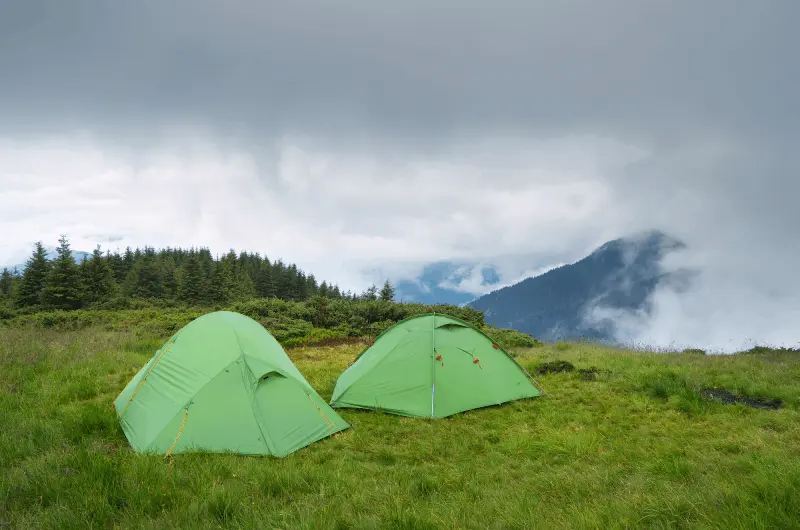
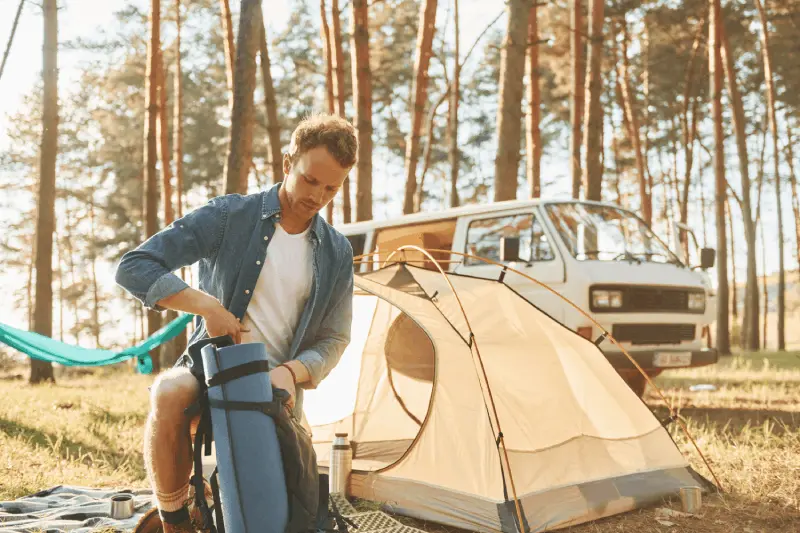
The most critical decision for beginners in camping is usually the tent selection. The terms "3-season" or "4-season" in the market actually symbolize the weather conditions that the tent can withstand. 3-season tents (designed for spring, summer, and autumn use, airy models) usually have mesh panels and are lightweight. 4-season tents (winter tents that can withstand snow loads and strong winds) have thicker poles and a more enclosed structure. At the beginner level, in Turkey's conditions, a 3-season, quality dome tent will generally be sufficient. For a budget-friendly but quality option, Decathlon's Forclaz series or Naturehike's entry-level models are great choices with a balance of lightness and durability. These tents offer ease of setup and won't leave you stranded in sudden rain showers.
Why Are Hydrostatic Head Values and Ripstop Fabric Features Important?
When purchasing a tent, you should definitely look for the "Hydrostatic Head" (the resistance level against the water pressure exerted on the fabric, measured in mm) in the technical specifications. Choosing a tent with at least 2000mm or 3000mm hydrostatic head value at the beginner level ensures that you stay dry inside during heavy rain. Additionally, having a fabric with "Ripstop" (a fabric structure with a grid pattern that prevents tearing) prevents a small hole from spreading throughout the tent. Aluminum poles (the rods that form the skeleton of the tent) offer a lighter and more durable option compared to fiberglass poles. If your budget is limited, fiberglass poles can also work, but keep in mind that they have a lower tolerance for bending in the wind.
What Is the Difference Between Comfort and Limit Ratings in Sleeping Bags?
When purchasing a sleeping bag, the numbers on the labels can sometimes be confusing. There are three main values to pay attention to: Comfort (the temperature at which a woman can sleep without curling up in a standard sleeping position), Limit (the lower limit at which a man can sleep without curling up), and Extreme (the survival limit, you should not aim to sleep at this temperature). If you are just starting out, you should choose a bag with a "Comfort" rating that is 5 degrees lower than the lowest nighttime temperature in the area you will be visiting. Synthetic-filled (which retains insulation properties even when wet) sleeping bags are both affordable and easy to maintain for beginners. While down-filled bags (which provide very light and high insulation) are great, they are quickly affected by moisture and can be quite expensive.
How to Choose Between Mummy and Rectangular Sleeping Bags?
Sleeping bags generally come in two basic shapes: Mummy (a narrow cut that follows body contours, has a hood, and minimizes heat loss) and Rectangular (a wider cut that allows more movement and can be opened like a blanket). If you really want to stay warm in nature, you should prefer mummy-shaped bags. These bags minimize the air gap between your body and the fabric, allowing you to use your body heat more efficiently. Rectangular bags are more suitable for those seeking comfort in summer months and campgrounds. For beginners, affordable synthetic mummy bags from brands like Husky or Evolite are quite successful in terms of price-performance.
How Does R-Value Affect Thermal Insulation in Mat Selection?
Many new campers think that only the sleeping bag will keep them warm; however, the real cold comes from the ground. This is where the mat's "R-Value" (the amount of resistance a material shows against heat transfer) comes into play. The higher the R-value, the better the mat protects you from the cold coming from the ground. For summer camps, an R-value between 1.5 - 2.5 is sufficient, while for winter camps, values of 4 and above are required. For beginners, a "Closed-cell foam mat" (a type of mat that does not compress and does not absorb water) is both very cheap and reliable as it does not carry a risk of puncture. If you want more comfort, you can opt for "Inflatable pads" (mats that are filled with air and offer higher comfort and insulation), but keep in mind that they may need patching (Reparation kit).
What Should Be the Capacity and Body Adjustment of a Backpack?
The volume of the backpack that will carry your camping gear varies according to the duration of your activity. Generally, a capacity of 50-65 liters (the internal volume unit of the backpack) is ideal for weekend camps. The most important technical detail when purchasing a backpack is the "Torso Length" (the distance between the vertebrae and the neck base). The backpack should fit snugly on your back, and 80% of the weight should be carried by your hip belt (Hip belt). Having an "Airflow" (ventilation channels that reduce sweating in the back area) feature in the backpack increases your comfort while hiking. For beginners, backpacks with adjustable back systems like Decathlon's MT500 series are both affordable and quite ergonomic.
What Types of Cartridges and Efficiency Are Measured in Camping Stoves?
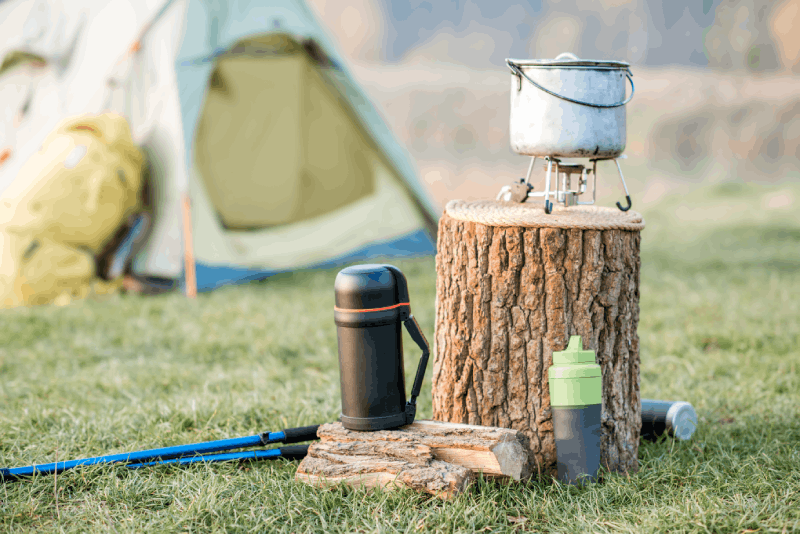
Cooking is one of the most enjoyable moments of camping. The most practical solution for beginners will be "Screw-on Cartridge Stoves" (small stoves that are used by screwing onto butane/propane gas canisters). These stoves are lightweight and easy to set up. The ratio of "Propane" (a component that allows gas to ignite more easily in cold weather) in the gas mixture determines whether your stove will ignite in winter. If you are camping in a windy area, you should definitely use a "Windshield" (a metal plate that protects the flame of the stove from the wind) next to your stove. For entry-level, small screw stoves from brands like Nurgaz or Kovea take up little space in your backpack and last for many years.
What Is the Carrying Capacity and Fabric Quality of Foldable Camping Chairs?
The first thing that comes to mind when thinking of camping comfort is the camping chair. Cheap chairs can often break at the "Scissor Joint" (the point where the chair's legs connect) during the first camp. Therefore, you should look at the thickness of the chair's profile (Steel or aluminum frame) and the "Denier" (a unit that indicates the thickness and durability of the fabric) value. Chairs with 600D denier fabric are quite durable. For beginners, rather than very expensive models, standard "Umbrella Fold" (a system that closes with a single motion) chairs with reinforced leg parts are budget-friendly options.
Why Are Lumen Values and Light Modes Necessary in Lighting?
A "Headlamp" (a lamp worn on the head that adjusts the light direction according to the viewing direction) is vital for keeping your hands free in the campsite. The "Lumen" (the measure of the total visible light output from a light source) value of the lamp indicates how bright the light is. For moving around the campsite and cooking, a lamp with 100-300 lumens is sufficient. Additionally, models with a "Red Light Mode" (a low-frequency light that does not disturb night vision and does not attract insects) feature are easier on the eyes for both you and those around you at night. Entry-level models from brands like Petzl or Black Diamond are excellent in terms of battery life and durability.
What Is the Difference Between Titanium and Aluminum Materials in Camping Cookware?
In kitchen equipment, weight and heat conductivity are paramount. "Anodized Aluminum" (aluminum that has been treated to increase oxidation resistance and gain non-stick properties) pot sets distribute heat evenly and are affordable. "Titanium" (a very lightweight and strong but expensive metal that conducts heat regionally) equipment is for ultralight campers and can be an unnecessary cost for beginners. Purchasing a nesting aluminum set (kitchen utensils that fit inside each other to save space) as a starter set saves space in your backpack and makes cooking easier.
What Are Vibram Soles and Gore-Tex Linings in Choosing the Right Shoes?
Camping is not just about sitting in front of the tent; it often requires walking on rugged terrain. It is important for your safety that the soles of your shoes are made of a non-slip material like "Vibram" (a globally renowned brand that provides high grip and durability). Additionally, having a "Gore-Tex" (a waterproof but breathable membrane that allows moisture inside to escape) or similar waterproof technology in your shoes keeps your feet dry. At the beginner level, "Mid-cut" (medium height ankle cut) boots that support your ankle are a safer choice to prevent sprains.
How to Read Vacuum Insulation and Heat Retention Times in Thermos Selection?
A hot coffee is essential for camping. A quality thermos has a "Double-wall vacuum insulation" (a system that stops heat transfer by removing the air between two steel walls). You will see statements like "12 hours hot / 24 hours cold" in the features of the product you purchase. Although brands like Stanley that offer a lifetime warranty may seem a bit expensive at first, they are the most profitable investment in the long run. However, if you are looking for a more affordable solution, locally produced quality steel thermoses will also do the job; just make sure the cap is leak-proof (Leak-proof cap).
What Should Be the Steel Quality When Choosing a Camping Knife and Multitool?
You will need a knife at every stage, from cutting rope to preparing food in nature. For beginners, a "Full Tang" (a knife where the steel extends uninterrupted to the end of the handle) knife is much sturdier. As for the type of steel, "Stainless Steel" (steel that is resistant to corrosion due to its chromium content) is the easiest to maintain for beginners. Additionally, a "Multitool" (a multi-purpose hand tool) that includes tools like pliers and screwdrivers will make your camping life easier. Swedish brand Morakniv knives are considered among the best camping knives in the world despite their incredibly low prices and should be in every camper's backpack.
What Basic Materials Should Be Included in a First Aid Kit?
Help may be far away in nature, so you should be able to rely on yourself. A first aid kit should definitely include sterile gauze, disinfectant solutions, band-aids of various sizes, and a "Thermal Blanket" (a space blanket that reflects 90% of body heat). Additionally, having pain relievers and anti-allergic (Anti-allergic - medications that suppress allergic reactions) tablets alongside your personal medications can be lifesaving. You can buy ready-made first aid kits and enrich their contents according to your needs.
How to Apply the Layering System in Camping Clothing?
You should avoid "cotton" clothing while camping; because cotton takes a long time to dry when wet and absorbs body heat. Instead, you should apply a three-layer system: "Base Layer" (a synthetic or merino wool base layer that wicks moisture away from the body), "Mid Layer" (a fleece or down jacket that traps heat), and "Outer Layer" (a technical jacket that protects against wind and rain). With this system, you can stabilize (Stabilize - keep balanced) your body heat by removing layers when the weather warms up or when you are active.
Why Should Biodegradable Products Be Preferred for Hygiene in Nature?
Respecting nature is the duty of every camper. The soap, shampoo, and dish detergent you use should be "Biodegradable" (substances that can be completely broken down by microorganisms in nature). Ordinary chemical detergents harm water sources and soil. Additionally, when you need to relieve yourself in the campsite, you should be at least 60 meters away from water sources and use a "Trowel" (a small hand shovel used to bury waste).
Is It Logical to Use Powerbanks and Solar Panels as a Power Source?
If you don't want to completely disconnect from technology, you will need a power source to charge your phone and flashlight. A power bank with a capacity of at least 10,000 mAh (Milliampere-hour - a unit of electric charge, a capacity indicator) is sufficient for short camps. Using a "Solar Panel" (a device that converts sunlight into electrical energy) is only efficient in very long and sunny camping conditions; because their efficiency is low and charging times are long. At the beginner stage, a quality, shock-resistant power bank is a more logical investment.
What Should Be Considered When Choosing a Camping Axe and Saw?
Collecting wood and preparing a fire is usually safer and more efficient with a saw than with an axe. "Folding Saws" (saws that fold into the handle) are great in terms of both weight and safety. If you are going to buy an axe, make sure the handle is ergonomically designed so it won't slip from your hand. Remember that you should only collect deadwood (wood that has fallen from trees or dried out) and never harm living trees. Saws from brands like Bahco or Fiskars are very high quality and long-lasting options for beginners.
What Equipment Is Necessary for Hammock Camping?
Sleeping in a hammock instead of a tent can be very enjoyable, but it requires technical preparation. A hammock alone is not enough; you will need a "Tarp" (a waterproof wide tarp fabric) to protect against rain and an "Underquilt" (an insulation layer hung under the hammock to cut off the cold from below). To prevent the hammock ropes from damaging the trees, you should use "Tree Straps" (straps that do not crush the tree trunk due to their wide structure).
How to Choose Water Purification Methods and Filters?
If you run out of water at the campsite, you may need to use natural sources. Not every clear water is drinkable. Using a "Water Filter" (a device that filters bacteria and protozoa through its pores) protects you from diseases. "Hollow Fiber" filters are the most common. If you don't have a filter, you can purify water by boiling it for at least 1 minute using the "Rolling Boil" method (water boiling with bubbles coming from all over).
What Are Fire Starting Tools and How to Use a Magnesium Rod?
A lighter can always fail, so it's good to have a backup fire starter. A "Magnesium Rod" (a metal rod that produces sparks up to 3000 degrees when scraped) is a great tool that can work even when wet. Additionally, preparing "Tinder" (small materials that catch fire easily) packets (like cotton balls soaked in petroleum jelly) at home makes starting a fire much easier. When starting a fire, always use a pre-prepared fire pit and ensure that the fire is completely out (Cold to the touch - the extinguishing temperature that feels cold when touched) before leaving.
Why Should GPS Devices and Compasses Be Learned?
Even though our phones have GPS in the modern world, you should be able to find your way in case of battery depletion or signal loss. Learning to use a "Baseplate Compass" (a compass with a transparent base used for navigation on a map) is a fundamental survival skill. You should download digital map applications (Offline maps - maps that work without the internet) to your phone in advance and review the topography of the area before you go.
How Should the Maintenance and Storage Conditions of Camping Equipment Be?
How you store your equipment after camping determines their lifespan. You should never pack your tent wet or damp; this causes "Mildew" (a fungal layer that forms in damp environments) and ruins the waterproofing of the fabric. You should store sleeping bags in a breathable, wide mesh bag rather than a compression sack to prevent the filling material (Loft - the fluffiness and air retention capacity of the filling material) from losing its properties.
What Extra Precautions Should Be Taken When Camping with Children?
In camps with children, the comfort level should be kept a notch higher. Higher R-value mats and quality sleeping bags should be preferred to prevent them from getting cold. Additionally, using lanterns that provide "Ambient Lighting" (soft lighting that illuminates a wide area) in the campsite can help children feel more comfortable and less afraid of the dark. You should also have their favorite snacks and small toys like binoculars for "Nature Observation" (an activity of examining the environment).
What Are the Key Points of Camping with Pets?
Camping with your dog is wonderful, but you need to prepare for it as well. You should have a separate "Pet Sleeping Pad" and an "LED Collar" for visibility at night. Additionally, to mitigate the risk of encountering wild animals, you should keep your dog under control and take "Tick and Flea Protection" measures before camping.
What Extra Equipment Should Be Purchased for Winter Camping at the Beginner Level?
Winter camping is not to be taken lightly. If you are going to camp in winter, you should definitely take a "Snow Shovel" and higher-calorie foods. To protect your body heat, "Hand Warmers" (chemical reaction packs that generate heat) can be placed inside your sleeping bag. Additionally, due to the decreased efficiency of gas stoves in winter, "Liquid Fuel Stoves" (stoves that perform well in all weather conditions) are more reliable.
What Should Be Considered When Choosing a Campsite?
No matter how good your equipment is, setting up a tent in the wrong place can ruin your camping experience. You should set up your tent on a high ground with "Drainage" (a system for water runoff) and avoid low areas. Additionally, you should be careful not to set up your tent under dangerous branches known as "Widowmakers" (dry and large branches that can fall at any moment). You should determine the direction of the wind and position the entrance of the tent facing away from the wind.
What Is Ultralight Camping and How to Start?
Ultralight camping is the art of minimizing your total weight. In this philosophy, every gram counts. Initially, buying the lightest option for everything can be very expensive. Instead, you should adopt the principle of "Multi-purpose" (an item serving multiple functions). For example, you can save weight by choosing trekking poles that can also serve as tent poles.
What Are the Advantages of Creating a Check-List for Camping Preparation?
Even the most professional campers can sometimes forget the most basic items at home. Therefore, creating a "Check-List" (a list for checking items) can be lifesaving. You should categorize your list into Sleep, Kitchen, Clothing, First Aid, and Technical Equipment. Before each camp, you should go through this list to confirm that your equipment is complete and operational.
How Should the Second-Hand Market Be Evaluated When Purchasing Equipment?
Quality camping equipment is expensive but very durable. Therefore, buying second-hand "Brand" products from reliable platforms is more logical than purchasing cheap and low-quality new items. Especially for products with less mechanical parts, like tents and backpacks, second-hand purchases can lead to significant savings. However, for hygiene-requiring items like sleeping bags and liners, I recommend buying new.
How to Learn Equipment Repair and Patching After Camping?
Your equipment may get damaged in nature. You should definitely have a "Repair Kit" in your backpack. This kit should include "Duct Tape" (a very strong and durable adhesive tape), self-adhesive patches for torn fabrics, and spare "Paracord" (a lightweight cord with high carrying capacity) for broken ropes. Learning to make these small repairs will extend the lifespan of your expensive equipment.
What Are the Principles of "Leave No Trace" for Sustainable Camping?
The most important rule of camping is to leave nature cleaner than you found it. "Leave No Trace" consists of seven basic principles. These principles are: plan ahead, camp on durable surfaces, dispose of waste properly, leave what you find, minimize campfire impact, respect wildlife, and be considerate of other visitors. Having this awareness is as valuable as having the best tent.